Recommended Free Tools
Selling grain in stages can reduce the risk of leaving an entire crop exposed to a later price drop, but it does not guarantee a better average price or maximum returns. A January 2023 column by Bryan Doherty of Total Farm Marketing urged producers to consider incremental sales using price targets, decision deadlines, or both. Its suggested pre-planting percentage was an example, not a universal allocation or current recommendation.
What “sell early and often” means
The phrase comes from Bryan Doherty’s January 20, 2023 column for Agriculture.com/Successful Farming. The basic idea is to divide expected production into smaller quantities and make sales at different times or price levels, rather than making one all-or-nothing decision.
Incremental sales can establish an average across several decisions and reduce price exposure on the portion already sold. They also give up some upside on that quantity if prices rise afterward. A forward contract may additionally require delivery under its agreed terms.
“Deciding to do nothing is still a decision which may have significant consequences, either good or bad,” Doherty wrote. Waiting leaves the expected production unpriced for longer; selling locks in terms on the quantity committed. Neither choice is risk-free.
#1 Best Overall

- Direct readout for 40 different grain scales
- Test high moisture grain up to 40%
- Illuminated multilingual display - English, Spanish, French, German, Italian, Portuguese, Swedish
- Includes Protective carrying case with shoulder strap
- Single-point or Precision multi-point calibration to match local elevator
How to make a grain marketing plan
A useful plan connects quantities, pricing tools, target prices, and decision deadlines. Michigan State University Extension’s grain marketing plan template, updated August 10, 2025, provides a framework for recording those choices. It is a planning aid, not a source of current price instructions.
- Estimate the production you can reasonably market. Build sale quantities around expected production, cash-flow needs, and what you can fulfill. Avoid treating a hoped-for yield as guaranteed production.
- Set both price targets and decision dates. A target tells you when you may want to act; a deadline provides a fallback if the target is never reached. Record the quantity each decision covers.
- Choose the tool that addresses the risk you mean to manage. Decide whether you want to fix the cash price, lock futures while leaving basis open, or retain some price upside while paying for an option.
- Review the plan as conditions and production estimates change. Update expected quantities and cash-flow needs, and check existing commitments before making another sale.
There is no established percentage that suits every farm. Doherty’s column floated selling 20% to 35% before planting as an illustration of a portion a producer might be comfortable committing—not as a proven optimum. Staging can spread decisions over time, but the available sources do not show that it will outperform a single sale or maximize a farm’s returns.
Rank #2
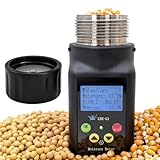
- AGRICULTURAL GRAIN CHECKS: This portable corn moisture tester and grain moisture meter supports on-farm reference checks for farmers, grain handlers, and grain or feed processors
- 25 CROP PROFILES: Select the matching profile for corn, wheat, soybeans, paddy rice, barley, oats, sorghum, and other supported crops before each measurement
- CONSISTENT SAMPLE PREPARATION: Use a representative sample, fill the clean and dry chamber evenly, and tighten the cap securely without overtightening for more consistent readings
- AUTOMATIC TEMPERATURE COMPENSATION: Built-in ATC adjusts the displayed result for sample temperature; for better consistency, let the meter and sample reach similar temperatures before testing
- USER-ADJUSTABLE CORRECTION: When a trusted reference method shows a consistent difference, use the correction setting to adjust the displayed value; the setting remains saved after power-off
What the main grain-marketing tools change
Penn State Extension describes common elevator tools and the risks they address in “What’s Your Grain Marketing Plan?” Terms and availability vary by buyer and location. Before signing, confirm the quantity, quality specifications, delivery window, pricing components, fees, and what happens if you cannot deliver.
| Tool | What it generally fixes or leaves open | Key trade-off to check |
|---|---|---|
| Cash sale | Sets the cash price for the grain sold, including local basis. | Sale terms are settled for that quantity; the producer does not benefit if the price later rises. |
| Forward cash contract | Agrees to a price and delivery terms for a specified quantity at a later date. | Creates a delivery obligation. Check quantity, quality, delivery period, and consequences of a shortfall. |
| Basis contract | Sets local basis while leaving the futures component open until pricing. | The final cash price remains exposed to futures-price changes until that component is set. |
| Hedge-to-arrive contract | Sets the futures component while leaving local basis open. | Check when and how basis must be set, plus delivery and other contract conditions. |
| Futures hedge | Can offset futures-price risk while the cash grain remains unsold; local basis remains a separate exposure. | Requires a brokerage account and understanding of margin and contract mechanics; it does not itself arrange physical delivery. |
| Options | Can establish a price floor or other exposure while preserving some upside, depending on the position. | Options have a premium and may not protect the local basis; the exact position and costs matter. |
The table describes general distinctions, not a substitute for the actual contract. Ask the elevator or broker to explain how the terms work for the specific crop, quantity, and delivery location.
Windows Errors? Fix Them Before They Spread
Repair common Windows errors and clear accumulated junk for a smoother, more stable PC - no reinstall needed.Free scan · no reinstallOutdated Drivers Are Slowing You Down
One free scan finds every outdated or missing driver and matches the right update for your exact hardware.Free scan · exact hardware matchRank #3
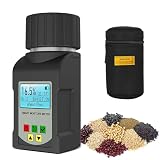
- 【SUPPORT 25 GRAINS】: The grain moisture tester is specifically designed to measure the moisture content of 25 different grains, including soya beans, voffee, lentils, grass seed rye grass, and more. Get accurate measurement results to help you make better agricultural practice decisions.
- 【PRECISE MEASUREMENT】: The smart grain moisture meter has a built-in high-precision sensor. Achieve accurate grain moisture readings with an industry-leading accuracy of ±0.5%, even under diverse environmental conditions. Ensure every measurement is reliable, demonstrating excellent reliability and accuracy, giving you full confidence in the quality of your grains.
- 【AUTOMATIC TEMPERATURE COMPENSATION】: This moisture meter for seeds comes equipped with automatic temperature compensation, which ensures consistent and accurate measurements regardless of changes in ambient temperature, making it ideal for indoor and outdoor use.
- 【BACKLIT DIGITAL DISPLAY】: Using backlight liquid crystal display technology, clear display and low power consumption, fast measurement speed, showing clear content in different lights. Whether for field or lab use, this moisture tester offers simplicity and efficiency, streamlining moisture measurement processes.
- 【VOICE BROADCAST】During measurement, it precisely announces the moisture value, enabling you to get key data without staring at the screen. If the lid isn't closed securely, the voice function gives a prompt, averting measurement errors from lid problems
Why the 2023 market details are not current guidance
Doherty’s column described early-2023 old-crop corn and soybean futures as supported by Southern Hemisphere weather concerns, while new-crop contracts were steady to weaker amid expectations of normal growing-season weather. It also said buyers were moving toward just-in-time purchasing in response to high prices. Those were observations about that period, not a description of today’s grain markets.
The column also reported corn exports running about 50% lower year over year for the first four months of the marketing year. That is a statistic reported by Doherty in 2023, not a current figure or one independently refreshed here.
Rank #4
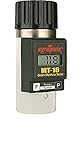
- TESTING EQUIPMENT: Specially calibrated to provide accurate moisture results for grains, the AgraTronix grain tester is reliable equipment that is commonly used by cultivators, farmers and sellers.
- UNIQUE DESIGN: The grain humidity tester is equipped with back lit display with multilingual settings for precise readings even in dark. It has an easy basic mode and advanced precision calibration mode to match local elevator.
- CONVENIENT TO USE: This is a handheld moisture tester for grain can be used with 16 different grain scales. It works well in moisture range of 5% to 40%, depending on the type of grain. Each scale is adjustable to match the local elevator.
- PRECISE READINGS: The MT-16 moisture tester automatically averages up to 99 test results. It has high-frequency capacitive circuit that improves the overall accuracy.
- PRODUCT SPECIFICATIONS: The grain moisture meter has 0.1% moisture display resolution. It can be operated using two 9V batteries. It works well with 32° to 113°F temperature range. It is supplied with protective carrying case with a shoulder strap.
For broader context, the USDA Economic Research Service reported in November 2020, using 2016 survey data, that farmers used a portfolio of risk-management tools, including marketing contracts and on-farm storage, rather than routinely covering all production with futures or options. That historical evidence explains why plans may combine tools; it should not be read as a current estimate of how many farmers use each one.
Independent reader supportYour contribution helps us test, update, and keep practical guides available for everyone.Use dated plans as examples, not price signals
The University of Minnesota Center for Farm Financial Management’s 2025 soybean pre-harvest marketing plan illustrates staged pricing, target dates, a no-sale threshold, and crop insurance as elements of a plan. Its specific prices and dates belong to that plan and crop year, not to a current recommendation.
Quick wins for a faster PC:
Fix the driver behind crashes, sound loss and screen glitchesFind Drivers →Clear out junk files and repair common Windows errorsFree Scan →Scan for outdated or missing drivers - takes under a minuteDriver Scan →Best Value

- High Precision & Consistency: Achieve accurate grain moisture readings with an industry-leading accuracy of ±0.5%, even under diverse environmental conditions. Ensure every measurement is reliable, giving you full confidence in the quality of your grains.
- Supports 25 Types of Grains: GS25A is versatile and supports the measurement of 25 different grain types, including wheat, corn, rice, coffee beans, and more. Easily switch between grains to get precise moisture content, tailored to your specific crop.
- User-Friendly & Portable Design: The lightweight, compact design and intuitive LCD display make GS25A easy to carry and operate in the field or storage. The straightforward interface allows anyone to perform accurate measurements with minimal setup.
- Automatic Temperature Compensation: With built-in automatic temperature compensation, GS25A ensures consistent and precise measurements, regardless of changes in ambient temperature, making it ideal for both indoor and outdoor use.
- Long Battery Life & Convenient Power Options: Powered by 4 AAA batteries and an additional CR-2032 battery (Package does not include batteries), GS25A is designed for extended field use. Stay productive without the constant worry of battery replacement.
Crop-year plans and market prices become stale quickly. Use an example to understand how decisions can be organized, then base actual targets and deadlines on current local bids, production estimates, cash needs, contract terms, and risk tolerance.
Quick Recap
Questions to resolve before committing grain
- How much production is reasonably expected, and how much is already committed?
- Does the proposed sale set futures, basis, or both?
- What quantity, grade, delivery location, and delivery period does the agreement require?
- Are there fees, premiums, margin requirements, or other costs?
- If production falls short or delivery becomes difficult, what does the contract require?
- What is the next decision date if the target price is not reached?
Product prices and availability are accurate as of the date/time indicated and are subject to change. Any price and availability information displayed on Amazon at the time of purchase will apply.




