Avnet’s documented approach is to help small hardware companies and makers early—when they may need design guidance more than large component orders—and try to stay involved as a product moves toward manufacturing. The model combines self-service resources, shared engineering and software capabilities, customer triage, a single coordinating contact, and manufacturing support. For a startup, the practical point is continuity: a design that works as a prototype still needs sourcing, production planning and fulfillment before it can become a business.
Why small hardware customers can be difficult to serve
A large distributor’s traditional economics favor high-volume component orders. A maker or startup may instead need help while buying only a few parts, evaluating a design or building a proof of concept. Those early projects can require engineering attention, inventory and fulfillment work before there is much sales volume to support the cost.
Avnet’s documented strategy was to make early engagement more economical through online tools, self-help content, communities and shared technical resources, while identifying promising designs before they reached production. The business rationale is to build a relationship during design and potentially retain the component business if the product scales. That is a strategy, not a guarantee that every idea will receive the same level of support or become a production order.
How the support model works across a product’s lifecycle
Avnet describes its lifecycle as spanning idea, design, prototype, mass production and end-of-life management. Its 2017–2018 descriptions of small-customer support show how the company aimed to connect those stages:
#1 Best Overall

- BUILD LARGER BREADBOARD CIRCUITS - Create LED indicators, button inputs, traffic-light sequences, light-activated circuits, RGB effects, buzzer alarms and other electronics experiments on the included 830-point breadboard
- 300+ PARTS FOR REPEATABLE EXPERIMENTS - Includes an 830-point solderless breadboard, power module, rigid and solderless jumper wires, Dupont wires, potentiometer, LEDs, resistors, capacitors, diodes, transistors, buttons and buzzers
- LEARN HOW CORE COMPONENTS WORK - Use the 74HC595 to expand outputs, the 4N35 optocoupler to explore signal isolation, PN2222 transistors to switch compatible loads and 1N4007 diodes for polarity-protection and rectification experiments
- POWER AND REWIRE PROJECTS QUICKLY - Use the breadboard power module for selectable 3.3 V or 5 V rails, with ample board space for ICs and multi-stage circuits; use a suitable 6.5–9 V DC input and do not exceed 9 V
- COMPONENT KIT WITH CLEAR EXPECTATIONS - A controller board, programming cable and wall adapter are not included; use a compatible controller for coded projects and follow the digital tutorial, datasheets and wiring guidance
| Stage | Documented role in the model |
|---|---|
| Idea and learning | How-to videos, schematics, self-help material and maker communities help people explore a concept before they are large buyers. |
| Design and proof of concept | New Business Development and IoT teams were organized to support makers, engineers and startups, with triage to match the customer’s stage and needs to an appropriate level of support. |
| Prototype | Engineering, component and software capabilities could be coordinated around a working proof of concept rather than treating the customer only as a catalog order. |
| Production | The intended bridge was from a successful design into component supply and, where needed, manufacturing strategy and production oversight. |
| End of life | Avnet includes end-of-life management in its overall lifecycle description; the cited material does not specify a particular small-customer service or process for this stage. |
Triage keeps support proportional
The triage process was meant to determine where a customer was in the design-to-production journey and what support made sense. That matters for both sides: a startup can get help suited to its immediate obstacle, while Avnet can direct limited engineering and service resources instead of treating every early idea as a full-scale engagement.
One contact connects the pieces
Avnet described a single point of contact who could coordinate components, engineering, suppliers and services. Lou Lutostanski, then Avnet’s vice president for Internet of Things, said the customer could “with one phone call” develop an end-to-end solution. He described an IoT organization layered over existing capabilities, including a 500-person cloud, web and mobile-applications development team and software-as-a-service offerings, to help customers move from proof of concept to producing thousands of items. These are statements from the historical account, not confirmation of Avnet’s current organization or staffing.
Rank #2
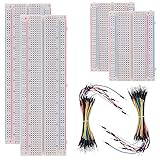
- BOJACK high quality Solderless Breadboard Assortment Kit
- Breadboard is a solderless device for temporary prototype with electronics and test circuit designs. Most electronic components in electronic circuits can be interconnected by inserting their leads or terminals into the holes and then making connections through wires where appropriate.
- The breadboard has strips of metal underneath the board and connect the holes on the top of the board. Note that the top and bottom rows of holes are connected horizontally and split in the middle while the remaining holes are connected vertically.
- The Breadboards Can be Spliced According to the Unit, the Structure is Clear in Color.
- Material: ABS Plastic Panel, Tin Plated Phosphor Bronze Contact Sheet.
Manufacturing expertise addresses the gap after a prototype
A prototype demonstrates that an idea can work; it does not by itself resolve factory selection, production planning or oversight. Avnet’s ecosystem included Dragon Innovation’s manufacturing platform and expertise, described as support for manufacturing strategy, factory selection and production oversight. That gives the model a broader stated scope than component sourcing alone, though the cited material does not establish the terms, availability or outcome of a current engagement.
What the ecosystem contributed
The documented ecosystem brought together several kinds of resources rather than relying on one service:
Windows Errors? Fix Them Before They Spread
Repair common Windows errors and clear accumulated junk for a smoother, more stable PC - no reinstall needed.Free scan · no reinstallOutdated Drivers Are Slowing You Down
One free scan finds every outdated or missing driver and matches the right update for your exact hardware.Free scan · exact hardware matchRank #3

- All products are tested for stability, consistency and reliability,Ensure product excellence
- Save time with this handy box full of the most practical and common electronic components
- Easy to store: Each different component is packaged in a plastic bag, Resistors values are stamped with the according value
- Electronic components set include: diodes, resistors, transistors, LED diodes, electrolytic capacitors, ceramic capacitors
- Electronics component kit: This is a great assortment of components for electronic professionals or enthusiasts
- element14 and Hackster.io: communities and learning resources for engineers, makers and product developers.
- MakerSource.io and Hardware Studio: additional maker and hardware-development resources named in Avnet’s ecosystem material.
- Software and cloud teams: capabilities intended to help with connected-product development beyond the physical components.
- Dragon Innovation: manufacturing strategy and factory-related expertise for the path from design toward production.
The combination is intended to connect technical learning, component choices, software and manufacturing. A community or a direct component marketplace may be a lower-commitment way to explore an early experiment; based on the documented service scope, it may offer less integrated factory support. That is a comparison of service scope, not a measured claim about price, quality or results.
Where Raspberry Pi fits
Avnet’s account specifically cites the Raspberry Pi single-board computer as an easy-to-use platform that lowered barriers for hobbyists, inventors and developers without deep technical backgrounds. For a prototype-focused idea, a Raspberry Pi can be a starting platform when its capabilities fit the project. It is not a substitute for checking whether the final product’s hardware, software, reliability and manufacturing requirements call for a different design. No particular model, price or present-day availability is established here.
Rank #4

- Complete and practical package: The package contains more than 400 components, which can help you complete interesting and simple electrical experiments.
- Clear and sturdy packaging: Each component is classified and packaged and placed in a transparent box with clear labels on it, making it easy to find components.
- Humanized design: The package includes a power module and a USB data cable, and the components can be directly plugged into the breadboard, which is more convenient without soldering.
- The quality of components is reliable.
- Compatible with STM32,Raspberry Pi,Arduino and so on.
What the historical numbers do—and do not—show
Avnet’s ecosystem materials reported several figures, but they describe activity at the time, not current scale or a startup’s likely outcome:
| Figure | What it refers to | Qualification |
|---|---|---|
| More than 750,000 | Entrepreneurs, makers and engineers in the community cited in Avnet’s 2017 Dragon Innovation acquisition announcement. | Historical community figure; it should not be read as a current membership count. |
| 12% growth | Sequential membership growth for element14 and Hackster.io reported in Avnet’s 2018 ecosystem graphic. | The cited passage does not define an absolute membership base. |
| 50,000 SKUs added | Products added to the Avnet.com Americas store, as reported in Avnet’s 2018 ecosystem material. | Specific to that store and report; it does not establish current catalog breadth or availability. |
What a startup should take from the model
Avnet’s approach is most relevant when the challenge extends beyond buying a few components: a team may need technical direction, connected-product capabilities, sourcing coordination or help planning a move into manufacturing. Its advantage, as documented, is breadth and the possibility of continuity from early design into supply and production—not a promise that every service is bundled, free or right for every project.
The Tool Desk
Outbyte Driver Updater FREEScan for outdated or missing drivers - takes under a minuteDriver Scan →Outbyte PC Repair FREERepair Windows errors before they cause bigger problemsFix Now →Best Value

- 35+ Guided Electronics Projects: Progress from LEDs and buttons to RFID access, real-time clocks, motion and distance sensing, environmental monitoring, motor control and interactive displays for STEM learning, coding clubs and maker projects
- More I/O and Memory for Larger Builds: The MEGA 2560 R3 provides 54 digital I/O pins, including 15 PWM outputs, 16 analog inputs, 4 hardware serial ports and 256 KB flash for projects that combine more sensors, controls and displays
- 200+ Components for Prototyping: Includes LCD1602, RC522 RFID, RTC, DHT11, HC-SR501 PIR, ultrasonic and water-level sensors, GY-521, MAX7219, keypad, joystick, rotary encoder, relay, SG90 servo, stepper motor, DC motor, breadboard and more
- Learn, Modify and Create: Follow 35+ guided lessons with example code, then adjust sensor thresholds, timing, display text, motor behavior and control logic to turn structured exercises into access systems, monitors, alarms and interactive projects
- Organized for Repeatable Learning: Pre-soldered modules, a solderless breadboard, storage case and small-parts box reduce setup time and keep sensors, LEDs, ICs, wires and other components easy to find between projects
For a small team deciding how to proceed, the useful questions are:
- Is the immediate need a low-cost experiment, or does the project already require coordinated design and sourcing help?
- What support is available at the current stage, and how does Avnet decide the level of engagement?
- Who will own coordination if the design moves from prototype to production?
- What manufacturing, supplier and production-planning assistance is actually included in the proposed engagement?
The evidence for this particular small-customer operating model is primarily Avnet’s 2017–2018 descriptions. Avnet’s case-study library includes examples dated through 2023, but those examples alone do not verify that the same organizational names, community sizes, services or terms remain in place today. A startup should confirm current offerings directly before relying on them in a budget or production plan.
Quick Recap
Product prices and availability are accurate as of the date/time indicated and are subject to change. Any price and availability information displayed on Amazon at the time of purchase will apply.




