Replacing a confirmed bad engine mount is usually worth it when the vehicle is otherwise sound. In the U.S., a typical single-mount repair often costs about $500 to $900 installed. RepairPal’s current national estimate is $630–$779 before taxes and fees, including approximately $315–$462 in labor and $315–$317 in parts. Difficult-access, hydraulic, active, luxury-vehicle, truck, and multi-mount repairs can cost substantially more.
The important qualification is the diagnosis. Vibration or a clunk does not prove that an engine mount has failed. Before authorizing the work, ask the shop to identify the specific mount, show the evidence of failure, inspect the other mounts and brackets, and explain whether any related repairs or special hardware are included.
| # | Preview | Product | Price | |
|---|---|---|---|---|
| 1 |

|
4PCS Engine Motor Mount Set for 2009-2015 Pilot V6 3.5L Auto | $129.99 | Buy on Amazon |
| 2 |

|
Engine Motor & Transmission Mount Compatible with Jeep Dodge 3.6L 5.7L RWD | $64.29 | Buy on Amazon |
| 3 |

|
GM Genuine Parts 15854939 Engine Mount | $118.78 | Buy on Amazon |
| 4 |
|
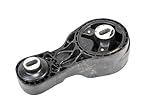
GM Genuine Parts 25840458 Engine Mount Strut | $52.87 | Buy on Amazon |
Quick answer: is an engine-mount repair worth the money?
It is generally worth replacing an engine mount when:
- The mount is visibly cracked, separated, collapsed, leaking, or allowing excessive powertrain movement.
- The engine, transmission, frame, body, and subframe are fundamentally sound.
- The complete quote is reasonable for the vehicle and the repair’s complexity.
- You plan to keep the car long enough to benefit from the repair.
An engine mount is not only a comfort component. It supports the engine’s weight, controls movement during acceleration and braking, maintains powertrain alignment, and reduces vibration and noise. A badly failed mount can place extra stress on the remaining mounts and allow the engine or transmission to contact the exhaust, radiator, fan, body, or other nearby parts. Firestone Complete Auto Care explains the potential symptoms and secondary damage, while RepairPal provides current cost and repair information.
The Tool Desk
Outbyte PC Repair FREERepair Windows errors before they cause bigger problemsFix Now →Outbyte Driver Updater FREEScan for outdated or missing drivers - takes under a minuteDriver Scan →#1 Best Overall
- Interchange Part Number: A65078 A4587 A65077 A65015, 9844 9411 9415 9845 9512
- Compatible with Fits HONDA PILOT 2009-2015 V6-3.5L Automatic Transmission
- Offer maximum durability and precise performance, all parts are tested throughout the manufacturing process to ensure proper management of engine torque and dampening of excess noise and vibration
- The rubber material is manufactured to specific Durometer (hardness) measurements based on the vehicle's application requirements
- All products are tested for reliable performance and durability
The repair may not be financially sensible if the car also has severe structural rust, an unsafe body, a failing transmission, major engine trouble, or several expensive repairs due soon. A $1,500 mount-related bill on a reliable vehicle you expect to keep for years can be reasonable; the same bill on a rusty car with a failing transmission may be money better saved for replacement transportation.
Best initial decision: If the diagnosis is uncertain, get a second diagnosis or pay for a proper inspection. If the mount is confirmed failed but the vehicle is otherwise healthy, repair it. If the engine is moving dramatically or contacting other components, stop normal driving and arrange a tow.
What an engine mount does
An engine mount, also called a motor mount, attaches the engine or powertrain to the vehicle’s frame, unibody, subframe, or other structural mounting points. Depending on the design, a vehicle may have two to four mounts, although the exact number varies with the engine, transmission, drivetrain layout, and model.
Mounts perform several jobs at the same time:
- Support: They carry the engine and, in some designs, part of the transmission’s weight.
- Movement control: They limit the engine’s rocking and twisting when torque is applied during acceleration, shifting, braking, and cornering.
- Vibration isolation: Rubber, fluid, polyurethane, or other damping material reduces the vibration transmitted into the cabin.
- Alignment: They help keep the engine, transmission, exhaust, axles, hoses, wiring, and other connected components in their intended positions.
- Clearance protection: They help prevent the powertrain from striking nearby components.
Mount designs include conventional solid-rubber mounts, hydraulic or fluid-filled mounts, polyurethane mounts, metal-supported mounts, and electronically controlled or active mounts. A replacement must match the vehicle’s intended height, stiffness, damping, and control system. A part that physically fits can still produce excessive vibration if its design is wrong.
Engine mount versus related mounts
People often use engine mount as a general term, but several different components can create similar symptoms:
- Engine mount: Supports and positions the engine.
- Transmission mount: Supports the transmission. A worn transmission mount can cause the same clunking or drivetrain movement attributed to an engine mount.
- Torque strut, dogbone, or roll restrictor: Controls fore-and-aft or rotational powertrain movement. It may be a small bushing-based component rather than a large primary mount.
- Mount bracket: The metal structure that connects the mount to the engine or vehicle. The rubber insulator may be defective while the bracket is reusable, but a cracked, bent, corroded, or damaged bracket must be addressed separately.
Symptoms of a failing engine mount
No single symptom proves that a mount has failed. The strongest diagnosis combines the complaint with visible damage, abnormal engine position, or excessive movement under a controlled load.
| Symptom | How strongly it points to a mount |
|---|---|
| Cracked, separated, or collapsed rubber | Strong evidence |
| Fluid leaking from a hydraulic mount | Strong evidence |
| Engine visibly lifts or shifts under load | Strong evidence |
| Clunk, thud, or lurch when selecting Drive or Reverse | Moderate to strong |
| Increased vibration at idle, especially in Drive or Reverse | Moderate; other causes must be checked |
| Engine sitting unusually low, leaning, or sagging | Strong evidence, although the bracket also needs inspection |
| Vibration only at highway speed | Weak evidence; check wheels, tires, and suspension first |
| Contact marks on the exhaust, fan, radiator, body, or other parts | Strong evidence of excessive movement |
Common complaints include vibration at idle, vibration that changes when the air conditioner loads the engine, a bang or lurch during starting or shifting, and a noticeable thump during acceleration, braking, or reversing. AutoZone’s mount guide and Firestone’s explanation of bad-mount symptoms describe these patterns in more detail.
What else can cause the same vibration or clunk?
This is where an engine-mount diagnosis can go wrong. A vibration alone is not enough reason to approve a mount replacement. Other possible causes include:
Free tools Windows power users keep installed
One-click scans. No signup required.
- An engine misfire caused by ignition, fuel, air-delivery, or compression problems.
- A vacuum leak, throttle problem, or other uneven-idle issue.
- Wheel imbalance, a damaged tire, bent wheel, or alignment problem.
- Worn suspension or steering components.
- An exhaust pipe touching the body or subframe.
- A loose heat shield or underbody component.
- Worn CV joints, driveshaft components, or other driveline parts.
- A failed transmission mount or torque strut rather than the main engine mount.
- A mount that is intact but incorrectly positioned, incorrectly torqued, or binding.
Firestone specifically notes that alignment, suspension, and wheel-balance problems can also produce vibration. AutoZone notes that a misfiring cylinder can cause severe vibration that resembles a mount failure. A good shop should investigate these alternatives instead of treating every rough idle as proof of a bad mount.
How a shop should confirm the diagnosis
A professional diagnosis should include more than a quick visual glance. The exact procedure depends on the vehicle, but it normally includes the following:
- Visual inspection: The technician checks for torn or separated rubber, a collapsed insulator, hydraulic-fluid leakage, loose fasteners, damaged studs, cracked brackets, corrosion, and contact marks.
- Engine-position inspection: The powertrain is checked for unusual leaning, sagging, or height compared with the vehicle-specific service information.
- Controlled loaded movement test: With the vehicle secured and appropriate safety precautions in place, the technician may load the drivetrain in Drive and Reverse while observing movement and listening for a clunk.
- Related-system checks: The technician checks engine idle quality, misfire data, the transmission mount, torque struts, exhaust clearance, brackets, subframe attachments, and driveline components.
- Vehicle-specific specifications: The manufacturer’s repair information determines acceptable movement, fastener torque, alignment, support points, and whether bolts or companion parts must be replaced.
Do not rely on a universal rule such as more than one inch of movement always means a mount has failed. One service procedure for a specific Chevrolet Camaro identifies approximately 24 millimeters, or 0.945 inch, as a model-specific inspection threshold. That number is not a universal limit for every car. The example service information illustrates why the vehicle’s own procedure matters.
Engine-mount replacement cost in 2026
As of August 10, 2026, RepairPal’s national estimator, updated June 18, 2026, shows an average installed price of approximately $630–$779 for engine-mount replacement. Its estimate includes about $315–$462 in labor and $315–$317 in parts. Taxes, fees, local pricing differences, and related repairs are excluded.
Windows Errors? Fix Them Before They Spread
Repair common Windows errors and clear accumulated junk for a smoother, more stable PC - no reinstall needed.Free scan · no reinstallCrashes, No Sound, or Screen Glitches?
Random freezes, missing sound and display glitches usually trace back to one bad driver. Find and replace yours safely.Free scan · under a minute| Repair situation | U.S. planning guidance |
|---|---|
| Simple, accessible rubber mount | Often several hundred dollars installed |
| Typical single-mount repair | About $500–$900 in many cases |
| Difficult-access, hydraulic, active, truck, luxury, or dealer repair | $900–$1,500 or more is possible |
| Multiple mounts | Vehicle-specific; labor may overlap, but parts and access vary |
| Severe outlier | More than $1,500 can occur when subframes, extensive disassembly, special mounts, or additional damaged parts are involved |
AutoZone gives broader guidance of roughly $10–$150 for simple replacement mounts, approximately $50–$200 or more for complex hydraulic or active mounts, and about $100–$450 in labor per mount. These figures are useful for understanding cost drivers but should not replace a vehicle-specific estimate.
Examples of vehicle-specific estimates
RepairPal’s current examples demonstrate why the vehicle and mount location matter:
| Vehicle | RepairPal range |
|---|---|
| Ford F-150 | $801–$1,069 |
| Toyota Camry | $634–$724 |
| Chevrolet Silverado 1500 | $550–$733 |
| Honda Accord | $595–$647 |
| Honda Civic | $575–$652 |
| Toyota Corolla | $667–$791 |
| Nissan Altima | $479–$538 |
| Honda CR-V | $738–$827 |
These are not guaranteed quotes. Labor rates differ by city and shop, and the estimate may change if the technician finds a damaged bracket, seized fastener, oil leak, or additional failed mount.
Rank #2
- Applicable Models: Engine motor mount and transmission mount compatible with Jeep Grand Cherokee 3.6L 5.7L RWD 2011-2019 and Dodge Durango 3.6L 5.7L RWD 2011-2019. Only compatible with rear-wheel-drive (RWD) models; not compatible with front-wheel-drive (FWD) or four-wheel-drive (4WD) models
- Replaces Part Numbers: OE:A5611, A5611, A5488, EM-4168, EM4168, EM-4172, EM4172, 5038548AB, 5038548AC, 52124675AF, 68110950AB, 68110950AC, 68110951AC, 68032661AC, 68032661AD, 68032661AE, 68032662AD, 68032662AE, 68032662AF, 68032665AD, 68032665AE, 3280, 3280, 3297
- High Quality: Our engine mounts and transmission mounts are crafted from premium metal and rubber materials, delivering excellent rigidity, toughness and long-lasting durability. They provide reliable support for the engine and transmission, effectively reduce noise and vibration transferred to the vehicle cabin, and ensure a safe, comfortable driving experience for every journey
- Package Included: 2x Front Left and Right Motor Mount, 1x Transmission Mount
- Note: Please verify the compatible vehicle models and OE numbers before purchase
A 2023 J.D. Power article cited an older average of $446–$498. That figure should not be used as the current national benchmark for 2026 because published averages vary by date, data set, vehicle mix, and repair market.
What’s actually slowing this PC down?
Pick the symptom - the matching free tool is one click away.
What makes the price unusually high?
Ask the shop to explain a quote above the normal range. Legitimate cost drivers can include:
- A mount located beneath or beside a subframe, intake assembly, axle, exhaust, or other major obstruction.
- A hydraulic, vacuum-controlled, electronically controlled, or active mount.
- Rust, seized fasteners, damaged studs, or a cracked bracket.
- Required one-time-use bolts, inserts, brackets, or companion parts.
- Replacement of multiple mounts during the same visit.
- Dealer or luxury-vehicle labor rates.
- Collision damage or damage to the subframe or mounting point.
- Extensive disassembly—or, in unusual cases, engine or drivetrain removal.
A quote of $1,500 or more is not automatically wrong, but it deserves a written explanation and a second quote.
Should you replace one mount or all of them?
Do not automatically replace every mount because one has failed. But do not replace only one without inspecting the others.
Replacing one mount is often appropriate when the other mounts are intact, correctly positioned, and not showing comparable deterioration. Replacing multiple mounts may make sense when:
Recommended Free Tools
- Several mounts are cracked, collapsed, leaking, or excessively soft.
- The mounts are the same age and show similar deterioration.
- Access overlaps, making the additional labor relatively inexpensive.
- The manufacturer’s procedure calls for a set or companion parts.
- The failed mount has forced unusual loads onto the others.
Ask the shop to list the failed mount by location and explain the evidence for each additional replacement. Also confirm whether the estimate includes an engine mount, transmission mount, torque strut, bracket, or some combination. A recommendation to replace all mounts without inspection evidence is not enough by itself.
Is it safe to drive with a bad engine mount?
Safety depends on how badly the mount has failed. A mildly worn mount may allow a short, careful trip to a repair shop, but that is different from saying the vehicle is safe for continued normal use. Mounts can deteriorate further, and excessive movement can damage connected parts or make shifting and acceleration less predictable.
Stop driving and arrange a tow if:
- The engine visibly jumps, lifts, or shifts dramatically.
- The mount is completely separated or collapsed.
- There is loud metal-on-metal banging.
- The engine is contacting the radiator, fan, exhaust, body, or another component.
- A bracket, stud, subframe attachment, or mounting point is cracked or loose.
- Shifting or acceleration has become unpredictable.
- A major oil or coolant leak may have soaked or destroyed the mount.
If the symptoms are mild and stable, drive only as necessary to obtain an inspection. Avoid hard acceleration, towing, long trips, and repeated Drive-to-Reverse loading until the problem is resolved. Firestone similarly advises addressing a suspected failed mount promptly even though an immediate tow is not required in every case.
How long do engine mounts last?
There is no dependable universal replacement interval. J.D. Power says mounts commonly last around five to seven years, while Firestone says they may last the life of the vehicle. The more accurate conclusion is that lifespan depends on the mount design and operating conditions.
Factors that shorten mount life include:
- Rubber aging, hardening, cracking, and separation.
- Heat and severe climate exposure.
- Oil or coolant contamination.
- Road impacts or collision damage.
- High engine torque, aggressive driving, or frequent towing.
- Loose or incorrectly torqued fasteners.
- A damaged bracket, stud, subframe, or mounting point.
- Incorrect installation or misalignment.
Replace a mount based on condition and the manufacturer’s maintenance information, if a replacement interval exists—not simply because it has reached an arbitrary age.
Is an aftermarket engine mount acceptable?
Yes, a reputable aftermarket mount can be a reasonable choice, particularly for a conventional rubber mount. The key is that it must match the vehicle’s original design and damping characteristics.
OEM parts or a documented high-quality equivalent are especially important for:
- Active or electronically controlled mounts.
- Vacuum-controlled mounts.
- Hydraulic mounts.
- Luxury, performance, hybrid, or vibration-sensitive vehicles.
- Vehicles with known mount-specific technical service bulletins.
A very cheap mount may fit physically but have the wrong stiffness, height, fluid damping, or electronic characteristics. That can leave the vehicle vibrating even though the new part is not visibly defective. Ask for the brand, warranty, and confirmation that the part matches the vehicle’s exact engine and transmission configuration.
Used mounts are generally a poor choice because rubber deterioration, internal leakage, and previous loading can be difficult to verify. Also ask whether the installation requires new bolts, nuts, brackets, inserts, or other one-time-use hardware.
Is engine-mount replacement a DIY job?
It is possible for an experienced DIY mechanic, but it is not a beginner-level repair. Removing a mount means the engine or transmission must be safely supported while one of its structural supports is removed. If the support fails, the powertrain can fall or shift and create a serious crushing hazard.
Rank #3
- Country of Origin : United States
- The Package Height of the Product is 6.4 inches
- The Package Length of the Product is 7.6 inches
- The Package Width of the Product is 6.9 inches
- Fit type: Vehicle Specific
A safe DIY repair requires, at minimum:
- The vehicle-specific service procedure.
- An approved engine brace, support beam, transmission support, or equivalent equipment.
- Wheel chocks, a level work surface, and properly rated jack stands if the vehicle must be raised.
- A torque wrench and the correct replacement hardware.
- Knowledge of torque-to-yield or one-time-use fasteners.
- The correct support points and removal sequence.
- A post-repair inspection and controlled test drive.
Do not improvise by supporting the engine with a jack or jack stand under a small, concentrated point. RepairPal specifically warns about the crushing hazard and the need for appropriate engine-support equipment. Do not use a universal torque specification; torque values, support points, mount neutralization, alignment, and fastener-reuse rules are vehicle-specific.
What a professional replacement normally involves
A typical shop procedure is:
- Verify the complaint and identify the failed mount.
- Inspect every other mount, bracket, fastener, subframe attachment, and nearby component.
- Find and repair any oil or coolant leak that could damage the replacement.
- Obtain the correct mount and required hardware or companion parts.
- Securely support the engine or powertrain with approved equipment.
- Remove obstructing components.
- Remove the failed mount and inspect the mounting surfaces and bracket.
- Install the replacement in the correct position.
- Align or neutralize the mount if the vehicle’s procedure requires it.
- Torque the fasteners to the manufacturer’s specification.
- Reinstall removed components and verify that hoses, wiring, exhaust parts, and fans are not under tension or contacting anything.
- Test for vibration, noise, shifting, and abnormal powertrain movement.
The exact sequence varies widely. One manufacturer technical tip describes neutralizing a mount by allowing the drivetrain to settle through Drive and Reverse before final torque. That is a model-dependent procedure, not a universal instruction for every vehicle.
Quick wins for a faster PC:
Fix the driver behind crashes, sound loss and screen glitchesFind Drivers →Repair Windows errors before they cause bigger problemsFix Now →Scan for outdated or missing drivers - takes under a minuteDriver Scan →Why vibration can remain after a new mount is installed
A new mount does not guarantee that the original vibration will disappear. Possible explanations include:
- The wrong mount was installed.
- A required companion part was omitted.
- The mount was installed out of position.
- Fasteners were not torqued correctly.
- The mount was not neutralized and is binding.
- Another engine, transmission, or torque-strut mount is also worn.
- The real cause is a misfire, exhaust contact, tire or wheel problem, suspension issue, or driveline fault.
- An oil or coolant leak was left unrepaired and has contaminated the new mount.
Manufacturer bulletins show why installation details matter. A 2023 Chevrolet/GMC bulletin warns that omitting required companion parts can allow a mount to ground out and create vibration. A Mazda bulletin describes vibration caused by a mount installed out of its original position. These are vehicle-specific examples, not universal rules, but they are good reasons to ask what procedure the shop followed.
How to decide whether an older car is worth repairing
Do not use a simple rule that says a repair is worthwhile only when it costs less than the car’s resale value. That comparison ignores the cost and uncertainty of replacing the vehicle. A reliable older car may be financially preferable to purchasing another used vehicle with unknown maintenance needs.
Evaluate the whole vehicle:
- Is the engine and transmission reliable?
- Is there severe structural rust or an unsafe body?
- Are the frame, subframe, suspension, brakes, tires, and steering in good condition?
- What repairs have been completed recently?
- What major repairs are likely in the next 12 to 24 months?
- Does the car have a known maintenance history?
- How many more months or years do you realistically plan to keep it?
Consumer Reports recommends considering repair cost against the number of additional months you expect to keep the vehicle. For example:
Do these 3 things before closing this tab:
1Clear out junk files and repair common Windows errors2Fix the driver behind crashes, sound loss and screen glitches3Repair Windows errors before they cause bigger problems- A $700 repair spread over 24 months is about $29 per month.
- A $1,500 repair spread over 12 months is $125 per month.
This calculation is a decision aid, not a promise that the car will need no other repairs. Add a realistic allowance for tires, brakes, cooling-system work, suspension, electrical faults, and other likely expenses.
Repair now when the diagnosis is proven, the vehicle is fundamentally sound, and the repair fits your ownership plan.
Get a second diagnosis or quote when the shop cannot identify the mount, the recommendation is based only on vibration, all mounts are being recommended without evidence, or the price is well above the normal range.
Defer temporarily with monitoring only when the mount is not collapsed, movement is mild and stable, no components are contacting, and a technician agrees that a short period of limited driving is reasonable. This is not a substitute for repair.
Decline the repair when the car has major structural or mechanical problems, the repair is part of a much larger uneconomical plan, or you are already replacing the vehicle. Do not sell or trade a vehicle while concealing a serious safety or drivability problem.
Independent reader supportYour contribution helps us test, update, and keep practical guides available for everyone.Dealer or independent shop?
A reputable independent repair shop is often a sensible choice for a conventional mount repair outside the warranty period. Consumer Reports says independent shops often receive higher satisfaction ratings and may be more willing to negotiate than dealerships. A dealership or brand specialist may be preferable when the vehicle has an active, vacuum-controlled, or electronically controlled mount; is under warranty; is a luxury, hybrid, performance, or uncommon model; or requires proprietary diagnostic equipment or a known manufacturer procedure.
Before paying out of pocket, check:
- Your factory, extended, or certified-pre-owned warranty.
- The vehicle identification number for open recalls.
- Manufacturer technical service bulletins.
- Customer-satisfaction campaigns or special coverage extensions.
NHTSA’s recall lookup accepts a license plate or 17-character VIN. Open safety recalls are repaired free by the manufacturer’s dealer network. A technical service bulletin is not automatically a free repair, but it may identify a revised mount, required installation method, known symptom, or possible goodwill assistance.
Coverage depends on the manufacturer and vehicle terms. For example, Ford’s published powertrain coverage information lists engine and transmission mounts among covered components, subject to the specific warranty, vehicle, and diagnosis.
What’s actually slowing this PC down?
Pick the symptom - the matching free tool is one click away.
How to avoid overpaying
Use this checklist before authorizing the repair:
- Which exact mount failed, and where is it located?
- What evidence supports the diagnosis—separation, leakage, collapse, excessive loaded movement, or contact marks?
- Can the shop provide a photo or show you the failed part?
- Were the transmission mount, torque strut, brackets, and other mounts inspected?
- Does the estimate separate diagnostic cost, parts, labor, shop supplies, taxes, and fees?
- Is the replacement OEM or aftermarket? What brand and warranty apply?
- Are new bolts, brackets, inserts, or companion parts required?
- Does the quote include more than one mount?
- Is an oil or coolant leak causing the failure?
- What installation, alignment, or neutralization procedure will be used?
- What is the warranty on the repair and part?
Get a second quote when the estimate is $1,000 or more, when the job involves a subframe or extensive disassembly, or when the shop cannot clearly explain the labor. A second quote should compare the same scope of work—not just the lowest advertised part price.
Rank #4
- Recommended replacement part for your GM vehicle’s original factory component
- Offering the quality, reliability, and durability
- Manufactured with GM Original Equipment specification for fit, form, and function
- Country of Origin : United States
What not to do
Do not authorize every mount solely because one has failed. Do not assume a new mount will cure a vibration that has not been diagnosed. Do not use a universal movement threshold or torque value. Do not support the engine with improvised equipment. And do not fill a mount with urethane, weld it, or create an improvised support for a normal street vehicle. Such modifications can increase vibration and may not preserve the powertrain movement designed by the manufacturer.
Decision guide
| Your situation | Most sensible next step |
|---|---|
| Visible separation, collapse, leakage, or dramatic movement; otherwise healthy car | Repair now; limit driving until the appointment |
| Mild vibration with no confirmed mount damage | Get a diagnosis or second opinion before buying a mount |
| Engine movement causes banging or contact with nearby components | Stop driving and tow |
| One mount failed; others look healthy | Replace the failed mount and document inspection of the others |
| Several mounts are deteriorated and labor overlaps | Compare the incremental cost of replacing them together |
| $1,500-plus quote on an old vehicle | Get a second quote and evaluate transmission, rust, safety, and upcoming repairs |
| Active or unusual mount on a newer vehicle | Check warranty and consider a dealer or brand specialist |
Frequently Asked Questions
Can I replace just one engine mount?
Yes, if that mount is the only one that has failed and the other mounts are in good condition. The shop should inspect all mounts, the transmission mount, torque struts, brackets, and fasteners before recommending a one-mount repair. Replacing the whole set is appropriate only when the other mounts are also deteriorated, the service procedure requires it, or the additional labor is minimal.
How long can I drive with a bad engine mount?
There is no universal safe mileage or time limit. A mildly worn mount may permit a short, careful trip to a repair shop, but a completely separated mount, dramatic engine movement, metal-on-metal banging, or contact with the radiator, fan, exhaust, or body calls for stopping use and arranging a tow. Avoid normal driving, hard acceleration, towing, and long trips until it is inspected.
Quick wins for a faster PC:
Scan for outdated or missing drivers - takes under a minuteDriver Scan →Repair Windows errors before they cause bigger problemsFix Now →Can a bad engine mount damage the engine?
A failed mount can allow enough movement to stress the remaining mounts and damage nearby hoses, wiring, exhaust parts, cooling components, brackets, or other driveline parts. It does not mean the internal engine is automatically damaged, but continued driving can turn a relatively contained repair into a more expensive one.
Do engine mounts have a maintenance interval?
Usually there is no universal replacement interval. Some sources cite five to seven years as a common lifespan, while other vehicles retain their mounts for the life of the car. Inspect condition rather than replacing solely based on age. Heat, oil contamination, road impacts, engine torque, climate, and driving style all affect service life.
Are hydraulic engine mounts more expensive?
Often, yes. Hydraulic or active mounts generally cost more than a simple rubber mount and may require more specialized diagnosis or parts. A difficult-access hydraulic, vacuum-controlled, or electronically controlled mount can push the total above the typical $500–$900 single-mount range.
Is a transmission mount the same as an engine mount?
No. They are related powertrain supports but are separate components on many vehicles. A worn transmission mount or torque strut can produce vibration, clunks, and excessive movement that resemble an engine-mount failure. The estimate should identify exactly which component is being replaced.
Recommended Free Tools
Are aftermarket engine mounts safe?
A reputable aftermarket mount that matches the vehicle’s exact design can be suitable, especially for a conventional rubber mount. OEM or a documented high-quality equivalent is generally the safer choice for active, hydraulic, electronically controlled, or vibration-sensitive mounts. Ask for the brand, specifications, warranty, and required hardware.
How long does engine-mount replacement take?
Labor time varies substantially by vehicle and mount location. An accessible mount may be relatively straightforward, while another may require removal or lowering of a subframe, intake, exhaust, axle, or other components. Rather than relying on a generic time estimate, ask the shop what obstructs access and how many labor hours are included.
Should I use a dealer for an engine-mount repair?
Not necessarily. A reputable independent shop is often appropriate for a conventional mount on an older vehicle. Use a dealer or brand specialist when the mount is active or electronically controlled, the vehicle is under warranty, a technical bulletin may apply, or the repair requires model-specific equipment or procedures.
Can an engine mount cause a check-engine light?
A mount failure by itself does not usually trigger a check-engine light. However, an engine misfire or other engine problem can cause both the light and vibration that is mistakenly blamed on a mount. If the light is on, the shop should scan for diagnostic trouble codes and investigate engine operation rather than replacing a mount based on vibration alone.
Does engine movement always mean the mount is bad?
No. Some movement is normal, and acceptable movement differs by vehicle. Excessive movement may result from a failed mount, loose fastener, cracked bracket, damaged subframe, or another powertrain support. The technician should use the vehicle’s service information instead of a universal one-inch rule.
Is an engine mount covered by the powertrain warranty?
Sometimes. Coverage depends on the manufacturer, vehicle, warranty type, age, mileage, and diagnosis. Check the warranty terms and contact the manufacturer or dealer before authorizing payment. Also check the VIN for recalls and service campaigns. A technical service bulletin may describe a known problem without guaranteeing a free repair.
The Bottom Line
Bottom line: A confirmed failed engine mount is usually a worthwhile repair on an otherwise reliable vehicle. Plan on roughly $500–$900 for a typical single mount, using the current national estimate of $630–$779 before taxes and fees as a reference rather than a promise. Confirm the diagnosis, inspect every related mount and bracket, check warranty and recall coverage, and compare the total repair with the vehicle’s condition and the number of months you expect to keep it—not just its book value.
Quick Recap
Product prices and availability are accurate as of the date/time indicated and are subject to change. Any price and availability information displayed on Amazon at the time of purchase will apply.
Do these 3 things before closing this tab:
1Fix the driver behind crashes, sound loss and screen glitches2Clear out junk files and repair common Windows errors3Scan for outdated or missing drivers - takes under a minute



