Open-source Polymarket bots can automate data collection, market monitoring, strategy signals, and simulated or live order handling—but a project’s features do not prove it can trade profitably. OpenMarket is a recent example: its authors report that its out-of-sample approach failed to beat the probability implied by Polymarket’s order book and produced a negative simulated result after stated fees and slippage. CloddsBot is another project to examine, though its listed capabilities come from a third-party directory and need repository-level verification.
What a Polymarket trading bot automates
Polymarket outcome shares are priced in USDC, with prices ranging from $0.00 to $1.00. Polymarket says prices reflect supply and demand, and a share representing the correct outcome pays $1.00 USDC when the market resolves. A bot can automate parts of interacting with those markets, but it cannot make an uncertain event certain or turn a forecast into a guaranteed return. Polymarket’s explanation of how the platform works provides the platform’s description of shares and resolution.


Market data, signals, and orders are separate jobs
A useful way to evaluate a project is to separate its pipeline into market discovery, data collection, decision-making, and execution. A bot might collect live prices and order-book changes, calculate a signal, then place or cancel orders. These are distinct capabilities: a repository that contains a strategy or connects to an exchange is not necessarily safe to run with funds, and neither fact establishes that its decisions have an edge.
A community-maintained developer guide to Polymarket APIs and clients describes Gamma as a market-discovery interface, CLOB as the order-book and order-management interface, and the Data API as a tool for wallet analysis. It also discusses TypeScript, Python, and Rust client packages. Because the guide is not official documentation and SDKs change, check the current project documentation and package versions before building against it.
OpenMarket: a research pipeline, not a proven profitable bot
OpenMarket began as an effort to trade Polymarket’s BTC 15-minute binary markets using Binance BTC/USDT spot order flow. Its authors describe a Rust system with WebSocket collectors for Polymarket and Binance, a millisecond-level recorder, a walk-forward calibrated logistic scorer, and simulated and paper execution. The resulting work is presented as data and methods, not as evidence of a live strategy that beats the market. See the OpenMarket paper, dated July 31, 2026, for the authors’ system description and results.
What the reported numbers mean
The paper reports 727,098,247 deduplicated rows across 202 archival snapshots, 2,936,031 explicit lead-lag pairs, and event coverage from February 12 through May 15, 2026. Those figures describe the dataset and analysis; they are not trade counts or returns.
Rank #2
For the trading result, the authors say their out-of-sample model did not beat the probability implied by Polymarket’s order book. Simulated trading returned -0.116 normalized payoff units per attempted trade under the paper’s stated fee and slippage assumptions. That is a project-specific result, not proof that every automated strategy loses. It does show why a forecasting score or apparent relationship in market data is not enough: spreads, fees, slippage, and execution assumptions can change whether a signal is tradable.
The project author’s release post likewise describes negative results after costs and characterizes the repository as an archived research record rather than a maintained live trading system. Treat the code as a research artifact, and verify its status and contents before relying on it operationally.
Rank #3
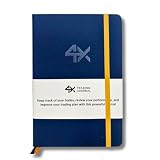
- BUILT FOR YOUR MARKET, FUTURES, STOCKS, FOREX, OPTIONS & CRYPTO: 4X is a mindset and process journal, not a strategy tool tied to one instrument. The plan, the trade log, the deep dive and the weekly review work the same whether you trade ES, EURUSD, SPY or BTC. Traders use it across all five markets every day.
- THE 2026 EDITION, REBUILT FROM TRADER FEEDBACK: Same trusted system, better in every way. An extra daily page for more room to log the session. Weekly reviews now grouped with each week's trades, so no more flipping back and forth. Crisp, darker print that's easy on the eyes after hours on a screen. A Quick-Start QR that scans straight to step-by-step instructions.
- NOT A NOTEBOOK, A COMPLETE 12-WEEK SYSTEM: Start with a one-time 9-part Trading Plan (your market, setups, risk rules and discipline checklist). Then twelve identical weeks: five Daily Logs, five Deep Dive trade pages, and a two-page Weekly Review. 189 guided pages, roughly 80 trades. Guided prompts walk you through every step. You never stare at a blank page.
- RATE YOUR EXECUTION, NOT YOUR RESULT: Your platform tracks the P&L. Nothing tracks the why. Log energy, sleep and mindset before the open; grade every trade A to F on whether you followed your plan, not on whether it won; then face the pattern every weekend with START / STOP / IMPROVE / CONTINUE. That review habit is the edge. You're 42% more likely to hit a goal you've written down.
- BUILT TO LAST, ARRIVES GIFT-READY: Vegan-leather hardcover, 100gsm bleed-resistant paper, two ribbon markers and an elastic closure band. Bound to lay flat so you're not fighting the spine while you write. 189 pages, 5.75" x 8.5", carries in a bag. Ships in a premium gift box: the gift every trader in your life actually wants.
CloddsBot: directory-listed features need verification
A third-party open-source bot directory describes CloddsBot as a multi-market agent with a Polymarket client, real-time feeds, and several automated strategies. The directory lists a September 12, 2026 release of v1.9.1. These are directory-reported details, not an independent assessment of code quality, safety, or current release status. Check the repository and release history before deciding what the bot actually supports. The directory does not establish that CloddsBot is profitable. See the directory listing for CloddsBot.
Independent reader supportYour contribution helps us test, update, and keep practical guides available for everyone.How to assess a bot before using it
Do not compare projects only by the number of strategies or APIs they advertise. Check what the code supports and what evidence exists for its behavior.
- Purpose and strategy: Determine whether it is designed for market making, directional forecasting, copy trading, arbitrage research, or data collection.
- Markets and time horizon: Identify the supported market types and durations. A system built around short-horizon crypto markets may not suit broader event markets.
- Data and integrations: Check how it discovers markets, which feeds it consumes, how it reads order books, and whether its real-time connections are implemented in the code.
- Execution and risk controls: Inspect paper mode, order handling, position or spend limits, cancellation behavior, and safeguards. A feature description alone does not verify that these protections work as intended.
- Evidence quality: Look for reproducible code and data, out-of-sample evaluation, clear separation between paper and live results, and explicit assumptions for fees, slippage, queue position, and fills.
For a personal-finance decision, the distinction between a working integration and a demonstrated edge matters. A bot may be useful for collecting data or testing an idea even if it has no reliable record of profitable execution. OpenMarket’s reported result is a concrete reminder to evaluate outcomes after trading costs rather than treating model accuracy as a substitute for returns.
Quick Recap
Product prices and availability are accurate as of the date/time indicated and are subject to change. Any price and availability information displayed on Amazon at the time of purchase will apply.
What’s actually slowing this PC down?
Pick the symptom - the matching free tool is one click away.




