Do these 3 things before closing this tab:
1Clear out junk files and repair common Windows errors2Scan for outdated or missing drivers - takes under a minute3Repair Windows errors before they cause bigger problemsThe best budgeting method is the one you can keep using. If you want broad guardrails, start with a percentage rule; if you lose track of spending, try zero-based budgeting; if bills leave you short before payday, map cash flow by date. You can also combine approaches. First get a realistic picture of your income, spending, and bill due dates, then choose a method that addresses your main friction and review it after a month.
What a budget does—and what it needs to work
A budget is a plan for comparing income with expenses over a period, usually a month. It can help you see whether money is likely to last until the next paycheck and make room for goals such as saving or paying down debt. As consumer.gov explains, a budget is a plan you write down to decide how to spend your money each month.
The plan is only as useful as its inputs. The Consumer Financial Protection Bureau (CFPB) recommends recording income, tracking spending, and checking bill due dates before settling on a working budget. If a full spending review feels daunting, the CFPB suggests starting with a week of records and building from there. Use pay stubs, bills, bank records, a spreadsheet, notes, or a worksheet; buying a planner is not required.
To make a budget, gather income and expense information, note when money arrives and bills are due, and choose a method below. A monthly total alone can hide a cash-flow problem: your income may cover the bills overall, but the bills may come due before the next paycheck.
The Tool Desk
Outbyte Driver Updater FREEScan for outdated or missing drivers - takes under a minuteDriver Scan →Outbyte PC Repair FREERepair Windows errors before they cause bigger problemsFix Now →#1 Best Overall
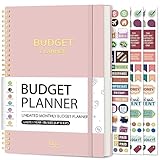
- Effective Budget Planning - Take control of your finances with the budget account book. This comprehensive planner allows you to plan and track your income, expenses, savings, and financial goals in one convenient place. With its intuitive layout and easy-to-use sections, you can stay organized and make informed decisions to achieve financial success.
- User-Friendly Layout - The budget planner features a user-friendly layout designed for easy navigation and organization. Each month, you'll find dedicated budget pages where you can set financial goals, track your income, and plan your expenses. Additional sections include debt trackers, savings goals, bill payment trackers, and more, making it simple to stay on top of your finances.
- Undated Monthly Calendar & Bonus Stickers - Featuring undated calendar each month, you'll have ample space to mark paydays, bills due, appointments, and important dates. Say goodbye to difficult writing spaces. Plus, we've included 3 cute sticker sheets that allow you to personalize your financial organizer and make budgeting more fun. Dates are not pre-printed and are completed by the user.
- Reliable and Convenient Design - Our monthly budget planner is designed for your convenience and built to last. The elastic band keeps everything securely in place, and the dual-sided pocket provides extra storage. Experience a budget planner that combines practicality and durability.
- Master Budgeting with Ease - Our financial planner includes a complete guidebook that provides valuable insights and instructions for optimal usage. From setting financial goals to tracking expenses, this guidebook offers step-by-step guidance and practical tips. Whether you're new to budgeting or an experienced user, this resource will help you make the most of your budget planner, empowering you to achieve financial success.
Which of the seven budgeting methods fits your main problem?
These approaches solve different problems rather than competing for a single “best” spot. Some are full budgeting frameworks; a bill calendar is a timing layer, while values-led and reverse budgeting are practical variations rather than formally standardized systems.
| Method | Best fit | Tracking effort | What it makes visible |
|---|---|---|---|
| 50/30/20 | You want broad spending guardrails | Low | Overall balance across needs, wants, and savings or debt goals |
| Zero-based | You want to know where every dollar is assigned | High | Detailed planned uses and differences from actual spending |
| Envelope | A few spending categories repeatedly run high | Moderate | Category limits and remaining funds |
| Pay yourself first | You keep postponing savings | Low to moderate | Progress toward a savings goal |
| Bill calendar or cash-flow plan | Your balance gets tight before payday | Moderate | Income dates, due dates, and tight weeks |
| Values-led or priority-based | Strict rules feel disconnected from your life | Varies | Whether spending reflects household priorities |
| Reverse or minimalist budget | Essentials are predictable and you want low effort | Low | Whether essentials and a set savings amount fit before discretionary spending |
1. The 50/30/20 budget: broad guardrails
This rule of thumb divides take-home income among needs, wants, and savings or debt goals. The labels and ordering vary. One CFPB worksheet describes 50% for needs, 20% for savings and debt payments, and no more than 30% for wants; other descriptions use 50% needs, 30% wants, and 20% savings goals. Check which version you are using, what counts in each category, and whether the percentages apply to take-home pay.
Try this method if you want a simple structure without tracking every purchase. It can be too broad to reveal overspending in a particular category, and the suggested percentages may not fit high housing costs, debt, or irregular income. Treat the split as a starting point, not a pass-or-fail test: classify your actual expenses and adjust the proportions to fit your situation. The CFPB notes that not everyone can follow the rule.
Rank #2

- Effective Budget Planning - Take control of your finances with the budget account book. This comprehensive planner allows you to plan and track your income, expenses, savings, and financial goals in one convenient place. With its intuitive layout and easy-to-use sections, you can stay organized and make informed decisions to achieve financial success.
- User-Friendly Layout - The budget planner features a user-friendly layout designed for easy navigation and organization. Each month, you'll find dedicated budget pages where you can set financial goals, track your income, and plan your expenses. Additional sections include debt trackers, savings goals, bill payment trackers, and more, making it simple to stay on top of your finances.
- Undated Monthly Calendar & Bonus Stickers - Featuring undated calendar each month, you'll have ample space to mark paydays, bills due, appointments, and important dates. Say goodbye to difficult writing spaces. Plus, we've included 3 cute sticker sheets that allow you to personalize your financial organizer and make budgeting more fun. Dates are not pre-printed and are completed by the user.
- Reliable and Convenient Design - Our monthly budget planner is designed for your convenience and built to last. The elastic band keeps everything securely in place, and the dual-sided pocket provides extra storage. Experience a budget planner that combines practicality and durability.
- Master Budgeting with Ease - Our financial planner includes a complete guidebook that provides valuable insights and instructions for optimal usage. From setting financial goals to tracking expenses, this guidebook offers step-by-step guidance and practical tips. Whether you're new to budgeting or an experienced user, this resource will help you make the most of your budget planner, empowering you to achieve financial success.
2. Zero-based budgeting: give every dollar a purpose
With zero-based budgeting, assign income to bills, everyday expenses, savings, and debt goals until planned income minus planned uses equals zero. A zero balance here does not mean spending all your money: saving and debt repayment are uses too. The goal is to leave no income unassigned.
Free tools Windows power users keep installed
One-click scans. No signup required.
This approach can help if you keep asking where your money went or want detailed visibility. It takes more work than a broad percentage rule because you must list expenses, assign amounts, compare the plan with actual spending, and adjust when circumstances change.
3. Envelope budgeting: put limits on categories
Set a spending limit for each category, such as groceries, entertainment, or shopping, and use only that category’s allocation. If one category runs out, you must either stop spending in it or consciously move money from another category.
Rank #3

- Effective Budget Plan Book – Take control of your finances with the SUNEE budget account book. This all-in-one budget planner allows you to plan and track your income, expenses, savings, and financial goals. Its intuitive layout and easy-to-use sections help you stay organized and make smart decisions to reach financial success. Our financial planner also included a comprehensive guidebook with valuable tips and instructions to help you get the most out of your budgeting planner.
- Full-Page Calendars – Each month’s full-page calendar provides plenty of space to track paydays, bills due dates, appointments, and important events. No more cramped boxes or tight writing areas, you can easily plan and organize your schedule at a glance.
- Colorful Pages Layout and Tabs – This vibrant budget planner features a user-friendly design for easy navigation and organization. Each month includes dedicated budget pages to set financial goals, track income, and plan expenses. Additional sections like debt trackers, savings goals, and bill payment trackers make managing your finances a breeze. The colorful backgrounds on each page offer clear, instant visibility.
- Bonus 4 Stickers and Convenient Design – This monthly budget planner is built for convenience and durability. Water-resistant cover protects against spills, while the elastic band keeps everything secure, and the dual-sided pocket offers extra storage. Plus, we’ve included 4 adorable sticker sheets to personalize your planner and make budgeting more enjoyable. Experience a budget planner that combines practicality with lasting quality.
- UNDATED DESIGN & 1 YEAR USE - Undated finance books start with 1 page-financial goals, 1 page-Mind Map, 1 page-Financial Strategy, 1 page-Tactics, 2 pages-Important Dates, 4 pages-Bill Tracker, 4 pages-Saving Tracker, 8 pages-Debt Tracker, followed by 12 Months(10 pages per month, 1 unique color for each month). 2 pages-Christmas Budgeting, 2 pages-Yearly Summary, 2 pages-Check Register and 12 pages-Notes(dotted). It is UNDATED, so you could start at any time, suitable for 1 year use.
Envelopes can hold cash, or the same idea can be applied with digital wallets or separate category balances. It can help when a few categories tend to exceed your intentions. Cash can be inconvenient, digital tools differ, and changing a limit means making a deliberate tradeoff elsewhere. Start with only the categories that need limits; decide separately how to handle electronic bills and transfers.
4. Pay yourself first: save at payday
Choose an amount for a savings or investing goal and set it aside when you are paid, before deciding how to spend what remains. You can treat the transfer like a bill and automate it after payday.
This can suit someone whose routine expenses are manageable but who keeps putting off saving. By itself, it does not show why spending is running high or guarantee that the remaining money will cover every bill. Pair it with a bill calendar or category limits if cash flow is tight.
Rank #4
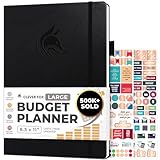
- Achieve Financial Mastery & Goals – master home finance, boost savings, and manage cash flow seamlessly with Clever Fox expense tracker notebook – guiding you to your financial freedom.
- Maximize Financial Goals – This large bill tracker notebook is more than a tool—it's your strategy for financial success. Break down big goals into manageable tasks and take small steps.
- Effortlessly Manage Spending, Debts, and Savings – This 12-month finance planner features an undated format with monthly calendars, budget plans, expense trackers, 8 savings and 12 debt trackers.
- Sized at 8.3x11 inches, this budgeting book includes a vegan leather cover, premium 120gsm paper, pen holder, elastic band, triple bookmarks, receipt pocket, budgeting stickers & detailed user guide.
- 60-Day Promise – Not satisfied with your mini budget planner? We'll refund or replace your budgeting planner. Simply message us for an easy return of your pocket-sized monthly budget planner.
5. Bill-calendar budgeting: plan around dates
Write down when income arrives and when each bill is due. Then identify which paycheck will cover each bill and whether any week is likely to be tight. The CFPB recommends a bill calendar because income and bill timing can be mismatched.
This is especially useful with weekly, biweekly, or irregular pay, or when many bills fall before payday. A monthly plan can add up while your account still runs short at a particular point in the month. Calendar planning helps you see the timing; it cannot by itself fix an income shortfall. Use it as a layer with another method if you also need category limits or a savings plan.
6. Values-led budgeting: protect what matters to you
After accounting for obligations and goals, decide which spending priorities matter most to your household and make room for them deliberately. That might mean protecting a particular family activity, hobby, or other priority in the plan rather than trying to eliminate all discretionary spending.
Best Value

- Effective Budget Planning - Take control of your finances with the budget account book. This comprehensive planner allows you to plan and track your income, expenses, savings, and financial goals in one convenient place. With its intuitive layout and easy-to-use sections, you can stay organized and make informed decisions to achieve financial success.
- User-Friendly Layout - The budget planner features a user-friendly layout designed for easy navigation and organization. Each month, you'll find dedicated budget pages where you can set financial goals, track your income, and plan your expenses. Additional sections include debt trackers, savings goals, bill payment trackers, and more, making it simple to stay on top of your finances.
- Undated Monthly Calendar & Bonus Stickers - Featuring undated calendar each month, you'll have ample space to mark paydays, bills due, appointments, and important dates. Say goodbye to difficult writing spaces. Plus, we've included 3 cute sticker sheets that allow you to personalize your financial organizer and make budgeting more fun. Dates are not pre-printed and are completed by the user.
- Reliable and Convenient Design - Our monthly budget planner is designed for your convenience and built to last. The elastic band keeps everything securely in place, and the dual-sided pocket provides extra storage. Experience a budget planner that combines practicality and durability.
- Master Budgeting with Ease - Our financial planner includes a complete guidebook that provides valuable insights and instructions for optimal usage. From setting financial goals to tracking expenses, this guidebook offers step-by-step guidance and practical tips. Whether you're new to budgeting or an experienced user, this resource will help you make the most of your budget planner, empowering you to achieve financial success.
This is a flexible framing, not a standardized formula. It may be more sustainable if rigid rules do not fit your life, but “spend on what matters” can become vague unless you turn priorities into amounts and review them. Choose a small number of priorities and include them alongside bills and goals.
7. Reverse or minimalist budgeting: cover the essentials, then simplify
This is a practical low-tracking variation, not a distinct standardized method. First cover essential expenses, set a realistic savings amount, and give the remaining discretionary money a broad boundary rather than logging every purchase. It combines the idea of saving first with a simpler limit for the rest.
It can suit people with predictable, manageable essential costs who want a lighter routine. It may not expose recurring overspending or irregular bills. If the discretionary remainder repeatedly disappears too quickly, add category limits; if bills cluster before payday, use a calendar.
Independent reader supportYour contribution helps us test, update, and keep practical guides available for everyone.How to choose a budgeting method
Start with the problem you want the budget to solve. You do not have to use only one method: for example, you could use a percentage rule for the overall plan and automate savings, or add a bill calendar to a zero-based budget. Choose the smallest amount of structure that makes the problem visible and manageable.
Outdated Drivers Are Slowing You Down
One free scan finds every outdated or missing driver and matches the right update for your exact hardware.Free scan · exact hardware matchWindows Errors? Fix Them Before They Spread
Repair common Windows errors and clear accumulated junk for a smoother, more stable PC - no reinstall needed.Free scan · no reinstall- Want broad guardrails? Try 50/30/20, adjusting the percentages to your actual costs.
- Keep wondering where your money went? Try zero-based budgeting to assign and review every dollar.
- Overspend in a few categories? Try envelopes for those categories rather than restricting every purchase.
- Keep postponing savings? Set a payday transfer with pay-yourself-first.
- Your monthly totals look fine, but you run short before payday? Add a bill calendar and match bills to income dates.
- Strict rules feel disconnected from your life? Build a values-led plan with specific amounts for a few priorities.
- Have predictable expenses and want less tracking? Try the reverse-budget variation, then check whether actual spending fits.
How to make a budget you can adjust
- Gather the numbers. Collect pay stubs, bills, and information about all income sources. For a starting point, consumer.gov recommends estimating monthly income using the prior year when you are not paid monthly.
- Record actual spending. Review transactions or keep a log. If a full month feels overwhelming, begin with a week and continue recording until you have a useful picture.
- Map due dates against paydays. Put income dates and bill due dates on one calendar. This helps distinguish a timing gap from a spending problem.
- Choose one method or a simple hybrid. Base the choice on your main friction, not on an assumption that one method works for everyone.
- Review after a month. Compare the plan with what actually happened and adjust amounts or the method for the next month. A useful budget can change when income, expenses, or priorities change.
The CFPB’s practical advice is to “Create a tool that works for you.” The right tool may be a written budget, worksheet, spreadsheet, or notes app; what matters is that it reflects your real cash flow and is usable enough to revisit.
Quick Recap
Product prices and availability are accurate as of the date/time indicated and are subject to change. Any price and availability information displayed on Amazon at the time of purchase will apply.




