Quick wins for a faster PC:
Scan for outdated or missing drivers - takes under a minuteDriver Scan →Repair Windows errors before they cause bigger problemsFix Now →Fix the driver behind crashes, sound loss and screen glitchesFind Drivers →To lower your electric bill, start with the bill itself: identify your largest energy uses, then choose the changes that fit your home and equipment. These six energy-saving ways—from adjusting heating and cooling to replacing heavily used bulbs—can help, but savings vary with climate, utility rates, home construction, equipment and household habits. The U.S. Department of Energy says renters can make some efficiency improvements too, though changes to the property may require a landlord’s approval.
Start with your bill and your biggest energy uses
Look at your recent bills for seasonal patterns and compare electricity use, if shown, rather than focusing only on the dollar amount. Your utility may also offer an online usage breakdown or meter data. Heating and cooling, water heating, lighting and appliances can all contribute; the largest opportunity depends on your home and how you use it. The DOE’s overview explains why efficiency matters: Why Energy Efficiency Matters.
There is no universal savings ranking for the six actions below. When comparing options, consider the upfront cost, installation effort, compatibility with existing equipment, renter suitability and the energy use you have actually observed. DOE’s general estimates are not guarantees for an individual home, and they should not be added together as though they predict a combined bill reduction.
1. Adjust heating and cooling schedules
Set your thermostat to reduce heating or cooling when you are asleep or away, if doing so suits your household and system. DOE says setting the temperature back 7–10°F for eight hours a day can save up to 10% on heating. That is a potential estimate under the stated schedule, not a promised reduction in your total electric bill; actual results depend on the home, climate, heating fuel and usage.
#1 Best Overall

- An Alexa thermostat - Amazon Smart Thermostat is an easy way to switch from a traditional thermostats for homes and help reduce energy usage.
- Create comfort zones throughout your home by connecting to select Alexa devices to automatically adjust heating and cooling based on temperature readings or presence detection.
- Save money and energy - After purchase, Amazon will send you an email with details about home thermostat rebates that may be available from energy providers in your area.
- Save energy - According to EPA estimates, ENERGY STAR certified thermostats save an average of $90 on yearly energy bills.
- Programmable thermostat and automatic control - Create your own home, away and sleep schedules, or have Alexa automatically control the temperature with Alexa+ advanced features.
Use controls appropriate for your equipment. Heat pumps may need different scheduling or thermostat settings than other systems, so follow the manufacturer’s guidance or consult a qualified HVAC professional before changing how the system operates. Renters can try schedule changes where they control the thermostat, but should avoid settings that conflict with lease requirements or equipment instructions. DOE’s renter guidance covers thermostat setbacks and other efficiency steps.
2. Replace frequently used bulbs with LEDs
Prioritize bulbs in fixtures used for several hours a day; replacing a rarely used bulb is less likely to make a noticeable difference. DOE estimates that the average household can save more than $200 per year by using LED lighting. This is a broad average-household estimate, not a guarantee for your household or a prediction of savings from replacing one bulb.
Rank #2

- PRIVACY PROTECTION*: Sensi won’t sell your personal information to third parties
- EASY DIY INSTALLATION: Use the built-in level and step-by-step app instructions for a quick installation. Works with HVAC equipment found in most homes. Common wire (c-wire) is not required in most applications
- SAVE ABOUT 23% ON HVAC ENERGY*: The ENERGY STAR-certified Sensi smart thermostat can help you save energy with features like flexible scheduling, remote access and usage reports
- SIMPLE CONFIGURATION: Looks and feels like a thermostat. Has buttons and fits the same space as a traditional thermostat so you don’t have to patch and paint your walls
- SMART MAINTENANCE: Sensi can help monitor the performance and efficiency of your HVAC system by delivering valuable usage reports, alerts about your equipment, and maintenance reminders like filter replacement
When choosing an LED, check that its base fits the fixture, its brightness suits the room, and its color temperature and dimming capability meet your needs. Look for ENERGY STAR certification as a useful efficiency cue, and confirm that the bulb is compatible with any dimmer or enclosed fixture. DOE’s Home Energy Checklist includes LED lighting guidance.
3. Seal major drafts safely
Air leaks around windows and doors can make a home less comfortable and increase heating or cooling demand. Weatherstripping and caulk may help with suitable gaps; choose materials for the location and follow product directions. Renters should get the landlord’s approval before making permanent changes.
Rank #3

- 【Notice】Buyers should thoroughly examine the installation and wiring instructions depicted in the images before buying. It is recommended to exercise caution if you lack experience in installation to avoid potential problems like product malfunction or incompatibility due to incorrect purchases. Note that the base can only be attached with a maximum of 2 to 5 wires, and connections with 6 to 8 wires are not suitable.
- Incompatible Systems: Multistage Heat & Cooling, 3-wire Hydronic (Hot Water), Heat Pump with Auxiliary Heating, Heat Pump w/o Auxiliary Heating, Dual Fuel/Hybrid Multistage Heating, Mini Split Systems, RV Thermostat, Convectors/Radiant Ceiling Heat and Electric Baseboard Heat (120-240 Volts)
- Compatible Systems: Single-Stage Heating & Cooling, Gas/Oil/Electric Furnace (Heat only), Boiler Radiant (Heat only), Furnace Forced-Air (Heat Only), Gas Fireplace (24 Volts), Cooling Only
- Non-Programmable Design: 3001-Blue non-programmable thermostat for house conventional single-stage systems up to 1 heat/1 cool, to control the temperature in a room
- Easy to Install and Use: Large terminal blocks with universal sub-base, can be installed within 30 minutes, clear, easy-to-read backlight LCD display and easy controls make for a user-friendly experience
Do not seal vents or openings that are required for safe operation or ventilation. More involved air sealing—especially work on ducts—may need a professional. DOE says a typical house can lose 20%–30% of duct air through leaks, holes and poor connections; that figure describes typical-house duct-system losses, not every home. See DOE’s renter guidance for air-sealing advice and Home Upgrades for duct information.
4. Maintain heating and cooling equipment
Inspect and clean or replace HVAC filters as the equipment manufacturer directs. A clogged filter can interfere with airflow, but changing a filter alone does not guarantee energy savings or fix other system problems. The right filter type and replacement schedule depend on the equipment and household conditions.
Rank #4

- Save up to 23% every year on heating and cooling costs, adjusts to your set schedule to save energy when you’re gone and optimize comfort when you’re home. Compared to a hold of 72
- Compatible with 85% of systems, check your system’s compatibility with our online ecobee Compatibility Checker on the ecobee support page
- Change your temperature by easily tapping the color touchscreen or using the ecobee app. Plus, free software upgrades ensure you get the best out of your Smart Thermostat Essential, for years to come
- Automatically adjusts to your set schedule to save energy when you’re gone and optimize comfort when you’re home. Keep track of your energy consumption when you're on the go on the ecobee app
- Easy DIY install. No C Wire, no problem. Get the ecobee Power Extender Kit (PEK) for homes without a C-Wire and keep your walls looking nice with our trim kit – both sold separately
Arrange professional maintenance appropriate to your system, particularly if airflow is weak, performance changes or the equipment needs attention beyond routine filter care. Do not open or repair components you are not qualified to service. DOE’s Home Energy Checklist includes filter maintenance among its recommended checks.
Independent reader supportYour contribution helps us test, update, and keep practical guides available for everyone.5. Reduce water-heating energy
Water heating accounts for about 14%–25% of home energy consumption, according to DOE’s general estimate; your household’s share may differ. Use less hot water where practical, and consider insulating accessible hot-water pipes if the material and installation are suitable for your system.
What’s actually slowing this PC down?
Pick the symptom - the matching free tool is one click away.
Best Value
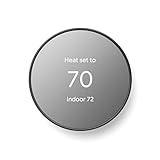
- ENERGY STAR certified smart thermostat for home that helps you save energy and stay comfortable.Connectivity : Wi-Fi - 802.11b/g/n 2.4 GHz, 802.11a/n 5 GHz Wi-Fi., Wireless interconnect : Bluetooth Low Energy Please refer to the product description section below for all applicable legal disclaimers.Product note: You can also check your system’s compatibility before purchasing a Nest thermostat with our online Nest Compatibility Checker on the Google Nest support page
- The Nest Thermostat is designed to work without a C wire in most homes, but for some systems, including heating only, cooling only, zone controlled, and heat pump systems, you’ll need a C wire or other compatible power accessory
- Nest Thermostat turns itself down when you leave, so you don’t waste energy heating or cooling an empty home. Lock feature: No
- Programmable thermostat that lets you create an energy efficient schedule in the Google Home app on your Android or iPhone
- Remote control lets family members change the thermostat temperature from anywhere on a phone, laptop, or tablet[1]
DOE’s checklist recommends a 120°F water-heater setting. Before changing the setting, check the equipment instructions and consider household health and safety needs; consult a qualified professional if you are unsure. Do not adjust settings or install insulation in ways that conflict with manufacturer guidance. The DOE checklist provides details on these measures: Home Energy Checklist.
6. Choose efficient replacements when equipment is due
When an appliance, heating or cooling system, or water heater needs replacement, compare efficient options that suit your home and usage. Check compatibility, installation requirements, operating costs and the total price—not just the efficiency label. A system that works well in one home may be unsuitable for another, so consider home-specific advice for larger heating and cooling changes. DOE’s Home Upgrades page discusses upgrade considerations.
A functioning appliance or system is not automatically worth replacing early. Before making a major purchase, compare its condition and energy use with the cost and expected fit of a replacement. No single upgrade has a guaranteed payback period for every household.
Check renter permissions and local rebates
Renters can often make reversible changes, such as adjusting a thermostat schedule they control or replacing bulbs in fixtures they use. Ask the landlord before caulking, adding insulation, altering equipment or making other property changes. DOE summarizes renter-focused options on its Renters page.
DOE’s Home Energy Rebates programs cover eligible upgrades such as insulation, air sealing, heating and cooling, water heaters, duct sealing, appliances and lighting. Availability is limited to select states, and eligibility and status vary. Check the Home Energy Rebates Program page and your state or territory energy office before budgeting for a rebate; do not treat one as guaranteed.
Quick Recap
Product prices and availability are accurate as of the date/time indicated and are subject to change. Any price and availability information displayed on Amazon at the time of purchase will apply.




