There is no single best hybrid-cloud host for every organization. Microsoft Azure is the strongest fit for Microsoft-heavy estates; AWS for AWS-consistent deployments; IBM for complex enterprise environments; Oracle for Oracle databases and ERP; Rackspace for managed multi-provider operations; and OVHcloud for teams prioritizing flexible infrastructure and cost visibility. These providers do different jobs, so the right choice depends on whether you need cloud services running locally, a management layer across existing systems, or an outside team to operate a mixed environment.
This is an April 2026 editorial snapshot. Product and pricing pages reviewed on August 18, 2026 can establish current positioning, but do not independently verify what prices or product labels appeared in April 2026. The comparisons below therefore avoid presenting current entry prices as historical April prices.
What hybrid-cloud hosting means
Hybrid cloud combines private or on-premises infrastructure with public-cloud resources in a deliberately connected and managed operating environment. “Hosting” is used broadly here: the providers include cloud platforms that extend into customer sites, management services that govern existing infrastructure, and operators that manage a mixed estate.
- Hybrid cloud versus multicloud: Hybrid joins private or on-premises infrastructure with public cloud. Multicloud uses services from more than one cloud provider; an organization can be one without being the other.
- Dedicated hosting versus private cloud: A dedicated server reserves physical hardware for a customer. A private cloud adds a virtualized, provisioned environment and management capabilities; dedicated hardware alone is not a hybrid architecture.
- Colocation versus managed hybrid cloud: Colocation supplies facility space, power, and connectivity for customer equipment. It does not necessarily supply cloud control, workload management, or ongoing operations.
- Hybrid Kubernetes versus hybrid cloud: Kubernetes clusters can run in several locations, but that alone does not provide unified identity, policy, monitoring, infrastructure lifecycle, or support.
- Backup versus production hybrid: A cloud backup or disaster-recovery copy can support continuity without making the production environment a hybrid-cloud architecture.
- Cloud-connected hardware versus local cloud services: A network connection to a cloud is different from running cloud infrastructure or services at a customer site.
A VPN, dedicated server, or cloud backup is not enough to establish a hybrid-cloud offering. Look for the actual management, deployment, connectivity, and operational capabilities the workload needs.
#1 Best Overall

- Entry-level NAS Personal Storage:UGREEN NAS DH2300 is your first and best NAS made easy. It is designed for beginners who want a simple, private way to store videos, photos and personal files, which is intuitive for users moving from cloud storage or external drives and move away from scattered date across devices. This entry-level NAS 2-bay perfect for personal entertainment, photo storage, and easy data backup (doesn't support Docker or virtual machines).
- Set Your Devices Free, Expand Your Digital World: This unified storage hub supports massive capacity up to 64TB.*Storage drives not included. Stop Deleting, Start Storing. You can store 22 million 3MB images, or 2 million 30MB songs, or 43K 1.5GB movies or 67 million 1MB documents! UGREEN NAS is a better way to free up storage across all your devices such as phones, computers, tablets and also does automatic backups across devices regardless of the operating system—Window, iOS, Android or macOS.
- The Smarter Long-term Way to Store: Unlike cloud storage with recurring monthly fees, a UGREEN NAS enclosure requires only a one-time purchase for long-term use. For example, you only need to pay $459.98 for a NAS, while for cloud storage, you need to pay $719.88 per year, $2,159.64 for 3 years, $3,599.40 for 5 years. You will save $6,738.82 over 10 years with UGREEN NAS! *NAS cost based on DH2300 + 12TB HDD; cloud cost based on 12TB plan (e.g. $59.99/month).
- Blazing Speed, Minimal Power: Equipped with a high-performance processor, 1GbE port, and 4GB RAM on Board, this NAS handles multiple tasks with ease. File transfers reach up to 125MB/s—a 1GB file takes only 8 seconds. Don't let slow clouds hold you back; they often need over 100 seconds for the same task. The difference is clear.
- Let AI Better Organize Your Memories: UGREEN NAS uses AI to tag faces, locations, texts, and objects—so you can effortlessly find any photo by searching for who or what's in it in seconds. It also automatically finds and deletes similar or duplicate photo, backs up live photos and allows you to share them with your friends or family with just one tap. Everything stays effortlessly organized, powered by intelligent tagging and recognition.
Which hybrid-cloud model do you need?
Public cloud extended to a site
Choose this model when workloads must run near a factory, hospital, store, or other location but the organization wants a public-cloud provider’s infrastructure and operating patterns. AWS Outposts and Azure Local-related offerings are examples to evaluate; confirm the exact services, hardware, location, and connection requirements for the design.
Central management of existing infrastructure
A management plane can inventory and govern servers, virtual machines, Kubernetes clusters, or databases that remain in existing data centers or other clouds. Azure Arc is a prominent example. This can improve visibility and policy consistency, but it does not automatically transform every connected system into a fully managed cloud service.
Managed hybrid operations
When internal teams lack capacity to run infrastructure across multiple environments, a managed provider can help design, migrate, connect, monitor, secure, and operate the estate. Define the scope precisely: “managed” can mean anything from infrastructure monitoring to patching, backup, incident response, and application support.
Database or ERP hosted near the customer
Some workloads are difficult to move because of database performance, licensing, application dependencies, or data-location requirements. Oracle’s customer-site and dedicated models are particularly relevant to Oracle-centric estates. Compare them with a broader private-cloud design only after mapping database licenses, support, interconnect, and operational responsibilities.
Disaster recovery or cloud bursting
Cloud-based recovery and extra capacity during demand spikes can be part of a hybrid design, but they are not a substitute for testing failover, recovery time, data replication, and application behavior when a site-to-cloud connection fails.
How the six providers compare
This is a fit-based shortlist, not a universal performance ranking. Enterprise platforms, managed operators, and infrastructure providers are not interchangeable.
| Provider | Best fit | Hybrid model | Managed operations | Pricing signal | Main trade-off |
|---|---|---|---|---|---|
| Microsoft Azure | Microsoft-heavy organizations | Azure services and management extended to customer and multicloud environments | Primarily platform tools; scope depends on separately selected services or partners | Consumption, licensing, and infrastructure costs; no universal hybrid starting price established | Costs and responsibilities span many services and licenses |
| AWS | AWS-native estates and edge deployments | AWS infrastructure and services extended to on-premises and edge locations | Primarily platform tools; customer operations remain a design decision | Outposts is an enterprise deployment, not a comparable standard VM starting price | Hardware, capacity, support, networking, and cloud usage must be modeled |
| IBM Cloud | Regulated, Red Hat, and mission-critical estates | Distributed cloud services across on-premises, colocation, cloud, and other locations | Enterprise services and consulting can support complex operations | No reliable universal public starting price established | Often sales-led and excessive for simple VM needs |
| Oracle Cloud Infrastructure | Oracle Database, Exadata, and ERP workloads | Public, dedicated, hybrid, multicloud, and customer-site options | Depends on the product and contract | Customer-premises and dedicated products are typically quote-led | Benefits are strongest for Oracle-centric organizations |
| Rackspace Technology | Organizations seeking a managed, mixed-cloud operator | Connects public, private, dedicated, on-premises, and third-party environments | Managed services are central; confirm scope and service boundaries | Quote-based on infrastructure, cloud mix, and support scope | Managed fees and contract details affect value |
| OVHcloud | Technical teams seeking infrastructure choice and cost visibility | Public cloud, private cloud, bare metal, and hosted virtualization | Product-dependent; do not assume every deployment is fully managed | Some products have public entry signals; a complete hybrid deployment is not represented by a VPS price | Smaller advanced-service catalog than major hyperscalers |
1. Microsoft Azure: best for Microsoft-centric estates
What it offers
Azure Arc projects eligible non-Azure and on-premises resources into Azure Resource Manager. It supports management of servers, Kubernetes clusters, databases, VMware vSphere, and SCVMM-managed virtual machines. Azure Local and related Azure Stack offerings bring Azure services and management patterns to customer-controlled infrastructure.
Rank #2

- 【Advanced Home Data & Media Hub】For advanced home users who need phone backup, file storage, and centralized data management. Centralize family photos, 4K videos, movies, computer backups, and personal files in one place while running multiple apps for home entertainment and everyday data management. Suitable for households with growing digital libraries and multiple NAS use cases.
- 【Built for Creators, Media Servers & Advanced Apps】Powered by the Intel N100 Quad-Core CPU, 8GB DDR5 RAM, 2.5GbE networking, and dual M.2 NVMe slots, DXP2800 handles large files and heavier workloads with ease. Run Docker, virtual machines, and media server applications compatible with Plex—ideal for content creators, tech enthusiasts, and advanced home users managing 4K videos, RAW photos, personal media libraries, and multiple NAS apps.
- 【Up to 80TB for Growing Digital Libraries】 Supports up to 80TB of storage using two HDD bays and two M.2 NVMe SSD slots for family photos, movies, RAW photos, 4K videos, work files, and device backups. AI photo management supports recognition of people, objects, scenes, and locations, album organization, and duplicate photo detection. HDDs and SSDs are not included.
- 【AI-powered Home Surveillance】Turn DXP2800 into a centralized home surveillance hub by connecting compatible network cameras and storing recordings locally on your NAS. AI-powered features include Face Recognition, People Detection, and Pet Detection, helping advanced home users review important events more efficiently while managing home surveillance and personal data in one place.
- 【One data Center Across Your Devices】Keep files from desktops, laptops, phones, tablets, and other devices together instead of scattered across cloud accounts and external drives. Access, back up, organize, and share data across Windows, macOS, Android, iOS, web browsers, and compatible smart TVs—ideal for creators and advanced home users working across multiple devices.
Costs and trade-offs
Core Arc control-plane functions—including organization, tagging, Resource Graph, RBAC, and several VM-management functions—are offered at no additional charge; connected services such as Monitor and Defender for Cloud can incur separate charges. Check the Azure Arc core control-plane pricing and service-specific prices before estimating a deployment.
Azure Hybrid Benefit may reduce eligible Windows Server, SQL Server, and certain Linux-related costs depending on licenses, agreement, reservations, and configuration. Microsoft advertises savings of up to 85% in certain combinations; that is a conditional marketing claim, not a standard discount for every hybrid deployment. See Azure pricing and Hybrid Benefit information.
Who should choose it
Azure is a natural candidate for organizations built around Windows Server, SQL Server, Active Directory, Entra ID, Microsoft 365, or existing Azure commitments. Its governance and identity integration can simplify oversight across locations.
Who should be cautious
Arc is a management layer, not a conversion of every local workload into an Azure-managed service. Costs can become difficult to forecast when monitoring, security, connectivity, hardware, and consumption are combined. Azure Local also calls for qualified hardware, deployment planning, and support arrangements.
2. AWS: best for breadth and AWS-consistent hybrid deployments
What it offers
AWS describes its hybrid portfolio as extending infrastructure and services from public cloud to on-premises and edge locations. Its hybrid portfolio covers compute, networking, storage, security, identity, data integration, management, monitoring, and operations. AWS Outposts is its flagship on-premises infrastructure product; the broader multicloud and hybrid portfolio is also relevant when evaluating the full service mix.
The Tool Desk
Outbyte Driver Updater FREEFix the driver behind crashes, sound loss and screen glitchesFind Drivers →Outbyte PC Repair FREEClear out junk files and repair common Windows errorsFree Scan →Who should choose it
AWS is a strong fit for organizations already standardized on AWS APIs, IAM, containers, databases, and operational tools. It is worth evaluating for low-latency and local-processing workloads that need AWS-managed infrastructure near a facility or customer.
Who should be cautious
Outposts and related products are infrastructure-heavy enterprise deployments, not simple replacements for a low-cost VPS. Compare hardware, capacity, support, connectivity, and ongoing AWS use together. Verify the availability of the required hardware, services, and network design for the specific site.
Rank #3
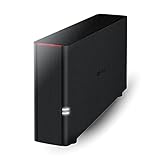
- Value NAS with RAID for centralized storage and backup for all your devices. Check out the LS 700 for enhanced features, cloud capabilities, macOS 26, and up to 7x faster performance than the LS 200.
- Connect the LinkStation to your router and enjoy shared network storage for your devices. The NAS is compatible with Windows and macOS*, and Buffalo's US-based support is on-hand 24/7 for installation walkthroughs. *Only for macOS 15 (Sequoia) and earlier. For macOS 26, check out our LS 700 series.
- Subscription-Free Personal Cloud – Store, back up, and manage all your videos, music, and photos and access them anytime without paying any monthly fees.
- Storage Purpose-Built for Data Security – A NAS designed to keep your data safe, the LS200 features a closed system to reduce vulnerabilities from 3rd party apps and SSL encryption for secure file transfers.
- Back Up Multiple Computers & Devices – NAS Navigator management utility and PC backup software included. NAS Navigator 2 for macOS 15 and earlier. You can set up automated backups of data on your computers.
3. IBM Cloud: best for regulated and mission-critical environments
What it offers
IBM positions its hybrid infrastructure across on-premises, colocated, cloud, and distributed environments. IBM Cloud Satellite provides a distributed-cloud model for provisioning managed cloud services in customer data centers and on other public clouds. See IBM’s hybrid infrastructure overview and hybrid-cloud solutions.
Who should choose it
IBM is a candidate for large enterprises with IBM or Red Hat commitments, OpenShift estates, regulated workloads, or complex mission-critical applications. Its combination of platform, infrastructure, and professional services can help organizations that need more than a self-service cloud account.
Do these 3 things before closing this tab:
1Scan for outdated or missing drivers - takes under a minute2Repair Windows errors before they cause bigger problems3Fix the driver behind crashes, sound loss and screen glitchesWho should be cautious
IBM offerings are often sales-led and quote-based, and can be excessive for a small environment with only a few virtual machines. Distinguish IBM Cloud platform services from consulting, managed infrastructure, and third-party hosting components when defining scope and accountability.
4. Oracle Cloud Infrastructure: best for Oracle databases and ERP
What it offers
Oracle’s distributed-cloud portfolio spans public, dedicated, hybrid, multicloud, and customer-data-center environments. Options include Exadata Cloud@Customer, OCI Dedicated Region, and Oracle Alloy, alongside database integrations with other clouds. Review the Oracle Cloud portfolio and its hybrid-cloud offerings.
Who should choose it
OCI is most compelling when Oracle Database, Exadata, Oracle ERP, or high-performance database requirements shape the architecture. Customer-site and dedicated models may suit workloads with strict placement or sovereignty requirements, subject to the exact service and contract.
Who should be cautious
Organizations without Oracle workloads or skilled Oracle administrators may not benefit from its strongest differentiators. Dedicated Region and customer-premises products are enterprise-scale and typically quote-based. Model licensing, support, interconnect, and database entitlements separately from compute.
Quick wins for a faster PC:
Fix the driver behind crashes, sound loss and screen glitchesFind Drivers →Clear out junk files and repair common Windows errorsFree Scan →5. Rackspace Technology: best for managed hybrid-cloud operations
What it offers
Rackspace describes a multicloud service spanning public, private, dedicated, on-premises, and third-party environments. RackConnect Global is designed to connect dedicated Rackspace infrastructure with other data centers and public clouds, including AWS, Azure, OpenStack, VMware, and Google Cloud. The Rackspace multicloud page advertises 24/7/365 support and a 99.95% connectivity uptime guarantee specifically for RackConnect Global; that figure is not a guarantee for every Rackspace service.
Rank #4

- Entry-level NAS Home Storage: The UGREEN NAS DH4300 Plus is an entry-level 4-bay NAS that's ideal for home media and vast private storage you can access from anywhere and also supports Docker but not virtual machines. You can record, store, share happy moment with your families and friends, which is intuitive for users moving from cloud storage, or external drives to create your own private cloud, access files from any device.
- Smart Photo Backup & AI Album: Automatically back up photos and videos from your phone in real time and keep growing family memories organized with AI-powered photo albums. Semantic search, custom learning, and recognition of people, objects, pets, and similar photos help you quickly find the moments you want. Duplicate photo removal also helps keep your library organized—ideal for families and users with large photo collections.
- User-Friendly App & Easy Setup: Connect quickly via NFC, set up simply and share files fast on Windows, macOS, Android, iOS, web browsers, and smart TVs. You can access data remotely from any of your mixed devices. What's more, UGREEN NAS enclosure comes with beginner-friendly user manual and video instructions to ensure you can easily take full advantage of its features.
- More Cost-effective Storage Solution: Unlike cloud storage with recurring monthly fees, A UGREEN NAS enclosure requires only a one-time purchase for long-term use. For example, you only need to pay $629.99 for a NAS, while for cloud storage, you need to pay $719.88 per year, $1,439.76 for 2 years, $2,159.64 for 3 years, $7,198.80 for 10 years. You will save $6,568.81 over 10 years with UGREEN NAS! *NAS cost based on DH4300 Plus + 12TB HDD; cloud cost based on 12TB plan (e.g. $59.99/month).
- Your Data, You Control:No third-party clouds, no hidden access, UGREEN NAS provides a more secure and private data storage solution. It stores data locally on your private hard drives and does automatic backups. Thus, you can keep full control over it. The advanced encryption is TRUSTe certified in the United States and is awarded the first (and only) ETSI EN 303 645 certification mark for NAS products by TÜV SÜD Group.
Who should choose it
Rackspace is worth considering when internal operations capacity is limited, the estate spans several platforms, or the organization wants a managed service relationship for migration, monitoring, security, and ongoing operations. Gartner Peer Insights lists Rackspace among managed hybrid-cloud hosting providers; its market page describes the category’s focus on management complexity, modernization, cost optimization, and compliance.
Who should be cautious
Managed service fees can exceed the cost of self-managed public cloud. Before signing, specify the assigned team, support scope, SLAs, escalation process, and whether Rackspace or the customer handles patching, incident response, backup testing, security monitoring, and application support.
Independent reader supportYour contribution helps us test, update, and keep practical guides available for everyone.6. OVHcloud: best for flexible infrastructure and cost visibility
What it offers
OVHcloud combines public cloud, private cloud, bare metal, and web cloud. Its options include managed VMware, Nutanix, dedicated servers, managed Kubernetes, private connectivity, and infrastructure designed for customer-controlled or on-premises deployments. The OVHcloud portfolio emphasizes predictable pricing, interoperability, data-location choice, and no- or low-cost egress in selected contexts.
What’s actually slowing this PC down?
Pick the symptom - the matching free tool is one click away.
Who should choose it
OVHcloud can suit technical teams combining bare metal with public cloud, buyers seeking alternatives to the largest U.S. hyperscalers, and organizations for which European data-location options matter. Some infrastructure products show public entry signals, but those prices do not represent a complete managed hybrid deployment.
Who should be cautious
Its advanced managed-service catalog is narrower than those of AWS, Azure, or Google Cloud. Check product availability, support, compliance, and maturity by region and service. A low-cost VPS or dedicated server alone does not provide private networking, orchestration, backup, identity, or unified operations.
How much does hybrid-cloud hosting cost?
There is no useful universal monthly price. A public VPS price, a cloud VM rate, a dedicated server rental, an enterprise hardware deployment, and a managed-service quote cover different responsibilities and capacity. The official pages reviewed do not establish comparable historical April 2026 prices for these six complete hybrid deployments.
Build a quote around the full architecture rather than comparing headline compute rates. Include:
Free tools Windows power users keep installed
One-click scans. No signup required.
Best Value

- Secure private cloud - Enjoy 100% data ownership and multi-platform access from anywhere
- Easy sharing and syncing - Safely access and share files and media from anywhere, and keep clients, colleagues and collaborators on the same page
- Automated Backup Protection - Set-and-forget backups for Macs, PCs and mobile devices to multiple destinations including cloud and external drives
- Home Security System - Record and monitor your property 24/7 with support for multiple IP cameras and remote viewing
- 2-Year Warranty - Reliable hardware backed by Synology's expert customer support team and ongoing software updates
- Number of virtual machines, vCPUs, and memory requirements
- Persistent storage capacity, performance, and I/O charges
- Monthly data transfer, egress, and inter-site traffic
- Private-link, VPN, Direct Connect, ExpressRoute, or equivalent bandwidth and redundancy
- Hardware purchase or rental, facilities, and refresh lifecycle
- Windows, SQL Server, Oracle, VMware, Red Hat, and other software licenses
- Backup capacity, retention, restore testing, and disaster-recovery replication
- Managed-service fees, support tier, and responsibility boundaries
- Security, identity, logging, monitoring, and key-management costs
- Migration, implementation, and professional-services labor
- Minimum terms, committed-use discounts, and contract exit costs
Azure’s Arc core control plane has no additional charge for specified core capabilities, but connected Azure services and licenses remain separate costs. Microsoft’s “up to 85%” Hybrid Benefit claim depends on eligibility and workload combinations. OVHcloud’s public entry prices and selected egress terms are useful signals, not proof that a complete hybrid environment will cost less. Rackspace’s price depends on infrastructure, cloud mix, migration, and support scope; AWS Outposts and Oracle dedicated products are not comparable to ordinary public VM rates.
How to choose the right provider
Match the provider to the workload that drives the architecture
- Choose Azure if Windows, SQL Server, Microsoft identity, and Azure governance dominate the estate.
- Choose AWS if you want a broad AWS-consistent hybrid and edge portfolio.
- Choose IBM for complex regulated, Red Hat, or mission-critical enterprise environments where services and integration matter.
- Choose Oracle when Oracle databases, Exadata, or ERP determine placement and performance needs.
- Choose Rackspace when you need an outside operator for a mixed estate and have defined which work it will own.
- Consider OVHcloud when bare metal, private cloud, cost visibility, and location options matter more than the largest managed-service catalog.
Weigh self-management against an operating partner
A self-managed hyperscaler offers direct control and a broad service catalog but requires internal architecture, security, FinOps, and operations expertise. A managed provider can reduce internal workload and consolidate support, at the cost of service fees and potentially less direct control. Colocation or private infrastructure can offer more predictable hardware economics for stable workloads, while leaving more capacity, lifecycle, and resilience responsibility with the customer.
Test latency, resilience, and disconnection behavior
Map where data resides and measure the round-trip latency between sites. Confirm whether private connections are redundant, what happens when a link fails, whether applications continue locally, and whether databases and storage are local, replicated, or cloud-hosted. Some managed control planes and services require cloud connectivity; do not assume every function keeps working offline. For latency-sensitive systems, jitter and failure behavior can matter as much as average response time.
Validate security, compliance, and data sovereignty
A provider certification does not make a customer’s architecture compliant by itself. Verify the certification for the specific service, region and jurisdiction, data-transfer path, backup location, support-staff access, logging and retention, encryption, and key ownership. Include identity, HSM requirements, segmentation, administrator access, and incident responsibilities in the design and contract.
PC Slower Than It Used to Be?
A free scan shows the junk files, broken settings and background clutter dragging Windows down - then fixes them in one click.Free scan · Windows 10 & 11Crashes, No Sound, or Screen Glitches?
Random freezes, missing sound and display glitches usually trace back to one bad driver. Find and replace yours safely.Free scan · under a minutePlan the exit before committing
Check whether VM images and data can be exported, Kubernetes workloads use portable configurations, databases can move without unacceptable conversion, and licenses remain usable elsewhere. Review export fees, backup readability outside the provider, termination terms, and what happens to customer-site hardware at contract end.
Alternatives worth evaluating
Google Cloud
Google Cloud is a credible alternative for Kubernetes, AI, analytics, distributed deployments, and cross-cloud networking. It documents managed connectivity to AWS, Azure, and Oracle Cloud through its hybrid connectivity offering. Connectivity alone does not show that workloads run locally or are centrally managed; evaluate the exact product, such as Google Distributed Cloud, before comparing it with an on-premises cloud platform or managed host.
Kyndryl
Kyndryl is more relevant to large outsourcing and transformation programs than to self-service hosting, particularly where mainframe operations, infrastructure modernization, consulting, or regulated service delivery are central.
VMware, Nutanix, and colocation providers
Managed VMware Cloud Foundation providers or Nutanix service providers may be a better migration path when preserving an existing virtual-machine estate is the priority. Colocation operators such as Equinix, Digital Realty, and Flexential can suit buyers seeking physical control, private interconnection, and proximity to several clouds rather than a single cloud-native control plane.
Recommended Free Tools
Quick Recap
Questions to resolve before signing
- Confirm the exact services and hardware are available in the required geography and meet the support lifecycle you need.
- Request an architecture-specific quote that includes compute, storage, network, licenses, backup, security, support, and migration.
- Model egress, private connectivity, redundancy, and failure behavior—not just average bandwidth.
- Confirm the on-premises hardware requirements and who owns capacity planning, patching, and lifecycle replacement.
- Write down support and SLA boundaries for infrastructure, operating system, hypervisor, database, application, network, and hardware.
- Test failover and restore, including recovery objectives and the behavior of workloads during a network outage.
- Validate service-specific compliance, data location, administrator access, encryption, and key ownership.
- Review licensing, minimum terms, data export, termination, and three-year total cost of ownership.
Product prices and availability are accurate as of the date/time indicated and are subject to change. Any price and availability information displayed on Amazon at the time of purchase will apply.




