In December 2007, a report said Chinese video-sharing site 56.com had raised $20 million as it pursued the ambition of becoming “China’s YouTube.” The figure needs a caveat: 56.com had already been reported to have received a separate $10 million investment earlier that year, and the available record does not establish whether December’s $20 million was an additional round or a cumulative total. What is clear is that 56.com was trying to scale in a crowded market where infrastructure, content rights and regulation mattered as much as audience growth.
What the December 2007 report said about the $20 million
The December 7, 2007 headline described 56.com as aiming to become the “YouTube of China” and said it had raised $20 million. The surviving indexed record preserves that framing, but the original article text is not available for confirming the deal’s terms. The amount should therefore be attributed to the contemporary report, not treated as a fully documented financing announcement. The indexed record of the 2007 report does not establish the round’s investors, valuation, preferred-stock terms or exact use of proceeds.
There is a notable complication: a June 2007 report described a $10 million investment in 56.com from Steamboat Ventures, Disney’s venture arm, for hardware upgrades, product features and marketing. That earlier investment is distinct from the December headline. Without primary deal documents, it is not possible to say confidently whether December’s $20 million was incremental, cumulative, or reported on another basis. The June financing report identifies Steamboat Ventures, but that does not prove which investors participated in the December financing.
What 56.com was building
Founded in 2005, 56.com was a Guangzhou-based online video-sharing service centered on user-generated content (UGC): videos uploaded by users rather than produced exclusively by a broadcaster or studio. Its basic proposition was to let people upload, watch, search, share and comment on short videos, with entertainment as a major focus. The company’s official history describes its early platform and UGC positioning.
Do these 3 things before closing this tab:
1Scan for outdated or missing drivers - takes under a minute2Clear out junk files and repair common Windows errors3Fix the driver behind crashes, sound loss and screen glitches#1 Best Overall

- HD streaming made simple: With America’s number 1 TV streaming platform,* exploring popular apps—plus tons of free movies, shows, and live TV—is as easy as it is fun. *Based on hours streamed—Hypothesis Group
- Compact without compromises: The sleek design of Roku Streaming Stick won’t block neighboring HDMI ports, and it even powers from your TV alone, plugging into the back and staying out of sight. No wall outlet, no extra cords, no clutter.
- No more juggling remotes: Power up your TV, adjust the volume, and control your Roku device with one remote. Use your voice to quickly search, play entertainment, and more.
- Shows on the go: Take your TV to-go when traveling—without needing to log into someone else’s device.
- TV, simplified: With setup that only takes minutes, a simple-to-navigate Home Screen, and an uncluttered remote control that does all you need—Roku makes it easier to watch the TV you love.
Calling it “YouTube of China” was a compact way to communicate the upload-and-share model and the hope that a large audience could support advertising. It was an analogy, not proof that 56.com matched YouTube in scale or economics. The company’s later self-description presents it as an original-video platform with a strong UGC base; that retrospective account should not be mistaken for a complete description of its December 2007 business. 56.com’s later history also describes a subsequent evolution toward professionally produced content.
Why the financing mattered—and what it could not solve
Online video requires a platform to attract both uploaders and viewers. More creators can make a catalog more appealing; more viewers can give creators an incentive to post. But that network effect is costly to support: video files consume storage and delivery capacity, while a larger catalog also increases the work of moderation and rights management.
Rank #2

- 4K streaming made simple:With America’s number 1 TV streaming platform,* exploring popular apps—plus tons of free movies, shows, and live TV—is as easy as it is fun. *Based on hours streamed—Hypothesis Group
- 4K picture quality: With Roku Streaming Stick Plus, watch your favorites with brilliant 4K picture and vivid HDR color.
- Compact without compromises: Our sleek design won’t block neighboring HDMI ports, and it even powers from your TV alone, plugging into the back and staying out of sight. No wall outlet, no extra cords, no clutter.
- No more juggling remotes: Power up your TV, adjust the volume, and control your Roku device with one remote. Use your voice to quickly search, play entertainment, and more.
- Shows on the go: Take your TV to-go when traveling—without needing to log into someone else’s device.
The June 2007 financing report said the $10 million investment was intended in part for hardware, new features and marketing. That points to the practical demands of scaling the service, but it does not disclose 56.com’s bandwidth costs, server count, operating margin or cash burn. The December report does not provide enough evidence to assign its $20 million figure to specific spending categories.
Advertising was a plausible business model for a free, high-traffic video service, but audience size alone would not guarantee that ad revenue covered hosting, moderation and content costs. 56.com’s later movement toward original and professionally produced programming reflected a wider industry effort to improve content supply and user retention; it should not be projected backward as a strategy already fully in place in 2007.
The Tool Desk
Outbyte PC Repair FREERepair Windows errors before they cause bigger problemsFix Now →Outbyte Driver Updater FREEFix the driver behind crashes, sound loss and screen glitchesFind Drivers →Rank #3
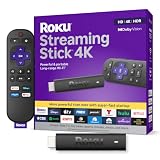
- Stunning 4K and Dolby Vision streaming made simple: With America’s number 1 TV streaming platform,* exploring popular apps—plus tons of free movies, shows, and live TV—is as easy as it is fun. *Based on hours streamed—Hypothesis Group
- Breathtaking picture quality: Stunningly sharp 4K picture brings out rich detail in your entertainment with four times the resolution of HD. Watch as colors pop off your screen and enjoy lifelike clarity with Dolby Vision and HDR10+.
- Seamless streaming for any room: With Roku Streaming Stick 4K, watch your favorite entertainment on any TV in the house, even in rooms farther from your router thanks to the long-range Wi-Fi receiver.
- Shows on the go: Take your TV to-go when traveling—without needing to log into someone else’s device.
- Compact without compromises: Our sleek design won’t block neighboring HDMI ports, so you can switch from streaming to gaming with ease. Plus, it’s designed to stay hidden behind your TV, keeping wires neatly out of sight
The China-specific constraints
Competition was fragmented
56.com competed with services including Tudou and Youku. These platforms did not necessarily have identical content strategies: services could combine user uploads with licensed television, film or other professional programming in different proportions. Renren’s later SEC filing described China’s online-video industry as competitive and fragmented, and warned that users could favor platforms with larger libraries of both UGC and professional video. The filing’s industry discussion is a later view, not a precise ranking of the market in December 2007.
Copyright affected both risk and content supply
A UGC platform could face claims over material uploaded without permission. Separately, securing professional television, film and music content could require licenses and added expense. Renren’s filing identified copyright regulation as one factor affecting the sector. The distinction matters: a service might offer a large user-uploaded catalog without having the licensed professional library that competitors could use to attract viewers.
Rank #4

- The Google TV Streamer (4K) delivers your favorite entertainment quickly, easily, and personalized to you[1,2]
- HDMI 2.1 cable required (sold separately)
- See movies and TV shows from all your services right from your home screen[2]; and find new things to watch with tailored recommendations for everyone in your home based on their interests and viewing habits
- Watch live TV and access over 800 free channels from Pluto TV, Tubi, and more[3]; if you find an interesting show or movie on your TV, mobile app, or Google search, you can easily add it to your watchlist, so it’s ready when you are[2]
- Up to 4K HDR with Dolby Vision delivers captivating, true-to-life detail[4]; and you can connect speakers that support Dolby Atmos for more immersive 3D sound
Bandwidth made growth expensive
Every increase in viewing could add delivery costs, so growing traffic was not automatically profitable. The reported plan to use the earlier financing for hardware upgrades supports the importance of infrastructure investment, but public information cited here does not quantify 56.com’s delivery expenses or show whether its video advertising revenue covered them.
The 2008 outage had competing explanations
In June 2008, 56.com went offline for several weeks. The company attributed the interruption to a server malfunction, while contemporaneous accounts speculated about regulatory action related to video content; the company denied being shut down by regulators. The available record does not conclusively establish the cause, and reports said the service was back online by July 11. A historical account of the interruption records the competing explanations.
Windows Errors? Fix Them Before They Spread
Repair common Windows errors and clear accumulated junk for a smoother, more stable PC - no reinstall needed.Free scan · no reinstallOutdated Drivers Are Slowing You Down
One free scan finds every outdated or missing driver and matches the right update for your exact hardware.Free scan · exact hardware matchBest Value

- Essential 4K streaming – Get everything you need to stream in brilliant 4K Ultra HD with High Dynamic Range 10+ (HDR10+).
- The newest Fire TV experience (2026) – Our biggest update to Fire TV has a new, modern design that gets you to your entertainment fast. Browse dedicated content categories, pin more of your favorite apps, and get personalized recommendations from Alexa+. Spend less time scrolling, and more time watching.
- Make your TV even smarter – Fire TV gives you instant access to a world of content, tailor-made recommendations, and Alexa, all backed by fast performance.
- All your favorite apps in one place – Experience endless entertainment with access to Prime Video, Netflix, YouTube, Disney+, Apple TV+, HBO Max, Hulu, Peacock, Paramount+, and thousands more. Easily discover what to watch from hundreds of thousands of movies and TV episodes (subscription fees may apply), including free, ad-supported content.
- Getting set up is easy – Plug in and connect to Wi-Fi for smooth streaming.
How the company’s trajectory changed
- 2005: 56.com was founded, according to its company history. Company history
- June 2007: A $10 million Steamboat Ventures investment was reported, with hardware, features and marketing among the stated uses. Financing report
- December 7, 2007: A contemporary headline reported a $20 million raise and cast 56.com as aspiring to become China’s YouTube. Indexed report record
- June–July 2008: The site experienced a multiweek interruption; its cause remains disputed in the available accounts. Historical account
- September 2011: Renren announced an agreement to acquire 100% of 56.com for $80 million in cash. Renren’s announcement
- October 2011: Renren later reported completing its acquisition of Wole Inc., the entity operating 56.com. Renren SEC filing
- 2014: Renren’s filing says it disposed of the business in December; 56.com’s official history says it merged with Sohu Video in October. These records establish the transition away from an independent 56.com, though their dates describe different corporate events. Renren filing · 56.com history
Did 56.com become China’s YouTube?
Not as an independent, enduring market leader. Renren’s $80 million cash acquisition shows the platform had strategic value, and linking video to a social network offered a different route to distribution than competing solely as a standalone video site. But 56.com did not retain an independent identity: Renren later disposed of the business, and 56.com’s history says it merged with Sohu Video.
The larger lesson is not that the YouTube comparison was meaningless; 56.com did pursue a recognizable UGC-video model. Rather, the analogy hid the harder questions that determined its prospects: whether it could sustain a compelling catalog, monetize viewing after infrastructure and rights costs, withstand regulatory uncertainty, and compete for distribution. The outcome was consolidation, not a simple story of one Chinese service reproducing YouTube’s path.
Quick Recap
Product prices and availability are accurate as of the date/time indicated and are subject to change. Any price and availability information displayed on Amazon at the time of purchase will apply.




