Outdated Drivers Are Slowing You Down
One free scan finds every outdated or missing driver and matches the right update for your exact hardware.Free scan · exact hardware matchWindows Errors? Fix Them Before They Spread
Repair common Windows errors and clear accumulated junk for a smoother, more stable PC - no reinstall needed.Free scan · no reinstallThere is no single authoritative list of six monopolies: the label depends on the market, place, and period being discussed. These five cases show how market power can come from very different sources—from a government charter to control of a network or a software platform—and why size alone does not prove unlawful conduct.
What makes a company a monopoly?
In antitrust analysis, “monopoly” is not simply another word for a very large or successful business. The Federal Trade Commission describes a monopolist as a firm with significant, durable market power: the long-term ability to raise prices or exclude competitors. The analysis depends on the relevant product or service market, geography, available alternatives, and how the company gained or maintained its position.
That distinction matters. A company can hold a leading position because customers prefer its product, because it has a strong operating model, or because of historical circumstances. Those facts alone do not establish unlawful exclusion. Market power and unlawful conduct are separate questions, and the legal status of a case must be described as a finding, allegation, or unresolved proceeding—not blurred into a single verdict.
| Case | Market and period | Source of power | Key outcome or legal status |
|---|---|---|---|
| East India Company | English trade with India and China, 1600 onward | State-granted trading privileges | Commercial rights were curtailed over time; the China tea-trade monopoly ended in 1833. |
| Standard Oil | U.S. oil business, late 19th and early 20th centuries | Consolidation and alleged exclusionary practices | The Supreme Court ordered a breakup in 1911. |
| AT&T | U.S. telephone services, especially local networks | Network economics and regulated service territories | A 1982 agreement separated 22 local Bell companies into seven regional clusters. |
| Microsoft | Intel-compatible PC operating systems, in the litigation | Position in operating systems and barriers to entry | An appellate court upheld an exclusionary-conduct finding but treated the browser-tying claim differently. |
| Digital advertising technology products in the U.S. case | Alleged monopolization of multiple ad-tech products | The DOJ case page records a trial start in September 2024; that milestone is not a finding of liability. |
How did the East India Company’s monopoly work?
The East India Company’s case was built on legal privilege and imperial power, not the kind of market position examined under modern U.S. antitrust law. An NBER paper describes the company as holding a legal monopoly over English trade with India and China from 1600 to 1813. That broad period does not mean it controlled every relevant trade without interruption or that its privilege was politically secure.
What’s actually slowing this PC down?
Pick the symptom - the matching free tool is one click away.
#1 Best Overall
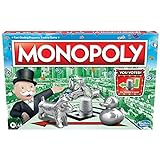
- FAST-DEALING PROPERTY TRADING GAME: It’s a Family Game Night staple! Players buy, sell, dream, and scheme their way to riches with the Monopoly board game
- BUY, SELL, AND TRADE TO WIN: Players compete to buy out neighborhoods, sell properties, charge rent, and grow an empire in the Monopoly game for adults and kids ages 8 and up
- BUILD HOUSES AND HOTELS: Love that feeling when an opponent lands on an owned property? In this be-loved family board game, the more players build, the more rent money they can collect. Cha-ching!
- WHAT’S YOUR TOKEN?: Includes 8 tokens: the Top Hat, Rubber Ducky, Scotty, Hazel, Race Car, Penguin, Battleship and either the Thimble
- FAMILY GAME NIGHT FAVORITE: With its classic Monopoly gameplay, this Monopoly board game is a go-to game for Family Game Night or anytime indoor fun, and it makes a great gift for families and kids
The UK Parliament’s history shows how its commercial rights narrowed. Successive charters in 1793, 1813, 1833, and 1853 reduced those rights; its last remaining monopoly over the China tea trade ended in 1833. The dates reflect a changing set of privileges, rather than one unchanging monopoly that simply switched off in a single year.
Why was Standard Oil broken up?
Standard Oil became the defining U.S. trust-busting case. Congress enacted the Sherman Act in 1890, and the Supreme Court ordered Standard Oil’s breakup in 1911, according to the U.S. Capitol’s historical account.
The Justice Department’s historical presentation describes the government’s case and its allegations, which included control of pipelines, discriminatory practices, contracts with competitors, local price cutting, secret intelligence gathering, and the use of bogus independent companies. Those are allegations advanced in the case; they should not be presented as though each were a separate judicial finding. The important distinction is between the conduct the government alleged and the Court’s ultimate disposition: a breakup order.
Rank #2

- FAST-DEALING PROPERTY TRADING GAME: A Family Game Night staple where players buy, sell, dream, and scheme their way to riches with the Classic 1980's Edition of Monopoly
- CLASSIC TOKEN SELECTION: Includes 9 authentic tokens from the 1980s era including the Battleship, Race Car, Cannon, Top Hat, Scotty Dog, Horse and Rider, Shoe, Thimble and Wheelbarrow
- BUY, SELL, TRADE: Players compete to own the best Properties, build Houses and Hotels, charge rent, and bankrupt their opponents
- BUILD AND GET RICH: The more money and property you acquire, the more you can build, and the quicker you'll accumulate wealth in this classic property trading game
- NOSTALGIC GAMEPLAY: Features classic Monopoly gameplay with original 1980's artwork and components that will bring back fond memories for players of all ages
“We, the people of the United States, and nobody else, must cure whatever is wrong in the industrial situation, typified by this narrative of the growth of the Standard Oil Company.”
Special offer. See more information about Outbyte and uninstall instructions. Please review EULA and Privacy policy.—Ida M. Tarbell, The History of the Standard Oil Company (1904), as reproduced by the U.S. Capitol
Tarbell’s words capture a reform-minded contemporary view, not a judicial ruling. They help explain the political force of the case without substituting an author’s judgment for the legal record.
Rank #3
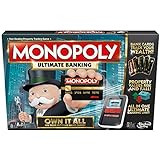
- Introducing Event cards for an exciting game
- Tap technology makes the game fast and fun
- Instant transactions and cashless gameplay
- Property values rise and fall
How was the AT&T case different?
AT&T shows why network industries do not fit a simple “one giant company gets split up” story. Telephone service depended on interconnected infrastructure, and local operating companies were treated as natural monopolies that would continue under regulation. The competitive outlook differed for the company’s other activities.
Under the January 1982 agreement described in the Justice Department’s history, 22 Bell companies providing mainly local service were organized into seven regional clusters. AT&T retained interstate long-distance service, Western Electric, and Bell Telephone Laboratories. The arrangement separated local operating companies from the retained businesses while taking account of service geography, network structure, and regulation.
The Tool Desk
Outbyte Driver Updater FREEFix the driver behind crashes, sound loss and screen glitchesFind Drivers →Outbyte PC Repair FREEClear out junk files and repair common Windows errorsFree Scan →What did the Microsoft litigation actually establish?
The Microsoft case focused on a defined market: Intel-compatible personal-computer operating systems. The district court analyzed Microsoft’s position in that market, barriers to entry associated with applications, and the alternatives available to customers. It was not a ruling about every product Microsoft made or every software market.
Rank #4

- Game Type: Board Game
- Game Theme: Harry Potter
- Minimum Number of Players: 2
- Maximum Number of Players: 6
- Length of Play: 60 minutes
In a September 6, 2001 release, the Justice Department reported that the Court of Appeals upheld the district court’s finding that Microsoft had engaged in exclusionary conduct intended to maintain its PC operating-system monopoly. The browser-tying claim had a different outcome: the appeals court reversed and remanded that finding for application of a more rigorous legal standard. The department also said it would not seek a breakup in the remand proceedings. So the case cannot accurately be reduced to either “every allegation was upheld” or “Microsoft was broken up.”
Independent reader supportYour contribution helps us test, update, and keep practical guides available for everyone.What is the Google case about—and what does its status show?
The Justice Department’s case page describes a U.S. civil suit, joined by seventeen states, alleging that Google monopolized multiple digital advertising technology products in violation of Sections 1 and 2 of the Sherman Act. The page records that trial began on September 9, 2024. An allegation and a trial-start date do not establish liability or a remedy.
This is a digital-advertising case, not a substitute name for separate litigation about Google Search. Because litigation can change after a trial begins, the cited procedural milestone alone does not establish a later disposition; no later finding or remedy is asserted here.
Quick wins for a faster PC:
Clear out junk files and repair common Windows errorsFree Scan →Scan for outdated or missing drivers - takes under a minuteDriver Scan →Best Value

- BIGGER & FASTER: With 12 additional spaces, Train Depots and Skyscrapers - how could the game play faster? Well, thanks to the SPEED DIE, a full game will only take about 90 minutes
- FAST-DEALING PROPERTY TRADING GAME: Players buy, sell, wheel and deal their way to riches - quickly - in Monopoly The Mega Edition
- SKYSCRAPERS: Now you can go 1 level bigger than houses and hotels. It's time to build skyscrapers and collect MEGA rent! Bankrupt your opponents faster
- CLASSIC TOKENS: Includes 8 classic tokens like the Top Hat, Scotty Dog, Race Car, Cannon, and more
- ENHANCED GAMEPLAY EXPERIENCE: The classic game of all-time has a delightful new twist with Monopoly Mega Edition featuring expanded board and faster gameplay mechanics
Why these five cases should not be treated as interchangeable
The cases differ in what the relevant market was, how power arose, who challenged it, and what happened next. The East India Company’s trading privileges came from government charters; Standard Oil’s case concerned consolidation and alleged business practices; AT&T involved a regulated network; Microsoft involved a defined software market; and the Google suit alleges monopolization in digital advertising technology. A chartered privilege, a court-ordered breakup, a regulated restructuring, an appellate decision, and a pending or evolving lawsuit are not the same kind of outcome.
For any monopoly claim, ask four questions: what exact product or service is at issue, where and when is the claim made, what alternatives did customers have, and is the conduct alleged or legally established? Those questions make it possible to discuss corporate power without treating every large company—or every antitrust case—as the same story.
Quick Recap
Product prices and availability are accurate as of the date/time indicated and are subject to change. Any price and availability information displayed on Amazon at the time of purchase will apply.




