Outdated Drivers Are Slowing You Down
One free scan finds every outdated or missing driver and matches the right update for your exact hardware.Free scan · exact hardware matchWindows Errors? Fix Them Before They Spread
Repair common Windows errors and clear accumulated junk for a smoother, more stable PC - no reinstall needed.Free scan · no reinstallCouples can combine all their money, keep accounts separate and agree how to share costs, or use a hybrid system with individual accounts plus a joint account for selected expenses or goals. No setup is best for everyone: choose one both partners understand, can access as intended, and consider fair.
1. Combine income and accounts
In a fully combined setup, income goes into shared accounts and the couple budgets and pays bills together. This can make recurring household expenses and shared savings easier to manage, but it also means agreeing on spending, saving, debt payments, and access to money.
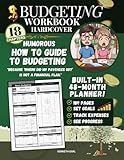
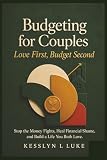

A joint account is not just a bookkeeping convenience. The FDIC says co-owners of a joint deposit account at an FDIC-insured bank have equal rights to make withdrawals and transactions. Read the bank’s account agreement and make sure both partners understand the access it provides; account ownership does not, by itself, settle every legal question in every circumstance. See the FDIC’s guidance on sharing finances.
2. Keep accounts separate and agree how to share costs
Each partner keeps their own accounts, and the couple agrees who pays each shared bill or how much each contributes. One arrangement is to split costs equally; another is to base contributions on income or a different mutually agreed formula. The cited guidance does not establish one method as universally fair.
#1 Best Overall
Write down which costs count as shared, who pays each bill, when contributions are due, and how you will handle reimbursements, income changes, or unexpected expenses. For unmarried partners, AP/NerdWallet recommends clarifying contributions, permitted uses, access, and what happens to funds if the relationship ends before opening a joint account. Those conversations are useful even if you decide to keep every account separate. The report is practical guidance, not legal advice: local rules and individual circumstances can matter.
3. Use a hybrid system
Each partner keeps an individual account, and both contribute to a joint account for agreed household expenses or goals. Contributions can be equal or follow another formula you both accept. Individual accounts can preserve room for personal spending, while the joint account gives shared bills a common funding source.
Set the boundaries before money starts moving:
- List which bills or goals the joint account covers.
- Agree on the amount and timing of each contribution, and the balance to maintain.
- Decide who checks due dates, pays bills, and flags a shortfall.
- Set a spending threshold above which both partners discuss a purchase first.
The FDIC recommends discussing whether to use individual, joint, or combined accounts and creating a shared budget. Census Bureau data also show that holding both joint and individual accounts is an established arrangement among married couples with financial-institution assets.
How common are joint and mixed accounts?
U.S. Census Bureau analysis of SIPP data found that, in 2023, 77% of householder married couples with assets at financial institutions held at least one bank account jointly. That figure does not mean they combined every account: 40% held all their bank accounts jointly, while 17% had both joint and individual accounts. The share with no joint bank accounts was 23%.
What’s actually slowing this PC down?
Pick the symptom - the matching free tool is one click away.
Rank #3

- TAKE CONTROL OF YOUR MONEY & ACHIEVE FINANCIAL GOALS – Are you looking for the best monthly budget planner to keep your finances organized? Clever Fox Financial Planner Premium will help you keep your money organized, spend well, and start saving.
- SET & ACHIEVE BIG FINANCIAL GOALS: This budget organizer is not just a tool; it's a framework for achieving your financial goals. The finance planner helps you develop a strategy and break your ambitious goals into manageable monthly tasks.
- EASILY CONTROL YOUR SPENDING, DEBTS & SAVINGS: This money planner is undated and covers 12 months. Every month features a calendar, budget plan, and expense tracker. The budgeting planner also includes 8 savings and 12 debt trackers, and a holiday budget.
- CASH ENVELOPES, STICKERS & GIFT BOX: This premium budgeting planner measures 5.8 by 8.3” and features cash envelopes, stickers, user guide, eco-leather hardcover, thick 120gsm paper, lay-flat binding, pen loop, elastic, pocket for notes, and a gift box.
- 60-DAY GUARANTEE: We will exchange or refund your budget planner organizer if you aren’t satisfied with your budgeting workbook for any reason. Reach out to us via message to refund your budget planner.
For comparison, in 1996, 53% held all accounts jointly, 9% held both joint and individual accounts, and 15% had no joint bank accounts. These are estimates for the stated group of married couples, not a survey of every couple. The figures and definitions are in the Census Bureau’s September 24, 2025 analysis.
How to choose a setup that works for both partners
Compare the options against the way you actually manage money, rather than treating one arrangement as a test of commitment.
- Shared bills and goals: Would a joint account make recurring bills or shared saving simpler, or are direct payments and transfers manageable?
- Autonomy and privacy: How much independent spending room does each person want, and what financial information will you share? In a 2026 CFP Board online survey of 1,138 U.S. adults ages 25–64 in committed relationships, respondents cited privacy and differing priorities as reasons money conversations can be difficult. The survey is not a census of account ownership. Its report on money and relationships also found that 56% expected to discuss ground rules for joint and separate bank and investment accounts in the year ahead, and 64% expected to check in regularly on finances.
- Access and ownership: Who can make transactions, and have both partners read the account terms? For a joint deposit account at an FDIC-insured bank, the FDIC describes equal transaction rights for co-owners.
- Contribution fairness: Decide whether to split shared costs equally, proportionally, or another way. Consider both partners’ incomes and obligations; no single formula suits every couple.
- Continuity: Could either partner find the accounts, bills, due dates, and important records and handle essential tasks if the other were unavailable?
- Changing circumstances: Agree when to revisit the setup—for example, after marriage, a child, job loss, a move, or a substantial income change. Census analysis describes couples moving from separate to joint accounts over time, particularly after having children; that is an observation, not a recommendation.
Make the money plan usable in an emergency
Both partners should know where household money is held, how bills are paid, and where important records are stored. The Consumer Financial Protection Bureau recommends sharing financial information with a spouse and considering who would manage finances if one partner became ill or died. Its checklist includes an inventory of income, expenses, debts, and investments. See the CFPB’s guidance on sharing financial information.
Before deciding, make a shared inventory and settle the practical details:
- List income sources, accounts, assets, debts, recurring bills, due dates, and beneficiaries.
- Mark which expenses and savings goals are shared.
- Choose how each person will contribute and where the money will go.
- Agree on access, spending boundaries, and how to handle a change in income or household needs.
- Set a recurring time to review the arrangement and update the inventory.
A spreadsheet or free worksheet can track the inventory; a budget planner is optional. What matters is that both partners can understand and maintain the plan.
Quick Recap
Product prices and availability are accurate as of the date/time indicated and are subject to change. Any price and availability information displayed on Amazon at the time of purchase will apply.




