Recommended Free Tools
Comcast notified 237,703 current and former customers that their information may have been exposed in a 2024 breach of Financial Business and Consumer Solutions (FBCS), a former debt-collection vendor. The available notices describe unauthorized access to FBCS’s network—not a reported compromise of Comcast or Xfinity systems. Potentially affected records included Social Security numbers and other identity data.
What happened in the FBCS breach?
FBCS provided collections-related services for Comcast until 2020. Historical records remained with the vendor after the relationship ended, partly because of retention requirements. SecurityWeek reported that some affected records dated from around 2021, even though Comcast had stopped working with FBCS by 2020.
FBCS’s filings describe unauthorized access to its systems from February 14 through February 26, 2024. FBCS discovered the access on February 26 and investigated whether information could have been viewed or acquired. Contemporary coverage called the event a ransomware attack, while regulatory filings use the more neutral description “external system breach (hacking).” Those filings do not establish the attacker, entry method, encryption details, ransom demand or payment.
| Date | Event |
|---|---|
| February 14, 2024 | FBCS’s stated start of unauthorized access. |
| February 26, 2024 | FBCS detected the intrusion. |
| April 2024 | FBCS began notifying clients and potentially affected people. |
| July 17, 2024 | Comcast says it learned that some Comcast customer information was involved, after earlier information from FBCS indicated Comcast customers were not affected. |
| August 16, 2024 | Comcast’s reported date for sending customer notifications. |
| October 7, 2024 | SecurityWeek published its Comcast-specific report. |
The July clarification helps explain why Comcast’s customer notices came months after the original FBCS disclosure. Comcast’s filing with the Maine Attorney General records the company’s account of the notification process.
#1 Best Overall
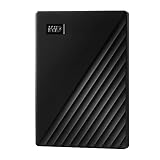
- Slim durable design to help take your important files with you
- Vast capacities up to 6TB[1] to store your photos, videos, music, important documents and more
- Back up smarter with included device management software[2] with defense against ransomware
- Help secure your important files with password protection and hardware encryption
- 3-year limited warranty
Was Comcast or Xfinity hacked?
There is no evidence in the available filings that Comcast or Xfinity computer systems were breached in this incident. The affected network was FBCS’s. FBCS said client systems were not impacted, and Comcast characterized the event as occurring entirely at its former vendor.
That distinction matters. Comcast supplied or authorized customer-related records for collections work, while FBCS acted as the custodian processing those records. A breach at the custodian can expose information without giving an attacker access to Comcast’s operational network or customer-login systems.
Rank #2
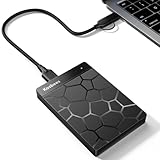
- 【Plug-and-Play Expandability】 With no software to install, just plug it in and the drive is ready to use in Windows(For Mac,first format the drive and select the ExFat format.
- 【Fast Data Transfers 】The external hard drives with the USB 3.0 cable to provide super fast transfer speed. The theoretical read speed is as high as 110MB/s-133MB/s, and the write speed is as high as 103MB/s.
- 【High capacity in a small enclosure 】The small, lightweight design offers up to 500GB capacity, offering ample space for storing large files, multimedia content, and backups with ease. Weighing only 0.35 Lbs, it's easy to carry "
- 【Wide Compatibility】Supports PS4 5/xbox one/Windows/Linux/Mac and other operating systems, ensuring seamless integration with game consoles,various laptops and desktops .
- Important Notes for PS/Xbox Gaming Devices: You can play last-gen games (PS4 / Xbox One) directly from an external hard drive. However, to play current-gen games (PS5 / Xbox Series X|S), you must copy them to the console's internal SSD first. The external drive is great for keeping your library on hand, but it can't run the new games.
The reported data concerns historical collections records, not Comcast login credentials. A Comcast password change is therefore not the central remedy for this event, although changing passwords reused elsewhere and enabling multifactor authentication remain sensible security practices.
How many Comcast customers were affected?
Comcast reported 237,703 current and former customers to Maine authorities. “About 238,000” is the rounded figure used in headlines. Former customers should not dismiss a notice simply because they no longer subscribe: records can remain with a service provider after service ends.
Rank #3
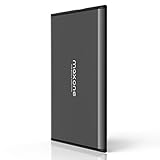
- Ultra Slim and Sturdy Metal Design: Merely 0.4 inch thick. All-Aluminum anti-scratch model delivers remarkable strength and durability, keeping this portable hard drive running cool and quiet.
- Compatibility: It is compatible with Microsoft Windows 7/8/10, and provides fast and stable performance for PC, Laptop.
- Improve PC Performance: Powered by USB 3.0 technology, this USB hard drive is much faster than - but still compatible with - USB 2.0 backup drive, allowing for super fast transfer speed at up to 5 Gbit/s.
- Plug and Play: This external drive is ready to use without external power supply or software installation needed. Ideal extra storage for your computer.
- What's Included: Portable external hard drive, 19-inch(48.26cm) USB 3.0 hard drive cable, user's manual, 3-Year manufacturer warranty with free technical support service.
FBCS’s broader incident involved customers of many organizations. Its filings contain changing totals reaching more than four million people overall. Those figures are for FBCS’s entire client population—not an additional count of Comcast customers and not a replacement for Comcast’s 237,703-person figure. See the FBCS filing and its supplemental filing for those wider populations.
What information may have been exposed?
The Comcast-related notices identify categories that may have been accessible for some people:
Rank #4

- High-capacity add-on storage.Specific uses: Business, personal
- Fast data transfers
- Plug-and-play ready for Windows PCs
- WD quality inside and out
- Name
- Address
- Date of birth
- Social Security number
- Comcast account number
- Internal FBCS identification number
“Potentially exposed” does not mean every person had every field accessed. The notices describe the types of records that could have been viewed or acquired; they do not establish an identical data set for all 237,703 people. The FBCS notice lists name, Social Security number, date of birth and account information, while Comcast’s customer-specific description adds Comcast account numbers and internal FBCS IDs. The FBCS notice provides the underlying wording.
Has anyone misused the information?
FBCS said it had seen no evidence of misuse when it issued its notice. That statement describes what the company knew at the time; it is not proof that information cannot later be used, sold or combined with data from another breach. Social Security numbers and dates of birth create a continuing identity-theft risk even when no fraud has yet appeared.
Best Value

- World’s First 6TB 2.5” Portable Hard Drive
- Slim durable design to help take your important files with you
- Vast capacities up to 6TB[1] to store your photos, videos, music, important documents and more
- Back up smarter with included device management software[2] with defense against ransomware
- Help secure your important files with password protection and hardware encryption
What assistance did Comcast offer?
Comcast’s Maine filing says affected people were offered 12 months of complimentary CyEx Identity Defense Complete, including credit and identity monitoring. FBCS notices also referred to 12 months of CyEx monitoring for people whose information might have been affected.
Eligibility and the enrollment deadline were tied to the individual breach letter. Because the incident occurred in 2024, the original one-year enrollment window may have expired by August 2026. Use the instructions printed in an authentic notice rather than a link found through search or social media. Monitoring can alert you to certain changes; it does not prevent identity theft.
What affected consumers should do now
- Verify the notice. Check that it identifies Comcast, FBCS and the relevant incident, and that contact and enrollment details match the letter. Do not respond to an unsolicited caller demanding payment or sensitive information.
- Use the offered monitoring if you are still eligible. Follow only the official instructions in your notice. Do not assume a benefit remains available years after the event.
- Freeze your credit with all three bureaus. Freezes are generally the strongest free measure against new-account credit fraud. Use the official pages for Equifax, Experian and TransUnion. You can temporarily lift a freeze when applying for credit, housing, utilities or an employment check.
- Review your credit reports. Obtain reports through AnnualCreditReport.com, the federally authorized source, and dispute unfamiliar accounts or inquiries.
- Consider a fraud alert. An alert asks creditors to take additional steps to verify your identity. One bureau generally notifies the other two, but confirm the current process directly with a bureau.
- Watch existing accounts. A freeze does not stop account takeover or fraud on accounts you already have. Review bank, card, utility and telecommunications statements.
- Watch for tax-related identity theft. If someone uses your Social Security number in a tax filing, follow the IRS Identity Theft Central guidance.
- Expect impersonation attempts. Scammers may pose as Comcast, FBCS, CyEx, a credit bureau or a government agency. Never provide a password, full Social Security number, one-time code or payment details to an unsolicited contact.
- Change reused passwords and turn on multifactor authentication. This is general protection; the incident did not report a Comcast credential breach.
- Document and report fraud. If fraudulent accounts or transactions appear, use IdentityTheft.gov for a recovery plan and records.
What a credit freeze can—and cannot—do
| Measure | Best use | Limits |
|---|---|---|
| Credit freeze | Blocks most new creditors from accessing a frozen file, reducing new-account fraud. | Does not stop account takeover, phishing, tax or government-benefit fraud, medical identity theft, or social engineering. |
| Fraud alert | Prompts creditors to take extra identity-verification steps. | Does not block access to a credit file and is not a substitute for a freeze. |
| Credit monitoring | Alerts you to some new inquiries, accounts or identity signals after they occur. | Reactive; it does not prevent fraud and may not detect every misuse. |
What remains unknown?
- The identity of the attacker or ransomware group.
- How the attacker first entered FBCS’s network.
- Whether files were encrypted, what ransom was demanded, or whether any ransom was paid.
- Whether every listed data category was present for each affected person.
- Whether information was later misused or sold.
- Whether FBCS’s broader population total will be revised again.
The strongest established conclusion is narrower than the headline: Comcast notified 237,703 current and former customers that identity information may have been exposed through a breach at former vendor FBCS. Treat the notice as a reason to use free credit freezes, inspect reports and remain alert for impersonation—not as evidence that Comcast’s own systems or every customer’s complete record were compromised.
Quick Recap
Product prices and availability are accurate as of the date/time indicated and are subject to change. Any price and availability information displayed on Amazon at the time of purchase will apply.
What’s actually slowing this PC down?
Pick the symptom - the matching free tool is one click away.




