Quick wins for a faster PC:
Scan for outdated or missing drivers - takes under a minuteDriver Scan →Repair Windows errors before they cause bigger problemsFix Now →Fix the driver behind crashes, sound loss and screen glitchesFind Drivers →The right business plan example is one that resembles your business model and matches what you need the plan to do. Start by deciding whether you are planning internally, applying for a loan, seeking outside investment, or preparing for another decision. That purpose—and the expectations of your intended reader—determines how much detail to include. Examples can show you what to cover, but their market claims, customer profiles, and financial assumptions are not evidence for your business.
Choose a traditional or lean plan first
The U.S. Small Business Administration (SBA) describes two common formats: traditional and lean startup plans. It says there is no single right or wrong way to write a plan, and that writers can adapt the traditional outline to their needs. That flexibility does not mean every lender, investor, or jurisdiction accepts the same format; ask the intended reader what they expect. The SBA’s plan guidance is U.S.-oriented, particularly where it discusses funding and legal structures.



| Format | What it covers | When it may fit |
|---|---|---|
| Traditional | A detailed account of the business, market, management, offer, marketing and sales, funding request, financial projections, and supporting documents. | When a lender, investor, or other reader asks for a detailed plan, or when the business decision calls for one. |
| Lean startup | A concise summary of key partnerships, activities, resources, value proposition, customer relationships and segments, channels, costs, and revenue streams. | When a shorter model summary is useful, such as for a simpler plan or one that will be revised frequently. |
The SBA says traditional plans are detailed and commonly requested by lenders and investors; that does not mean every funding application requires the same document. Its lean format is a summary of core business-model elements, not simply a traditional plan with its sections removed.
What makes a business plan example useful?
A sample is most useful as a guide to structure and questions—not as a ready-to-submit plan. Look for a model with a similar combination of customer, offer, sales channel, operating setup, and revenue source. A neighborhood restaurant, for example, faces different planning questions from a software company that sells subscriptions online, even if both use the same section headings.
#1 Best Overall
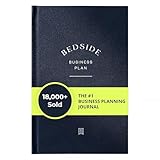
- TURN IDEAS INTO REALITY – Feeling stuck with your idea and not sure where to start? This guided journal helps you write a complete business plan so you can gain clarity and move forward with confidence as an entrepreneur.
- SIMPLE DAILY PRACTICE – 13 guided journaling sections with over 100+ business planning prompts. Make this business planner part of your routine to build momentum and work toward your business goals in just 5 minutes a day.
- BUSINESS PLANNER FOR ENTREPRENEURS – Use this guided journal to define your vision, understand your customers, evaluate competitors, plan expenses, and create a clear roadmap for launching your business.
- PERSONAL GROWTH – Designed as a personal growth workbook to help you reconnect with your purpose, prioritize well-being, and build a business plan centered around meaningful impact.
- PREMIUM ECO-FRIENDLY JOURNAL – Crafted with 100% FSC-certified recycled paper, a recycled cardboard cover, and wrapped in luxurious linen. This entrepreneur planner blends sustainability with thoughtful design.
The SBA provides downloadable traditional plans for a consulting firm and a toy company, plus a lean-plan example, on its sample business plans page, last updated June 12, 2023. LivePlan’s commercial example library lists examples across 23 industries and advises readers to replace sample research, numbers, and strategy with their own. Treat every sample’s market claims, customer descriptions, and financial figures as illustrative—not as current evidence about your own market.
15 business plan examples to study by industry
These are useful industry-specific plan types to look for when browsing sample libraries, not a claim that a complete, verified sample is available for every item. LivePlan’s library lists examples across these and other industries; availability and the contents of individual samples can change. For each model, focus on the questions your own plan must answer rather than copying a sample’s assumptions.
1. Food service: restaurant or café
Study how a plan describes its target customers, menu or service concept, location, customer experience, and the way orders and sales happen. Replace any sample’s customer profile, demand claims, pricing, and forecasts with your own local research. Explain the operating setup and how the offer stands apart from alternatives customers can choose.
2. Retail: shop or online store
Separate the plan’s sales channel from its product proposition: a physical shop and an online store may sell similar goods but differ in how they reach and serve customers. Identify the intended customer, the products offered, the sales process, and the resources required to operate the chosen channel. Do not reuse sample sales or inventory assumptions without evidence for your business.
Outdated Drivers Are Slowing You Down
One free scan finds every outdated or missing driver and matches the right update for your exact hardware.Free scan · exact hardware matchPC Slower Than It Used to Be?
A free scan shows the junk files, broken settings and background clutter dragging Windows down - then fixes them in one click.Free scan · Windows 10 & 11Rank #2
3. Consulting: professional services firm
The SBA’s traditional sample for a consulting firm can help readers see how a service business is presented. Pay particular attention to the defined client, the problem addressed, the service package, how clients are acquired, and who delivers the work. Substitute your own credentials, scope of service, client pipeline, and revenue assumptions.
4. Cleaning: residential or commercial service
A cleaning-service plan should make clear which customers it serves, what work is included, how customers book, and how the service is delivered. Explain the responsibilities of the owner and any staff or partners. Use local research for customer demand and your own estimates for sales, costs, and capacity rather than borrowing a sample’s figures.
5. Construction: contractor or building firm
Show who hires the business, what work it undertakes, how projects are sourced and sold, and how the work is organized. A reader should be able to connect the plan’s staffing and operating description to its forecast and, if applicable, funding request. Research any location-specific requirements that apply to your business; an example cannot establish what rules apply to you.
6. Agriculture: farm or food producer
Describe what the business produces, who buys it, how it reaches those customers, and what resources and activities support production and sales. Be precise about the revenue model and its assumptions. Replace any sample’s market or production claims with evidence suited to your product, location, and proposed operation.
7. Lodging: inn, hotel, or guest accommodation
Explain the accommodation offer, intended guests, booking and sales channels, and the operating model. Make clear what distinguishes the business for its target customers and how the forecast follows from the plan’s assumptions. Any sample’s occupancy, pricing, or demand assumptions need independent support before they can inform your projections.
8. Healthcare: clinic or care service
Identify the customers or patients the business is designed to serve, the service offered, how people access it, and who is responsible for delivering it. Include the management and operating detail relevant to the plan’s intended reader. Legal, licensing, and other requirements vary by location and circumstances, so research those separately rather than treating an industry example as authoritative guidance.
9. Nonprofit: mission-led organization
State the organization’s purpose, the people or community it serves, its activities, and how it expects to sustain its work. Make the sources of expected revenue and the assumptions behind the financial outlook understandable. A sample can show ways to organize the story, but it cannot establish which legal structure or funding rules apply to a particular organization.
10. Technology: software or app business
Describe the customer problem, the product’s value proposition, how customers find and access it, and the revenue model. Explain the activities, resources, and partnerships needed to deliver the product and maintain customer relationships. Replace a sample’s adoption, customer, and revenue assumptions with evidence and estimates specific to your product.
Recommended Free Tools
11. Manufacturing: maker or producer
Explain what the business makes, who buys it, how it is sold, and what production and operating activities the plan assumes. Show how the resources and management described support the planned sales and financial projections. Avoid treating another manufacturer’s production or cost assumptions as transferable without checking whether the business models match.
12. Transportation: carrier or delivery service
Identify the customers, service area or channel relevant to your offer, the service being sold, and how transactions take place. Describe the operational model and the people or partners involved. Research location-specific legal or permit requirements separately, and make sure any funding request is connected to the business’s own financial plan.
13. Education: tutoring or training provider
Specify who the learners or customers are, what instruction or training they receive, how they find and access it, and how the business earns revenue. Include the delivery model, management responsibilities, and evidence behind demand assumptions. An example can suggest questions to ask; it cannot validate a forecast for a different audience or location.
14. Beauty: salon or personal-care service
Explain the intended customer, the service offer, how appointments and sales work, and how the business attracts and retains customers. Describe the people and operating setup needed to provide the service. Check applicable local requirements independently and replace sample prices, demand claims, and projections with your own researched assumptions.
The Tool Desk
Outbyte PC Repair FREEClear out junk files and repair common Windows errorsFree Scan →Outbyte Driver Updater FREEFix the driver behind crashes, sound loss and screen glitchesFind Drivers →15. Events: planner or event-services firm
Define the type of customer and event served, the service or package sold, how customers are reached, and how work is delivered. Show how the roles of the owner, team, and partners support the offer. Keep the revenue forecast consistent with the sales process and operating plan instead of relying on a sample’s assumed booking volume.
Independent reader supportYour contribution helps us test, update, and keep practical guides available for everyone.Use a traditional plan outline to organize the detail
If you need a detailed plan, the SBA’s common traditional-plan outline offers a practical starting point. Include the sections that serve your purpose and intended reader; do not add headings just to imitate a template.
- Executive summary: Give a concise overview of the company, its offer, leadership, location, financial picture, and high-level growth plans where relevant.
- Company description: Explain the problem the business addresses, its intended customers, and its competitive strengths.
- Market analysis: Describe the industry outlook, target market, relevant trends, and competitor strengths using research that supports your claims.
- Organization and management: Set out responsibilities, the organizational structure, relevant team experience, and the legal structure where appropriate. Legal-structure guidance depends on location and circumstances.
- Service or product line: Describe what is sold, the customer benefit, the offer’s lifecycle, and relevant intellectual-property or research-and-development plans.
- Marketing and sales: Explain how the business will attract and retain customers and how sales will happen.
- Funding request: If seeking funding, state the amount, preferred debt or equity approach, terms and period sought, intended use of funds, and related financial plans.
- Financial projections: Connect the forecast to the operating story and any funding request. For an established business, the SBA says to include historical income statements, balance sheets, and cash-flow statements for the prior three to five years. For prospective outlooks, it describes five-year projections, with more detail—quarterly or monthly—for the first year where applicable.
- Appendix: Add relevant supporting material such as resumes, licenses, permits, product images, or contracts.
Make the sample’s assumptions your own
Before you adapt an example, use this checklist to test whether the plan tells one coherent story:
- Customer and problem: Define who the customer is and what need or problem your business addresses.
- Market and competition: Research your target market, relevant industry outlook, and competitors rather than copying a sample’s claims.
- Offer and sales: Explain what the customer buys, how they learn about it, and how the transaction happens.
- Operations and management: Describe the people, resources, activities, and partnerships needed to deliver the offer.
- Assumptions: Identify the evidence or estimate behind each important claim and projection.
- Financial consistency: Make the projections match the customer, sales process, operating plan, and any funding request.
- Audience and location: Confirm what the intended reader expects and research local legal, tax, permit, or funding rules where relevant.
When a template or planning tool helps
Free examples and guidance from the SBA may be enough to get a straightforward plan started. If you want guided planning and forecasting features, LivePlan describes templates and plan-building tools alongside its industry examples; its page also mentions QuickBooks and Xero integrations. Current features and prices were not independently verified here, so check the provider’s current terms before choosing. A business-plan workbook can also help organize a draft, but no specific edition or listing is established here. Accounting software may help track actual performance against a forecast after planning; it is not a requirement for writing a business plan.
Quick Recap
Product prices and availability are accurate as of the date/time indicated and are subject to change. Any price and availability information displayed on Amazon at the time of purchase will apply.




