Quick wins for a faster PC:
Clear out junk files and repair common Windows errorsFree Scan →Fix the driver behind crashes, sound loss and screen glitchesFind Drivers →Repair Windows errors before they cause bigger problemsFix Now →The best movies about the 2008 financial crisis show different parts of the story: investors who bet against risky mortgage securities, employees facing a firm’s collapse, officials trying to contain the damage, and families confronting the consequences. This is an editorial selection, not an objective ranking. The first six titles focus most directly on the crash; the rest broaden the view to its causes, aftermath, and the culture of finance. Some are documentaries, some are dramatizations, and some are related viewing rather than accounts of the crisis itself.
Best movies that deal directly with the 2008 financial crisis
These six films are the strongest starting points for viewers who want to understand the crisis from more than one angle. The selection weighs how directly each film addresses the crash, what its perspective helps explain, and whether it presents documentary evidence or a dramatized story. The British Film Institute’s 2018 overview and ICAEW’s 2018 selection both discuss several of these titles.
| # | Preview | Product | Price | |
|---|---|---|---|---|
| 1 |
![Legal Eagles [DVD]](https://m.media-amazon.com/images/I/51u90akoV9L._SL160_.jpg)
|
Legal Eagles [DVD] | $7.46 | Buy on Amazon |
| 2 |

|
Margin Call | Buy on Amazon | |
| 3 |
|
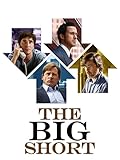
The Big Short | $4.99 | Buy on Amazon |
| 4 |

|
The Financial Matrix | $16.36 | Buy on Amazon |
| 5 |

|
Too Big To Fail | Buy on Amazon |
1. The Big Short (2015)
This comedy-drama follows investors who recognized the danger in the housing market and bet against mortgage-related securities. Paramount identifies the 130-minute film as an adaptation of Michael Lewis’s book. Its brisk storytelling and explanatory cameos make unfamiliar financial terms easier to follow, as the BFI’s discussion notes. It is a useful first choice for viewers who want an accessible, investor-centered account of how some people anticipated the crash. It is not a neutral or comprehensive explanation of every cause. Paramount Pictures’ official film page provides details about the movie.
2. Margin Call (2011)
This fictional drama takes place inside an investment firm during the early crisis. A risk analyst discovers that the firm’s exposure could threaten its survival, setting off a night of urgent decisions and ethical conflict. The story is especially useful for considering how institutional pressure can shape decisions once a firm recognizes danger. It is a dramatization, not a documentary record of a particular bank’s internal events. ICAEW’s film selection describes its compressed, 36-hour setting.
What’s actually slowing this PC down?
Pick the symptom - the matching free tool is one click away.
#1 Best Overall
- Factory sealed DVD
3. Inside Job (2010)
This documentary investigates the crisis through interviews with financial insiders, politicians, and journalists, examining links among finance, politics, regulation, and academia. Choose it for an argument-driven inquiry into causes and accountability rather than a character-led drama. Its framing reflects the film’s thesis; viewers should distinguish its interpretation from a settled consensus. The Sony Pictures Classics film page describes the documentary and its interviews.
4. Too Big to Fail (2011)
This docudrama shifts attention from investors and bank employees to the negotiations among financial leaders and government officials as the crisis deepens. Based on Andrew Ross Sorkin’s book, it is a good choice for viewers interested in crisis management and policy response. Its reconstructed scenes and dialogue are dramatized; they should not be mistaken for documentary footage. ICAEW, the BFI, and CFA Institute all include it among useful finance-crisis viewing.
5. The Queen of Versailles (2012)
This documentary follows the Siegel family as the financial crash disrupts plans for an extravagant home and lifestyle. Rather than explaining the machinery of mortgage securities or government intervention, it brings the crisis closer to household wealth, spending, and the fragility of an ambitious personal project. It is a strong companion to films about what happened inside banks. The BFI and ICAEW both identify it as a film connected to the crash.
Rank #2
6. Wall Street: Money Never Sleeps (2010)
Oliver Stone’s fictional sequel to Wall Street places Gordon Gekko and other characters in a crisis-era story. It works as a cultural response to the crash and as a drama about finance and ambition, not as a factual guide to the crisis. The BFI, ICAEW, and CFA Institute include it in broader discussions of financial-crash films.
Recommended Free Tools
More films about the causes, fallout, and culture around the crash
The next titles are worthwhile additions, but they do not all offer a direct account of the 2008 events. Some analyze the social cost or financial history; others examine wealth and misconduct in a broader setting.
7. Capitalism: A Love Story (2009)
Michael Moore’s documentary makes a pointed critique of U.S. capitalism and financial institutions, with attention to the social cost of the crisis. Watch it as an explicitly critical argument about the system, not as a detached or comprehensive chronology of the crash. CFA Institute includes it in its finance-film guide.
Rank #3
8. The Ascent of Money (2008)
This documentary series explores the history of money, credit, bonds, and insurance, and includes the subprime mortgage debacle. It is historical background rather than a feature film focused solely on the 2008 crisis. It can help viewers place the crash within a longer story about credit and financial systems. CFA Institute lists it among its finance-related viewing.
9. The Last Day of Lehman Brothers (2009)
This short docudrama focuses on Lehman Brothers’ bankruptcy, offering a compact supplement to longer films about the crisis. CFA Institute lists it as a Lehman bankruptcy story. Its narrower focus makes it most useful after a broader introduction to the crash.
10. The Flaw (2011)
CFA Institute lists this documentary as an analysis of the financial crisis. It is a natural next choice for viewers who want another documentary perspective alongside Inside Job; the available source descriptions do not establish enough detail to characterize its specific argument more narrowly.
Rank #4
- Author: Orrin Woodward.
- Pages: 123
- Publication Date: 2021
- Edition: 3rd
- Binding: Hardcover
11. Generation Wealth (2018)
Lauren Greenfield’s documentary considers wealth and materialism in a society still living with the crisis’s legacy. The BFI treats it as a broader study of wealth rather than a direct account of the crash. Choose it to explore attitudes toward money and status after the crisis, not to follow the events of 2008 in sequence.
12. Arbitrage (2012)
This fictional thriller follows a hedge fund manager engaged in financial malpractice and a cover-up. The BFI discusses it as finance-themed post-crisis cinema. It is adjacent viewing about misconduct and wealth, not a direct explanation of the 2008 crash.
13. The Wolf of Wall Street (2013)
Set before the financial crisis, this film is not about the 2008 events. The BFI notes that its depiction of excess can be viewed through a post-crisis lens. Include it if your interest is the wider culture of greed and finance, rather than a film that explains the crash.
Best Value
14. Wall Street (1987)
Oliver Stone’s earlier film is relevant as background to the greed-and-finance themes revisited in Wall Street: Money Never Sleeps, but it predates the crisis and does not explain it. It belongs in an expanded finance-film watchlist, not a direct 2008-crisis program.
15. Rogue Trader (1999)
This pre-crisis finance drama offers an earlier screen story about risk-taking and financial misconduct. It is included as adjacent viewing for readers interested in finance films, not as a film about the 2008 crash. The direct-crisis recommendations above are better choices when the goal is to understand what happened in 2008.
Quick Recap
Which movie should you watch first?
| If you want to understand… | Start with | Why |
|---|---|---|
| How some investors anticipated the crash | The Big Short | An accessible investor-centered story with explanations of financial terminology. |
| Causes and accountability through interviews | Inside Job | A documentary investigation with an explicit argument. |
| Pressure inside a financial firm | Margin Call | A fictionalized look at institutional decisions and ethical conflict. |
| Government and financial-sector crisis response | Too Big to Fail | A docudrama centered on negotiations and policy response. |
| Household wealth and social consequences | The Queen of Versailles | A documentary follows one family as the crash upends its plans. |
| Finance and wealth as broader cultural subjects | Generation Wealth or Arbitrage | These are post-crisis or adjacent works, not direct crash histories. |
How to interpret films about the financial crash
- Separate documentary from drama. Interviews and documentary footage do not make every interpretation conclusive; docudramas and fictional films use reconstructed or invented scenes.
- Notice whose perspective is centered. An investor’s trade, an employee’s dilemma, a policymaker’s negotiation, and a family’s financial consequences each illuminate a different part of the crisis.
- Distinguish a direct account from an adjacent film. Several well-known finance movies reflect on greed or wealth without explaining the events of 2008. The BFI’s 20 July 2018 overview, ICAEW’s 14 September 2018 selection, and CFA Institute’s broader finance-film guide make useful distinctions across this group.
Product prices and availability are accurate as of the date/time indicated and are subject to change. Any price and availability information displayed on Amazon at the time of purchase will apply.




