Do these 3 things before closing this tab:
1Clear out junk files and repair common Windows errors2Scan for outdated or missing drivers - takes under a minute3Repair Windows errors before they cause bigger problemsYou can start a renewable-energy business in 2026 without owning a power plant: options range from installation and maintenance to project analysis, charging services, and recycling. The right fit depends on local demand, regulations, technical skills, financing, and whether you can build recurring service revenue. There is no reliable universal ranking of the most profitable models or startup costs that applies across countries.
The comparison below is a starting point for deciding what to investigate—not a prediction of returns. Permitting, incentives, licensing, labor, interconnection, customer economics, and market access all need to be checked locally.
What does the renewable-energy market context tell a founder?
The International Energy Agency (IEA) reported in 2026 that the combined global market value of clean-energy technologies, low-emissions fuels, and near-zero-emissions materials grew by an average of 20% per year over the prior decade and reached nearly USD 1.2 trillion in 2025. That figure covers multiple technologies and materials; it is not the market size for renewable-energy startups.
The IEA also reported that around 80% of global solar PV and wind generation occurred at lower levelised costs than coal or gas. This describes generation costs globally, not the profitability of an installation company in a particular market. Battery prices fell by 75% over the past decade, but the IEA also identifies relatively high upfront battery costs as a limitation for distributed energy resources. These trends create business opportunities, not guarantees of customer demand or profit.
Quick wins for a faster PC:
Fix the driver behind crashes, sound loss and screen glitchesFind Drivers →Clear out junk files and repair common Windows errorsFree Scan →Scan for outdated or missing drivers - takes under a minuteDriver Scan →#1 Best Overall
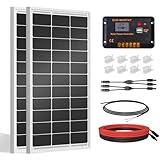
- [Wide Application]: Daily Output 800wh/day under 4 hours full sunshine condition. Perfect for RV, Caravan, Marine, Camper, Electric scooter, Golf Carts, Power wheels, Trolling motor, Tool trailer, Backup power supply for cabin shed home etc.
- [Excellent Performance]: ECO-WORTHY solar panels use high-performance monocrystalline solar cells, which can provide up to 21.5% higher efficiency sufficient light conditions.size:35.2*23.1.37in
- [Durable]: Corrosion-resistant aluminum alloy frame, so that the panel can be used for decades, and can withstand strong wind (2400Pa) and snow load (5400Pa), with a long service life. Ip65 rated junction box provides complete protection.:
- [Complete and Easy]: The back of the pre-drilled and plug-and-play cables allow quick installation, the kit can be connected in series (24V) or parallel (12V) if you need. What you will get: 2 pcs 100W mono solar panel + 2 set of Z mounting brackets + 30A solar controller + 1 pair of 16.4ft 10 awg solar cables + 1 pair of 2-in-1 connectors + 1 pair of 4.92ft tray cable.
- [Support]: 1 year with 24/7 tech support, if any problems or questions about the product,please do not hesitate to let us know through Amazon or call ECO-WORHTY hotline for solution.
For heat pumps, BNEF data reported by IRENA show global sales rising from 13.5 million units in 2023 to 14.4 million in 2024. IRENA also reported that sales fell in parts of Europe in 2024, illustrating that demand can shift with policy and market conditions. These figures are global unit sales, not a forecast for any one country or installer.
How do the 11 business models compare?
This qualitative comparison is a guide to the work and risks involved, not a scored ranking. Capital intensity and the other descriptions depend on the business’s scale and location; they are not quoted startup-cost estimates.
| Business idea | Capital intensity | Specialized labor | Dependence on policy or market rules | Customer-acquisition burden | Potential for recurring service revenue |
|---|---|---|---|---|---|
| Rooftop solar installation | Medium to high; equipment, labor, insurance, and working capital matter. | High; electrical, construction, and safety expertise are important. | High; licensing, permitting, incentives, financing, and interconnection rules vary locally. | High; each project requires customer trust and a viable site and offer. | Possible through monitoring, maintenance, or repairs. |
| Commercial solar-plus-storage integration | High; storage adds substantial upfront equipment costs. | High; design, installation, and controls require technical capability. | High; tariffs and market rules affect the value of storage and grid services. | High; the provider needs customers with a suitable load and a credible business case. | Possible through system operations, monitoring, and maintenance. |
| Community-solar development or administration | Medium to high for project development; lower for administration alone. | Medium to high; project, customer, and regulatory expertise can be needed. | Very high; eligibility, compensation, consumer protections, and project rules vary by jurisdiction. | High; projects need viable subscribers, partners, or both. | Possible through ongoing subscriber and project administration. |
| Solar operations, maintenance, and repair | Low to medium for a service operation; staffing and equipment needs vary. | High; diagnostics and safe field work are central. | Medium; safety, licensing, and site-access requirements are local. | Medium to high; access to installed systems and customer trust matter. | High potential through service agreements and repeat maintenance. |
| Solar panel reuse, resale, and recycling | Medium to high; collection, handling, processing, and logistics can require investment. | Medium to high; testing, repair, handling, and processing skills may be needed. | High; waste, transport, reuse, and recycling rules vary. | High; the business needs reliable supply and buyers for recovered products or materials. | Possible through recurring collection or processing arrangements. |
| Heat-pump installation and service | Medium; tools, vehicles, training, and working capital are relevant. | High; installation, electrical, and heating or cooling skills are needed. | Medium to high; incentives, licensing, and energy prices affect customer economics. | High; demand depends on building suitability and customer economics. | High potential through maintenance and repair. |
| Building-electrification retrofits and integration | Medium to high; scope and coordination needs vary by building. | High; work may span several building systems and trades. | High; electrical codes, permits, incentives, and utility rules can shape projects. | High; customers need a clear plan for a complex, site-specific project. | Possible through ongoing system support and staged improvements. |
| EV charging and smart-charging services | Low to high; software or advisory work differs from owning or installing charging equipment. | Medium to high; hardware, controls, and grid coordination skills may be needed. | High; utility tariffs, grid signals, and market participation affect value. | Medium to high; customer use patterns and site needs determine fit. | Possible through software, operations, or ongoing charging management. |
| Virtual power plant or demand-response software and operations | Medium to high; software, integration, and operations capabilities are required. | High; aggregation, controls, data, and energy-market expertise may be needed. | Very high; participation and value-stacking rules can constrain deployment. | High; the business must secure participants, partners, or market access. | Possible through continuing software and aggregation services. |
| Wind-project services | Low to high depending on the niche; inspection differs from owning assets or equipment. | High for technical, inspection, and maintenance work. | Medium to high; project approvals, safety, and market access are location-specific. | High; customer base and demand depend on the local project pipeline. | Possible through recurring inspection or operations contracts. |
| Renewable project assessment and development support | Low to medium for a specialist advisory practice; data and professional capabilities are essential. | High; credible work needs technical and financial competence. | High; local tariffs, interconnection, permitting, and project rules shape the analysis. | High; the business needs trusted relationships with developers, owners, or investors. | Possible through continuing feasibility, development, or portfolio support. |
What renewable energy business can you start in 2026?
Choose an idea by matching your capabilities and local customer problem before committing capital. Some models require equipment, field staff, or project finance; others can begin as specialist services, though they still require expertise and access to customers.
Rank #2

- 【Efficient Performance】This Starter Kit can generate an average of 500Wh of electricity per day (varies with sunlight). The solar panel boasts a 22.5% cell efficiency, 1.3% higher than other counterparts. Each panel dispatched from our facility undergoes 100% EL testing, ensuring that your panel is completely free from any hidden cracks.
- 【Market-Leading Service Plan】Enjoy worry-free usage with our market-leading service plan, providing 10 years of coverage for solar panel material and workmanship, along with a 2-year plan for the charge controller. Additionally, benefit from a 25-year service plan for the power output of the panel.
- 【Exceptional Safety】Certified by UL 61730, CSA C22.2#61730, IEC 61730/IEC 61215, our solar panel withstands 2400Pa wind and 5400Pa snow loads. Featuring IP65-rated J-box and IP67-rated solar connectors, rest assured, it can tackle any weather challenge.
- 【Remote Monitoring】The Wanderer PWM Charge Controller features an RS232 Bluetooth port. By adding a Renogy BT-1 Bluetooth Module, you can remotely monitor your solar system on the Renogy DC Home app. Keep track of voltage and current at any time, and receive timely warnings for over-voltage, under-voltage, and over-discharge.
- 【Excellent Compatibility】The solar kit with the Wanderer 30A PWM Charge Controller, supports expansion up to 400W with additional solar panels and is compatible with AGM, Gel, Flooded, and Lithium batteries.
1. Rooftop solar installation
A rooftop installer assesses sites, arranges or performs system design and installation, and coordinates the work needed to connect a system. Revenue may come from project work, with additional service opportunities after installation. The U.S. Department of Energy (DOE) lists resources for solar entrepreneurs, but that does not establish a universal startup budget or expected return.
Free tools Windows power users keep installed
One-click scans. No signup required.
- Pros: It serves customers directly and draws on solar PV, a technology whose global generation costs have become competitive in many settings.
- Cons: Customer acquisition, safety, licensing, permitting, financing, and grid interconnection can all affect whether a project is workable. Requirements and customer economics differ by location.
2. Commercial solar-plus-storage integration
This business designs or coordinates solar and battery systems for commercial customers. Storage can shift energy use and provide flexibility, but the value depends on the customer’s tariff and the rules for grid services. The IEA’s analysis of distributed energy resources identifies high upfront battery costs as a limitation.
- Pros: Combining generation and storage can address more than one customer need, including when energy is used and how flexible a site can be.
- Cons: The added battery cost can make a project harder to finance. Do not assume grid services will generate revenue without checking applicable tariffs and market rules.
3. Community-solar development or administration
A developer may organize a shared solar project; an administrator may handle participant enrollment and ongoing customer or project support. This can serve people who cannot or do not install a system at their own property, but there is no single universal community-solar structure.
Rank #3

- Max Battery Voltage: 32V
- Pros: The model can create a way for multiple customers to participate in a shared project and can support ongoing administrative services.
- Cons: Subscriber eligibility, compensation, consumer protections, and project rules are jurisdiction-specific. Confirm them before designing an offer or promising customer savings.
4. Solar operations, maintenance, and repair
Service businesses inspect systems, diagnose faults, coordinate repairs, and help owners keep installations operating. DOE identifies lifecycle maintenance, repair, and system decision support as active areas, but the cited resources do not quantify the service-market opportunity.
- Pros: Work can continue after the original installation, creating the possibility of repeat service revenue rather than relying only on new projects.
- Cons: The business needs skilled workers, reliable diagnostics, safety procedures, and access to installed systems or fleets.
5. Solar panel reuse, resale, and recycling
This business can test and refurbish panels for reuse or resale, decommission systems, or recover materials through recycling. DOE describes these end-of-life pathways. In the United States, DOE says recycling costs are generally still greater than landfill disposal costs, so the economics can depend on logistics, material recovery value, and regulation.
PC Slower Than It Used to Be?
A free scan shows the junk files, broken settings and background clutter dragging Windows down - then fixes them in one click.Free scan · Windows 10 & 11Outdated Drivers Are Slowing You Down
One free scan finds every outdated or missing driver and matches the right update for your exact hardware.Free scan · exact hardware match- Pros: The model can recover usable components and materials while providing services around decommissioning and end-of-life equipment.
- Cons: Collection and transport, processing, and buyers for recovered products all affect viability. The U.S. cost comparison should not be treated as a universal estimate for other countries.
6. Heat-pump installation and service
Installers and service providers help building owners select, install, maintain, and repair heat pumps. Global heat-pump sales reached 14.4 million units in 2024, up from 13.5 million in 2023, according to BNEF as reported by IRENA. That global growth does not establish local demand or margins.
Rank #4

- 【High Conversion Rate】This 20W solar panel with monocrystalline A+ solar cell has an excellent cell efficiency of 21%-30%. Designed to charge and maintain 12V rechargeable batteries like LiFePO₄, Lithium Ion, AGM, SLA, GEL, EFB, MF, etc. Keep batteries in charged for trailer, tractor, truck, boat, motorcycle, RV, car, lawn mower, water pump, gate opener, electric fence, etc
- 【Built to Last】 Low-iron tempered glass surface and corrosion-resistant aluminum frame, make this solar panel 100% waterproof and rustproof, and provide the prolonged lifespan up to 25 years. This 12V solar panel can withstand all weather conditions such as sandstorm, strong wind, thunderstorm, blizzard, hail, etc. It can withstand up to 2400Pa wind pressure and 5400Pa snow load
- 【Smart MPPT Controller】The charging efficiency of this upgraded 10A controller is 30% higher than other controllers on the market. Its intelligent three-stage charging design effectively prevents the battery from overcharging, over-voltage and short circuit. It takes no power from the battery. You will clearly know the charging status of the battery through the two indicator lights on the controller
- 【360° Adjustable Bracket & Plug-and-Play Installation】Comes with a fully 360° angle adjustable mounting bracket, which allows you to adjust the solar panel to the optimal sun-facing angle for maximum solar energy absorption and higher charging efficiency. Pre-drilled mounting holes and matched screws greatly simplify the installation process, no complicated tools or professional skills are required. All cable connections support plug-and-play, enabling quick and effortless installation and disassembly for both indoor and outdoor scenarios.
- 【Complete Accessories & Reliable After-Sales Service】Our SOLPERK Solar Panel kit includes 1*20W solar panel, 1*smart MPPT charge controller, 1*adjustable mounting bracket, 1*alligator clip, 1*O-ring and a full set of mounting accessories to meet your diverse installation and use needs. We offer 1-year professional after-sales service and lifetime technical support, with 7×24-hour online customer service to respond to your questions and solve problems within 24 hours, bringing you a worry-free shopping and using experience.
- Pros: Heat pumps are a major building-electrification technology, and installation can lead to continuing maintenance and repair work.
- Cons: Customer economics and demand vary with climate, electricity and fuel prices, building conditions, worker availability, and incentives. IRENA reported falling sales in parts of Europe in 2024, a reminder that demand can shift with policy and market conditions.
7. Building-electrification retrofits and integration
A retrofit business can coordinate heat pumps, heat-pump water heaters, electrical-panel planning, EV and building connections, envelope improvements, and thermal storage. NLR’s 2024 report identifies these technologies as relevant to building decarbonization; each project still needs assessment of the specific building.
- Pros: A coordinated service can help customers plan connected upgrades rather than treating each building system in isolation.
- Cons: Project scope and coordination can be complex. Existing electrical capacity may limit options, and work may involve multiple trades, permits, and customer decisions.
8. EV charging and smart-charging services
Businesses can install or manage charging equipment, provide software, or coordinate charging with prices or grid signals. The IEA identifies managed EV charging as a possible demand-response resource; the practical value depends on equipment, control strategy, utility or market participation, and customer usage patterns.
- Pros: Smart charging can make charging more flexible than simply charging whenever a vehicle is plugged in.
- Cons: Flexibility does not automatically translate into revenue. Hardware, controls, market access, tariffs, and how customers use their vehicles all affect the service.
9. Virtual power plant or demand-response software and operations
A virtual power plant (VPP) or demand-response provider coordinates distributed generation, storage, or flexible demand. The IEA describes digital management as a way to coordinate distributed energy resources, while also identifying policy and regulatory issues—including value-stacking rules—as barriers to broader VPP deployment.
Best Value

- Portable Generator with 60W Solar Panel Included: with a big battery pack, ZeroKor 300W solar powered generator are powerful enough to charge smartphones,tablets,laptops,headphones or other outdoor small camping supplies(Tips:Using electrical appliances over 300W may damage the portable solar generator, especially some devices that are prone to heat or built-in air compressor such as coffee maker,Hair dryer, water pump etc )
- Multiple Charging outlets for camping gear with SOS Flashlight: with 2* 300W Max wall AC outlets, 1* DC port (9V-12.6V/10A max ), 3* 5V/3A Max USB ports, 1*quick charge USB port (5V/3A 9V/2A Max), Flashlight with reading mode and SOS mode for your outdoor Adventures, our portable solar power station offers a versatile charging solution,allowing you to charge your outdoor smart devices directly from a wall AC outlet
- Multiple Charging Optional, Solar Panel Charger 60W Included: ZeroKor portable power bank generator can be recharged by Home AC outlet, DC5521 13V-23V Solar Panel (Portable Power Station built-in MPPT), 12V Carport. Take the portable solar power bank generator with you on-the-go and never worry about power shortage,the portable AC outlet design makes it more suitable for Tent camping OFF-Grid
- Built in BMS(Battery Management System) : ZeroKor portable power station features short circuit protection, over-current protection, over-voltage protection, overload protection and overheating protection. The built-in cooling fan system will automatically start and stop according to the portable battery pack internal temperature during use. Acting as a portable solar power bank, it accommodates multiple devices simultaneously, making it perfect for indoor and outdoor use
- HIGH CONVERSION EFFICIENCY: ZeroKor solar panels 60W monocrystalline solar cell have a high conversion efficiency of 20.5%, and its performance is better than that of polycrystalline solar panels under the condition of insufficient light
- Pros: Aggregation can coordinate many smaller resources that would otherwise operate separately.
- Cons: The business needs suitable technology and operational capability as well as a workable regulatory and market pathway. Rules about stacking multiple value streams can affect the business model.
10. Wind-project services
Possible niches include site assessment, inspection, operations support, and specialist maintenance. NLR’s free System Advisor Model (SAM) can evaluate wind projects as well as other project types, showing that techno-economic assessment is one enabling activity—not evidence of demand for a particular service niche.
- Pros: A focused service can support project development or operation without requiring the business to own a wind farm.
- Cons: Demand, capital needs, licensing, and customer access depend on the niche and local project market; they are not established as universal figures.
11. Renewable project assessment and development support
Specialists can help developers, owners, and investors assess technical and financial feasibility. NLR’s SAM supports techno-economic analysis across PV, storage, wind, geothermal, and other technologies. A software model can support analysis, but it does not substitute for professional engineering, permitting, or project-finance advice.
- Pros: This can be a service-led route into the sector for people with the right analytical skills, without owning generation equipment.
- Cons: Credible advice requires technical competence, reliable data, and knowledge of local tariffs and interconnection. Winning work also depends on earning the trust of clients making consequential investment decisions.
How should you decide which business to pursue?
Start with the customer and the local rules, not a global growth statistic. Before investing, work through these checks:
- Validate demand and the payer. Identify the customer with the problem, who makes the buying decision, and what would make the service worth paying for.
- Check legal and workforce requirements. Confirm licensing, permits, safety obligations, and the availability or training needs of qualified workers.
- Test grid and utility constraints. For projects connected to the grid or relying on flexible energy use, investigate interconnection capacity, grid rules, and applicable utility tariffs.
- Model the cash required. Account for equipment, insurance, financing, and working capital, as well as the time between paying costs and collecting revenue.
- Verify incentives and eligibility. Check current local program terms directly; do not build a customer offer around an incentive until its availability and eligibility are confirmed.
- Decide how revenue repeats. Distinguish one-time project income from maintenance contracts, administration, software, or other continuing services—and test whether customers will actually buy the recurring offer.
Where can solar entrepreneurs look for support?
For U.S.-based founders, DOE lists resources including SBIR/STTR, the SETO Incubator Program, technology-commercialization resources, and national-laboratory entrepreneurship support. Program availability, eligibility, and application windows can change. Check the current official program information before planning around funding; listing a program does not mean an applicant will receive support.
For project analysis, NLR’s System Advisor Model is available as a free tool for techno-economic evaluation of PV, storage, wind, geothermal, and other project types. It can support feasibility work, but it does not replace local engineering, permitting, or finance expertise.
Quick Recap
Product prices and availability are accurate as of the date/time indicated and are subject to change. Any price and availability information displayed on Amazon at the time of purchase will apply.




