Recommended Free Tools
Hong Kong International Airport is the strongest answer to “What is the most expensive airport ever built?” among the figures compared here: Guinness World Records reports a $20 billion cost, while a transport-geography source lists $20.1 billion for the broader Chek Lap Kok project. Those totals include more than the airport itself. The comparison below presents reported project costs, not a definitive all-time ranking: it mixes whole airports with a terminal project, does not adjust costs for inflation, and does not give every project the same boundary.
How to read the reported costs
The figures below come from The Geography of Transport Systems’ “Recently Completed Airports by Cost” table. That source does not state a publication year or a common inflation-adjustment year, so the amounts are not directly comparable in purchasing power. Some totals include land reclamation and transport connections; Beijing’s entry is for Terminal 3, not an entire airport. Treat the order as a selected comparison of reported project costs, rather than a verified ranking of like-for-like airport construction budgets. Source: The Geography of Transport Systems.
10 high-cost airport projects in the cited comparison
| Reported rank | Airport or project | Reported cost | Opening year | Scope note |
|---|---|---|---|---|
| 1 | Hong Kong International (Chek Lap Kok) | USD 20.1 billion | 1998 | Broader project total; the source separately gives USD 9 billion for the airport itself and says the total exceeds USD 20 billion with rail, road, and bridge links. |
| 2 | Kansai International, Osaka | USD 14.4 billion | 1994 | Reported airport project cost; the table does not further itemize its scope. |
| 3 | Al Maktoum International, Dubai | USD 8.0 billion | 2010 | Reported airport project cost; the table does not further itemize its scope. |
| 4 | Chubu Centrair, Nagoya | USD 7.3 billion | 2005 | Reported airport project cost; the table does not further itemize its scope. |
| 5 | Incheon International, Seoul | USD 5.8 billion | 2001 | Opening-era figure in the comparison; the operator reports later expansion phases separately. |
| 6 | Munich Franz Josef Strauss Airport | USD 5.3 billion | 1992 | Reported airport project cost; the table does not further itemize its scope. |
| 7 | Denver International | USD 4.2 billion | 1995 | Reported airport project cost; the table does not further itemize its scope. |
| 8 | Beijing Capital, Terminal 3 | USD 3.6 billion | 2008 | Terminal project, not the cost of building the whole airport. |
| 9 | Suvarnabhumi, Bangkok | USD 3.3 billion | 2006 | Reported airport project cost; the table does not further itemize its scope. |
| 10 | Kuala Lumpur International | USD 3.2 billion | 1998 | Reported airport project cost; the table does not further itemize its scope. |
All costs and opening years in this table are as reported by The Geography of Transport Systems; its page gives no common price year or inflation adjustment. The source also lists Guangzhou Baiyun at USD 2.5 billion and Shanghai Pudong at USD 1.4 billion, outside its ten highest figures shown above. See the source table and its scope notes.
Why Hong Kong’s cost depends on what counts
The headline amount for Hong Kong International reflects a wider infrastructure undertaking, not just airport facilities. Guinness World Records identifies it as the “Most expensive airport” and reports $20 billion, including the terminal and island reclamation; its account also describes related tunnels, a highway, railway, and bridges. It states: “The new Hong Kong International Airport at Chek Lap Kok, which opened on 6 July 1998, cost a total of $20 billion (£12 billion).” Guinness World Records’ airport-cost record.
Quick wins for a faster PC:
Clear out junk files and repair common Windows errorsFree Scan →Scan for outdated or missing drivers - takes under a minuteDriver Scan →Repair Windows errors before they cause bigger problemsFix Now →#1 Best Overall

- Officially licensed by the airline
- Die cast metal with plastic parts
- Makes a great souvenir or gift
The Geography of Transport Systems draws a narrower boundary for the airport itself, giving USD 9 billion, and a broader figure above USD 20 billion when rail, road, and bridge connections are included. That distinction explains why the two published figures—USD 20.1 billion and $20 billion—are close without being identical: they are reported totals, not a single audited figure normalized to a common scope or price date.
Incheon’s later costs are reported by phase
Incheon International Airport Corporation does not present one cumulative figure as a single opening cost. It reports separate costs for four development phases, spanning 1992 through 2024. The amounts below are in Korean won and should not be added and described as the cost of opening the airport; the total would combine the original airport with expansions over decades.
Rank #2

- OFFICIALLY LICENSED UNITED AIRLINES PLAYSET – Features a die-cast United Airlines airplane with authentic airline livery, detailed logos, airport vehicles, signs, and accessories for a realistic airport experience.
- COMPLETE AIRPORT PLAYSET – Includes a colorful assortment of airport vehicles, signs, and accessories that inspire imaginative storytelling and interactive airport adventures.
- DURABLE DIE-CAST CONSTRUCTION – Built with sturdy die-cast metal and quality plastic parts to withstand hours of play while maintaining realistic aircraft and vehicle details.
- PERFECT FOR IMAGINATIVE PLAY – Designed for little hands, this airport playset encourages creative roleplay while introducing children to the exciting world of aviation.
- GREAT GIFT FOR YOUNG AVIATION FANS – Recommended for children ages 3 and up. A fun gift or souvenir for kids who love airplanes, airports, travel, and collecting die-cast aircraft.
| Phase | Period | Reported cost |
|---|---|---|
| Phase 1 | 1992–2001 | KRW 5.6 trillion |
| Phase 2 | 2002–2008 | KRW 3 trillion |
| Phase 3 | 2009–2017 | KRW 4.6 trillion |
| Phase 4 | November 2017–October 2024 | KRW 4.8 trillion |
Incheon International Airport Corporation’s project overview lists the phase costs and periods; its Phase 4 construction overview gives the Phase 4 schedule and cost.
Independent reader supportYour contribution helps us test, update, and keep practical guides available for everyone.What makes airport-cost rankings difficult
- Project boundaries differ. An airport-only budget is not comparable to a program that also includes land reclamation, railways, roads, tunnels, or bridges.
- Project types differ. A new airport and a major terminal are different units of comparison; the cited list includes both.
- Prices are from different periods. The cited table supplies nominal USD amounts but no shared inflation base. A project completed earlier may appear lower than a later project even if their inflation-adjusted costs would compare differently.
- Development can continue for decades. A facility’s opening cost and the cumulative cost of later expansion phases answer different questions.
- Land and site engineering matter. The source notes that reclamation contributed to the cost of island and reclaimed-land airports, including Chek Lap Kok and Kansai.
For a fairer comparison, a ranking would need to define the project boundary, separate whole-airport builds from terminal expansions, convert currencies on a consistent basis, and adjust every figure to the same price year. The sources cited here do not provide enough information to perform that normalization.
Quick Recap
Best Value

- OFFICIALLY LICENSED SOUTHWEST AIRLINES PLAYSET – Features an authentic Southwest Airlines die-cast airplane with realistic airline markings, plus airport vehicles, traffic signs, and accessories for immersive airport adventures.
- COMPLETE 10-PIECE AIRPORT SET – Includes 1 die-cast model airplane, 2 toy vehicles, 2 construction cones, and 5 traffic signs to inspire creative storytelling and pretend airport operations.
- DURABLE DIE-CAST CONSTRUCTION – Built with a die-cast metal airplane and quality plastic parts for long-lasting durability while maintaining realistic aircraft details.
- ENCOURAGES IMAGINATIVE PLAY – Perfect for kids who love airplanes and airports, helping develop creativity, fine motor skills, and an interest in aviation through hands-on play.
- GREAT GIFT FOR YOUNG AVIATION FANS – Recommended for children ages 3 and up. An ideal gift for birthdays, holidays, travel lovers, and young airplane enthusiasts.
Rank #4

- Realistic airplane model: Officially licensed by Southwest with authentic, highly detailed markings and designs accurate to the real plane
- Airplane for ages 3+. This must-have for the young aviator enthusiast in your life. Includes a single toy plane with rolling wheels and authentic livery.
- Size: Plane model measures approximately 5.75 inches in length with a 5 inch wingspan, perfectly sized for easy display and handling
- Quality materials: Die-cast metal airplanes with plastic parts, no assembly required
- Let your imagination fly: Daron airplanes have brought smiles to kids and collectors since 1990 as America’s source of aviation-related collectibles and transportation themed toys
Rank #3
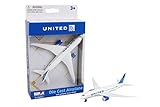
- Realistic airplane model: Officially licensed by United Airlines with authentic, highly detailed markings and designs accurate to the real plane
- Toy airplane for kids: This must-have for the young aviator in your life includes a single toy plane with rolling wheels and authentic livery
- Size: Plane model measures approximately 5.75 inches in length with a 5- inch wingspan, perfectly sized for easy display and handling
- Quality materials: Die-cast metal airplanes with plastic parts, no assembly required
- Let your imagination fly: Daron airplanes have brought smiles to kids and collectors since 1990 as America’s source of aviation-related collectibles and transportation themed toys
Product prices and availability are accurate as of the date/time indicated and are subject to change. Any price and availability information displayed on Amazon at the time of purchase will apply.




