Standard AI’s pivot was announced on March 26, 2024—not in 2026. The company introduced VISION, a computer-vision analytics platform intended to help retailers and consumer brands understand shopper movement, product interactions, merchandising, stock conditions and in-store media using camera infrastructure. Angie Westbrock became CEO, David Woollard became CTO and co-founder Jordan Fisher remained chairman.
VentureBeat reported a $1.5 billion private valuation at the time. Standard AI’s launch announcement did not disclose a financing round establishing that figure, so it should be treated as a reported March 2024 valuation, not a currently verified value or public-market capitalization.
What changed at Standard AI?
Standard AI began in 2017 with autonomous-checkout technology: computer vision designed to identify shoppers’ selections and support checkout-free retail. VISION applies much of the same underlying capability—tracking, mapping, product recognition and interaction understanding—to analytics that can operate in a conventional store.
That is a change in product and monetization strategy, not an abandonment of computer vision. Instead of first asking a retailer to redesign checkout, install a large amount of specialized infrastructure and change payment operations, Standard is offering data about what happens inside existing stores.
What’s actually slowing this PC down?
Pick the symptom - the matching free tool is one click away.
#1 Best Overall

- Day/Night Vision: IR-CUT Filter switched in and out automatically based on light condition (only visible light during the daylight and infrared sensitivity during the night with 850 IR LEDs on)
- HD Resolution: This camera adopts 2MP OV2710 sensor for sharp image, Max. resolution: 1920*1080
- High Frame Rates: 30fps@320*240, 352*288, 640*480, 800*600, 1024*768, 1280*720, 1280*960, 1280*1024, 1920*1080; YUY2 30fps@320*240 15fps@640*480 20fps@800*600 10fps@1024*768, 1280*720; 5fps@1280*960,1280*1024,1920*1080; High speed USB 2.0 interface.
- Plug&Play: UVC-compliant, just connect the camera to PC, laptop, Android device or Raspberry Pi with the USB cable without extra drivers to be installed.
- Applications: this mini 38mmx38mm camera board can be installed in most hidden and narrow position for a home surveillance system, wildlife photography, dashcam, baby camera, etc.
Leadership changes
- Angie Westbrock became CEO after serving as COO.
- David Woollard became CTO after serving as SVP of Technology Strategy.
- Jordan Fisher, the outgoing CEO and co-founder, remained chairman.
The company’s About page identifies Standard AI as founded in 2017 and, in the available material, continues to list Westbrock and Woollard in those roles.
Why move away from a cashierless-first strategy?
Standard AI’s CEO told VentureBeat that autonomous checkout had not reached mass-market scale because shopper adoption was slower than expected and infrastructure and computing costs made returns harder to achieve. That does not prove cashierless retail has failed everywhere; it indicates that adoption has been more selective and slower than the industry’s earlier forecasts.
A full autonomous-store deployment can require broad camera coverage, networking, edge computing, payment integration, store redesign, installation and operational change. Analytics can be introduced in a department, campaign or pilot store and tied to narrower outcomes such as fewer out-of-stocks, better merchandising compliance or improved media measurement. A retailer can therefore test value without committing to a complete checkout replacement.
Rank #2

- Day/Night Vision: IR-CUT Filter switched in and out automatically based on light condition (only visible light during the daylight and infrared sensitivity during the night with 850 IR LEDs on).With IR Cut and IR LED for day&night whole day view:ELP usb camera module with 24pcs IR leds,Auto IR usb camera module with photosensitive resistor on the camera board,when the surrounding environment becomes dark,the ir LED will turn on antomatically,On the contrary,it will be closed automatically,too.
- FHD Resolution: This camera adopts 2MP OV2710 sensor for sharp image,Max. resolution: 1920*1080,support:1280 (H) x 720 (V),640 (H) x 480 (V) USB2.0 Por for fast,smoother, embedded USB camera module convenient compatible for all kinds of device.
- With 10PCS IR LED for whole day and night image view,Camera support night vision with UVC for all kinds of system,Plug&Play,UVC-compliant, just connect the camera to PC, laptop, Android device or Raspberry Pi with the USB cable without extra drivers to be installed.
- YUY2 and MJPEG compression format optional: ELP 2megapixel night vision usb camera module with MJPEG/YUY2 compression format optional help to save more storage space,streaming with less demand on your computer provides faster and smoother video uploading.
- High Frame Rates: MJPG 30fps@1080P; 60fps@1280*720,100fps@640*480; High speed USB 2.0 interface.FHD 1080P video USB camera for clear surveillance: ELP 2.0 megapixel 1080p FHD USB camera module,High Speed auto IR 1080P@30fps usb camera,day night vison infrared usb camera module for smooth video recording.
The commercial difference
| Autonomous checkout | VISION-style analytics |
|---|---|
| Reconfigures how shoppers pay and how stores operate | Adds measurement to existing retail operations |
| Requires a broad, integrated deployment to deliver its main benefit | Can begin with a store, zone, display or campaign |
| Return depends heavily on adoption, labor savings and transaction performance | Return can be linked to stock, conversion, displays, promotions or media |
| Often needs substantial new infrastructure | Standard says it is designed to use existing cameras, subject to technical suitability |
What VISION is designed to measure
Standard AI describes VISION as a platform for converting camera observations into retail intelligence. Its announced and current product materials support these use cases:
Free tools Windows power users keep installed
One-click scans. No signup required.
- Shopper paths, movement and journey mapping.
- Store traffic and “true buyer” counts.
- Product encounters and interactions.
- Product and placement performance.
- Out-of-stock conditions and potential lost-sales estimates.
- Merchandising, signage, fixture and promotional effectiveness.
- In-store media and advertising measurement.
- Store operations and execution.
The company positions the product around aggregated or derived information rather than facial-recognition-based identity. It has also promoted shopper engagement, verified impressions and store intelligence on its current website.
Retailer and brand use cases are different
A retailer may use the system to prioritize replenishment, redesign a layout, compare conversion by zone or verify a promotion. A CPG brand may use similar observations to determine whether shoppers notice a display, interact with a product or receive an in-store advertisement. Those buyers can have different permissions, budgets, success metrics and data-sharing requirements even when they rely on the same camera network.
Rank #3
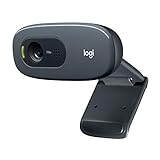
- Compatible with Nintendo Switch 2’s new GameChat mode
- Crisp HD 720p/30 fps video calls with diagonal 55° field of view and auto light correction. Compatible with popular platforms including Skype and Zoom.
- The built-in noise-reducing mic makes sure your voice comes across clearly up to 1.5 meters away, even if you’re in busy surroundings.
- C270’s RightLight 2 feature adjusts to lighting conditions, producing brighter, contrasted images to help you look good in all your conference calls.
- The adjustable universal clip lets you attach the camera securely to your screen or laptop, or fold the clip and set the webcam on a shelf. You’re always ready for your next video call.
How does it differ from basic foot-traffic counting?
Basic people counting answers how many people entered, exited or passed a point. Standard AI’s claimed distinction is a relationship between people, products and places: where shoppers move, what they encounter, what they touch or engage with, and how those observations may relate to a purchase or other outcome.
| Capability | Basic people counting | Standard AI’s claimed approach | Shelf-image analytics |
|---|---|---|---|
| Entry and exit counts | Usually yes | Yes | Usually no |
| Journey mapping | Limited | Core proposition | Usually no |
| Product interaction | Usually no | Core proposition | Product- or shelf-focused |
| Shopper-to-product relationship | Limited | Core proposition | Usually inferred from images |
| Shelf availability | Sometimes | Claimed use case | Core strength for some vendors |
| Planogram compliance | Sometimes | Possible or claimed merchandising use | Core strength for some vendors |
| In-store media measurement | Limited | Emphasized on current site | Varies |
| Requires a cashierless store | No | No | No |
VentureBeat reported a company claim of “up to 98% accuracy.” That figure is not meaningful without the specific task, sample size, store format, lighting, product mix and error definitions. Buyers should request accuracy separately for each use case and examine false positives and false negatives.
What “privacy-safe” does—and does not—establish
Standard AI’s current website says video remains local while its algorithms convert it into privacy-safe data sent securely to the cloud. That is a company statement, not an independent audit or a legal conclusion. Not using facial recognition does not by itself answer whether a system can persistently track an anonymous person across cameras, monitor employees, retain derived records or allow a third party to combine data with another identifier.
Rank #4

- Starvis CMOS: This USB camera module adopts 1/2.8" IMX462 CMOS Sensor for high-quality day and night vision.
- Intelligent IR Mode: This night vision camera supports automatic IR-Cut switching ensuring automatic color-to-B&W transition in dark light.
- Powerful Night Vision: Comes with 6x 940nm IR LEDs, this webcam can offer clear 3m night monitoring.
- HD lens: This noir camera is equipped with a 95° Diagonal Field of View Wide-angle larger aperture M12 lens, ensuring optimal light intake for flawless night vision capabilities.
- Reach up to 30fps: This UVC camera module supports smooth 30fps@1080p Video capture, making it ideal for reliable home surveillance.
Privacy questions for procurement
- Is raw video retained, and for how long?
- What processing occurs on a camera, edge appliance or other local system, and what leaves the store?
- Can an individual be reidentified through persistent tracking, device identifiers or cross-camera correlation?
- What notices and consent practices are used for shoppers and employees?
- Which retailers, brands and media partners can access derived data?
- Where is data stored, and how are deletion, auditing and access controls handled?
Retailers operating under stricter state or national privacy rules should obtain technical documentation and contractual commitments rather than relying on a marketing label.
What does the $1.5 billion valuation mean?
The valuation needs more qualification than the headline suggests.
| Date | Event | What is established |
|---|---|---|
| February 17, 2021 | Series C | Standard announced $150 million led by SoftBank Vision Fund 2 and described itself as a unicorn worth approximately $1 billion. |
| March 26, 2024 | VISION launch and leadership announcement | Standard announced the product and executive changes. Its announcement did not disclose a financing transaction establishing $1.5 billion. |
| March 26, 2024 | VentureBeat report | VentureBeat reported that Standard AI was valued at $1.5 billion. |
| 2026 | Current value | No current valuation was verified in the available company and news material. |
A private-company valuation can come from a financing round, a secondary transaction, an internal estimate or another investor assessment. It is not a market capitalization, and Standard AI is not publicly traded. The careful formulation is: “VentureBeat reported a $1.5 billion valuation in March 2024.”
Quick wins for a faster PC:
Fix the driver behind crashes, sound loss and screen glitchesFind Drivers →Clear out junk files and repair common Windows errorsFree Scan →Best Value
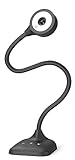
- 3 in 1 USB document camera, doc camera and webcam: it can be used as a webcam for webinars and conference calls, or flip the lens for live presentations. The document camera of the hose structure can be adjusted to any angle that you want, capturing images and videos from all angles. The maximum size is A3 paper
- Document camera for teachers and classroom with left and right mirroring and auto focus: it can be manually adjusted for image inversion. In the process of video chat or remote video teaching, it supports the left and right mirroring function of freely adjusting the image. Press the focus button once to automatically focus once. Ideal for remote video teaching
- Doc camera for teachers with LED fill light and IOS exposure: It comes with an exposure adjustment button. You can manually adjust the 5-level IOS exposure to ensure you get perfectly sharp images in imperfect environments. The 3-level LED fill light eliminates shooting problems in difficult lighting conditions, allowing you to aim for objects easily in dark and bright environments
- Important & High Compatibility: PAKOTOO document camera is not plug and play. You need to select "USB Camera" in the system that comes with your computer. The USB visualiser is equipped with a USB-C cable, which can be directly used with devices with USB-C interface such as MacBook. Compatible with Windows PCS, Macs and Chromebooks, works with Tiktok, Google Meet, Skyp-Microsoft Teams, Zoom; If you encounter any problems during the use of the product, or the computer does not recognize the camera, please be sure to contact our friendly support team for a quick solution.
- 5MP/1944P USB Document Camera for classroom: Full HD streaming at up to 30 fps, with CMOS image sensor, outputs HD images and video in real-time for excellent noise reduction and color reproduction—ideal for dimly lit environments shoot. Macro captures objects as close as 3.94"
Deployment is not automatically plug and play
Using existing cameras can lower installation costs, but camera compatibility determines whether the promised measurements are possible. Buyers should evaluate:
- Camera resolution, frame rate, placement and blind spots.
- Lighting, glare, refrigeration doors, carts, baskets and crowded aisles.
- Network bandwidth and edge-compute capacity.
- Store formats, seasonal resets, temporary displays and packaging changes.
- Connections to POS, inventory, replenishment, planogram, retail-media and data-warehouse systems.
- Model recalibration and maintenance when layouts or SKUs change.
Common failure modes include occlusion, confusion between similar packages, inaccurate planograms during promotions, inventory-system mismatches and attribution errors when a shopper touches a product but buys it later or elsewhere. A supervised pilot can also perform better than a rollout across stores with inconsistent camera maintenance.
A practical pilot design
- Choose one measurable problem, such as out-of-stock response, display engagement or conversion in a defined zone.
- Record a baseline before changing the display, replenishment process or promotion.
- Use comparable test and control stores where possible.
- Agree in advance how camera observations will be matched to sales, inventory or media outcomes.
- Require use-case-specific accuracy, error rates, deployment time and privacy documentation.
- Set a scale decision based on incremental financial impact, not on dashboard activity alone.
Competitive alternatives
| Provider | Primary emphasis | Where it may fit better |
|---|---|---|
| Trax Retail | Shelf intelligence, product recognition, share of shelf, pricing and retail execution | CPG and retailer shelf-compliance programs |
| Scandit Store Intelligence | Mobile-device capture, shelf intelligence, expiry, markdowns and planogram compliance | Associate-operated workflows; pricing is quote-based by edition and scale (pricing) |
| VusionGroup | Connected-store infrastructure, digital signage, electronic shelf labels and IoT operations | Broader store-transformation programs |
| Simbe Robotics | Robotic inventory, pricing, promotion and merchandising scans | Retailers comfortable with autonomous robots |
| Google Cloud Vertex AI Vision | Configurable video, object detection, occupancy, face blurring and product-recognition components | Enterprises with engineering and data-science teams; usage and stream pricing is published |
| Eyrene | Image recognition and digital merchandising | Image-capture use cases; the vendor advertises pricing as low as $0.19 per visit |
These are not interchangeable quotes. A build-your-own cloud service may have a lower visible API price but a higher internal cost for model tuning, integrations, dashboards and store support. Fixed-camera, mobile-device and robotic approaches also collect different kinds of evidence.
Questions to ask Standard AI before signing
- What financing or secondary transaction supports the reported $1.5 billion valuation?
- How many paying VISION customers and active stores exist now?
- What percentage of deployments use existing cameras without replacement?
- What are the minimum camera, lighting, bandwidth and edge-compute specifications?
- What accuracy and error rates are achieved for each use case?
- How long is raw video retained, and can the product persistently track individuals across cameras?
- How is out-of-stock status determined: shelf appearance, inventory records or both?
- What are the pricing units, minimum commitments, onboarding fees and integration charges?
- What independently measured customer ROI can be documented?
Bottom line for retail decision-makers and investors
Standard AI’s 2024 pivot is strategically understandable: it reuses expensive computer-vision capabilities in applications that may require less store disruption and offer a shorter path to measurable value than cashierless checkout. VISION is aimed at shopper, product, merchandising, operations and media questions—not at replacing every checkout.
The investment headline is less certain than the product announcement. The $1.5 billion figure is a VentureBeat-reported private valuation from March 2024, while the last clearly documented company financing was the $150 million Series C announced in 2021 at an approximately $1 billion valuation. The technology’s practical value still depends on camera quality, model performance, integrations, privacy controls and customer results that Standard AI has not publicly quantified in the available material.
Quick Recap
Product prices and availability are accurate as of the date/time indicated and are subject to change. Any price and availability information displayed on Amazon at the time of purchase will apply.




