Forbes did not issue an official “worst CEO” ranking of Steve Ballmer. In 2012, Forbes contributor Adam Hartung argued that Ballmer was the worst CEO of a large publicly traded American company, chiefly because Microsoft had failed to keep pace with the shift toward mobile devices. That was Hartung’s opinion—not an award or an established industry verdict—and later accounts of Ballmer’s tenure offer a more mixed picture.
What the 2012 criticism actually said
Hartung’s argument focused on Microsoft’s strategic response to fast-growing consumer technology markets. In his view, the company was losing ground in mobile music, handsets and tablets, while delayed product launches and weak bets made it harder for Microsoft and its ecosystem partners to compete.

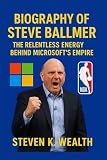


Hartung named Windows Vista and the Zune as examples of products that did not deliver the momentum Microsoft needed. He also argued that Microsoft’s choices harmed companies dependent on its platform, including Dell, Hewlett-Packard and Nokia. Computerworld’s May 14, 2012 coverage reproduced Hartung’s statement: “Without a doubt, Mr. Ballmer is the worst CEO of a large publicly traded American company today.” The superlative was Hartung’s assessment, not a Forbes corporate finding.
Why mobile became the central test
The criticism was less about whether Microsoft had valuable products than whether it adapted quickly enough as consumer computing moved beyond the PC. Phones and tablets were becoming important technology markets, and Hartung saw Microsoft’s weaker position there as evidence of a broader failure to anticipate and respond to change.
Quick wins for a faster PC:
Fix the driver behind crashes, sound loss and screen glitchesFind Drivers →Clear out junk files and repair common Windows errorsFree Scan →#1 Best Overall
That argument has a particular lens: consumer devices and competitive timing. It does not by itself measure the performance of Microsoft’s enterprise software, profits or every product launched during Ballmer’s tenure. Those parts of the record complicate any simple verdict.
Ballmer’s record was mixed, not uniformly poor
Computerworld’s account also pointed to successes during the Ballmer era, including SharePoint, Office, SQL Server, Windows Server and Xbox. A 2013 Forbes retrospective by contributor Tristan Louis likewise credited growth in profits and businesses including Xbox and Azure, while maintaining that Microsoft had moved too slowly as computing shifted toward phones and tablets.
The distinction matters: a company can grow profitable businesses while missing a major change in its market. Conversely, weakness in a strategically important category does not establish that every part of a CEO’s tenure failed. The available accounts support a debate about priorities and adaptation, not a single objective ranking.
What the historical financial figures show—and don’t
Two Forbes articles from 2013 offered different snapshots of Microsoft’s performance. They should be read in their own contexts rather than combined into one supposedly definitive scorecard.
Do these 3 things before closing this tab:
1Clear out junk files and repair common Windows errors2Fix the driver behind crashes, sound loss and screen glitches3Repair Windows errors before they cause bigger problems| Measure | Reported figure | Context |
|---|---|---|
| Share price and market capitalization | $58.719 per share and $616.3 billion at the record high cited for December 23, 1999; $33.27 per share and $277.14 billion at the close of the week discussed in September 2013 | Forbes contributor Tristan Louis’s 2013 retrospective. The dates refer to different points and the comparison is not a complete measure of Ballmer’s performance. |
| Annualized yearly profits | Roughly $25 billion to around $70 billion | Louis’s 2013 retrospective calculation over Ballmer’s tenure. |
| Surface write-down | $900 million | Louis’s 2013 retrospective reported this write-down following weak Surface computer sales. |
| Stock change over Ballmer’s CEO tenure | Down 36% | Forbes’ 2013 year-end list reported this figure for the tenure; it is a separate calculation from Louis’s dated share-price comparison. |
These figures point in different directions: the retrospective reported substantial profit growth, while the stock and Surface figures reflected serious concerns. Stock-price movement alone cannot establish executive quality, and the articles do not supply a common method that reconciles all the figures. They are historical measures, not current prices.
Independent reader supportYour contribution helps us test, update, and keep practical guides available for everyone.How to assess the “worst CEO” claim
The fairest reading is to treat Hartung’s 2012 claim as a sharp, specifically framed critique of Microsoft’s response to consumer-device change. Later Forbes coverage acknowledged both missed opportunities in phones and tablets and meaningful business successes. A sound assessment therefore separates three questions:
Rank #4
- Strategic adaptation: Did Microsoft respond effectively to the move toward phones and tablets? Hartung and the 2013 retrospective argued that it did not move fast enough.
- Business performance: Did Microsoft’s established businesses and profits grow? The 2013 retrospective reported growth and credited successes such as Xbox and Azure, alongside other enterprise and software successes noted by Computerworld.
- Shareholder returns: What happened to the stock over the chosen period? The 2013 articles reported negative comparisons, but used distinct dates and calculations that should not be treated as interchangeable.
Each question measures a different part of the record. None, on its own, proves that Ballmer was—or was not—the worst CEO.
Quick Recap
Product prices and availability are accurate as of the date/time indicated and are subject to change. Any price and availability information displayed on Amazon at the time of purchase will apply.
The Tool Desk
Outbyte PC Repair FREEClear out junk files and repair common Windows errorsFree Scan →Outbyte Driver Updater FREEScan for outdated or missing drivers - takes under a minuteDriver Scan →



