Web3 makes some digital assets easier to control and transfer without relying on one platform’s account database. It does not, by itself, give a token holder full legal ownership of an image, game item, identity, or physical asset. What a person owns depends on the rights attached to the token, who controls the keys and infrastructure, and whether the legal and off-chain parts of the arrangement hold up.
What does digital ownership mean?
“Ownership” can describe several different rights. A person may possess a file, have access to it, control its transfer, earn money from it, or hold legal rights recognized by a court. These are not interchangeable. Web3 most directly changes control over blockchain-recorded assets and the ability to verify transaction history; it does not automatically grant economic or legal rights in whatever an asset represents.


- Possession: You have a copy of a file or hold a physical object.
- Access: You can retrieve a file, enter an account, or use a service.
- Control: You can authorize transfers or other actions, often by signing with a private key.
- Economic ownership: You have a right to sell, license, or profit from an asset.
- Legal ownership: Your rights are recognized under applicable law and agreements.
A person may control a token while having no copyright in the art it depicts, no right to use a game item outside its game, and no enforceable claim to a physical object supposedly represented by the token.
How the Web3 ownership stack works
Web3 is a proposed user-centric model that combines blockchains, tokens, wallets, and related technologies. NIST describes it as a developing paradigm, not a settled replacement for the internet’s existing systems, and highlights security and privacy considerations in NISTIR 8475.
#1 Best Overall
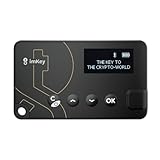
- Top-Tier Security Chip, Bank-Grade Asset Protection: Equipped with an industry-leading Infineon CC EAL 6+ certified security chip, also certified by EMVCo, this chip is widely used in bank payment and identity verification systems. Your private keys are generated and stored entirely offline within the chip, ensuring they never touch the internet. This physically blocks remote hacker attacks and eliminates the risk of private key leakage, building an impregnable first line of defense for your digital assets.
- What You See Is What You Sign, Hardware Button Protection: Every transaction requires manual confirmation via physical buttons on the imKey Pro's clear display. The device intuitively shows key transaction details like the amount and address, ensuring the data hasn't been tampered with during transmission—truly achieving "What You See Is What You Sign." It also features secure PIN code protection and a self-destruct mechanism after multiple incorrect attempts (the private key is wiped after 5 consecutive wrong entries), effectively preventing brute-force attacks even if the device is lost.
- Comprehensive Multi-Chain Asset Support, Access the Web3 Ecosystem: Fully supports major mainnets and Layer 2 networks, including Bitcoin (BTC), Ethereum (ETH), LTC, ATOM, FIL, TRX and more. By adding custom RPCs, you can easily access all EVM-compatible chains like BSC, Polygon, and Avalanche. Furthermore, imKey Pro perfectly supports Layer 2 solutions such as zkSync and Arbitrum, as well as the display and storage of NFTs, meeting all your diverse on-chain needs.
- Cold & Hot Wallet Separation, A Seamless Experience: Utilizing Bluetooth 4.1 wireless technology, it pairs seamlessly with the imToken App on your mobile phone or browser extension wallets on your PC without needing any cables. It combines the ultimate security of a cold wallet (offline private key storage) with the convenience of a hot wallet (online interaction). When a transaction is needed, you sign it offline with your imKey, and the app broadcasts it to the chain. This guarantees asset security without sacrificing the fluidity of use.
- Extremely Thin and Light, A Portable Digital Vault: The device is smaller than a credit card, measuring just 2.3mm thick and weighing approximately 17g. Crafted with a zinc alloy body and a PC panel, it offers a premium feel and is extremely portable. The built-in 33mAh lithium-polymer battery provides a battery life of up to approximately four weeks on a single charge. The package includes the hardware wallet, a USB cable, and mnemonic cards, making it ready to use right out of the box—a secure and reliable gateway to the crypto world.
- Blockchain: A shared ledger records transactions and contract activity. Other participants can verify what the ledger records, subject to the network and application working as intended.
- Wallet and authorization: A wallet holds or enables use of keys that authorize transactions. It generally does not contain the asset; the blockchain records the token.
- Token or credential: A token may represent a cryptocurrency balance, collectible, membership, voting right, or claim linked to something off-chain. Its meaning comes from the protocol, issuer, contract, marketplace, and applicable law.
- Metadata and media: A token may point to descriptive information or a file, rather than storing the full image, video, or document on-chain. NIST notes that large data may require external or decentralized storage referenced by blockchain pointers (NISTIR 8475 PDF).
- Application and legal terms: A marketplace, game, or service makes the token usable, while contracts and law determine any rights beyond the ledger.
For example, buying a digital collectible may put a token in a wallet and create a verifiable transfer record. The image might remain hosted elsewhere; a marketplace may control the interface; and the creator’s terms may grant only a limited license. The token record alone does not answer those separate questions.
What blockchain changes—and what it cannot prove
A blockchain can provide a shared transaction history, programmable rules, and a way to verify transfers without asking one company to update its private database. A wallet may let its holder authorize a transfer directly, and compatible applications may read the same record. These features can make control more portable and independently verifiable than a platform-only balance.
But a ledger proves only what happened under its protocol. It can show that one address transferred a token to another, that a contract ran a function, or that a wallet signed a message. It cannot, on its own, prove that the minter owned the artwork, that a real-world title document is valid, that an issuer will redeem a claim, or that a company will keep its service running.
Nor does “decentralized” describe every layer equally. A network may distribute ledger validation while relying on a centralized website, wallet provider, storage service, identity check, developer team, exchange, or governance group. To assess a product, ask which layer is decentralized and who can change, block, or maintain the rest.
Quick wins for a faster PC:
Clear out junk files and repair common Windows errorsFree Scan →Fix the driver behind crashes, sound loss and screen glitchesFind Drivers →Repair Windows errors before they cause bigger problemsFix Now →Rank #2

- Instant Ethereum Access — No Wallet Setup Required: Pre-loaded Burner ETH Card gives you immediate Ethereum access without needing an exchange account or complicated wallet setup. Perfect for beginners and experienced crypto users looking for a fast, secure onboarding option.
- Secure, Anonymous & Easy to Activate: No personal information, KYC, or lengthy verification process. Simply follow the activation instructions on the card to claim your ETH safely and privately.
- The Perfect Crypto Gift for Any Occasion: Great for holidays, birthdays, graduations, stocking stuffers, employee rewards, or gifting crypto to someone curious about Web3. A modern way to introduce family and friends to Ethereum.
- Use Your ETH Anywhere Ethereum Is Supported: Once activated, funds transfer to your preferred wallet—MetaMask, Coinbase Wallet, Ledger, Trust Wallet, and more. Spend, trade, stake, or hold your ETH just like any other Ethereum balance.
- Physical Card With Simple Step-By-Step Instructions: Premium-quality physical card includes clear instructions for activating and accessing your ETH. Everything is securely contained inside—no codes printed on receipts.
Does an NFT mean you own the underlying work?
No—not automatically. An NFT is a unique token identifier under a contract. It may be associated with an artwork, video, game item, membership, certificate, or physical asset, but holding the token does not by itself transfer copyright, title, or unrestricted commercial rights. NIST describes NFTs as a way to exchange real or virtual assets on a blockchain, not as a universal grant of rights (NIST on NFT security).
| Layer | What the holder may control | What may remain outside the holder’s control |
|---|---|---|
| Token | The blockchain entry and transfer rights allowed by the contract | The underlying content or legal rights |
| Metadata | A token-linked description or attributes | Whether an issuer can alter those details |
| Media file | Access to an image, video, or document | Hosting, deletion, format, or copyright |
| Application account or item | A token that the application recognizes | Platform rules, servers, and continued service |
| Legal rights | Claims provided by a contract or applicable law | Enforcement, jurisdiction, and issuer solvency |
| Physical asset | A token linked to an asset or claim | Custody, inspection, title, and redemption |
A token can be designed to transfer legal rights, but the arrangement needs an enforceable legal framework connecting the token to those rights. Check the purchase terms, license, issuer, governing law, and any redemption or custody arrangements rather than inferring rights from the token’s existence.
Why storage and metadata matter
When a token points to a file stored outside the ledger, the holder’s experience depends on the storage and metadata layers as well as the token. A link may break, a service may stop being paid, metadata may be changeable, or the file may remain available while the holder lacks rights to reproduce or sell it.
- Is the media stored by content hash, at a mutable URL, or through an issuer-controlled service?
- Can the holder export the original file and metadata?
- Who operates the storage, and are independent copies or gateways available?
- What happens if the issuer or hosting provider disappears?
- Does the token remain useful without the official website or marketplace?
“Decentralized storage” does not necessarily mean free of service providers or ongoing costs. MetaMask’s IPFS service documentation states a vendor pricing policy of a $5 monthly minimum, including 5 GB of storage and 5 GB each of ingress and egress bandwidth; it also describes account disabling and eventual content deletion after unpaid charges (MetaMask IPFS pricing FAQs). That example illustrates why a project should document persistence, backups, payment responsibility, and migration plans.
The Tool Desk
Outbyte Driver Updater FREEFix the driver behind crashes, sound loss and screen glitchesFind Drivers →Outbyte PC Repair FREERepair Windows errors before they cause bigger problemsFix Now →Custody: who controls the keys?
Custody concerns who controls the keys or other authorization mechanism. In a custodial arrangement, a platform holds keys and may record a user’s balance in its own books. In self-custody, the user controls the keys. Some systems divide control using multisignature wallets, recovery services, or smart-account rules.
| Arrangement | Who authorizes activity? | Main trade-off |
|---|---|---|
| Custodial | A platform or custodian controls the keys; the user accesses an account | Convenient recovery and support, but dependence on the provider and its solvency, policies, and security |
| Self-custodial | The user controls keys or a user-controlled wallet | More direct control and exit options, but the user bears key security, recovery, and transaction risks |
| Shared or delegated | Multiple signers, guardians, or a smart-account arrangement share authority | Can improve recovery or governance, while adding trust in participants, providers, and account code |
The Congressional Research Service notes that custodial platforms may record transactions on their internal books rather than directly on-chain until a user withdraws to an external address (CRS report on digital assets). A displayed exchange balance therefore may be a claim against the platform, not a token the customer can independently transfer at that moment.
Self-custody: more control, more responsibility
Self-custody can reduce reliance on an exchange or marketplace to approve withdrawals, and assets may remain accessible during a particular platform outage. It also shifts operational duties to the user. A lost recovery phrase can mean permanent loss; phishing or a malicious contract can lead to an irreversible transfer; and public transaction histories can expose activity. Customer support generally cannot reset a self-custodial wallet as it can a conventional account.
Hardware wallets keep signing keys away from an internet-connected computer or phone and require device confirmation for transactions. MetaMask’s compatibility documentation lists devices including Ledger, Trezor, Lattice, Keystone, and NGRAVE ZERO, with support varying by app, extension, and device (MetaMask hardware-wallet compatibility). Hardware reduces some remote-key exposure but cannot prevent approving a malicious transaction, losing a recovery phrase, using fake wallet software, or encountering a vulnerable contract.
Account abstraction, multisignature arrangements, and social recovery can make wallet recovery less dependent on one secret phrase, but they create other trust assumptions: guardians might collude, a recovery provider may be compromised, or account logic may contain vulnerabilities. Read who can recover, pause, or block an account before relying on such a system.
Independent reader supportYour contribution helps us test, update, and keep practical guides available for everyone.Where Web3 ownership may be useful
Collectibles, memberships, and creator communities
Tokens can provide verifiable scarcity, transferability, or access credentials, and smart contracts can encode some transaction rules. A creator may intend to receive royalties on resales, but whether those payments are enforced depends on contract and marketplace support. Buyers should distinguish a collectible token from the license to display, reproduce, or commercialize its associated work.
Gaming items
A token can potentially move between wallets or outlive a marketplace, but portability is not the same as interoperability. Another game must choose to recognize the item and implement its behavior. The original publisher may still control servers, game rules, and whether the item functions at all.
Identity and credentials
Wallet-based authentication, decentralized identifiers, verifiable credentials, selective disclosure, and zero-knowledge proofs aim to make some credentials reusable across services. They do not make a wallet address equivalent to a real-world identity or replace passports and government identity systems. Public addresses can be linked to real people, credentials can reveal sensitive attributes, and recovery or revocation remains difficult.
Best Value
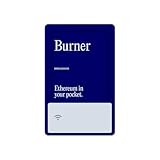
- Instant Ethereum Access — No Wallet Setup Required: Pre-loaded Burner ETH Card gives you immediate Ethereum access without needing an exchange account or complicated wallet setup. Perfect for beginners and experienced crypto users looking for a fast, secure onboarding option.
- Secure, Anonymous & Easy to Activate: No personal information, KYC, or lengthy verification process. Simply follow the activation instructions on the card to claim your ETH safely and privately.
- The Perfect Crypto Gift for Any Occasion: Great for holidays, birthdays, graduations, stocking stuffers, employee rewards, or gifting crypto to someone curious about Web3. A modern way to introduce family and friends to Ethereum.
- Use Your ETH Anywhere Ethereum Is Supported: Once activated, funds transfer to your preferred wallet—MetaMask, Coinbase Wallet, Ledger, Trust Wallet, and more. Spend, trade, stake, or hold your ETH just like any other Ethereum balance.
- Physical Card With Simple Step-By-Step Instructions: Premium-quality physical card includes clear instructions for activating and accessing your ETH. Everything is securely contained inside—no codes printed on receipts.
Payments and stablecoins
Stablecoins can offer around-the-clock blockchain transfers and programmable payment flows, but they combine on-chain control with issuer, reserve, redemption, banking, and regulatory dependencies. They may be frozen or blacklisted, lose their peg, or be affected by network and smart-contract failures. The Financial Stability Board’s 2026 implementation review found continuing gaps and inconsistencies among jurisdictions in areas including custody, redemption, disclosure, and reserves (FSB implementation review summary). In the United States, the White House said in July 2025 that the GENIUS Act created a federal stablecoin framework; that is a dated U.S. policy statement, not a description of rules worldwide or a guarantee against consumer or counterparty risk (White House fact sheet).
Tokenized real-world assets
Tokenization may make some claims—such as interests in funds, bonds, real estate, commodities, or invoices—easier to divide, transfer, and settle. The Bank for International Settlements identifies potential benefits including fractional ownership, direct transfers, shared records, and automated settlement, while noting fragmentation and interoperability limits in current public blockchain ecosystems (BIS Annual Economic Report 2026). A tokenized claim still needs a reliable bridge to the asset: often a custodian, registrar, auditor, legal wrapper, oracle, redemption agent, or court. Tokenization can change intermediaries’ roles; it does not necessarily eliminate them.
Privacy, portability, and permanence
Public verification can come at the cost of privacy. Blockchain addresses are often pseudonymous, not anonymous: transactions may be linked to one another and eventually to a person. Public histories can reveal holdings or behavior, and on-chain information may be difficult or impossible to remove. Privacy tools such as selective disclosure and zero-knowledge proofs can limit what is revealed, but they bring implementation and usability challenges. Sensitive personal information is generally better kept off-chain, with proofs or revocable credentials used where appropriate.
Similarly, a transferable token is not automatically portable in a useful sense. A wallet may move it while another application cannot interpret or support it. Chains can become fragmented, bridges can fail, fees can rise, and a project’s interface or infrastructure can disappear. Evaluate whether an asset can be exported, whether standards are documented, and whether its usefulness depends on one service.
Free tools Windows power users keep installed
One-click scans. No signup required.
A practical test for digital ownership
Before treating a Web3 asset as something you own, answer these questions:
- Key control: Who can sign a transfer? Can an administrator freeze activity or change the contract? Is recovery dependent on one provider?
- Legal rights: What does the written agreement grant? Who is the counterparty, what law governs, and what happens if the issuer fails?
- Persistence: Where are the file and metadata stored? Are they mutable? Can you export them, and who pays to keep them available?
- Portability: Can you move the token to another wallet? Can another application use it? Is the contract upgradeable or tied to one marketplace?
- Security: Who can alter balances or metadata? Are permissions revocable? Can you inspect what a transaction authorizes?
- Privacy: What information and transaction history are public, and can activity be tied to your identity?
- Recovery and usability: Can an ordinary user restore access? Are fees and errors understandable? Is support able to resolve mistakes?
- Sustainability: Who pays for storage, interfaces, indexing, and validation, and does the product have utility beyond trading?
The useful question is not simply whether a product is decentralized. Ask which part of ownership you control, who can override it, what remains off-chain, and what happens if the issuer or interface disappears.
The likely transition is hybrid
Web3 has made digital control more portable and independently verifiable, but it has not produced universal, self-sufficient ownership. The practical model is often hybrid: user-controlled wallets or accounts, public or permissioned ledgers, centralized interfaces and service providers, off-chain storage and identity systems, and conventional contracts and regulation. Its value depends on whether the added transferability and verifiability justify the added responsibilities and dependencies for a particular asset.
Quick Recap
Product prices and availability are accurate as of the date/time indicated and are subject to change. Any price and availability information displayed on Amazon at the time of purchase will apply.




