What’s actually slowing this PC down?
Pick the symptom - the matching free tool is one click away.
Short answer: Britain’s full-fibre rollout is accelerating, but rural availability still trails urban coverage. Ofcom measured full-fibre access at 78% of UK residential premises (23.7 million) in July 2025, versus 61% in rural areas and 81% in urban areas. Openreach is targeting 25 million premises by December 2026, while Gigaclear says its rural network reaches more than 600,000 premises across 26 counties. Those figures describe different things: national wholesale scale versus a rural-focused network. Neither proves that every home can order service today.
The UK rollout in four numbers
- 78% of UK residential premises had full-fibre access in July 2025, according to Ofcom’s Connected Nations 2025 report.
- 61% of rural premises had full-fibre access, compared with 81% in urban areas.
- 87% had access to a gigabit-capable network, a broader measure that includes full fibre and some cable networks.
- 10.6 million premises had taken a full-fibre service, equal to 42% of premises where it was available.
Competition is also uneven: 57% of premises could access more than one gigabit-capable network in July 2025. Yet rural customers who do have fibre are adopting it strongly: take-up where full fibre was available was 56% in rural areas, compared with 40% in urban areas.
Rural Britain is not one broadband market
Ofcom’s rural full-fibre figures vary sharply by nation:
| Area | Rural premises with full fibre (July 2025) |
|---|---|
| England | 60% |
| Northern Ireland | 91% |
| Scotland | 50% |
| Wales | 59% |
| UK overall | 61% |
A UK average therefore says little about a particular village. Scotland’s rural shortfall is much larger than Northern Ireland’s, and even neighbouring properties can have different outcomes because of ducts, poles, private roads or property boundaries.
The Tool Desk
Outbyte PC Repair FREEClear out junk files and repair common Windows errorsFree Scan →Outbyte Driver Updater FREEFix the driver behind crashes, sound loss and screen glitchesFind Drivers →#1 Best Overall

- DUAL-BAND WIFI 6 ROUTER: Wi-Fi 6(802.11ax) technology achieves faster speeds, greater capacity and reduced network congestion compared to the previous gen. All WiFi routers require a separate modem. Dual-Band WiFi routers do not support the 6 GHz band.
- AX1800: Enjoy smoother and more stable streaming, gaming, downloading with 1.8 Gbps total bandwidth (up to 1200 Mbps on 5 GHz and up to 574 Mbps on 2.4 GHz). Performance varies by conditions, distance to devices, and obstacles such as walls.
- CONNECT MORE DEVICES: Wi-Fi 6 technology communicates more data to more devices simultaneously using revolutionary OFDMA technology
- EXTENSIVE COVERAGE: Achieve the strong, reliable WiFi coverage with Archer AX1800 as it focuses signal strength to your devices far away using Beamforming technology, 4 high-gain antennas and an advanced front-end module (FEM) chipset
- OUR CYBERSECURITY COMMITMENT: TP-Link is a signatory of the U.S. Cybersecurity and Infrastructure Security Agency’s (CISA) Secure-by-Design pledge. This device is designed, built, and maintained, with advanced security as a core requirement.
What Openreach is actually expanding
Openreach is principally a wholesale network operator. Retail brands such as BT, Sky, TalkTalk, Vodafone and Zen can sell services over its infrastructure; Openreach itself is not a single consumer broadband tariff.
Openreach reported more than 18 million homes and businesses passed in May 2025. It is targeting 25 million premises by December 2026 and has described a possible expansion to as many as 30 million by the end of 2030, subject to economic and regulatory conditions. Earlier company reporting recorded more than 17 million premises with access, including over 4.3 million in rural, remote or hard-to-reach areas, and a build rate of about 78,000 premises a week. These are milestones from different dates, not conflicting totals. See Openreach’s May 2025 announcement and its record-year update.
Commercial and publicly supported construction
Openreach combines commercial investment with government-supported work, including Project Gigabit. Scale can make more exchange areas viable, but it does not guarantee every property in an exchange area. Openreach says engineering complexity, difficult terrain, wayleaves, access permissions and commercial conditions can leave individual premises outside an initial build. Its build-plan page and checker are therefore more useful than a national target when you are checking one address.
Rank #2

- OneMesh Compatible Router - Form a seamless WiFi when work with TP-Link OneMesh WiFi Extenders
- Next-Gen Wi-Fi 6 Technology – The Archer AX10 leverages advanced Wi-Fi 6 features like OFDMA and 1024-QAM to deliver improved efficiency across your entire network. Perfect for high-bandwidth activities like streaming, gaming, and smart home connectivity.
- Next-gen Dual Band router - 300 Mbps on 2. 4 GHz (802. 11n) plus 1201 Mbps on 5 GHz (802. 11ax)
- Connect more devices than ever before - Wi-Fi 6 technology simultaneously communicates more data to more devices using OFDMA and MU-MIMO while reducing lag dramatically
- Powerful Dual-Core 900MHz Processor – Handles multiple data streams simultaneously for reliable performance across your devices. Ensures smooth streaming, online gaming, and video conferencing without buffering or lag.
Gigaclear’s rural strategy and leadership claim
Gigaclear is a rural-focused network owner and retail broadband provider rather than a nationwide wholesale platform on Openreach’s scale. The company says its network reaches more than 600,000 premises across 26 counties and serves more than 160,000 customers. It also says more than 30,000 new premises were connected in 2025 under Project Gigabit. Those are company-reported figures; they show substantial rural presence but do not establish an independent industry ranking. Details appear in Gigaclear’s 15-year statement.
Gigaclear’s description of itself as the UK’s “leading rural-focused altnet” depends on the definition of leadership. The largest footprint, customer base, number of counties, Project Gigabit portfolio, take-up rate and financial strength are different measures. Available evidence supports a large rural footprint, not a definitive lead on every measure against operators such as B4RN, Community Fibre, County Broadband, GoFibre, F&W Networks, Full Fibre Limited, MS3 and Toob.
What the 2026 recapitalisation changes
In April 2026, Gigaclear announced £80 million of new capital from a consortium including the National Wealth Fund, ABN AMRO and NatWest. It said the transaction strengthened and deleveraged its balance sheet, fully funded its business plan and supported further customer and network expansion. Gigaclear also reported that it was EBITDA positive and had a path to cash-flow positivity. These are management’s claims, not an independently verified conclusion in the announcement; see the recapitalisation statement.
Rank #3

- NIGHTHAWK WIFI 6 ROUTER FOR YOUR WHOLE HOME: Delivers fast, reliable WiFi across every room of your apartment or small home for streaming, gaming, video calls, and smart home devices, all running at the same time without slowing each other down.
- WORKS WITH YOUR EXISTING INTERNET SERVICE: Pairs with your existing modem or gateway via ethernet. Compatible with most cable, fiber, DSL, and satellite providers. Some gateways and modem router combos may require bridge mode. No coax needed.
- SET UP AND MANAGE YOUR NETWORK WITH THE NIGHTHAWK APP: Download the free Nighthawk app on iOS or Android for guided setup. Manage WiFi, run speed tests, pause devices, and set up guest networks from anywhere. Active internet required.
- READY FOR THE DEVICES YOU ALREADY OWN: Your phones, laptops, and TVs work right out of the box. WiFi 6 delivers speeds up to 1.8 Gbps across 2.4 GHz and 5 GHz bands. Backward compatible with WiFi 5 and earlier.
- COVERAGE IN EVERY ROOM: Covers up to 1,500 sq. ft. for up to 20 connected devices. Walls, floors, and interference can reduce range. Larger or multi-story homes may benefit from a NETGEAR Orbi mesh WiFi system.
Openreach and Gigaclear compared
| Question | Openreach | Gigaclear |
|---|---|---|
| Role | Large wholesale full-fibre network | Rural-focused network owner and retail ISP |
| Reported scale | More than 18 million premises passed (May 2025) | More than 600,000 premises across 26 counties (company figure) |
| Stated expansion | 25 million premises by December 2026; possible 30 million by 2030, conditional | Continued rural expansion; no equivalent national target cited |
| Rural approach | Commercial, exchange-area and government-supported programmes | Rural-focused commercial and Project Gigabit deployment |
| Retail choice | Several providers may sell over the same network | Availability and choice depend mainly on Gigaclear’s footprint and offer |
| Leadership evidence | National scale is reflected in company milestones and market data | “Leading rural altnet” is a company claim whose metric must be specified |
Why the hardest premises remain difficult
The final rural properties are expensive because populations are sparse, routes are long and construction may cross private land. Operators must secure wayleaves, install the final drop to a building, maintain equipment and attract enough customers to recover costs. Commercial rollout, public procurement and alternative technologies will all be needed for near-universal coverage.
Project Gigabit is designed to address the gap. In a 7 January 2025 announcement, the government said £289 million of new contracts were being announced, a separate Openreach agreement could make up to £800 million available for rural infrastructure in England, Scotland and Wales, more than 1.1 million hard-to-reach premises were being reached and over £2.2 billion of contracts had been signed with more than 10 suppliers. These are figures from that dated announcement, not a live 2026 total; see GOV.UK’s Project Gigabit release.
Recommended Free Tools
Ofcom’s 2026 framework: the next phase is competition
Ofcom’s March 2026 regulatory announcement covers the next five years and describes the sector as entering the final phase of the full-fibre rollout. It said full fibre had reached nearly eight in ten homes, industry plans could take it to almost 29 million properties by the end of 2027 with the right support, around three quarters of the country could access at least two networks and nearly a third could choose among three.
Rank #4

- Next-Gen Gigabit Wi-Fi 6 Speeds: 2402 Mbps on 5 GHz and 574 Mbps on 2.4 GHz bands ensure smoother streaming and faster downloads; support VPN server and VPN client¹
- A More Responsive Experience: Enjoy smooth gaming, video streaming, and live feeds simultaneously. OFDMA makes your Wi-Fi stronger by allowing multiple clients to share one band at the same time, cutting latency and jitter.²
- Expanded Wi-Fi Coverage: 4 high-gain external antennas and Beamforming technology combine to extend strong, reliable, Wi-Fi throughout your home.
- Improved Battery Life: Target Wake Time helps your devices to communicate efficiently while consuming less power.
- Improved Cooling Design: No heat ups, no throttles. A larger heat sink and redefined case design cools the WiFi 6 system and enables your network to stay at top speeds in more versatile environments.
The framework is intended to encourage investment and competition, including possible deregulation of Openreach where competing networks take root. It is not a promise that every difficult rural property will receive two or three fibre networks. Read the Ofcom announcement for the regulatory detail.
“Planned”, “passed” and “available” mean different things
- Planned: the operator intends to build, but construction may not have started.
- In build: work is under way; orders may still be unavailable.
- Premises passed: network infrastructure is nearby or capable of serving the property, but a final connection may remain.
- Available to order: a retail provider can accept an order for that exact address.
- Connected: an active service has been installed.
- Take-up: the share of premises passed that have become customers.
Openreach’s map is generally exchange-area based and warns that plans can change. Use the exact-address checker rather than relying on a roadworks notice. Gigaclear also requires a postcode and address check; voucher-supported builds can require customer consent and a BDUK confirmation process.
If the village is covered but your house is not
- Check the full address, not only the postcode.
- Ask whether the status is planned, in build, passed or orderable.
- Ask about a missing wayleave, private-road permission or final drop cable.
- Check both Openreach and every relevant altnet checker.
- Ask the local authority or operator about Project Gigabit or voucher options.
- Consider another fixed network, 4G/5G, fixed wireless or satellite instead of waiting indefinitely.
Choosing a connection when fibre reaches your address
- Confirm the physical network. “Fibre broadband” may still mean part-fibre FTTC. Confirm FTTP/full fibre.
- Compare upload speed as well as download speed. Upload capacity matters for video calls, cloud backups and business files.
- Check the complete contract cost. Include activation, router charges, annual price rises, post-contract pricing and exit fees.
- Compare retail providers where Openreach is present. The same physical network can support different prices, routers, support and contract terms.
- Ask about installation conditions. Rural work may involve poles, long driveways, private land or difficult duct routes.
- Plan resilience. A 4G/5G backup, second fixed network or satellite service may be worthwhile for home businesses.
- Keep the existing service until the new line works. A passed network is not an activated connection.
Retail examples and price checks
Gigaclear
Gigaclear’s home broadband page begins with an address check. It is most relevant to rural homes inside its footprint and to households with few fixed-line alternatives. The company says voucher-supported customers who consent to BDUK participation may have a £30 activation fee waived, subject to the stated process; verify eligibility at checkout.
Quick wins for a faster PC:
Fix the driver behind crashes, sound loss and screen glitchesFind Drivers →Repair Windows errors before they cause bigger problemsFix Now →Best Value
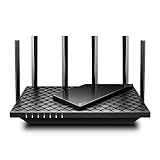
- 𝐆𝐢𝐠𝐚𝐛𝐢𝐭 𝐖𝐢𝐅𝐢 𝐟𝐨𝐫 𝟖𝐊 𝐒𝐭𝐫𝐞𝐚𝐦𝐢𝐧𝐠 – Up to 5400 Mbps WiFi for faster browsing, streaming, gaming and downloading, all at the same time. Performance varies by conditions, distance to devices, & obstacles such as walls.
- 𝐅𝐮𝐥𝐥 𝐅𝐞𝐚𝐭𝐮𝐫𝐞𝐝 𝐖𝐢𝐅𝐢 𝟔 𝐑𝐨𝐮𝐭𝐞𝐫 – Equipped with 4T4R and HE160 technologies on the 5 GHz band to enable max 4.8 Gbps ultra-fast connections.Power:12 V 2.5 A
- 𝐂𝐨𝐧𝐧𝐞𝐜𝐭 𝐌𝐨𝐫𝐞 𝐃𝐞𝐯𝐢𝐜𝐞𝐬 – Supports MU-MIMO and OFDMA to reduce congestion and 4X the average throughput
- 𝐄𝐱𝐭𝐞𝐧𝐬𝐢𝐯𝐞 𝐂𝐨𝐯𝐞𝐫𝐚𝐠𝐞 - Covers up to 2,000 sq. ft. High-Power FEM, 6× Antennas, Beamforming, and 4T4R structures combine to adapt WiFi coverage to perfectly fit your home and concentrate signal strength towards your devices.
- 𝐌𝐨𝐫𝐞 𝐕𝐞𝐧𝐭𝐬, 𝐋𝐞𝐬𝐬 𝐇𝐞𝐚𝐭 – Improved vented areas help unleash the full power of the router
Openreach-based providers
Openreach’s checker and build information identify network status, after which you can compare participating retail providers. Do not assume every provider offers identical speeds, equipment or support.
Vodafone Broadband
On 18 August 2026, Vodafone displayed standard broadband from £24 a month on a 24-month plan, rising to £27.50 on 1 April 2027 and £31 on 1 April 2028. Pro 3 was displayed from £35.50, rising to £39 and then £42.50 on those dates. The page showed speeds up to 910 Mbps for standard service and up to 2.2 Gbps for Pro 3, Wi-Fi 6 and Wi-Fi 7 respectively, optional Super Wi-Fi Booster at £7 a month, 4G backup with Pro 3 and an offer of up to £200 towards eligible early termination fees. Prices and availability are address-specific and can change; check the official Vodafone page. Vodafone says the 2.2 Gbps figure is achieved using a wired connection, so Wi-Fi performance may be lower.
What the headline does—and does not—prove
Openreach supplies unmatched national scale and wholesale choice. Gigaclear shows how a rural specialist, supported in part by Project Gigabit, can build where purely urban economics are weaker. The meaningful test for a household is narrower: can the exact address order a full-fibre service, what will installation cost, what upload speed is offered, and what happens if the line fails?
Coverage, premises passed and customers connected are separate measures. More networks can improve choice, but they do not automatically mean lower prices, shorter contracts or universal reliability. The UK is moving from a shortage-of-fibre problem toward a competition-and-final-premises problem, and local address checks remain decisive.
Do these 3 things before closing this tab:
1Repair Windows errors before they cause bigger problems2Scan for outdated or missing drivers - takes under a minute3Clear out junk files and repair common Windows errorsQuick Recap
Product prices and availability are accurate as of the date/time indicated and are subject to change. Any price and availability information displayed on Amazon at the time of purchase will apply.




