Quick wins for a faster PC:
Repair Windows errors before they cause bigger problemsFix Now →Scan for outdated or missing drivers - takes under a minuteDriver Scan →Tuskr is test-management software for organizing test cases, planning and recording test runs, and reporting results. Current third-party pricing pages list paid plans at $9, $15, and $29 per user per month, but those figures are not verified 2025 prices—and a reported five-user minimum can make the real starting cost $45 a month. Reviews are generally strong, while recurring complaints point to limits in customization and reporting. Here is what the available pricing and review evidence shows, and what to check before committing.
Date note: This article separates current information available in 2026 from claims about 2025. The available sources do not establish that today’s prices, plan limits, or trial terms were the same in 2025.


What Tuskr does
Tuskr is a cloud-based test-management platform. Teams can create and organize a test-case repository, group cases into suites and projects, plan test work, run manual tests, record outcomes, and share reports with stakeholders. Capterra describes a rich-text test-case editor, organized test data, configurable runs and result statuses, PDF reporting, and workload comparisons (Capterra’s Tuskr profile).
It is best understood as a place to manage testing work and evidence—not as a defect tracker, browser/device testing service, or full CI/CD automation platform. It can connect with other tools and provide API or webhook access, but buyers should confirm how each required connection works and whether it covers their workflow. Tuskr’s own site presents it as a cloud test-management tool (Tuskr).
Recommended Free Tools
#1 Best Overall
Tuskr pricing: reported plans and limits
G2’s pricing page lists the following prices and plan limits. TrustRadius reports the same three paid-plan prices and a 16% annual-billing discount. These are third-party listings, not a current vendor quote, and they do not establish historical 2025 pricing. G2 says its pricing information was last updated October 10, 2024, so it should not be treated as proof of what a customer would have paid in 2025 (G2 pricing; TrustRadius pricing).
| Plan | Reported price | Reported capacity and features |
|---|---|---|
| Free | $0; G2 displays a one-user/month billing unit. Tuskr’s site says up to five users. | Core test-management functionality; exact current limits are not established in the cited listings. |
| Team | $9 per user/month | Up to 50 projects, 50,000 test cases, 5 GB per-user file space, 15 custom fields, 5 field sets, custom run statuses, 2 webhooks, 1,200 API calls per hour, and 250 runs per project. |
| Business | $15 per user/month | Up to 100 projects, 100,000 test cases, 15 GB per-user file space, 25 custom fields, 10 field sets, 3 webhooks, 2,400 API calls per hour, audit trail, two-factor authentication, and 500 runs per project. |
| Enterprise | $29 per user/month | Up to 250 projects, 250,000 test cases, 30 GB per-user file space, 50 custom fields, 15 field sets, 5 webhooks, 4,800 API calls per hour, audit trail, two-factor authentication, single sign-on, and 1,000 runs per project. |
The feature and capacity figures above are those shown in G2’s listing; confirm them against Tuskr’s live plan matrix before purchase. The table also does not establish whether prices are USD in every region, whether taxes are included, or which users count as billable.
The five-user minimum changes the math
A Tuskr article says paid plans require at least five users (Tuskr’s QA leaders guide). If that minimum still applies at checkout, the listed per-user rates imply a five-seat monthly commitment, not a one-seat subscription:
Rank #2

- TURN YOUR IDEAS INTO REALITY: Unleash your creativity with this unique planning notebook, consisting of 224 pages divided into 112 Project Planner sheets. Each sheet is designed to step-by-step completion and management of your project.
- EMPOWER YOUR MANAGEMENT: This professional project organizer keeps all project-related information in one place. Stay on top of multiple projects with the convenient project tracker notebook feature, ensuring no detail is missed.
- ARCHIVE YOUR PROJECT GOALS: Stay focused on your projects with dedicated sections for objectives, tasks with deadline, essential supplies and tools notes, space for ideas and sketches illustration, and notes. Experience a simple yet powerful tool to ensure completion and accomplish more with ease.
- EFFICIENT BONUS STATIONARIES: You will receive either set of a ball pen and two cute sticky notes or a set of remind stick pads (randomly). The versatile design can be used for projects at home, work, school, or business to organize, manage a team, and to delegate tasks. This planner is a simple way to make sure you finish what you start and accomplish more.
- HANDLE SINGLE PROJECT IN HAND: Designed with tearable sheets allow you taking any single sheet for more convenient. 7x10 inch sheets are printed on 70 lb premium paper. With advanced printing technology and leather cover, our planner exudes a premium feel and long lasting.
| Plan | Illustrative five-user monthly total | Illustrative annual total at monthly list price | Illustrative annual total after TrustRadius’s reported 16% discount |
|---|---|---|---|
| Team | $45 | $540 | $453.60 |
| Business | $75 | $900 | $756 |
| Enterprise | $145 | $1,740 | $1,461.60 |
These totals are arithmetic based on the reported per-user prices, a five-user minimum, and TrustRadius’s reported discount; they are not confirmed quotes. The discount’s availability by plan, region, and purchase date is not established. A small team should ask whether invited but inactive users are billed, and whether the minimum applies to its quote.
Free tools Windows power users keep installed
One-click scans. No signup required.
What the price comparison does—and does not—tell you
TrustRadius also displays a “starting at $45” figure, which conflicts with its detailed per-user plan prices unless a five-seat minimum is being reflected. The listing does not explain the discrepancy. For budgeting, use the plan table only as a price signal, then request a written quote that specifies seats, billing cadence, currency, tax, discount, and renewal terms. Do not treat a comparison-site figure as a verified 2025 price.
Is there a free plan or trial?
Tuskr’s homepage says its free plan supports up to five users and includes core test-management features (Tuskr). The available information does not establish all free-plan caps, support terms, attachment or API limits, or what happens to a workspace when it exceeds a limit. Before migrating a real test library, ask whether projects remain accessible, whether the workspace becomes read-only, and how exports work if you later upgrade or leave.
Rank #3

- Essential to High Productivity — Take your efficiency to the next level with this work notebook organizer planner. Stay on top of projects, manage your team and make strategic decisions to grow your business with this project organizer notebook
- Juggle Multiple Tasks at Once — No need to feel overwhelmed by all your responsibilities. Break them down piece by piece in this meeting notebook for work. From the finance department to the marketing team, this project organizer planner keeps track of all the moving parts
- Assign Actionable Items — Prioritize your tasks based on their importance and urgency with this planning notebook. Record general notes, list action items and due dates. See what needs to be done today, this week, or next month and stay accountable
- Built to Take on the Go — These project manager notebooks are made of 120gsm double-sided paper with large, easy to read print. The sturdy cover withstands heavy use as you take it from the office to the gym. Know exactly where you left off with the built-in sash and get straight to business no matter where you are
- Reduce Stress with Clear Organization — Don't sweat the small stuff. Focus on high-impact actions that will move the needle. Whether you're head of a team or running your own business, this business notebook organizer provides a helpful boost to your performance and peace of mind
The trial duration is inconsistent across sources. Tuskr’s current trial page advertises 15 days (Tuskr trial page), while G2 lists a 30-day premium-feature trial and TrustRadius reviews refer to a 30-day trial. The third-party references may reflect an older offer or different signup route. Confirm the duration, card requirement, trial-end behavior, and cancellation terms on the signup flow you will actually use; the cited sources do not settle those details.
What Tuskr users say: ratings and review limits
At the time of the available 2026 review listings, the platforms show the following scores. Counts and ratings change, and the populations, verification practices, and scales differ, so these numbers should not be read as a head-to-head ranking.
The Tool Desk
Outbyte PC Repair FREEClear out junk files and repair common Windows errorsFree Scan →Outbyte Driver Updater FREEScan for outdated or missing drivers - takes under a minuteDriver Scan →| Platform | Listed rating | Listed review count | What to keep in mind |
|---|---|---|---|
| G2 | 4.6/5 | 557 | Ratings and review topics on G2; count is a snapshot and may change. |
| Capterra | 4.7/5 | 66 | A separate review population and platform methodology. |
| TrustRadius | 9.3/10 | 30 | Some reviews are identified as incentivized. |
Sources: G2 reviews, Capterra, and TrustRadius. Strong aggregate scores indicate favorable responses among reviewers, not proof that Tuskr fits a particular team. Read reviews for workflows like yours and pay particular attention to the date and context of any complaint or praise.
Rank #4
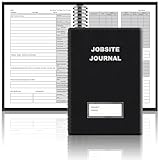
- The Jobsite Journal: this offering features a single black construction planner ensures you have a streamlined tool for organized recording at the jobsite, allowing you to document ideas, create sketches, and monitor progress in one centralized place. Crafted with quality in mind, this journal is a daily essential for jobsite scheduling, serving as a reliable partner for all your documentation needs
- Portable Design: measuring approximately 7 x 10 inches, the construction notebook fits seamlessly into work bags or briefcases, making it a go-to accessory for architects, engineers, and field professionals. Its ample page space ensures notes and sketches remain comprehensive and legible, while its lightweight design supports mobility during site visits and meetings
- Productive Layout: featuring a clear, efficient layout, the construction daily log book eliminates organizational challenges, enabling effortless documentation of critical details-including jobsite activities, task timelines, and milestone dates. It serves as a trustworthy archive for referencing, verifying, and reviewing site information, essential for project accountability and compliance
- Premium Materials: constructed with high-quality PU leather and paper, this project management notebook is built to endure daily use, while offering a smooth writing experience.The sleek, solid-black cover combines modern style with long-lasting durability, preserving its pristine appearance even after frequent use-all while safeguarding your work records. Designed with a spiral binding, it allows for easy, flat-page access, making note-taking effortless in any on-site scenario
- Versatile Utility: engineered to meet the demands of anyone requiring systematic and dependable note-taking, drafting, or sketching, this Record Construction Planner adapts to various roles-from architects and engineers to site supervisors. Its thoughtful size and design make it suitable for individual use or collaborative teams, ensuring it caters to diverse needs in field observations, project planning, and progress tracking
What reviewers like
Accessible interface and organization
G2 review summaries commonly praise the clean interface, straightforward navigation, and relatively low learning curve. Reviewers describe the organization of cases, runs, and reports as logical, which can help teams move away from spreadsheets or scattered documents. These are recurring reviewer impressions, not a measured onboarding-time result (G2 reviews).
Structured, reusable test assets
Reviewers cite test-case hierarchies, reusable steps, bulk cloning, and centralized assets as useful for regression and release cycles. For teams that repeat similar testing across versions or projects, that structure can reduce duplication; validate whether the hierarchy and reuse model match your own conventions.
Perceived value and connections to other tools
TrustRadius reviewers praise the free or lower-cost entry point and sometimes compare its value favorably with TestRail. G2 lists connections involving Jira, GitHub, GitLab, Jenkins, Microsoft Teams, Slack, Excel, Power BI, ClickUp, and monday.com. A name on an integrations list does not by itself show whether the connection is native, supplied through a marketplace, API-based, or dependent on another service. Verify the exact connector, permissions, data flow, and setup effort for the tools your team relies on.
What’s actually slowing this PC down?
Pick the symptom - the matching free tool is one click away.
What reviewers criticize
Customization may not keep pace with complex workflows
G2 identifies limited customization as a recurring negative theme, and some reviewers say constraints become more noticeable as workflows grow more complex. That matters if you need highly tailored permissions, fields, result models, or process rules. The listed custom-field and field-set counts are capacity limits; they do not establish that the underlying workflow is configurable enough for every team.
Reporting may be too basic for advanced analysis
Some G2 reviewers want more depth in reports and dashboards for management analysis and quality decisions. During evaluation, test the actual views managers need: filtering by release, environment, component, or tester; traceability; trend analysis; and export to a BI tool such as Power BI if applicable. Feature availability alone does not establish the depth of analysis available.
Integration setup needs validation
Review summaries mention integration issues, and some users describe setup or configuration as requiring patience. That is not enough evidence to conclude integrations are generally poor. Instead, connect your required issue tracker or CI tool during evaluation, then test a realistic handoff—for example, whether a failed test can be linked to the right issue and whether the status flow is useful.
Enterprise-scale claims need workflow proof
Some reviewers find Tuskr less compelling for highly complex projects, advanced CI/CD tracking, predictive analytics, or large quality-engineering programs. Those are individual experiences, not independent scalability tests. An Enterprise plan label and higher capacity limits alone do not establish suitability for a large organization’s security, procurement, reporting, support, or integration needs.
Who is Tuskr a good fit for?
- Small or mid-sized QA teams: A plausible fit if the priority is a shared repository, manual test execution, and approachable organization rather than extensive workflow engineering.
- Startups and agencies: Worth evaluating when replacing spreadsheets or fragmented test assets, especially if a free plan can support an initial trial of the process. Check how costs change when more contributors need access.
- Developers and project managers: Useful where they need visibility into planned and completed test work, provided the reporting and integrations answer their actual questions.
- Solo testers or two-person teams: The free plan may be relevant, but the reported five-user minimum could make a paid plan uneconomical. Confirm whether that minimum remains in effect.
- Enterprise QA organizations: Consider it only after testing required SSO, audit controls, data export, support commitments, complex reporting, automation flows, and implementation requirements. A plan name is not a substitute for that validation.
How Tuskr compares with alternatives
| Alternative | Why consider it | What to verify |
|---|---|---|
| TestRail | A more established, enterprise-oriented test-management option for teams prioritizing maturity and formal processes. | Current quote and total cost; G2 lists a higher starting price in its comparison data, but that is not an official current quote. Also weigh process overhead against your needs. |
| Qase | A direct modern test-management alternative with a free-plan signal in G2’s comparison data. | Current free-tier user and attachment limits, reporting, automation support, integrations, and plan pricing. G2’s cited listing describes up to three users and 500 MB of attachments, but confirm current official terms. |
| Testmo | Worth comparing if manual, exploratory, and automated testing workflows need to be managed together. | Current pricing and implementation fit; available evidence here does not establish a price. |
| PractiTest | May suit organizations prioritizing traceability, formal test-management processes, and enterprise support positioning. | Current quote, complexity, and fit. TrustRadius lists a starting price of $39, but that is not an official current quote. |
| BrowserStack | Relevant for browser, device, and testing infrastructure needs. | It is not a direct replacement for a central test-case repository and test-run manager; decide whether you need infrastructure alongside, rather than instead of, test management. |
G2 lists TestRail, Qase, and BrowserStack among Tuskr alternatives, and has direct comparisons for Testmo and PractiTest (G2 pricing and alternatives; Testmo comparison; PractiTest comparison). G2’s rankings and comparisons are useful discovery tools, not proof that products are interchangeable or that one is best.
Quick Recap
How to evaluate Tuskr before paying
- Get the commercial terms in writing. Confirm current per-user prices, any five-user minimum, who is billable, currency, tax, annual discount, renewal price, and whether the quote is monthly or annual.
- Import a representative set of test cases. Include nested suites, reusable steps, attachments, and whatever history or relationships matter. Check whether imports preserve the structure you need.
- Run a real regression cycle. Create a plan, execute cases, record failures, and review how results are tracked across testers and releases.
- Connect the required issue tracker and development tools. Test the integration path end to end; determine whether it is native or API/connector-based and whether it preserves the links and fields you rely on.
- Build the manager’s report. Try the filters, traceability, trend views, and exports that stakeholders actually use rather than relying on a sample dashboard.
- Test API, webhooks, and automation handoffs if needed. Confirm rate limits and whether your use case is test management, result ingestion, or orchestration; do not assume these are the same capability.
- Check permissions, security, and data portability. Confirm which plan contains the controls you require, and ask what exports preserve—including attachments, comments, history, and relationships.
- Clarify trial and exit terms. Confirm the trial length for your signup route, any card requirement, what happens at expiration, how to cancel, and whether workspace data remains available.
Product prices and availability are accurate as of the date/time indicated and are subject to change. Any price and availability information displayed on Amazon at the time of purchase will apply.




