Trump’s executive orders did not make every diversity, equity and inclusion (DEI) program illegal or repeal Title VII. The administration has directed agencies to target what it calls illegal private-sector DEI preferences, and the EEOC and Justice Department say employment decisions motivated in whole or in part by protected characteristics may violate existing law. Federal contractors also face a separate, newer set of requirements under a March 2026 order, with obligations that depend on the contract terms agencies put in place.
What the rules mean for private employers
The core question is not whether an employer calls something “DEI.” The EEOC says DEI is a broad term that Title VII does not define. Instead, the agencies focus on the employment action and whether a protected characteristic motivated it. Title VII remains the central employment-law frame in the agency materials discussed here; the executive orders direct agency policy and enforcement but do not themselves repeal that statute.
In March 2025, the EEOC and Justice Department said that a DEI initiative may be unlawful if an employment action is motivated “in whole or in part” by an employee’s or applicant’s race, sex, or another protected characteristic. The agencies presented this as an application of longstanding Title VII protections, not as a new statute. Their technical assistance is educational guidance, not a judicial ruling that every program described as DEI is unlawful.
That distinction matters in practice: a program’s name, stated purpose, or slogan cannot determine whether a particular hiring, promotion, compensation, training, or other employment decision complies with the law. The relevant facts include the criteria used and how they affected the decision.
Quick wins for a faster PC:
Repair Windows errors before they cause bigger problemsFix Now →Scan for outdated or missing drivers - takes under a minuteDriver Scan →#1 Best Overall

- Valued Carpenter Pencil Set: You will get 2 pcs solid carpenter pencils with 26 piece 2.8 mm refills, 1 replaceable sharpener, 1 plastic storage box.The complete carpenter pencils combination allows you to finish your work faster and more easily
- Deep Hole Marker Pencil: The deep-hole construction pencils adopts 45mm elongated tip design, which is more convenient to mark in the small hole or in other tight areas that other carpenter markers cannot reach
- Carpenter Pencils with Sharpener: The sharpener is screwed into the top of the work pencil, which won't get lost either. Built-in pencil sharpener that keep the lead with pointed and smooth to Improves line of sight in fine work
- Stronger Solid Lead: This work pencil is matched with a 2.8 mm thick lead , which is much thicker and stronger during the drawing process of construction work, it will not break or damage easily
- Marks on Various Surfaces: 3 colors solid construction pencil can marks on various surfaces,such as metal, plastic, wood, paper etc. Ideals for woodworkers, contractors, craftsmen, builders, merchants and masons
How the federal actions differ
| Source of obligation or policy | Who it concerns | What it does | Status and potential consequences |
|---|---|---|---|
| Title VII and applicable precedent | Employers and other covered entities within the statute’s scope | Prohibits employment discrimination based on protected characteristics; the EEOC and DOJ say an employment decision motivated in whole or in part by a protected trait can violate the law. | Existing federal law. The executive orders do not repeal it. |
| EEOC and DOJ technical assistance, March 19, 2025 | Employers and other covered entities seeking guidance on DEI-related conduct | Explains the agencies’ view that the legality turns on the employment action and its basis, not the DEI label. | Non-binding educational materials based on Title VII, existing EEOC guidance, and Supreme Court precedent, as EEOC Chair Andrea R. Lucas described them in February 2026. |
| Executive Order 14173, January 21, 2025 | Federal agencies and, through their enforcement work, private-sector employers | Directs agencies to combat what the order calls illegal private-sector DEI preferences and asks the Attorney General to develop an enforcement strategy. | Administration policy and direction for agency action, not a categorical statutory ban on all DEI programs. |
| Executive Order on disparate-impact enforcement, April 23, 2025 | Federal agencies | Directs agencies to deprioritize enforcement of provisions to the extent they involve disparate-impact liability, and to review certain pending matters and regulations. | An enforcement-policy direction. It does not, by its text alone, erase every statute or resolve all legal challenges. |
| Federal-contractor order, March 26, 2026 | Covered federal procurement contractors and subcontractors to the extent applicable contract terms bind them | Directs agencies to include a clause prohibiting “racially discriminatory DEI activities” in covered contracts, with information, record-access, and subcontractor-reporting provisions. | Provides for possible contract cancellation, suspension, or termination, potential suspension and debarment, and possible False Claims Act actions. Agencies were directed to issue interim guidance and amend procurement rules. |
These instruments should not be treated as interchangeable. Title VII supplies an existing statutory rule; agency technical assistance explains the agencies’ position; executive orders direct the administration and agencies; and contractor requirements operate through applicable contract language. A case-specific court ruling addresses the parties and issue before that court, not automatically every employer or contract.
What changed, and when
- January 21, 2025 — Executive Order 14173. The order directed agencies to enforce civil-rights laws and “combat illegal private-sector DEI preferences, mandates, policies, programs, and activities.” It asked the Attorney General for an enforcement strategy addressing sectors, potential investigations and litigation, and regulatory or sub-regulatory action. It also revoked Executive Order 11246 and allowed federal contractors to continue under the prior regulatory scheme for 90 days. Those directives expressed administration policy and planned agency action; they did not establish that every DEI program was unlawful. Source: The White House, Executive Order 14173, January 21, 2025.
- March 19, 2025 — EEOC and DOJ technical assistance. The agencies explained that a DEI initiative may violate Title VII when an employment action is motivated in whole or in part by a protected characteristic. The guidance described the agencies’ interpretation of existing law rather than a newly enacted Title VII rule. Source: EEOC, “EEOC and Justice Department Warn Against Unlawful DEI-Related Discrimination,” March 19, 2025.
- April 23, 2025 — disparate-impact enforcement direction. The White House directed agencies to deprioritize enforcement based on disparate-impact liability to the extent covered by the order and to review specified matters and regulations. This is distinct from the agencies’ guidance about intentional employment decisions based on protected traits. Source: The White House, “Restoring Equality of Opportunity and Meritocracy,” April 23, 2025.
- March 26, 2026 — federal-contractor requirements. A new order directed agencies to add a clause concerning “racially discriminatory DEI activities” to covered procurement contracts. It also set out access, reporting, and potential enforcement consequences and assigned further work on procurement guidance and rules. Source: The White House, “Addressing DEI Discrimination by Federal Contractors,” March 26, 2026.
- February 26, 2026 — EEOC Chair letter. Chair Andrea R. Lucas called the EEOC/DOJ materials non-binding educational documents and reminded employers that they remain responsible for complying with federal law. The letter is an agency leader’s statement, not a complete ruling on every DEI-related issue. Source: EEOC, “Reminder of Title VII Obligations Related to DEI Initiatives,” February 26, 2026.
What federal contractors should check
The March 2026 order is a separate concern for contractors from the generally applicable Title VII framework. It directs agencies to put a specific clause into covered procurement contracts; the order’s wording alone does not tell every contractor which final terms apply to its award. Read the solicitation, contract, and any amendments actually governing the work, and confirm implementation details with qualified counsel.
Rank #2

- Ergonomically Designed: Work in tight areas with a compact design that gets into tough spots
- Compact and Lightweight: Both tools are designed to fit into difficult to reach spaces. The 1/4" impact driver has a length of 5.55 in. and weighs just 2.8 lbs, while the 1/2" drill/driver measures only 7.5 in. and weighs 3.6 lbs
- Both the DEWALT impact driver and electric drill driver feature integrated LED work lights with a convenient 20-second delay, ensuring enhanced visibility in dimly lit or challenging work areas
- One-Handed Loading - Keep one hand free with a 1/4 in. hex chuck that accepts 1 in. bit tips
- Power drill cordless with 1/2" single sleeve ratcheting chuck provides tight bit gripping strength, making bit changes faster and more secure
- Check whether the contract is covered and whether the required clause has been included or incorporated through an amendment.
- Review what the applicable clause defines as “racially discriminatory DEI activities,” as well as its record-access and information requirements.
- Understand any obligation to report known or reasonably knowable conduct by subcontractors, and establish a process for identifying and escalating relevant information.
- Track agency implementation of the interim guidance and procurement-rule changes, since the order directed additional work after its issuance.
- Assess potential contract remedies and enforcement exposure using the actual contract terms and facts, not the order’s headline alone.
What employers can do now
The following are general compliance steps, not a substitute for advice on a particular workforce decision, investigation, or contract.
- Inventory employment decisions and access criteria. Review hiring, promotion, compensation, training, mentoring, and other workplace opportunities. Identify who qualifies, how selections are made, and whether protected characteristics affect a decision.
- Keep records of the criteria and their application. Preserve documentation showing neutral, job-related decision criteria and how they were applied. Records should reflect actual decision-making rather than be created after a dispute arises.
- Review programs by their operation, not just their labels. A DEI label neither proves a violation nor establishes compliance. Examine the actual eligibility rules, selection decisions, and outcomes in the relevant employment context.
- For federal work, review contract documents separately. Have counsel assess the solicitation, award, incorporated clauses, amendments, and any subcontracting terms that apply to the employer.
- Seek advice on the facts. The governing law, the terms of a contract, and the details of a decision matter. Employers should consult qualified employment or government-contracting counsel for their circumstances.
What the court and reporting developments do—and do not—show
A preliminary ruling in one Labor Department case
On April 15, 2025, the Associated Press reported that a federal judge preliminarily barred the Labor Department from enforcing a key certification provision against the plaintiff in Chicago Women in Trades’ lawsuit. AP reported that the judge considered the plaintiff likely to succeed and that similar litigation existed. This was a preliminary, case-specific ruling; it does not establish that every anti-DEI order was invalidated nationwide. The sources cited here do not establish the complete later litigation status of the March 2026 contractor order.
Do these 3 things before closing this tab:
1Scan for outdated or missing drivers - takes under a minute2Repair Windows errors before they cause bigger problems3Fix the driver behind crashes, sound loss and screen glitchesRank #3

- 【Great Compatibility】This Katerk 1/4 inch hex shank bit holder is specifically designed for 1/4 inch hex shank drill bits. It's compatible with most 1/4 fast hex handles, hex sockets, various electric screwdrivers, and handheld screwdrivers. The bit holder makes it a valuable addition for any handyman.
- 【Secure and Safe】Built with a secure backup nut design, each drill bit holder securely locks onto your bits, ensuring they stay firmly in place. Additionally, our bit holder incorporates a high-quality steel ball rolling design that holds up to several kilograms of weight, ensuring your various drill bits don't fall off.
- 【Easy One-Handed Operation】The bit holder for impact driver allows you to change bits single-handedly, simplifying your workflow. Its multi-color design further allows for quick identification of the drill bit you need.
- 【Compact and Convenient】Thanks to its compact size, this 1/4 inch bit holder is easy to carry around. The bit holder allows for easy attachment to various tools, making this a convenient addition to your construction accessories. The Katerk bit holder is cast from high-quality alloy material, promising a long product lifespan. Despite its rugged strength, the bit holder remains lightweight, making it portable.
- 【Cool Christmas Gift For Men Stocking Stuffers】 This screwdriver bit holder, driver bit holder, impact bit holder, can be given as a gift to your loved one, especially for anyone involved in construction or electrical work. It's a must-have for stocking stuffers for men and women, tools gifts for dad, tech gadgets for men, gifts for dad, gifts for him, gifts for husband, gifts for boyfriend, cool gadgets for men, and cool gifts for dad.
A proposed EEO-1 reporting change
On July 21, 2026, AP reported that the EEOC voted 2–1 to propose rescinding EEO-1 demographic reporting and opened a 30-day public-comment period before final approval. AP described it as a proposal, not a completed repeal; the materials available here do not establish its final status. Employers should verify current reporting requirements with the EEOC or counsel rather than assume the proposal ended them. The same AP report said the agency had last collected 2024 data and had not publicly disclosed it at that time.
For historical context only, AP reported that EEO-1 data for 2023 showed women held 34.5% of executive and senior-manager roles at surveyed companies, up from 29.2% a decade earlier; white men held 52.7% of those roles while representing about one-third of the surveyed workforce. AP said the collection typically covered more than 50 million employees and 73,000 employers nationwide. These are historical figures reported in 2026, not measurements of 2026 workforce composition, and they do not determine whether any particular employment decision is lawful.
Quick Recap
Best Value
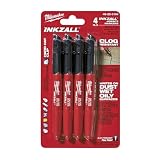
- Milwaukee Ink all Fine Point Marker, Black, 4 Per Pack
- 4 per pack Features Clog Resistant Marker Tip Writes through Dusty, Wet and Oily Surfaces Durable Marker Tip for Writing on Concrete, OSB and Rough Surfaces
- Clog resistant tip writes on dusty, wet and oily surfaces and is optimized for rough surfaces such as OSB, cinderblock and concrete
- Hard hat clip- attaches for easy access
- Quick dry time with reduced smearing and marking
Rank #4

- Long Nib and Deep Hole Marker: Our mechanical carpenter pencil with 45mm nib is designed for easy marking of deep holes or narrow areas. These construction pencils are the great choice for woodworking tools, construction tools, carpenter tools, contractor tools, wood carpentry tools and architect tools
- Extra Refills in 2 Colors for Versatile Marking: The construction mechanical pencil comes with 12 extra 2.8mm refills, including 6 red and 6 black refills. The black refill is suitable for light surfaces, while the red wax is perfect for dark surfaces. Our carpenter mechanical pencil makes sure that you'll have an ample supply for extended use
- Built-in Sharpener: Our construction pencil comes with a built-in sharpener to ensure the mechanical pencil tip is always sharp and ready for use. Never buy an extra pencil sharpener again. A great tool for any woodworker pencil, contractor pencils. The refill can easily be extended or retracted with a simple click of the pencils mechanical, allowing you to work more efficiently and accurately
- Portable Clip Design: Our deep hole construction pencil features a portable clip design, easy to carry and attach to your pocket or tool box, so that you can keep the carpenter pencils mechanical close at hand, making it a convenient tool to have on the go. Great gifts choice for carpenters
- Stronger Pencil Lead: The black refills are made of lead, sturdy and smooth. The red refills are made of wax, clear and light. These marking pencils are much thicker and stronger than normal pencils during the marking process of construction work, suitable for various surfaces, such as glasses, metal, boards, floors, walls, furniture, etc. The written marks can be easily wiped with a wet paper towel when needed
Product prices and availability are accurate as of the date/time indicated and are subject to change. Any price and availability information displayed on Amazon at the time of purchase will apply.




