Recommended Free Tools
Short answer: On August 6, 2025, President Donald Trump said the United States would impose an “approximately 100 percent” tariff on imported chips and semiconductors, while exempting companies building—or committed to building—in the United States. That statement was not a complete tariff order. The later formal action identified in official records was narrower: a 25 percent duty on certain advanced-computing chips and derivative products, effective January 15, 2026.
What Trump said on August 6, 2025
Trump made the remarks during an Oval Office event announcing additional Apple investment in the United States. He said imported “chips and semiconductors” would face a tariff of approximately 100 percent, but added that companies building in the United States, or committed to doing so, would not be charged.
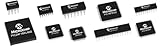
Trump also indicated that a company could face accumulated charges if it promised to build in the United States but failed to follow through. The remarks linked tariff treatment to corporate investment rather than simply to the country where a chip was manufactured. The contemporaneous transcript and American Presidency Project record document the exchange.
The event followed Apple’s announcement of a planned $600 billion U.S. investment over four years, according to the White House. Apple’s commitment illustrated the type of investment Trump appeared to have in mind, but it did not itself establish a legally binding, company-wide tariff exemption.
#1 Best Overall

- 35+ Guided Electronics Projects: Progress from LEDs and buttons to RFID access, real-time clocks, motion and distance sensing, environmental monitoring, motor control and interactive displays for STEM learning, coding clubs and maker projects
- More I/O and Memory for Larger Builds: The MEGA 2560 R3 provides 54 digital I/O pins, including 15 PWM outputs, 16 analog inputs, 4 hardware serial ports and 256 KB flash for projects that combine more sensors, controls and displays
- 200+ Components for Prototyping: Includes LCD1602, RC522 RFID, RTC, DHT11, HC-SR501 PIR, ultrasonic and water-level sensors, GY-521, MAX7219, keypad, joystick, rotary encoder, relay, SG90 servo, stepper motor, DC motor, breadboard and more
- Learn, Modify and Create: Follow 35+ guided lessons with example code, then adjust sensor thresholds, timing, display text, motor behavior and control logic to turn structured exercises into access systems, monitors, alarms and interactive projects
- Organized for Repeatable Learning: Pre-soldered modules, a solderless breadboard, storage case and small-parts box reduce setup time and keep sensors, LEDs, ICs, wires and other components easy to find between projects
Was a 100% semiconductor tariff actually imposed?
Not through the August 6, 2025 statement. Trump’s comments supplied a proposed rate and a broad exemption concept, but not the customs instructions importers need to calculate liability.
The remarks did not specify:
- Which Harmonized Tariff Schedule codes would be covered.
- Whether the measure would apply to wafers, bare dies, packaged chips, memory, processors, sensors, power semiconductors, or modules.
- Whether the tariff would apply to the chip’s value or the full customs value of a device containing the chip.
- Whether all countries would receive the same treatment.
- When collection would begin.
- How companies would prove that they were “building” or “committed to build” in the United States.
- Whether an exemption would be company-wide, product-specific, or tied to a particular facility.
Those omissions matter. A presidential remark can signal policy, but importers generally need a formal proclamation, implementing notice, tariff classification, and customs guidance before they can determine what duty is owed. Associated Press coverage highlighted the uncertainty over the proposed tariff’s scope and exemptions (AP follow-up).
What formal action came later?
On January 14, 2026, the administration issued a semiconductor action under Section 232 of the Trade Expansion Act of 1962. The proclamation imposed a 25 percent tariff on certain advanced-computing chips and specified derivative products entered for consumption, or withdrawn from a warehouse for consumption, on or after January 15, 2026.
Rank #2

- TURN CODE INTO REAL-WORLD RESULTS — Follow 22+ guided lessons to make LEDs blink, read temperature and distance, move servo and stepper motors, control an LCD and respond to joystick or IR input; ideal for a family weekend build, homeschool unit, coding club or STEM classroom
- MORE PROJECT VARIETY IN ONE ORGANIZED KIT — Includes the UNO R3 controller, LCD1602 with pre-soldered header, breadboard power module, ultrasonic and DHT11 sensors, joystick, IR receiver and remote, SG90 servo, stepper motor, relay, DC motor, fan blade, displays, LEDs, buttons, resistors and jumper wires
- START WITHOUT SOLDERING — Plug-in modules, a solderless breadboard and the pre-soldered LCD help beginners focus on wiring, code and testing; the illustrated component list makes it easier to find each part and move from one lesson to the next
- LEARN THE LOGIC, THEN CREATE YOUR OWN — Use Arduino IDE and the included example code to understand digital input and output, analog sensing, timing, motor control and display functions, then change thresholds, speeds and sequences for alarms, environmental monitors, reaction games and motion projects
- CLEAR SETUP SUPPORT FOR FIRST-TIME BUILDERS — Download the latest tutorial and code, select the UNO board and correct computer port, check component polarity and breadboard rows, and keep power-module input at 9V or below; younger learners should work with an experienced adult
The White House specifically cited products such as NVIDIA’s H200 and AMD’s MI325X in its fact sheet. The proclamation also provided exclusions for imports that contribute to building the U.S. technology supply chain or expanding domestic manufacturing capacity.
The proclamation directed negotiations with trading partners concerning semiconductors, semiconductor manufacturing equipment, and derivative products. It also contemplated potentially broader semiconductor tariffs and a tariff-offset program. However, the official action identified here does not verify that the proposed blanket 100 percent tariff took effect.
Which chips and products are most exposed?
The answer depends on the final classification and the form in which a product enters the country. The August 2025 remarks were broad, while the January 2026 action was narrower.
Rank #3

- EVALUATION KIT: Professional development and evaluation starter kit designed specifically for the A3PE1500 ProASIC3 FPGA family
- COMPATIBILITY: Fully compatible with Microchip's ProASIC3 series, offering comprehensive development capabilities
- DEVELOPMENT PLATFORM: Complete hardware platform for developing and testing FPGA designs and prototypes
- FEATURES: Includes essential debugging tools, programming interface, and expansion capabilities for custom applications
- DESIGN SUPPORT: Enables rapid prototyping and verification of FPGA designs with integrated development environment support
| Category | What can be said |
|---|---|
| AI and data-center accelerators | Most clearly connected to the January 2026 action. NVIDIA H200 and AMD MI325X were cited by the White House. |
| Mainstream processors | Potentially relevant to the broad 2025 proposal, but not clearly covered by the narrower January action based on the available official summary. |
| Memory | The August remarks did not clarify treatment of DRAM, NAND, HBM, or other memory products. |
| Automotive chips | Vehicles use controllers, sensors, microcontrollers, and power-management chips, but the remarks did not establish how automotive semiconductors would be treated. |
| Power semiconductors | These are used in vehicles, industrial systems, energy equipment, and consumer electronics; coverage was not established by the August statement. |
| Finished electronics | Phones, computers, servers, appliances, vehicles, and networking equipment could be treated differently depending on whether the duty applies to a component, the finished product, or both. |
| Manufacturing equipment | Semiconductor manufacturing equipment was included in the scope of the January proclamation’s broader policy discussion, but that does not mean every piece of equipment received the same 25 percent duty. |
“Derivative products” is a technical legal term. It should not automatically be read as every electronic product that contains a semiconductor.
How might the proposed exemption work?
The August 2025 remarks did not define the exemption in enough detail for companies or consumers to assume that a particular manufacturer is protected.
Quick wins for a faster PC:
Repair Windows errors before they cause bigger problemsFix Now →Fix the driver behind crashes, sound loss and screen glitchesFind Drivers →Clear out junk files and repair common Windows errorsFree Scan →Unresolved questions included:
- Whether owning a U.S. fabrication plant would be sufficient.
- Whether a construction project would qualify before production began.
- Whether a contract manufacturer’s U.S. project would benefit the chip designer.
- Whether the company would need to produce the imported chip domestically or merely invest somewhere in its supply chain.
- Whether the exemption would cover all products from a company or only goods connected to the investment.
- What would happen if a project were delayed, reduced, or canceled.
A company’s headquarters is not the same thing as a product’s manufacturing origin. A U.S.-based chip designer may use an overseas foundry, while a foreign company may operate a U.S. fab but still import much of its output. Semiconductor supply chains also separate design, wafer fabrication, packaging, testing, and final assembly.
Companies to watch
- Apple: Its $600 billion U.S. investment commitment made it the clearest example of the investment-based exemption idea, but the announcement did not create a universal legal exemption for every Apple product.
- TSMC: TSMC’s U.S. capacity is relevant, but chips fabricated in the United States and chips still imported from Taiwan or elsewhere may receive different customs treatment.
- NVIDIA and AMD: The January 2026 fact sheet specifically identified NVIDIA H200 and AMD MI325X advanced-computing products.
- Intel: Intel’s U.S. design and manufacturing presence is important, but “U.S. company” does not mean every product is made domestically.
- Samsung, SK Hynix, Micron, Infineon, and others: Their exposure would vary by product, country of origin, packaging location, and the classifications ultimately used.
What could this mean for prices?
A tariff is paid legally by the importer, not directly by the foreign government. The importer may absorb the cost, negotiate lower prices, pass it to a manufacturer, or pass some or all of it to customers.
The financial effect would depend on where the duty applies. A 25 percent duty on a high-value AI accelerator could affect data-center costs differently from a duty on a low-cost automotive controller. A tariff on a bare chip could also have a different effect from a tariff calculated on an entire finished device.
Potential downstream effects include higher costs for:
Free tools Windows power users keep installed
One-click scans. No signup required.
Best Value

- DEVELOPMENT BOARD: Official PIC32 Starter Kit featuring integrated FPU (Floating Point Unit) and hardware crypto acceleration capabilities
- PROCESSOR: Built around the powerful PIC32 microcontroller platform, ideal for advanced embedded system development
- FEATURES: Includes on-board debugging capabilities and comprehensive development tools for efficient programming
- COMPATIBILITY: Works seamlessly with MPLAB X IDE and XC32 compiler for streamlined software development
- APPLICATIONS: Perfect for learning embedded systems, prototyping, and developing secure IoT applications
- Cloud and data-center infrastructure.
- Computers, phones, and networking equipment.
- Vehicles and replacement parts.
- Appliances and industrial machinery.
- Energy systems and other equipment using power semiconductors.
Consumers should not assume that every imported phone, laptop, vehicle, or appliance received a 100 percent tariff. The August statement did not establish that outcome, and the January 2026 formal action was narrower.
Nor can a responsible estimate of consumer price increases be made without the final product list, customs valuation rules, exemptions, and evidence about how much of the duty businesses pass through.
Who could gain—and who could lose?
Potential beneficiaries
- U.S. fabs, packaging plants, and semiconductor suppliers could receive stronger incentives to expand.
- Companies with qualifying U.S. projects could gain an advantage over import-dependent competitors.
- The administration could gain leverage in negotiations with foreign producers and governments.
- A more geographically diversified supply chain could reduce exposure to overseas disruptions over time.
Potential costs and risks
- U.S. manufacturers that rely on imported chips could face higher input costs.
- Domestic production cannot immediately replace all overseas capacity, especially in advanced packaging, memory, specialty chips, and high-volume mature-node products.
- Companies may make investment decisions to avoid tariffs rather than to minimize total production costs.
- Unclear exemptions could encourage lobbying and create unequal treatment.
- Trading partners could retaliate or impose barriers on U.S. chip exports.
- A company-level exemption could leave U.S. customers exposed if that company still imports much of its output.
What businesses should verify before calculating exposure
Importers should not rely on headlines or a company’s nationality. They should identify the exact product, its country of origin, its stage in the semiconductor supply chain, and the applicable customs classification.
- Check the product’s classification in the USITC Harmonized Tariff Schedule.
- Review current implementation guidance through U.S. Customs and Border Protection.
- Determine whether the item is a wafer, packaged chip, module, manufacturing tool, or finished product containing semiconductors.
- Document the manufacturer, fabrication location, packaging and testing locations, and country-of-origin analysis.
- Check whether a specific exclusion or supply-chain exemption applies and what evidence is required.
- Use a customs broker, trade attorney, or binding government ruling for products whose classification is uncertain.
Trade-management systems from providers such as Avalara, Thomson Reuters ONESOURCE, Descartes, E2open, and SAP Global Trade Services may help large importers model classifications and landed costs. Pricing and suitability vary, and software cannot by itself determine whether a presidential exemption applies. Freight forwarders and customs providers such as DHL Global Forwarding, Expeditors, Kuehne+Nagel, and Flexport may assist with entries and logistics, but legal questions may require specialized trade counsel.
Do these 3 things before closing this tab:
1Repair Windows errors before they cause bigger problems2Scan for outdated or missing drivers - takes under a minute3Clear out junk files and repair common Windows errorsThe unresolved questions
A definitive answer would require formal guidance on:
- What counts as “committed to build” in the United States.
- Whether an exemption is company-wide or limited to specific products or facilities.
- How wafers, packaged chips, assembled modules, and chip-containing products are classified.
- How customs will treat a product assembled in the United States from an overseas wafer.
- What documentation and audits apply.
- Whether failed or canceled investment commitments trigger retroactive charges or clawbacks.
- How the semiconductor tariffs interact with other tariffs and trade restrictions.
Bottom line
Trump’s approximately 100 percent semiconductor tariff was a threat and policy proposal made on August 6, 2025—not, by itself, a fully operative blanket tariff. The later formal action identified in official records imposed a narrower 25 percent duty on certain advanced-computing chips beginning January 15, 2026, with important supply-chain exclusions. For consumers, the effect on phones, computers, cars, and appliances depends on the exact product and customs treatment; for businesses, the decisive issues are classification, origin, documentation, and exemption rules.
Quick Recap
Product prices and availability are accurate as of the date/time indicated and are subject to change. Any price and availability information displayed on Amazon at the time of purchase will apply.




