The best workflow management tool depends on the work your team needs to coordinate. Asana, monday.com and ClickUp are broad work-management choices; Jira and Linear suit software teams; Trello keeps simple Kanban work visible; and Airtable or Smartsheet fit teams that organize work around structured data or spreadsheets. Zapier, Make and n8n automate handoffs, but are not substitutes for a place to assign and track work.
This guide compares 26 tools by their strongest use cases and trade-offs. It also explains how to narrow the shortlist, assess real costs and pilot a system before moving active work into it.
What workflow management software does—and what it does not
Workflow management software helps a team capture work, assign ownership, move items through stages, coordinate handoffs and deadlines, automate repeatable actions, and see progress. The term covers several overlapping product types, so a tool advertised as a workflow platform may not provide every capability a team needs.
- Task management organizes individual or small-team to-dos.
- Project management coordinates time-bound initiatives, often with milestones and dependencies.
- Process management supports repeatable operations such as approvals, onboarding, purchasing, and service requests.
- Work management is broader, potentially combining projects, goals, resource planning, documents, and reporting.
- Automation platforms connect applications and run trigger-based actions. They may move information between systems without providing a complete work-management system of their own.
These categories overlap, but they are not interchangeable. A development issue tracker, relational database builder, visual whiteboard, and automation service solve different parts of the work problem.
#1 Best Overall

- Efficiency & Organization Boost: Thoughtfully designed layout for easy recording of key meeting details like date, location, objective, and attendees. Professional index pages enable easy categorization and quick access, enhancing overall efficiency.
- Long-lasting and Reliable: Crafted for durability, this work notebook includes a double-sided pocket for added convenience. With 140 pages of premium 100gsm paper, it offers a smooth writing experience with no ink bleed-through. The twin-wire spiral binding ensures easy page-turning and long-lasting use.
- Your Versatile Meeting Partner - Our daily notebook for work is a versatile companion. Executives, project managers, team leaders, students—everyone benefits from its efficient organization and note-taking prowess. It's not just a meeting planner for work; it's an indispensable office supplies for anyone seeking to enhance their meeting productivity.
- Boost Meeting Efficiency: A meeting notebook helps you manage and streamline meeting details, ensuring discussions, decisions, and action items are accurately captured and organized. It promotes a more efficient workflow, allowing for easy reference and retrieval of information during and after the meeting.
- 100% Quality and Service - Your satisfaction is our top priority. If you encounter any quality issues with our product or if you are not completely satisfied for any reason, we will gladly exchange your item promptly. Simply contact us through an Amazon message, and our dedicated team will ensure a smooth and straightforward process. We stand behind the quality of our products and strive to provide you with the best customer service possible.
Quick comparison: 26 workflow tools by best fit
Use this as a shortlist, not a universal ranking. “Best for” describes the product’s strongest fit in this comparison; it is not a claim that the tool is best for every team.
| Tool | Category | Best fit | Main trade-off |
|---|---|---|---|
| Asana | Work management | Cross-functional projects, marketing, and operations | Advanced portfolio, workload, proofing, and reporting capabilities depend on plan. |
| monday.com Work Management | Work management | Visual workflows and department operations | Seat minimums and plan-gated features can affect small-team value. |
| ClickUp | Work management | Teams seeking tasks, docs, goals, dashboards, and more in one workspace | Feature breadth can create setup and adoption overhead. |
| Jira | Software and IT work management | Agile software, IT, and DevOps workflows | Can be unnecessarily complex for nontechnical teams. |
| Trello | Kanban and task management | Small teams and straightforward visual workflows | Portfolio, workload, and dependency controls are limited or plan-dependent. |
| Wrike | Work management | Complex cross-functional and enterprise workflows | Pricing and administration can be hard to justify for smaller teams. |
| Smartsheet | Spreadsheet-style work management | Organizations familiar with grid-based work tracking | Can be less intuitive when processes become highly relational or customized. |
| Airtable | Database-based work management | Data-driven operations and custom workflow apps | Requires more system design than a ready-made project tool. |
| Notion | Documentation and work management | Documentation-heavy teams needing lightweight project tracking | Formal project controls and governance may require custom setup. |
| Basecamp | Team collaboration and task management | Small teams prioritizing simplicity and asynchronous communication | Limited depth in resource management, portfolio reporting, and complex dependencies. |
| Teamwork.com | Client-service work management | Agencies and client-facing project teams | May be more specialized than an internal-only team needs. |
| Zoho Projects | Project management | Budget-conscious teams and existing Zoho customers | Test interface and ecosystem fit against alternatives. |
| Microsoft Planner | Microsoft ecosystem | Microsoft 365 organizations coordinating team tasks | Advanced project and portfolio needs may require other Microsoft products or capabilities. |
| Microsoft Project / Planner premium capabilities | Formal project planning | Scheduling, dependencies, resource planning, and portfolio control in the Microsoft ecosystem | More formal than ordinary task coordination; confirm current packaging and licensing. |
| Linear | Software and product work management | Product and engineering teams | Less suited to broad business operations. |
| GitHub Projects | Software development | Teams already managing work in GitHub | Not a general business-operations suite. |
| Azure Boards | Software development | Microsoft-centric development teams using Azure DevOps | Value depends on broader Azure DevOps adoption. |
| Confluence | Documentation and knowledge management | Team documentation, particularly alongside Jira | Not a complete workflow manager without additional tools or Jira. |
| Miro | Visual collaboration | Workshops, process mapping, and collaborative planning | Better for discovery and collaboration than as the execution system of record. |
| Zapier | Automation | Connecting applications with triggers and actions | Does not replace task ownership, governance, or project planning. |
| Make | Automation | Visual, multi-step automations and data transformation | Flexibility can bring a steeper learning curve and more maintenance. |
| n8n | Automation | Technical teams needing customization or deployment control | Hosting, security, upgrades, and operations may fall to the customer. |
| ProofHub | Project collaboration | Teams considering a flat-rate collaboration model | Compare automation and integration depth with enterprise alternatives. |
| MeisterTask | Kanban and task management | Lightweight visual task tracking | Less comprehensive for portfolio and resource planning. |
| Todoist | Task management | Fast personal-to-team task capture and recurring tasks | Not a substitute for structured project, resource, or approval management. |
| Hive | Work management | Teams seeking flexible project views and collaboration | Verify current plan limits, product direction, and integration depth. |
Best general work-management tools
Asana: structured cross-functional projects
Asana is a strong starting point when projects need clear task ownership, dependencies, forms, timelines, goals, and cross-team visibility. Its structure suits teams coordinating marketing campaigns or operational initiatives rather than just tracking a personal list. Advanced portfolio, workload, proofing, and reporting capabilities are plan-dependent; check the official Asana pricing page against the features your team actually needs.
monday.com Work Management: visual, configurable workflows
monday.com is built around customizable boards, views, dashboards, forms, and automations. It can fit departments that want to shape an intake or tracking process around their work. Before committing, check whether the plan includes the views and automations you need and whether its seat minimums suit your headcount. Its pricing page is the place to confirm current terms.
ClickUp: broad functionality in one workspace
ClickUp brings tasks together with capabilities such as docs, goals, dashboards, time tracking, custom views, and automation. That breadth can reduce app switching, but it also makes configuration and consistent use important. Choose it when the team is willing to define a manageable structure; more features alone do not guarantee a better workflow. Check current plan limits at ClickUp pricing.
Wrike: complex cross-functional workflows
Wrike is aimed at teams that need request forms, approvals, proofing, Gantt charts, dashboards, or resource planning across substantial work. Its administrative and pricing complexity may be excessive for a small team with simple handoffs. Wrike says the pricing displayed on its pricing page applies to new purchases from January 21, 2026 onward; confirm the plan and terms for your purchase.
Teamwork.com: agency and client-service projects
Teamwork.com is particularly relevant when delivery involves client projects, budgets, time tracking, milestones, workload, and client collaboration. That specialization may be useful for agencies and billable services teams, but unnecessary for groups doing only internal work. Review current plan details at Teamwork.com pricing.
Best lightweight tools for Kanban and everyday tasks
Trello: simple visual flow
Trello’s boards and cards make it a natural fit for straightforward workflows such as editorial calendars, small-team task queues, and personal work tracking. Check whether the plan supports required Power-Ups or other capabilities. Teams that need complex dependencies, workload planning, or portfolio reporting may outgrow a board-centered setup. See Trello’s current plans.
MeisterTask: lightweight Kanban
MeisterTask suits teams that want assignments, checklists, deadlines, and a visual board without adopting a broad enterprise platform. It is less compelling when resource planning or cross-project portfolio controls are central. Verify features and limits at MeisterTask pricing.
Recommended Free Tools
Rank #2

- Half Meeting Half Note: 1.MEETING PLANNING: Date, Location, Topic & Attendees 2.MEETING MINUTES: Agenda, Quick Notes & Other 3.NOTES AREA: Lined Page 4.ACTION ITEMS: Action Steps, Person, Due Date & Check Box 5.NEXT MEETING: Date, Time & Location 6.INDEX PAGE: Date, Title, Page Number, which will help create more effective meetings and good results.
- Premium Quality Notebook for Work: Golden spiral binding is sturdy and flexible, with easy-to-turn pages. Hot-stamped cover is water-resistant and not easy to bend. Bonus Bookmark and Pockets. Perfectly hold up well to frequent transfers in and out of backpacks, briefcases, and cars.
- Fight Ink-bleeding & Great Size: The high-end 100gsm paper could prevent ink bleeding through or feathering, handle double-sided writing and most daily use pens pretty well. The office/business work notebook measures 7.5"x 10"(similar to B5 size), Generous size provides ample space to jot down your meeting notes.
- Each 160 Pages Per Book: Provide ample space for note taking & planning and with the date section at the top for tracking them. With 160 pages for meeting minutes, the manager notebook will cover more than half a year, even in daily use. Also provides index pages for organizing this office planner.
- Better Tool Drives Better Meetings: The hassle of organizing the chaotic meeting notes VS this professional meeting notebook. Definitely a step up! Everything is neatly zoned on each page makes it a breeze to fill them out and ensure all you need are accounted for.
Basecamp: simple coordination and asynchronous communication
Basecamp combines to-dos with message boards, schedules, documents, check-ins, and client collaboration. That can work well for small teams that want a clear shared place to communicate and track work. It is a weaker match for formal resource management, intricate dependencies, or portfolio reporting. Compare its current per-user and flat-rate options at Basecamp pricing.
Todoist: capture and recurring tasks
Todoist is suited to fast task capture, priorities, recurring work, and simple collaboration. It is not designed to provide the structured project controls, approvals, or resource planning expected from a full work-management system. Check current tiers at Todoist pricing.
Best tools for spreadsheet-style and data-driven workflows
Smartsheet: grid-based work management
Smartsheet is a bridge for organizations comfortable organizing work in a spreadsheet-like grid, with automation, dashboards, reports, and resource views. That familiarity can help, but it does not make every setup simple: a large collection of independently designed sheets can be difficult to govern. Check which capabilities are included in current plans at Smartsheet pricing.
Airtable: relational data and custom operational systems
Airtable is a better candidate when the work depends on linked records, custom views, interfaces, forms, and automations—for example, coordinating a structured operational database rather than just a project task list. The flexibility comes with system-design work: teams need to decide how records relate, who maintains the structure, and which view is authoritative. Review current limits and plans at Airtable pricing.
What’s actually slowing this PC down?
Pick the symptom - the matching free tool is one click away.
Zoho Projects: project depth at a budget-conscious position
Zoho Projects covers tasks, milestones, Gantt planning, time tracking, automation, and issue management. It merits consideration for cost-conscious teams and organizations already using Zoho, but assess the interface and ecosystem fit rather than assuming the lowest entry price is the best value. Confirm current plan features at Zoho Projects pricing.
Best tools for software and product teams
Jira: Agile, IT, and DevOps work
Jira is designed around issues, workflows, Scrum and Kanban, releases, dependencies, and reporting. It is a strong candidate when product or engineering work needs structured issue tracking; the same complexity can burden nontechnical teams with simpler needs. Pricing depends on product, billing method, and user count, so use Jira’s pricing page to check current terms.
Linear: product and engineering workflows
Linear focuses on issues, cycles, roadmaps, product planning, triage, and developer workflows. Teams looking to coordinate broad operations, client work, or general departmental processes should compare it with a work-management tool instead. Current plan information is at Linear pricing.
GitHub Projects: work alongside code
GitHub Projects can make project boards, custom fields, and issues visible alongside repositories and developer work. It is most compelling when the team already works in GitHub, not as an all-purpose business process system. See GitHub’s issues and project features.
Rank #3
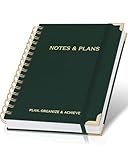
- Easily Stay On Track & Make The Most Of Your Time: ZICOTOs’ daily planner makes it easier than ever for you to stay organized, reduce stress & enjoy more free time! Arrange your schedule, priorities, to do’s and jot down plans & ideas on the daily notes section
- Smartly Plan Ahead & Boost Your Productivity: Absolutely clever & efficient! With the to do list notebook / notepad you can break down your daily tasks into half-hourly focus blocks and map out priorities & follow-up duties to keep your day on track and enhance productivity
- Plenty Of Space For Efficient Planning: Stay focused & manage your time wisely! The 8.4x6.1” work planner & organizer notebook offers ample space for 105 days of life-changing planning with each day being spread across 2 pages - set yourself up for purposeful days
- Now Is The Best Time To Start: The daily planner is undated so you can start to add structure to your schedule and cultivate new planning habits right away! Beat procrastination, boost happiness & make each day count with the hourly planner
- Adds Beauty To Daily Planning: A gorgeous dark green linen cover, chic golden letters, a gold ring wire and a clean, easy-to-use layout, elastic band - enjoy the lovely and modern design of the undated daily planner!
Azure Boards: Microsoft-centric development
Azure Boards supports backlogs, sprints, boards, and work items within Azure DevOps. Its appeal depends on the team’s wider use of Azure DevOps and Microsoft’s development stack. Product information is available from Azure Boards.
Best for documentation and visual collaboration
Notion: documentation with lightweight project tracking
Notion combines pages, databases, and project information, which can suit startups and documentation-heavy teams that want work context close to their wiki. It may need custom design to support robust dependencies, resource planning, governance, or a reliable audit trail. Check current plan details at Notion pricing.
Confluence: team knowledge and process documentation
Confluence is suited to team spaces, pages, templates, and documentation, especially where Jira linkage matters. Documentation does not by itself assign and manage execution; teams may need Jira or other applications for a complete workflow. See Confluence product information.
Miro: workshops and process mapping
Miro is useful for brainstorming, workshops, mapping processes, and collaborative visual planning. It works best as a space to explore or communicate ideas, not necessarily as the authoritative record of owners, deadlines, and execution status. Current plan details are at Miro pricing.
Best options for Microsoft 365 organizations
Microsoft Planner: team task coordination
Planner is a logical first place to look when an organization wants task coordination connected to its Microsoft 365 environment, including Teams and enterprise identity. Confirm which capabilities are included in the organization’s subscription and which require an additional license. Microsoft’s task management overview is the relevant starting point.
Microsoft Project and Planner premium capabilities: formal planning
Teams needing scheduling, dependencies, resource planning, baselines, or portfolio control should evaluate Microsoft’s more formal project-planning capabilities. Product names and packaging can change, and Planner’s basic and premium capabilities are not necessarily separate alternatives in every licensing context. Confirm the current edition and required license with Microsoft before choosing; the Microsoft Project overview describes the product family.
Best automation companions: Zapier, Make, and n8n
Automation tools connect existing applications and move information or trigger actions. They can improve a workflow’s handoffs, but they do not by themselves provide clear task ownership, project planning, or governance.
Zapier: broad no-code app connections
Zapier is a candidate for connecting applications through triggers and actions, including multi-step automations. It is most useful when the team can state exactly what event should trigger what action and where the resulting record belongs. Check current plans; total costs may also depend on connected services and usage.
Quick wins for a faster PC:
Repair Windows errors before they cause bigger problemsFix Now →Fix the driver behind crashes, sound loss and screen glitchesFind Drivers →Clear out junk files and repair common Windows errorsFree Scan →Rank #4

- Easily Stay On Track & Make The Most of Your Time: ZICOTOs’ daily planner makes it easier than ever for you to stay organized, reduce stress & enjoy more free time! Arrange your schedule, priorities, to do’s and jot down plans & ideas on the daily notes section
- Smartly Plan Ahead & Boost Your Productivity: Absolutely clever & efficient! With the planner notebook you can break down your daily tasks into half-hourly focus blocks and map out priorities & follow-up duties to keep your day on track and enhance productivity
- Plenty Of Space For Efficient Planning: Stay focused & manage your time wisely! The 9.3x6.3” (inner pages) work planner & organizer notebook offers ample space for 80 days of life-changing planning with each day being spread across 2 pages - set yourself up for purposeful days
- Now Is The Best Time To Start: The daily planner is undated so you can start to add structure to your schedule and cultivate new planning habits right away! Beat procrastination, boost happiness & make each day count with the hourly planner
- Adds Beauty To Daily Planning: A gorgeous champagne pink cover, chic gold foil letters, a golden ring wire and a clean, easy-to-use layout - enjoy the gorgeous and modern minimalist design of the undated daily planner!
Make: visual scenarios and data transformation
Make offers a visual approach to multi-step scenarios, branching, and data transformation. That flexibility can mean more design and maintenance than a basic automation. Review current Make plans and consider who will troubleshoot scenarios when an integration changes.
n8n: customization and deployment control
n8n suits technical teams that want customizable workflow orchestration, API connections, or deployment control. A self-hosted or highly customized setup also gives the team responsibility for hosting, security, upgrades, and operations. Check n8n pricing and account for any hosting or usage costs relevant to the chosen deployment.
Automation failure modes to plan for
Automations can fail through expired authentication, duplicate records, silent errors, rate limits, circular triggers, unclear ownership, or changes to fields and statuses. For a production workflow, establish error visibility, retry behavior, duplicate prevention, change control, and a named owner.
Other specialist option: ProofHub
ProofHub: project collaboration with a flat-rate option to assess
ProofHub combines projects, Gantt charts, proofing, time tracking, and discussions. It may suit teams comparing flat-rate collaboration pricing, but pricing structure alone does not establish value: compare its automation, integrations, reporting, and required project controls with alternatives. Confirm current offerings at ProofHub pricing.
Outdated Drivers Are Slowing You Down
One free scan finds every outdated or missing driver and matches the right update for your exact hardware.Free scan · exact hardware matchPC Slower Than It Used to Be?
A free scan shows the junk files, broken settings and background clutter dragging Windows down - then fixes them in one click.Free scan · Windows 10 & 11How to choose a shortlist for your team
Start with the work pattern, not a feature checklist. A tool should fit the process people actually follow and make ownership and status easier to maintain.
- Agile issues, releases, and developer workflows: compare Jira and Linear; consider GitHub Projects or Azure Boards if the team already works in those ecosystems.
- Simple visual task flow: compare Trello and MeisterTask.
- Structured cross-functional projects: compare Asana and monday.com; include ClickUp if the team values breadth and can manage its setup.
- Client projects, budgets, or billable time: start with Teamwork.com.
- Spreadsheet-oriented tracking: start with Smartsheet; choose Airtable when linked data and custom operational systems are central.
- Documentation-first work: compare Notion and Confluence, while checking whether execution controls require another product.
- Microsoft-native collaboration: evaluate Planner first, then confirm whether formal planning requires additional Microsoft capabilities or licensing.
- App-to-app handoffs are the main problem: consider Zapier, Make, or n8n as an automation layer alongside the existing work system.
For each finalist, map one representative workflow end to end: intake, owner assignment, status changes, approvals, deadlines, recurring work, exceptions, and reporting. Include users who will do the daily updates, not just managers selecting the system.
Independent reader supportYour contribution helps us test, update, and keep practical guides available for everyone.What to evaluate before paying
Fit the evaluation to your process
Assess the capabilities that matter for the work, rather than treating every checkbox as equally valuable. Useful criteria include task and subtask structure, dependencies, recurring tasks, templates, timelines or Gantt views, workload planning, intake forms, approvals, custom statuses, automation, time and budget tracking, reporting, documentation, guest access, integrations, and mobile capture. For larger organizations, add permissions, SSO, SCIM, audit logs, data residency, retention, export, and migration controls.
AI features should be evaluated by the actions they perform, their usage limits, and their data-handling terms—not merely by whether a product advertises AI.
Free tools Windows power users keep installed
One-click scans. No signup required.
Best Value

- Easily Stay On Track & Make The Most Of Your Time: ZICOTOs’ daily planner makes it easier than ever for you to stay organized, reduce stress & enjoy more free time! Arrange your schedule, priorities, to do’s and jot down plans & ideas on the daily notes section
- Smartly Plan Ahead & Boost Your Productivity: Absolutely clever & efficient! With the planner notebook you can break down your daily tasks into half-hourly focus blocks and map out priorities & follow-up duties to keep your day on track and enhance productivity
- Plenty Of Space For Efficient Planning: Stay focused & manage your time wisely! The 9.3x6.3” (inner pages) work planner & organizer notebook offers ample space for 80 days of life-changing planning with each day being spread across 2 pages - set yourself up for purposeful days
- Now Is The Best Time To Start: The daily planner is undated so you can start to add structure to your schedule and cultivate new planning habits right away! Beat procrastination, boost happiness & make each day count with the hourly planner
- Adds Beauty To Daily Planning: A gorgeous terracotta cover, chic gold foil letters, a golden ring wire and a clean, easy-to-use layout - enjoy the gorgeous and modern design of the undated daily planner!
Use a scorecard without pretending it is universal
| Criterion | Suggested weight | What to assess |
|---|---|---|
| Workflow fit | 25% | Whether the product naturally matches the team’s process. |
| Core work management | 15% | Tasks, subtasks, ownership, statuses, and due dates. |
| Planning depth | 10% | Dependencies, timelines, milestones, workload, and resources. |
| Automation and intake | 10% | Forms, rules, triggers, approvals, and integrations. |
| Collaboration and documentation | 10% | Comments, files, docs, client access, and asynchronous communication. |
| Reporting and visibility | 10% | Dashboards, cross-project reporting, goals, and portfolio views. |
| Adoption and usability | 10% | Setup burden, navigation, training, and day-to-day friction. |
| Administration and security | 5% | Permissions, SSO, auditability, and data controls. |
| Price and scalability | 5% | Entry plan, seat minimums, feature gates, and growth costs. |
Adjust those weights to your situation. An engineering team should give more weight to Agile fit and developer integrations; an agency to clients, time, budgets, and proofing; a small business to setup speed and total cost; and an enterprise to identity, governance, auditability, and portfolio reporting. Use the scorecard to structure a discussion, not to turn uncertain preferences into a supposedly scientific ranking.
Pricing: compare the usable plan, not just the headline
Prices below are signals reported as of August 16, 2026, not guaranteed current quotes. Where a signal comes from comparison coverage rather than an official pricing page, treat it as provisional. Geography, tax, billing frequency, seat count, and plan packaging can change the amount you pay.
| Tool | Price signal and qualification | Where to verify |
|---|---|---|
| Asana | Official page showed Personal free, Starter at $10.99 per user per month billed annually, and Advanced at $24.99 per user per month billed annually; confirm current terms. | Asana pricing |
| ClickUp | Comparison coverage reported a free tier and a paid entry signal around $7 per user per month; not an official quote. | ClickUp pricing |
| monday.com | Comparison coverage reported a free tier for very small teams and an entry signal around $9 per seat per month; minimum seats and billing basis matter. | monday.com pricing |
| Jira | Comparison coverage reported a free tier for small teams and an entry signal around $7.91 per user per month; product, billing method, and user count affect the price. | Jira pricing |
| Trello | Comparison coverage reported an entry signal around $5 per user per month; confirm the applicable plan and billing basis. | Trello pricing |
| Wrike | Comparison coverage reported an entry signal around $9.80 per user per month; official pricing applies to new purchases from January 21, 2026 onward. | Wrike pricing |
| Smartsheet | Comparison coverage reported an entry signal around $9 per member per month; verify plan and billing basis. | Smartsheet pricing |
| Notion | Comparison coverage reported an entry signal around $10 per member per month; verify current plans. | Notion pricing |
| Teamwork.com | Comparison coverage reported an entry signal around $10.99 per user per month; verify current plan and billing basis. | Teamwork.com pricing |
| Zoho Projects | Comparison coverage reported a signal around $4–$5 per user per month; plan limits and billing terms require confirmation. | Zoho Projects pricing |
| ProofHub | Comparison coverage reported approximately $45 per month flat when billed annually; confirm current offer and included features. | ProofHub pricing |
| Basecamp | Comparison coverage showed per-user and flat-rate options; current amounts were not established here. | Basecamp pricing |
| Airtable | Comparison sources showed materially different entry signals; no single amount is reliable without checking the current official plan. | Airtable pricing |
| Microsoft Planner | Sources showed both inclusion in Microsoft plans and signals around $10 per user per month; licensing context must be confirmed. | Microsoft task management |
| Linear | Current price was not established here. | Linear pricing |
| MeisterTask | Comparison sources showed varying plan signals; check current official tiers. | MeisterTask pricing |
These amounts are not a direct value ranking: products may count seats differently, require minimum seats, or place forms, automations, reporting, guests, storage, history, time tracking, and permissions on higher plans. Check the cost of the first plan that supports your real workflow, not only whether a free tier exists. For automation products, also account for usage, connected services, and any hosting responsibilities.
Common selection and rollout mistakes
Buying an all-in-one system because it has the most features
A broad platform can consolidate tasks, docs, goals, dashboards, and time tracking, but feature density can increase configuration and training work. Select capabilities the team will maintain, and keep the initial process consistent.
Do these 3 things before closing this tab:
1Clear out junk files and repair common Windows errors2Scan for outdated or missing drivers - takes under a minute3Repair Windows errors before they cause bigger problemsStaying with boards after the work outgrows them
Kanban boards can be effective until a team needs cross-project reporting, capacity planning, complex dependencies, formal approvals, budget tracking, or portfolio governance. Those requirements are a signal to compare deeper work-management options, not proof that every board tool is inadequate.
Letting spreadsheets or databases fragment
Smartsheet can ease a spreadsheet-oriented transition, while Airtable can support linked records and custom data structures. Either approach can become hard to govern if every department invents its own fields, statuses, and source of truth.
Treating a wiki as an execution system
Notion or Confluence can hold useful documentation, but teams should separately check task ownership, dependencies, reminders, reporting, and auditability. A process page is not automatically a managed workflow.
Underestimating enterprise administration
Advanced governance and portfolio features only help when the organization maintains its permissions, templates, statuses, taxonomy, and reporting model. Include administration effort in the evaluation alongside functionality.
The Tool Desk
Outbyte Driver Updater FREEFix the driver behind crashes, sound loss and screen glitchesFind Drivers →Outbyte PC Repair FREEClear out junk files and repair common Windows errorsFree Scan →Quick Recap
A practical rollout and migration sequence
- Map the current process. Record how work enters, who assigns it, status changes, approvals, handoffs, deadlines, recurring work, and reporting.
- Separate unlike work types. Software issues, campaigns, service requests, and recurring operations may need different workflows rather than one universal board.
- Name the system of record. Decide where the authoritative task, status, deadline, file, and decision will live.
- Start with a small taxonomy. Limit initial workspaces, projects, statuses, custom fields, and templates.
- Pilot a representative workflow. Include ordinary work, exceptions, approvals, overdue items, and external collaborators.
- Test integrations and automations. Verify record creation and updates, failures, retries, duplicate prevention, and permissions.
- Measure adoption and execution. Track overdue and unassigned work, cycle time, completion, status freshness, and user participation.
- Migrate selectively. Move active work and essential history first; archive or export obsolete projects.
- Assign governance owners. Name people responsible for templates, fields, automations, permissions, and reports.
- Review after 30–60 days. Remove unused fields and views before adding more complexity.
Product prices and availability are accurate as of the date/time indicated and are subject to change. Any price and availability information displayed on Amazon at the time of purchase will apply.




