Free tools Windows power users keep installed
One-click scans. No signup required.
Tin is not the material doing the computing inside a silicon chip or storing most of the energy in an electric-vehicle battery. Its modern importance is quieter: tin helps join, coat, and improve the materials in electronics and energy systems. Its largest technology role is solder, the material that connects components to circuit boards and helps devices, vehicles, and solar modules work as systems.
The title’s “3,000-year-old” description is a conservative shorthand, not a precise start date. The U.S. Geological Survey cites tin-bronze implements as early as 3500 B.C.—about 5,500 years ago. Across both eras, tin’s value has often come from changing how other materials perform.

What tin is—and why it keeps showing up
Tin is a relatively soft, malleable metal with the chemical symbol Sn, from the Latin stannum. It melts at a comparatively low temperature, alloys readily with other metals, and resists corrosion. Those properties make it useful in solder, protective coatings, tinplate, alloys, and industrial compounds.
In technology, tin is usually not a large mass of pure metal. It may be one ingredient in an alloy, a thin coating, a chemical compound, or a small but essential connection. Tin is not a rare-earth element, although it is designated a critical mineral in the United States.
Crashes, No Sound, or Screen Glitches?
Random freezes, missing sound and display glitches usually trace back to one bad driver. Find and replace yours safely.Free scan · under a minuteWindows Errors? Fix Them Before They Spread
Repair common Windows errors and clear accumulated junk for a smoother, more stable PC - no reinstall needed.Free scan · no reinstall#1 Best Overall
From Bronze Age tools to electronic connections
Adding tin to copper makes bronze, generally harder and more useful for tools, weapons, vessels, and ornaments than pure copper. Because tin deposits are unevenly distributed, obtaining it could involve long-distance trade. The U.S. Geological Survey’s historical account places tin-bronze implements as early as 3500 B.C. (USGS, Tin, Professional Paper 1802-S).
The continuity is striking: in bronze, a relatively small amount of tin changed copper’s useful properties; in electronics, tin-bearing solder joins separate components into functioning systems.
How tin moves from ore to products
The supply chain is more than mining. The main tin ore mineral is cassiterite, tin dioxide (SnO₂). The typical route is:
- Mining: Extract ore containing cassiterite.
- Concentration: Separate and upgrade the ore into concentrate. The International Tin Association describes typical concentrates as containing roughly 55%–75% SnO₂.
- Smelting: Remove oxygen from the tin oxide to produce crude metal.
- Refining: Purify the metal to industrial specifications.
- Fabrication: Make solder, tinplate, chemicals, alloys, coatings, or other materials.
- Recovery: Return suitable manufacturing scrap and end-of-life material to the supply chain.
Each stage can constrain what manufacturers can buy. Mine output alone does not determine the availability of refined metal in the right form, quality, location, and price. The association’s overview of tin production and sustainability discusses processing and recycling as parts of that chain.
Solder is tin’s central technology role
Solder joins electronic components to circuit boards and provides both an electrical path and a mechanical attachment. A joint must survive heat during manufacturing and conditions such as vibration, corrosion, and repeated temperature changes in service. Tin-bearing solder is used across consumer electronics, industrial equipment, telecommunications, vehicle electronics, power systems, and solar modules.
Rank #2
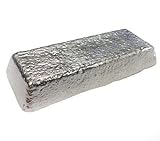
- RotoMetals Whole Tin Ingot 99.9+% Pure Made in USA
- 99.9+ Pure Tin- Hand Poured in USA
- Weighs approximately 1 pound (+/- .1 pound)
- Measures 3/4" x 1.5" x 4"
The International Tin Association estimated that solder accounted for 51% of global tin use in 2023. In its survey, lead-free solder represented an estimated 92% of electronics solder that year, compared with 86% in 2022. These are association estimates, not a census of every producer; the reported survey covered companies representing about 42% of estimated global refined-tin use. (ITA, Tin Use in Recovery Cycle.)
Lead-free does not mean pure tin. Common formulations combine tin with metals such as silver, copper, nickel, bismuth, or antimony. Manufacturers choose formulations to balance melting temperature, reliability, cost, mechanical performance, and applicable requirements. Changing a solder alloy can also affect production processes and reliability qualification.
Solar modules use tin in their connections
Tin-bearing solder and ribbon connect solar cells within modules. The ITA estimated that solar ribbon represented about 20% of solder production in its 2024 study. It also reported that growth had plateaued at the time, amid Chinese overcapacity and “tin thrifting”—using less tin in each connection. More installed solar capacity therefore does not automatically translate into proportional growth in tin demand.
Recommended Free Tools
Where tin appears beyond solder
Boards, coatings, and electronics packaging
Tin can be used in component terminations, platings, coatings, packaging, solder balls or bumps, and specialized manufacturing chemicals. The USGS includes circuit-board components and corrosion-resistant coatings among tin’s uses in its 2025 critical-minerals overview. This does not make tin the main active material in ordinary silicon transistors.
Electric vehicles and grid equipment
Tin supports electric vehicles and renewable-energy infrastructure mainly through the electronics and interconnection layer: power electronics, vehicle controls, battery-management systems, charging equipment, connectors, circuit boards, and soldered joints. That is different from saying tin is the principal material in an EV battery.
Rank #3

- PROFESSIONAL GRADE MATERIAL: High-purity pewter alloy (Tin 98%, Bismuth 1.5%, Copper 0.5%) specifically formulated for jewelry making, sculptural works, and custom artistic projects - delivering superior casting results and elegant silver finish
- EASY TO WORK WITH: Low melting point range (338-446°F/170-230°C) makes this alloy perfect for home studios and professional workshops - ideal for both beginners and experienced artisans
- TWO FORMS OPTION: Choose between hemisphere or ingot shape to suit your specific crafting needs - convenient sizing for various projects from small jewelry pieces to larger sculptural works
- WIDE APPLICATION: Ideal for jewelry casting, sculpture making, metal art, decorative elements, repairs, and mixed media projects - compatible with standard metalworking tools and techniques
- ARTISAN'S CHOICE: Preferred by professional jewelers and sculptors for its workability, durability, and aesthetic appeal - creates stunning silvery finish that can be polished to a high luster
Solar materials beyond cell ribbons
Researchers are investigating tin-containing photovoltaic materials, including kesterite and lead-free perovskite formulations. These are distinct from tin’s established role in soldering solar-cell connections. The International Tin Association lists both established uses and research opportunities in its overview of new tin technologies; a research listing is not evidence that a material is already widely deployed.
Which future applications are established—and which are not?
The table separates current, established uses from development opportunities. The maturity labels are an editorial synthesis of the application descriptions and evidence cited by the ITA, not a standardized industry classification.
| Application | Maturity | Potential role | Main constraint |
|---|---|---|---|
| Lead-free electronic solder | Established | Electrical and mechanical connections in electronics | Formulation-specific process and reliability requirements |
| Solar-cell ribbon and interconnection | Established | Connect cells within solar modules | Tin thrifting and changing market conditions can limit demand growth |
| Tin-enhanced lithium-ion anodes | Development to early commercialization, depending on design | Use tin as an anode material or additive | Expansion and contraction during cycling can damage structure and reduce cycle life |
| Sodium-ion battery anodes | Research and early development | Candidate anode material in a battery chemistry that could serve selected uses | Performance, durability, manufacturing scale, and competition from other materials |
| Tin-containing photovoltaic materials | Research and early-stage development | Alternative compositions for solar cells | Stability, efficiency, and manufacturability |
| Thermoelectrics | Research or niche | Convert heat differences into electricity | Economics and fit with real operating conditions |
| Hydrogen, carbon-capture catalysts, fuel cells, and water treatment | Research-stage opportunities | Use tin compounds or materials for catalytic, electrochemical, or treatment functions | Efficiency, durability, scale, and a competitive manufacturing route |
| E-waste recovery | Industrial recovery in some streams; pilot-stage challenges for complex electronics | Recover secondary tin from discarded products | Low concentrations and difficult separation |
Tin-based battery work does not mean tin batteries are replacing lithium-ion batteries. Tin’s electrochemical capacity can be attractive, but repeated expansion and contraction can undermine an anode. It also competes with graphite, silicon, hard carbon, and other candidates on cost, performance, and durability. The status depends on the specific design; broad claims about “tin batteries” obscure those differences.
For any technology claim, ask whether tin is a primary material or a small additive, whether the evidence is commercial or laboratory-stage, what form of tin is used, and whether the product has a credible manufacturing route. Also ask whether the application increases total tin demand or merely substitutes tin for another ingredient.
Why tin is called a critical mineral
Tin appears on the 2025 U.S. List of Critical Minerals. In this context, “critical” concerns a mineral’s importance to economic or national security, vulnerability to supply disruption, and role in essential manufacturing. It does not mean the world is about to run out, that no substitute exists, or that prices must rise permanently. The designation is U.S.-specific; it should not be treated as a universal policy label.
Rank #4

- 99.9% Pure Tin Metal – Made from high purity tin, this 1 oz ingot provides a compact elemental sample for collection, display, and hands-on learning.
- Hand Poured and Polished in USA – Each bar is individually hand poured and hand polished in the United States, creating a smooth, refined finish.
- Low Melting Point Metal – Tin is easy to melt and work with, making it ideal for demonstrations, beginner experiments, and understanding metal behavior.
- Used for Casting and Soldering – Commonly used in casting, soldering, and alloying, offering insight into real-world metalworking in a small, manageable form.
- Stamped for Identification – Clearly stamped with metal type and purity, making it easy to identify and organize in collections, classrooms, or storage.
Supply risk is about industrial availability, not just geology
It is misleading to say simply that the world is running out of tin. Geological resources, economically recoverable reserves, production capacity, and market availability are different things. Identified resources may exist without mines, smelters, and logistics able to deliver refined tin when manufacturers need it.
The ITA says remaining deposits do not currently imply an inability to support a long-term, gradual increase in mined tin, while warning that underinvestment in exploration and project development matters. More immediate vulnerabilities can include concentrated supply chains, political disruption or export restrictions, permitting delays, environmental and social opposition, ore grades, smelter capacity, shipping, and inventory shocks. Demand growth from electronics, solar, vehicles, and energy systems can add pressure, but tin thrifting and substitution can counter some of it. See the association’s account of tin supply.
The U.S. position
The 2026 USGS Mineral Commodity Summaries says the United States has not mined tin since 1993 or smelted it since 1989. It estimates U.S. imports of refined tin at 32,000 metric tons in 2025. About 17,000 metric tons from old and new scrap—approximately 9,000 from old scrap and 8,000 from new scrap—was estimated to have been recycled domestically that year. These are U.S.-specific estimates, not global supply figures. (USGS, 2026 Mineral Commodity Summaries.)
Import dependence on refined metal is not the same as dependence on ore from one country: mining, smelting, and refining are separate stages and may occur in different places.
Independent reader supportYour contribution helps us test, update, and keep practical guides available for everyone.Recycling can help, but it is not a quick replacement for mining
The ITA estimated that recycled material supplied 34.2% of global tin use in 2023, with a 35.4% forecast for 2024. The forecast is not a measured final outcome. In its 2023 survey, the ITA estimated refined tin use at 357,100 tonnes; the survey’s 2024 demand figure of 367,900 tonnes was a forecast or estimate published at the time, not a verified 2026 result. Its recycling-input measure includes refined and unrefined forms under the study’s methodology. (ITA, Tin Use in Recovery Cycle.)
The Tool Desk
Outbyte Driver Updater FREEScan for outdated or missing drivers - takes under a minuteDriver Scan →Outbyte PC Repair FREEClear out junk files and repair common Windows errorsFree Scan →Best Value
- Lead Free Pewter
- 98% Tin, 1.5% Bismuth, 0.5% Copper
- ~1 Pound (.9 to 1.1)
- 3/4" x 1-1/2" x 4"
- Great for Casting! Costume Jewelry
In the United States, the USGS’s estimate of 17,000 metric tons of recycled tin in 2025 includes both manufacturing scrap and material from old products. These figures use different geographic scopes and methods, so the global recycling-input rate and U.S. scrap estimate should not be compared as if they were the same measure.
Recovery is generally easier where tin is concentrated, such as production scrap or some tinplate streams. In complex electronics, tin may be present in small amounts, bonded to other materials, or spread across many products. Whether it is recovered depends on collection, sorting, processing chemistry, labor and energy costs, contamination, and the value of the recovered material. More discarded electronics do not automatically mean more economically recoverable tin; miniaturization and tin thrifting can reduce tin per device or connection.
The Government Accountability Office found that critical minerals in discarded electronics can be difficult to recover because concentrations are low and materials are mixed and bonded; recycling technologies for this stream remain at pilot-stage development. The GAO also notes that recycling and substitution may not quickly reduce import reliance where alternatives perform poorly or are not commercially mature. (GAO-26-108687.) Recycling can reduce demand for primary production, but the evidence does not support treating it as an immediate substitute for mining and refining.
Responsible sourcing and environmental trade-offs
Tin’s role in solar panels or electronics does not automatically make its production environmentally benign. Mining can disturb land and generate tailings; concentration and smelting consume energy; transport adds emissions. The footprint depends on factors including ore grade, feedstock, energy source, and recovery efficiency, so environmental performance should be compared by production route rather than by metal name alone.
Quick wins for a faster PC:
Fix the driver behind crashes, sound loss and screen glitchesFind Drivers →Repair Windows errors before they cause bigger problemsFix Now →Scan for outdated or missing drivers - takes under a minuteDriver Scan →Social and sourcing questions also matter, including worker safety, informal or small-scale mining, labor abuses where they occur, environmental damage, and traceability through processing. The ITA describes an industry Tin Code and responsible-supply initiatives, but an industry framework is not proof that every shipment meets a particular standard. Buyers and readers assessing a sourcing claim should look for evidence about the mine and processor, traceability, applicable environmental and labor standards, independent verification, and documented recycled content.
What tin’s technology future most likely looks like
The strongest near-term case remains tin’s established work in solder, connections, coatings, alloys, and industrial materials. Batteries, advanced solar chemistries, thermoelectrics, hydrogen, carbon capture, fuel cells, and water treatment are credible areas of investigation, but their maturity ranges from development to laboratory research. They should not be presented as assured sources of mass-market tin demand.
Tin is strategically important less because it is a miraculous new power source than because many systems depend on small quantities of the right material, reliably produced and delivered. Supply resilience will likely require a mix of continued mining and refining, diversified supply chains, careful material substitution, reduced tin use where performance allows, and better recovery where it is technically and economically practical.
Quick Recap
Product prices and availability are accurate as of the date/time indicated and are subject to change. Any price and availability information displayed on Amazon at the time of purchase will apply.
Do these 3 things before closing this tab:
1Repair Windows errors before they cause bigger problems2Scan for outdated or missing drivers - takes under a minute3Clear out junk files and repair common Windows errors



