Quick wins for a faster PC:
Scan for outdated or missing drivers - takes under a minuteDriver Scan →Clear out junk files and repair common Windows errorsFree Scan →Healthcare IT leaders can deploy AI to support patient outcomes in three connected parts of care: clinical decision support at the point of care, predictive analytics and remote monitoring, and patient and caregiver engagement. The strongest starting point is a bounded workflow where a named clinical owner can act on the AI output and the organization can measure what happens next.
Where AI can support patient outcomes
These areas differ in who uses the output and what action it is meant to enable. A diagnostic or treatment suggestion, a deterioration warning, and a patient-facing education tool should not be judged on model accuracy alone: each has distinct users, decisions, workflow requirements, and failure modes.
| Deployment area | What AI can support | What must follow |
|---|---|---|
| Clinical decision support | Summarizing records, surfacing relevant risks, prioritizing worklists, and offering explainable suggestions in care workflows. | A clinician reviews the information and remains responsible for the care decision. |
| Predictive analytics and remote monitoring | Identifying elevated risk or possible deterioration from clinical, claims, device, or patient-generated data, including between visits. | A defined person or team responds within a specified timeframe using an actionable escalation path. |
| Patient and caregiver engagement | Supporting communication, self-care, personalized education, symptom collection, and participation in decisions. | Patients and caregivers receive usable information and a clear route to care when follow-up is needed. |
1. Clinical decision support in care workflows
Clinical decision support (CDS) puts timely, person-specific information in front of clinicians when they can use it. Established CDS forms include order sets, recommendations, preventive-care reminders, and alerts. AI can extend these workflows by organizing a complex record, highlighting information relevant to a guideline, or helping clinicians prioritize a worklist.
The goal is not to replace clinical judgment. AHRQ says CDS “can effectively improve patient outcomes and lead to higher-quality health care” (Clinical Decision Support page, reviewed November 2024). ONC describes CDS as information intelligently filtered and presented at appropriate times to enhance outcomes and quality. For an AI-supported suggestion, the interface should make relevant context and uncertainty understandable, and the clinician should retain responsibility for the decision.
#1 Best Overall

- Monitor and assess a wide range of patients and detect normal and abnormal sounds and rhythms
- Useful in non-critical care environments such as a medical office, general ward, OB/GYN, ambulatory clinic or urgent care
- More than twice as loud* as the next leading stethoscope. *Based on tests against globally-available comparable stethoscopes in an equivalent class using recorded heart sounds with diaphragm.
- Allows you to more reliably and consistently hear heart sounds at lower frequencies (below 120Hz*) like Korotkoff sounds, Mitral Stenosis and S3 and S4 Gallops when compared to other leading stethoscopes. *Based on tests against globally-available comparable stethoscopes in an equivalent class using recorded heart sounds with diaphragm.
- Weighs less** than other stethoscopes. ** Based on published weights of globally-available comparable stethoscopes in an equivalent class.
Design the suggestion around a decision
Before choosing a model, specify the decision or task it is meant to support, the point in the workflow where the information will appear, and what the clinician can do with it. A summary that arrives too late, an alert without a practical next step, or a suggestion that duplicates existing work may add burden without helping care.
- Identify the intended clinical user and the decision the output supports.
- Show enough relevant context for the user to assess the suggestion rather than treating the model output as a conclusion.
- Measure whether the information changes a care process and whether that change is associated with the patient outcomes the organization intends to improve.
2. Predictive analytics, early warning, and remote monitoring
Predictive models can combine electronic health record, laboratory, claims, device, and patient-generated data to identify elevated risk or possible deterioration. Remote monitoring extends observation beyond clinic visits and can prompt earlier outreach, escalation, or care coordination. The 2025 HHS AI Strategic Plan identifies ongoing management across services, analytics for care coordination and engagement, and remote monitoring as strategic directions.
Rank #2

- TRUSTED by Medical Providers since 1971 | Backed by our Full Lifetime Warranty & Replacement-Parts-For-Life Program Included| Latex-Free
- ALL-PURPOSE LIGHTWEIGHT diagnostic stethoscope that delivers accurate auscultation of heart, lung, and stomach (gastrointestinal, bowel, etc.), blood pressure flow (Korotkoff) sounds with acoustic integrity and clarity in doctor, nurse, student, etc. clinical settings or home settings.
- DUAL HEAD CHESTPIECE designed with a turnable, fully rotating stem and a true bell and true diaphragm to capture high or low frequency sounds as needed. Handcrafted from premium aluminum to deliver the ultimate value in auditory diagnostics with unmatched performance and durability in its lightweight class.
- PATENTS, HEADSET, TUBING & EARTIPS: longer, thicker and non-stick tube and ErgonoMax headset that includes a patented dual-leaf spring construction, patented Acoustic Pyramid Chamber and a patented SafetyLock Eartip adapters to maximize sound performance, durability, comfort, and extended use.
- INCLUDES: 3 pairs of Small, Regular and Large MDF ComfortSeal clear eartips, an extra diaphragm, ID name tag, Lifetime Warranty and Replacement Parts for Life program included. Makes a great gift with over 20 color variations to choose from.
Make a prediction actionable
A risk score is not an intervention. Before deployment, decide what threshold triggers action, who owns the response, how quickly that person or team must respond, and what happens if the signal cannot be acted on. Those details determine whether the model can fit the service’s capacity and care pathway.
- Define the response threshold and the action it triggers.
- Name the escalation owner and the expected response time.
- Specify what happens when staff cannot reach a patient or a monitoring signal is missing.
- Check whether risk identification and follow-up work equitably across patient subgroups.
Without clear ownership and response expectations, a predictive alert can create a queue of unresolved signals rather than earlier care. Evaluate the whole pathway—from data capture to response—not just the model’s ability to identify risk.
PC Slower Than It Used to Be?
A free scan shows the junk files, broken settings and background clutter dragging Windows down - then fixes them in one click.Free scan · Windows 10 & 11Outdated Drivers Are Slowing You Down
One free scan finds every outdated or missing driver and matches the right update for your exact hardware.Free scan · exact hardware matchRank #3
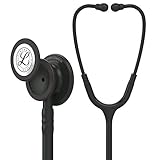
- Monitor and assess a wide range of patients and detect normal and abnormal sounds and rhythms
- Useful in non-critical care environments such as a medical office, general ward, OB/GYN, ambulatory clinic or urgent care
- More than twice as loud* as the next leading stethoscope. *Based on tests against globally-available comparable stethoscopes in an equivalent class using recorded heart sounds with diaphragm.
- Allows you to more reliably and consistently hear heart sounds at lower frequencies (below 120Hz*) like Korotkoff sounds, Mitral Stenosis and S3 and S4 Gallops when compared to other leading stethoscopes. *Based on tests against globally-available comparable stethoscopes in an equivalent class using recorded heart sounds with diaphragm.
- Weighs less** than other stethoscopes. ** Based on published weights of globally-available comparable stethoscopes in an equivalent class.
3. Patient and caregiver engagement
Patient-centered CDS uses patient-centered outcomes research and patient-specific information to support personalized care and participation in health decisions. AI-enabled portal messaging, symptom collection, tailored education, and shared-decision aids can help patients and caregivers communicate with care teams and manage care between visits. ONC describes patient-centered CDS as a way to involve patients or caregivers in decision-making.
Patient-facing tools need to be designed around what a patient can understand and do, including how to seek help when an answer or symptom report indicates a need for follow-up. A tool that generates information but does not connect it to an appropriate care pathway may not improve the patient’s ability to act.
Rank #4

- Monitor and assess a wide range of patients and detect normal and abnormal sounds and rhythms
- Useful in non-critical care environments such as a medical office, general ward, OB/GYN, ambulatory clinic or urgent care
- More than twice as loud* as the next leading stethoscope. *Based on tests against globally-available comparable stethoscopes in an equivalent class using recorded heart sounds with diaphragm.
- Allows you to more reliably and consistently hear heart sounds at lower frequencies (below 120Hz*) like Korotkoff sounds, Mitral Stenosis and S3 and S4 Gallops when compared to other leading stethoscopes. *Based on tests against globally-available comparable stethoscopes in an equivalent class using recorded heart sounds with diaphragm.
- Weighs less** than other stethoscopes. ** Based on published weights of globally-available comparable stethoscopes in an equivalent class.
Measure outcomes patients experience
AHRQ’s Outcomes and Objectives Workgroup report (2023) notes that existing CDS evidence has made limited use of measures for patient engagement, experience, and patient-reported outcomes. That is a measurement gap, not evidence of a quantified effect. Include patient experience, engagement, and patient-reported outcomes in the evaluation rather than relying only on clinician workflow or technical measures.
Independent reader supportYour contribution helps us test, update, and keep practical guides available for everyone.How to choose among AI options
Use criteria that reflect the decision, user, and consequences of each particular tool. A single accuracy score cannot establish whether a tool is useful, safe, or workable in a clinical service.
Best Value

- IDEAL FOR DIAGNOSTICS - An excellent general-purpose stethoscope for all manner of medical professionals. Designed to assist doctors, nurses, and EMTs with patient diagnostics and evaluations.
- DUAL-HEAD STETHOSCOPE - Designed for patients of all ages, the stethoscope is made for nurses, doctors and medical students looking for a high-quality stethoscope. The eartubes are both flexible and adjustable to ensure the most comfortable fit for the user. The solidly constructed chest piece allows for superior contact with the patient to provide more accurate readings and evaluations.
- DUAL LUMEN DESIGN - Eliminates the auditory interference that's common in other two tube stethoscopes. The two tubes in one design eliminates the rubbing noise that traditional double tube stethoscopes tend to create.
- ANATOMICALLY DESIGNED - The specially designed headset is made to match the angle of the ear canal for a superior fit that allows for better performance. Large 27-inch length allows you to easily accommodate all patients from infants to adults.
- Clinical impact and outcome evidence: What patient outcome or care process is the tool intended to affect, and how will that effect be evaluated?
- Workflow fit and interoperability: Can the output reach the right person in the existing EHR, portal, or service workflow at the right time?
- Actionability and ownership: Is there a clear response to the output and a named owner for that response?
- Equity and subgroup performance: Does performance and follow-up remain acceptable across the patient groups served?
- Explainability and human oversight: Can users understand relevant context and uncertainty, and is human review appropriate to the decision?
- Privacy and security: Are patient data handled appropriately for the proposed workflow?
- Regulatory classification: What classification applies to the specific tool and intended use?
- Implementation effort and total cost: What integration, operational, and ongoing support will the deployment require?
- Measurable patient experience: Can the organization assess whether patients and caregivers find the interaction useful and can act on it?
Safety, trust, and ongoing oversight
AHRQ’s AI viewpoint highlights four themes for AI-supported CDS: promote trust, transparency, and explainability; understand how to scale; keep humans in the loop; and test systems in real-world settings. WHO likewise recognizes AI’s potential to improve diagnosis, treatment, self-care, and person-centred care, while emphasizing safety, effectiveness, equity, and governance.
Translate those principles into a monitoring plan that covers calibration, false positives and false negatives, performance across subgroups, alert burden, clinician overrides, patient experience, and actual outcomes. Assign responsibility for reviewing the signals and deciding when a workflow needs adjustment or suspension. Performance in a real service may differ from what a model showed during development, so monitoring should continue after go-live.
A practical sequence for deployment
- Choose a bounded workflow. Start with a high-value problem and a named clinical owner who can act on the output.
- Set a baseline and success measures. Define current workflow and patient outcomes, then specify how the prospective evaluation will assess impact, workload, and equity.
- Review safety and equity before launch. Determine how the tool’s limitations, subgroup performance, and potential harms will be assessed.
- Plan integration and oversight. Put the output into the relevant EHR or portal workflow, provide explanations and uncertainty, and decide who monitors performance.
- Define rollback conditions. Agree in advance how the organization will respond if safety, workload, equity, or outcome measures become unacceptable.
- Expand only on evidence from use. Scale when patient outcomes, workload, and equity measures remain acceptable in the deployed workflow.
There is no dependable cross-sector effect-size figure that can be applied to all three areas. The outcome depends on the use case, workflow, population, and evaluation design, so leaders should set expectations and evaluate each deployment on its own terms.
Quick Recap
Product prices and availability are accurate as of the date/time indicated and are subject to change. Any price and availability information displayed on Amazon at the time of purchase will apply.




