Recommended Free Tools
Effective route planning is not simply finding the shortest road sequence. It is a decision system: data science prepares reliable operational inputs, optimization assigns and sequences work under real constraints, and business analytics decides whether the result improves cost, service and financial performance.
What the intersection means
A route can be mathematically efficient and still be a poor business decision. A plan that minimizes miles may overload one driver, miss customer time windows, exceed vehicle capacity or require expensive overtime. A useful system therefore connects three disciplines:
- Data science cleans and represents locations, orders, travel times, service durations and other operational facts.
- Optimization searches for vehicle assignments and stop sequences that satisfy required constraints while pursuing a chosen objective.
- Business analytics defines what success means, compares the plan with a baseline and measures financial and service consequences.
The practical outcome is a repeatable way to turn delivery demand into executable work, measure the trade-offs and revise the plan as conditions change.
Start with a business definition of “optimal”
There is no universal best route. The objective function determines which trade-offs the solver makes. Google’s routing documentation lists objectives such as travel efficiency, vehicle use and service performance; each can produce a different plan.
#1 Best Overall

- Real-Time Location Tracking with No Monthly Fees: Keep track of what matters most without any hidden costs. This GPS locator uses the SeekTag app to show your item's real-time location on your phone. There are no subscriptions and no SIM card required, making it a cost-effective tracking solution for your auto, motorcycle, truck, or trailer. You can track over a long distance with peace of mind.
- Universal Compatibility for Both iOS and Android: Whether you use an iPhone or an Android phone, this smart tracker works seamlessly for everyone. Simply download the free SeekTag application, pair the device via wireless Bluetooth connection, and you're ready to start tracking. It's the perfect personal equipment for families with mixed phone types.
- Compact, Durable Design with Multiple Attachments: Despite its powerful tracking capabilities, this device is remarkably small, tiny, and portable. The included magnetic mount securely attaches to metal surfaces, while the keychain allows for easy attachment to dog collars, kid backpacks, or luggage. With an IP65 rating, it's protected against dust and water splashes, ready for any adventure.
- Versatile Tracking for Your Valuables, Pets, and People: This isn't just for cars. Use it as a pet tracker to monitor your dogs & cats` location, a child locator for your children's safety, or an item finder for your bags and valuables. Its long range and tiny size make it an incredibly versatile tool for protecting your people and possessions from being lost.
- Reliable and Discreet for Long-Term Use: Engineered for reliability, this locator is designed for long-term use. Its efficient power management ensures a long battery life up to 360 days, providing extended tracking without frequent replacement battery. The small and undetectable design allows for discreet placement on your auto or other personal items, offering a reliable security solution.
| Business priority | What the model tends to favor | Financial or operational question |
|---|---|---|
| Minimize total distance | Fewer miles across all routes | Will fuel and mileage savings outweigh extra vehicles, overtime or missed stops? |
| Finish the fleet quickly | Shorter longest route or balanced completion times | Can the business close the delivery day sooner and reduce paid driving hours? |
| On-time arrival | Schedules that respect customer time windows | What is the cost of late delivery, failed service or lost goodwill? |
| Vehicle-use cost | Fewer vehicles or lower operating cost | Does using fewer vehicles create unacceptable workload or service risk? |
| Workload balance | More even route duration, stop count or load | Will balanced assignments reduce overtime, turnover and safety exposure? |
Many organizations use a weighted objective, but the weights should be explicit. For example, a plan might assign a high penalty to a missed appointment, a lower cost to additional miles and a separate limit on driver hours. A weighted score is only meaningful when managers can explain the business value behind each term.
Build the operational data foundation
The optimizer can only reason about the information it receives. Before modeling, establish ownership, freshness and accuracy for every critical field.
Locations and travel data
- Geocode each stop accurately, including unit, entrance and delivery-side details where they affect access.
- Use a consistent distance and travel-time source, and document whether estimates reflect typical or current traffic.
- Record depots, vehicle start and end locations, and any restricted roads or site-access rules.
Tasks and loads
- Represent deliveries, pickups, returns and pickup-to-delivery relationships as distinct tasks.
- Capture quantity, weight, volume or other capacity units that match the vehicle limits.
- Estimate service duration at each stop rather than treating every visit as instantaneous.
People, vehicles and schedules
- List available vehicles, capacities, equipment and compatibility restrictions.
- Represent driver shifts, breaks, maximum working time and start or end requirements.
- Record customer time windows, appointment commitments and allowable early or late arrival policies.
Costs and penalties
Translate business consequences into model inputs: vehicle operating cost, paid time, overtime, tolls, failed-delivery cost and the penalty for violating a service commitment. If a value is uncertain, test a range rather than hiding the uncertainty inside a single precise number.
Choose the right routing model
Traveling salesperson problem
The traveling salesperson problem describes one vehicle visiting a set of locations and returning to its starting point. It is useful for understanding stop ordering, but it rarely captures a full fleet operation.
Do these 3 things before closing this tab:
1Scan for outdated or missing drivers - takes under a minute2Repair Windows errors before they cause bigger problems3Fix the driver behind crashes, sound loss and screen glitchesVehicle routing problem
The vehicle routing problem assigns many stops among multiple vehicles and determines each vehicle’s sequence. Real deployments commonly add capacity, time-window, resource and compatibility constraints. Pickup-and-delivery relationships can require a particular pickup to precede its corresponding drop-off.
Rank #2
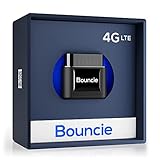
- Real-Time GPS Tracker Device for Vehicles — Ideal for personal use or fleet management, this car GPS tracker provides up-to-the-minute location updates. Our car tracking device also provides unlimited trip history, including a detailed route history
- Driving Insights — Our OBD tracker for cars monitors speed, acceleration, hard braking, idle time, and more. This versatile family and fleet GPS tracker for cars also helps improve road safety by sending alerts in response to unsafe driving practices
- Vehicle Health — Unlike other vehicle tracking devices, our car tracker device continuously monitors diagnostic engine data, alerting you to potential maintenance issues, so you can avoid downtime and keep fleet and family vehicles in peak condition
- Geo-Fencing & Accident Detection — Set up geo-fences to receive notifications when your vehicle enters or exits designated areas; Equipped with advanced sensors and software, this vehicle tracker device instantly detects impacts and sends SMS alerts
- Easy To Install & Low Monthly Subscription — Our OBD GPS tracker for vehicles plugs directly into OBD2 ports and works on most vehicles 1996 and newer; $9.65 monthly subscription required - no hidden activation or return fees - cancel anytime
Dropped visits and service trade-offs
Some models allow a stop to be dropped with an explicit penalty. This can be safer than forcing an infeasible plan, but the penalty must reflect the real cost of postponement or failure. A low penalty may cause the solver to skip commercially important customers simply because doing so makes the objective easier.
What optimization produces—and what it does not prove
A routing service or solver can return vehicle assignments, visit order, estimated arrival and departure times, total distance, total duration and an aggregate cost. Those are model outputs, not measured business results.
Combinatorial routing becomes harder as the number of stops, vehicles and constraints grows. Google’s OR-Tools documentation notes that large instances can take a very long time to solve optimally and that the toolkit may return a good, non-optimal solution. Therefore, describe a result as feasible, best found within a time limit or improved against a baseline unless formal optimality has actually been established.
For a large operation, decide whether requests need synchronous responses or an asynchronous workflow. The decision should reflect planning frequency, instance size, acceptable solve time and the operational cost of waiting for a marginally better solution.
Evaluate the plan with business analytics
Evaluation should compare the proposed plan with a defined operational baseline, such as the current dispatch method or the previous planning period. Keep modeled estimates separate from observed results after execution.
Rank #3

- LONG-BATTERY VEHICLE TRACKING – Built for cars, trailers, fleets, equipment, boats, and motorcycles, Tracki’s trailer GPS tracker uses a 10,000mAh battery for 2 to 7 months active at 1–5 minute updates or up to 12 months in sleep mode.
- SUBSCRIPTION-POWERED SERVICE – The Tracki GPS tracker connects through 4G LTE Cat1 with built-in global SIM, giving app access, real-time location updates, alerts, and support after activation; Subscription Required, Cancel Anytime.
- FLEET-WIDE CONTROL – A practical fleet GPS tracker for work vehicles, with subscription-powered 15-second to 1-minute updates plus speed, geofence, movement, idle time, impact, and battery alerts through SMS, email, and app notifications.
- TRAILER & ASSET COVERAGE – A GPS tracker for trailer, car, truck, RV, boat, or equipment use, with 185+ country coverage, GPS accuracy of 5 to 10 meters outdoors, and Wi-Fi fallback indoors when GPS signals are harder to reach.
- SECURE TWO-WHEEL MONITORING – Use this motorcycle tracker for authorized bikes and powersport assets, with a built-in strong magnet, included screw mount, and weatherproof design for flexible vehicle placement.
| Measurement layer | Examples | Interpretation |
|---|---|---|
| Feasibility | Capacity violations, missed windows, shift and break compliance | Whether the plan can legally and operationally be run |
| Resource use | Miles, drive time, route duration, vehicles used, utilization | How much capacity and paid time the plan consumes |
| Service | On-time arrivals, completed stops, failed deliveries, customer exceptions | Whether efficiency harmed the customer promise |
| Financial | Fuel, labor, overtime, tolls, vehicle cost and cost per completed stop | Whether the route creates economic value after all relevant costs |
| Equity and resilience | Route-duration spread, difficult-stop concentration, recovery capacity | Whether the plan is sustainable for drivers and robust to disruption |
Use the same definitions and observation period for the baseline and the new plan. A lower modeled distance does not establish savings unless actual paid hours, fuel, service failures and other relevant costs also improve.
Connect planning to execution
Planning is only one stage of a fleet system. Google’s integration guidance distinguishes route-plan generation from driver activity and real-time tracking through Fleet Engine. A practical workflow includes the following stages:
- Initial planning: import orders, vehicles, shifts, constraints and current travel information; generate assignments and sequences.
- Dispatch: publish the plan through the driver-facing application or dispatch system, including stop details and service instructions.
- Monitoring: capture departures, arrivals, completed work, delays, cancellations and exceptions.
- Midday adjustment: re-optimize when traffic, new orders, unavailable vehicles or customer windows change.
- New-stop allocation: assign additional work to a route with sufficient capacity and time, or deliberately defer it with a recorded reason.
- Learning: use observed service times, travel outcomes and exception patterns to improve future inputs and constraints.
Re-optimization should not erase operational context. Dispatchers may need to lock a promised appointment, preserve a driver’s current sequence or prevent a late change that would be unsafe or confusing.
Independent reader supportYour contribution helps us test, update, and keep practical guides available for everyone.Keep driver knowledge in the system
Data often omits details that experienced drivers know: a loading-bay restriction, a reliable entrance, a recurring customer preference or a road that is technically available but impractical for a particular vehicle. Those observations should become structured exceptions, verified map updates or service-time adjustments rather than remaining informal folklore.
In a Yamato Transport case published by Accenture, development combined delivery knowledge, geospatial data, route-logic APIs and an implementation platform. Shigeaki Namiki, Managing Director of Accenture’s Technology Consulting Division, summarized the adoption principle: “The key is to integrate the drivers’ senses and experience with the logic of the Route Optimization API, thereby building a system that drivers can use naturally.”
Rank #4

- Premium GPS Tracker — The LandAirSea 54 GPS tracker provides accurate global location, real-time alerts, and geofencing. Easily attaches to vehicles, ATVs, golf carts, or other critical assets.
- Track Movements in Real-Time — Track and map (with Google Maps) in real-time on web-based software or our SilverCloud App. Location updates as fast as every 3 seconds with historical playback for up to 1 year.
- Powerful & Discreet — The motion-activated GPS tracker will sleep when not in motion for extended periods, preserving the battery life. The ultra-compact design and internal magnet create the ultimate discreet tracker.
- Lifetime Warranty — This GPS tracker is built to last. LandAirSea, a USA-based company and pioneer in GPS tracking offers a unconditional lifetime warranty that covers any manufacturing defects in the device encountered during normal use.
- Subscription Required — Affordable subscription plans are required for each device. Fees start as low as $9.95 a month for annual plans and $19.95 for monthly plans. No contracts, cancel anytime for a hassle-free experience.
The lesson is not that one deployment guarantees a particular result. It is that adoption and data quality are part of the analytics design, not post-launch details.
The Tool Desk
Outbyte PC Repair FREEClear out junk files and repair common Windows errorsFree Scan →Outbyte Driver Updater FREEScan for outdated or missing drivers - takes under a minuteDriver Scan →Interpret published performance claims carefully
Google’s May 10, 2023 product announcement reported a Skroutz Last Mile example with 93% to 98.5% on-time delivery reliability and a 10% increase in driver throughput after integrating Google Maps Platform. These figures are a company-published customer example, not an independent study or a typical expected improvement. Any organization assessing a route project should establish its own baseline, measurement definitions and observation period before using such figures for a financial case.
Is machine learning required?
No. Mathematical optimization can assign and sequence routes using known locations, travel times, constraints and objectives. Predictive models may improve inputs such as demand, service duration or travel-time estimates, but forecasting is an optional input layer rather than a prerequisite for every routing problem.
Where analytics and prediction can help
- Estimate likely service duration from stop type and historical observations.
- Improve travel-time estimates for recurring periods or corridors.
- Forecast demand to plan vehicle availability and staffing.
- Detect unusual completion times or repeated exception patterns.
Predictions should be monitored for bias and drift. An apparently sophisticated forecast does not compensate for incorrect capacity, missing time windows or unreliable location data.
A disciplined implementation sequence
- Define the decision: state the primary objective, non-negotiable constraints and the financial baseline.
- Audit data: measure geocoding accuracy, missing fields, service-time quality, vehicle availability and exception frequency.
- Build a feasible model: start with the constraints that can invalidate a route—capacity, time windows, shifts, breaks and task dependencies.
- Select a solve policy: set time limits, acceptable solution quality and rules for infeasible or dropped stops.
- Run a controlled comparison: compare modeled and observed outcomes against the same baseline, separating estimates from realized results.
- Integrate dispatch and tracking: give drivers usable instructions and feed completion events back into the system.
- Review exceptions: classify every missed stop, late arrival and manual override, then decide whether to change data, constraints, process or staffing.
Common failure modes
- Optimizing the wrong metric: distance falls while lateness or overtime rises.
- Ignoring service duration: the sequence looks feasible on a map but cannot fit the working day.
- Using nominal capacity: actual loading rules, vehicle compartments or handling limits make the assignment impossible.
- Over-penalizing extra vehicles: the model saves vehicle cost by creating unsafe or unrealistic routes.
- Treating a solver as an oracle: a feasible output is presented as a proven global optimum without evidence.
- Leaving exceptions informal: driver workarounds never reach the data or model, so the same errors recur.
- Measuring only the launch period: unusual demand or incomplete adoption is mistaken for a permanent business effect.
A financially credible standard for route analytics
A route-planning program is credible when it can show, in one chain of evidence, what decision it is optimizing, which constraints protect service and safety, how the input data was validated, what the solver actually returned, and how executed results changed cost and customer outcomes against a baseline. That standard turns route optimization from a map exercise into accountable business analytics.
Outdated Drivers Are Slowing You Down
One free scan finds every outdated or missing driver and matches the right update for your exact hardware.Free scan · exact hardware matchPC Slower Than It Used to Be?
A free scan shows the junk files, broken settings and background clutter dragging Windows down - then fixes them in one click.Free scan · Windows 10 & 11Quick Recap
Product prices and availability are accurate as of the date/time indicated and are subject to change. Any price and availability information displayed on Amazon at the time of purchase will apply.




