The Hasselblad HV was announced on February 5, 2014, at approximately US$11,500. Its photographic foundation was Sony’s Alpha SLT-A99: a 24.3-megapixel full-frame, Sony A-mount camera with an electronic viewfinder, translucent mirror and full-HD video. The HV was not a medium-format Hasselblad. It was an A99-derived camera transformed through materials, finish, accessories, branding and scarcity.
That distinction explains the price. A Sony A99 body was reported at about $2,900 at the time, making the HV nearly four times as expensive. The package did include a Carl Zeiss 24–70mm f/2.8 lens, two batteries and a premium case, but those additions still did not account for the entire difference. The remaining premium was the price of a luxury object and Hasselblad identity, not a radically superior imaging system.
What the Hasselblad HV actually was
Hasselblad introduced the HV during its short-lived period of Sony-based luxury cameras, following the Lunar and Stellar. It used a 36 × 24mm full-frame CMOS sensor, Sony/Minolta A-mount compatibility and the core architecture associated with the Alpha SLT-A99. Contemporary coverage described it as a luxury reworking of the Sony camera rather than a new medium-format platform. New Atlas reported the launch and positioning in February 2014.
The most accurate description is therefore “a Sony A99-derived camera platform transformed into a luxury Hasselblad package.” Calling it merely a rebadged Sony ignores the substantial exterior work; calling it an entirely new Hasselblad imaging system is equally misleading.
#1 Best Overall

- World's First Full Frame Global Shutter: The Alpha 9 III features the world’s first full-frame image sensor with a global shutter. Unlike a rolling shutter that records images sequentially, the newly developed Exmor RS sensor exposes and reads all pixels simultaneously for capture of fast-moving subjects with absolutely no distortion.
- Blackout-free, 120fps Continuous Shooting: The Alpha 9 III is defined by speed and accuracy, enabling it to capture decisive moments with ease. It’s capable of shooting continuous bursts at up to 120fps with full AF/AE tracking, with no viewfinder blackout, and its AI processor recognizes subjects with astonishingly high reliability.
- Preserve Split-second Moments: At 1/80,000 second maximum shutter speed, the Alpha 9 III makes it easy to capture fast-moving subjects in almost any situation. Compatible flash units can synchronize at all shutter speeds, eliminating drop-off in illumination that occurs with high-speed sync and ensuring even illumination.
- Full-frame Backside Illuminated 24.6MP Exmor RS Image Sensor: The Alpha 9 III is equipped with 24.6 million effective pixels, a stacked CMOS architecture and integral memory. This offers high resolution, overwhelming speed, and simultaneous full-pixel readout, so even fast-moving subjects can be captured distortion-free.
- Evolved BIONZ XR Image Processing Engine: With up to eight times more processing power than previous versions, the BIONZ XR processing engine minimizes latency and significantly boosts processing power, resulting in higher color gradation, more realistic color reproduction and reduced image noise.
Hasselblad HV versus Sony Alpha A99
| Feature | Hasselblad HV | Sony Alpha SLT-A99 |
|---|---|---|
| Sensor | 24.3MP full-frame CMOS, approximately 36 × 24mm | 24.3MP full-frame CMOS |
| Lens mount | Sony A / Minolta A | Sony A / Minolta A |
| Viewfinder | 2.359-million-dot electronic viewfinder | 2.359-million-dot electronic viewfinder |
| Rear display | Articulated 3-inch screen, about 1.228–1.229 million dots | Articulated 3-inch display |
| Continuous shooting | About 6 fps at full resolution; some descriptions cite higher rates in particular modes | Maximum 6 fps in Sony’s specifications |
| Video | Full HD 1080p, including 60 fps in contemporary descriptions | Full HD 1080 video |
| Stabilization | In-camera SteadyShot | In-camera stabilization |
| Supplied lens | Sony/Carl Zeiss 24–70mm f/2.8 A-mount zoom | Typically body-only or sold in other configurations |
See Sony’s A99 specifications, B&H’s archived HV specifications and KEH’s mount identification. The shared specifications establish a close platform relationship, but they do not prove that every internal component, firmware version or production detail was identical.
What Hasselblad changed
Exterior materials and finish
The HV received a machined high-grade aluminum treatment, a two-tone finish and a PVD coating that contemporary descriptions compared with exceptionally hard protective surfaces. Titanium was used for controls, including a larger, more conspicuous mode dial. These details changed the camera’s tactile and visual character, but no cited source provides a laboratory durability rating or demonstrates greater reliability than an A99.
Luxury presentation
The Hasselblad logo, distinctive finish and presentation were central to the product. The kit included a specialized hard case made from TTX01 resin and two Sony NP-FM500H batteries. B&H’s archived listing identifies the supplied Carl Zeiss Vario-Sonnar T* 24–70mm f/2.8 ZA lens. The launch report was uncertain about whether the lens itself would carry Hasselblad branding; the retail listing identifies it as a Sony 24–70mm Carl Zeiss A-mount lens.
Rank #2

- 24.2MP APS-C Exmor sensor w/ advanced processing up to ISO 51.200
- Wide 425 phase detection AF points, Fast 0.05 sec. AF acquisition
- 5-axis in-body image stabilization steadies every lens. Silent Shooting. Noise Reduction :Long exposure NR: On/Off, available at shutter speeds longer than 1 sec., High ISO NR: Normal/Low/Off
- 11fps continuous shooting to 269 frames at 24.2MP w/ AE/AF tracking
- 4K movie w/ 2.4x oversampling4, full pixel readout, no pixel binning
Where the $11,500 went
A specification-sheet comparison makes the HV look irrational because the underlying imaging proposition was close to the A99. The economics become clearer when the price is separated into components:
- Camera platform: A99-level full-frame technology and A-mount capability.
- Lens: The included 24–70mm f/2.8 Carl Zeiss zoom was described at the time as normally selling for about $2,000.
- Finishing: Aluminum treatment, PVD coating, titanium controls and bespoke exterior work.
- Package: Hard case, two batteries and a presentation-ready ownership experience.
- Brand and scarcity: Hasselblad identity, unusual styling and a small intended audience.
Using the reported launch figures, an HV kit at $11,500 cost about $8,600 more than a roughly $2,900 A99 body. Even adding the approximately $2,000 lens to the Sony side leaves a very large, approximate gap before accounting for a case and batteries. Accessory prices and configurations varied, so this is not an exact cost calculation. It shows why the product cannot be evaluated as an ordinary megapixel-per-dollar purchase.
Was the HV technically better?
Image quality
There is no source-backed independent test establishing materially better image quality from the HV. The published descriptions identify the same broad 24.3MP full-frame class and similar operating capabilities as the A99. A buyer should not assume that the Hasselblad badge produced cleaner files, greater dynamic range or superior autofocus.
Rank #3
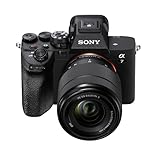
- 33MP1 full-frame Exmor R back-illuminated CMOS sensor
- 8x more powerful2, next generation BIONZ XR image processing engine
- Up to 4K 60p11 10-bit 4:2:2 w/ full pixel readout in all rec. formats
- Real-time Eye-AF for humans, animals, birds for photo and movie
- Advanced movie features; Focus Map16, Breathing Comp14., S-Cinetone, S-log3, HLGAF Assist17
Handling and durability
The larger dial, premium controls and different surface treatment could make the camera feel more distinctive. That is an ergonomic and subjective difference, not proof of faster operation. Likewise, premium materials and a protective case may improve perceived ruggedness and ownership experience, but the available reporting does not quantify a reliability advantage.
System capability
The HV retained Sony A and Minolta A compatibility. That gives it access to the mature A-mount lens ecosystem, but it also ties the camera to a discontinued system compared with Sony’s current E-mount direction.
Who would pay for one?
The likely customer was not someone seeking the most efficient full-frame camera. The HV appealed to buyers who valued:
Rank #4

- 20.1MP stacked back illuminated 1" Exmor RS CMOS sensor w/ DRAM, large aperture 24-70mm1 F1.8-2.8 ZEISS Vario-Sonnar T lens
- Enhanced subject capture: wide 425 Phase/ 425 contrast detection points over 84 percent of the sensor
- Fast and accurate: Up to 11Fps continuous shooting at 24.2 MP raw with crisp, clear natural colors
- Multiple movie functions: Make time lapse movies or slow/quick motion videos without post processing
- Tiltable LCD screen: customizable for vlogging, still photography or recording a professional film
- Hasselblad prestige without moving to a medium-format system;
- Unusual industrial design and tactile materials;
- A collectible or conversation-piece camera;
- Status signaling and exclusivity;
- A complete, presentation-ready package with lens and case.
Hasselblad’s stated idea of taking pictures “in real style” supports reading the HV as a lifestyle luxury product. Its utility was only part of what was being sold; ownership identity and presentation were the rest.
Independent reader supportYour contribution helps us test, update, and keep practical guides available for everyone.What the HV is worth now
The original $11,500 was a historical launch price, not a 2026 valuation. As of August 18, 2026, B&H marks the kit “No Longer Available”, while KEH’s HV listing was temporarily unavailable. Those pages demonstrate scarcity, not a completed-sale price.
For context, KEH showed a bargain-condition Sony A99 body at $616 when crawled. That is a condition-specific dealer listing, not a universal market value and not an appraisal of the HV. A surviving HV’s price can vary substantially with the original case, Zeiss lens, batteries, charger, paperwork, finish condition and proof that every electronic function works.
The Tool Desk
Outbyte Driver Updater FREEScan for outdated or missing drivers - takes under a minuteDriver Scan →Outbyte PC Repair FREEClear out junk files and repair common Windows errorsFree Scan →Best Value

- ★【High Capacity】Battery Capacity: 2000mAh; Voltage: 7.2volts. High quality cells for longer battery life with no memory effect. high capacity replacement batteries make it have more power to keep the camera running and working, take more shots, photos and videos to record the moments of life.
- ★【Quick Charge】This super fast NP-FM500H battery charger built in DC 5V/2A input charging current, takes only 2.5 hours to fully charged. Dual battery charger design is convenient to charge 2 batteries simultaneously, and each charging slot works independently.
- ★【Smart LED Display】Smart charging LED indicates when charging is completed and prevents battery from overcharging, of course you can also check the charging process from the LED display. Built-in intelligent protection board containing various technical protections such as overcharge, discharge, temperature control, over current protection, etc.
- ★【Multiple Charging Ways】Common micro-USB and Type-C input, you can charge your fm500h battery with wall charger, Car charger, Laptop or power bank. Flexible charging ways ensure that your battery is fully charged at all times.
- ★【Compatible with】Replacement for Sony NP-FM500H battery,compatible with Sony Alpha SLT-A57, SLT-A58, SLT-A65, SLT-A68, SLT-A77, SLT-A77 II, SLT-A99, Sony Alpha A99 Mark II, A100, A200, A300, A350, A500, A550, A560, A580, A700, A850, A900 Cameras.
How to buy or sell a surviving HV
Buyer checklist
- Confirm whether the listing includes the original hard case, Zeiss lens, two batteries, charger, caps and documents.
- Inspect the PVD finish, titanium controls, screen and lens glass for damage or refinishing.
- Test autofocus, shutter release, stabilization, card slots, EVF, LCD articulation, video, flash communication and aperture control.
- Check battery charge retention; decade-old batteries may no longer be dependable.
- Verify the Sony/Minolta A mount and sensor condition.
- Do not value a body-only camera as though the original lens and case are included.
Seller checklist
- Photograph the serial number, exterior finish, controls, screen, lens glass, case, batteries, charger, caps and paperwork.
- Record the shutter count if accessible, while describing overall function rather than relying on that number alone.
- Test and document autofocus, shutter, stabilization, card slots, EVF, LCD, video, flash communication and lens aperture.
- Describe it accurately as a “Hasselblad HV based on the Sony A99 platform.” Do not call it medium format.
- Separate the body, Zeiss lens, case and accessories in the description so buyers can judge completeness.
- Price against current completed sales or specialist-dealer evidence, never against the 2014 launch price.
- Use insured shipping and signature confirmation, and retain serial-number and condition records.
- State whether the camera is fully tested, partially tested or untested.
Rarity alone does not guarantee a high price. The HV may attract collectors, but its Sony-derived architecture can also limit the number of buyers willing to pay a luxury premium.
The verdict
The HV was not simply a standard A99 with a logo: Hasselblad supplied real exterior engineering, a Zeiss zoom, two batteries and an unusual case. But it was not a technical transformation of the A99, either. The $11,500 launch price purchased a luxury object built around a serious full-frame platform, with the largest premiums attached to materials, branding, scarcity and presentation. For photography per dollar, the Sony A99 was the rational choice. For a collector who specifically wants the rare Hasselblad package, the object itself—not a hidden image-quality advantage—is the point.
Quick Recap
Product prices and availability are accurate as of the date/time indicated and are subject to change. Any price and availability information displayed on Amazon at the time of purchase will apply.




