What’s actually slowing this PC down?
Pick the symptom - the matching free tool is one click away.
Data protection is the disciplined handling of information throughout its life: deciding what to collect, explaining why, limiting access, securing storage and transmission, retaining it only when justified, and deleting it properly. Data privacy concerns whether those uses are appropriate and transparent; data security is the technical and organizational protection against unauthorized access, alteration, loss, or destruction. Cybersecurity is broader still, covering systems and networks as well as data. A locked-down system can still have poor privacy if it collects information it never needed.
The safest approach is risk-based. Financial records, identity documents, tax files, account credentials, health information, customer records, screenshots, spreadsheets, paper files, exports and supplier-held copies can all require protection. Ordinary details can become sensitive when combined.
The eight rules that prevent most data-protection failures
- Know what you have and why. Maintain an inventory of data, systems, people, vendors, retention periods and deletion methods.
- Collect less. Make optional fields genuinely optional and avoid keeping information “just in case.”
- Explain the use. Tell people what you collect, why, who receives it, how long you keep it and what choices or rights may apply.
- Use least privilege. Give each person and service only the access needed, for only as long as needed.
- Protect every state. Secure data while stored, transmitted, used, backed up and discarded.
- Keep it only while useful or required. Define deletion triggers and include replicas, synchronized folders and backups in the design.
- Prepare for mistakes. Make reporting a lost device, wrong-recipient email or suspicious login immediate and blame-free.
- Build safeguards in early. Include privacy and security in product design, procurement, forms, analytics, AI projects and remote-work arrangements.
These principles align with the European Commission’s GDPR principles on minimization, purpose limitation, retention and need-to-know access, the FTC’s practical guidance to collect only what is needed and dispose of it securely, and the ICO’s risk-based security outcomes. European Commission, FTC, ICO
Do the practical controls first
Map the information lifecycle
For every significant dataset, record what is collected, its purpose, storage locations, users and vendors, retention period, legal or business justification, and what deletion means in each system. Include tax returns, bank statements, identity scans, payroll files, customer invoices, email attachments, phone backups, removable drives and paper records. Assign an owner who reviews access and unresolved risks.
The Tool Desk
Outbyte Driver Updater FREEScan for outdated or missing drivers - takes under a minuteDriver Scan →Outbyte PC Repair FREERepair Windows errors before they cause bigger problemsFix Now →#1 Best Overall

- Requires 3 "AAA" batteries (included)
- Unit auto-locks for 30 minutes after 5 consecutive incorrect PINs
Use strong account and access controls
- Use named accounts rather than shared logins so access and changes can be attributed.
- Turn on multifactor authentication (MFA) first for email, financial services, cloud storage, password managers, administrator accounts and remote-access tools. Passkeys or hardware security keys are preferable for high-risk accounts where available.
- Review permissions regularly, remove former workers promptly, disable unused accounts, rotate old API keys and replace default administrator passwords.
- Use role-based or time-limited access for sensitive folders and require approval for large exports.
MFA materially reduces account-takeover risk, but it does not stop phishing, malware, insider misuse or excessive permissions.
Encrypt appropriately—and manage the keys
Use device encryption on laptops and phones, encrypted removable media, protected backups and secure channels for sensitive transfers. Encryption is a risk control, not a complete privacy program. The UK ICO says UK GDPR does not require encrypting all personal information; the appropriate measure depends on circumstances. ICO encryption guidance
Document who owns recovery keys, where they are stored, how recovery is tested and how emergency access works. CISA describes AES-128, AES-192 and AES-256 as highly secure options; AES-256 is not automatically required when device capability, performance or managed defaults point elsewhere. CISA device-storage guidance
Rank #2
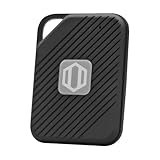
- Auto-Fill Feature: Say goodbye to the hassle of manually entering passwords! PasswordPocket automatically fills in your credentials with just a single click.
- Internet-Free Data Protection: Use Bluetooth as the communication medium with your device. Eliminating the need to access the internet and reducing the risk of unauthorized access.
- Military-Grade Encryption: Utilizes advanced encryption techniques to safeguard your sensitive information, providing you with enhanced privacy and security.
- Offline Account Management: Store up to 1,000 sets of account credentials in PasswordPocket.
- Support for Multiple Platforms: PasswordPocket works seamlessly across multiple platforms, including iOS and Android mobile phones and tablets.
Back up and update
Keep backups protected from ordinary user accounts and ransomware, apply retention and deletion rules to them, and perform actual restoration tests. Keep operating systems, browsers, applications, routers, phones and security tools patched. CISA recommends secure backups, encryption and timely updates. CISA Secure Our World
Recommended Free Tools
Train for realistic errors
Practice spotting phishing, checking recipients, handling attachments, using approved cloud and AI tools, protecting screens and paper, and reporting lost devices. Training cannot compensate for a system that permits one-click emailing of an entire customer database; add warnings, approval workflows and technical limits.
Vet every supplier
Before sending information to a provider, establish what it receives, why, where it is processed, who can access it, which subprocessors are involved, what audit evidence exists, how incidents are reported, and how active data, replicas and backups are returned or deleted. Contract terms help but do not remove configuration and operational risk.
Rank #3

- NEVER FORGET A PASSWORD AGAIN: Almost every App. has a password, it is almost impossible to remember all the password log in details. This password book is specifically designed to help you create secure passwords and store all your passwords safely in one place. You will never forget your password log-in details again with this password keeper.
- ALPHABETICAL A-Z TABS FOR QUICK ACCESS: Alphabetical tabs design allows you to store your passwords alphabetically so you can find what you want faster, no more annoying searches!
- ANONYMOUS WITHOUT ANY TITLE: On the outside, this password notebook organizer looks just like those writing journals, there is no title listed on the cover, so no one would know it's a password book. But we still recommend keeping the internet password logbook in a safe place such as a locked drawer or a shelf full of books.
- THICK NO-BLEED PAPER: This 5.2" x 7.6" password book contains 74 sheets of thick 120gsm paper that resists ink smearing, say goodbye to those cheap password books that bleed ink!
- PREMIUM QUALITY & PERFECT MEDIUM SIZE: This password journal comes with a high-quality leatherette hardcover, an elastic band, pen holder, ribbon bookmarker, and inner accordion pocket. It measures 5.2 inches wide and 7.6 inches long, which is the perfect size for your needs.
Don’t make these common mistakes
Don’t collect or retain information “just in case”
Extra fields increase breach impact, inaccurate records, access complexity, vendor exposure and deletion work. Test each field: Is it necessary, is there a less intrusive alternative, can it be optional, and when does it stop being useful?
Don’t treat consent or a privacy notice as a cure-all
Consent does not replace minimization, security, transparency, purpose limitation or an appropriate legal basis, and a notice does not by itself make processing lawful. Requirements differ by jurisdiction, sector and organizational role.
Don’t send sensitive data casually
Before emailing a bank statement, tax file or identity document, verify the recipient and address, confirm necessity and authorization, choose an appropriate secure portal or encrypted channel, and avoid uncontrolled copies in personal email, consumer storage, screenshots and USB drives.
Rank #4

- NEVER FORGET A PASSWORD AGAIN - Clever Fox password journal will help you create secure passwords and keep them safe and organized. This password book allows you to store all your passwords and other computer information in one place to find it easily.
- ALPHABETICAL A-Z TABS - Alphabetic tab system makes it easy to find any password you need. The book also has sections for most important passwords, wireless & email settings, software license information & additional notes.
- ELEGANT, SMART, PRACTICAL & SECURE PASSWORD ORGANIZATION - This password keeper book has been designed to be anonymous without an obvious title on the cover. For added security there is space to write hints instead of the password itself.
- POCKET SIZE & PREMIUM QUALITY - This internet address and password logbook with tabs comes in pocket size (4.0x5.5 inches). The password notebook has an eco-leahter hardcover, elastic band, pen loop, bookmark, pocket for notes, and thick 120gsm paper.
- 60-DAY MONEY-BACK GUARANTEE - We will exchange or refund your password organizer if you aren’t satisfied with your password organization for any reason. Reach out to us via message to refund your internet password logbook.
Don’t assume deletion is erasure
Deleting a database row or moving a file to a recycle bin may leave email attachments, synchronization copies, caches, logs, exports, archives and backups. Define deletion for each platform and document backup expiry or overwrite behavior.
Don’t call data anonymous just because names were removed
Other attributes can identify someone when combined with outside information. Use terms such as pseudonymized, de-identified or aggregated only when technically and legally accurate.
Don’t upload confidential information to unapproved tools
Popular file-sharing services, transcription tools, browser extensions and public generative-AI systems may retain, expose or reuse content in ways you have not assessed. Check access, training use, retention, deletion, location and contractual terms first.
Best Value

- Securely Remember All Your Passwords, Log-in's, User Names, ATM PIN Numbers and More
- Large Back-lit LCD Screen, QWERTY Keyboard - So Easy to Use
- Enter one PIN number and have access to 400 accounts. Search function included.
- Unit auto locks for 30 minutes after 5 consecutive incorrect PIN attempts
- Includes mini stylus for easier keypad entry
Don’t wait to report a mistake
Early reporting of a misdirected payment file, lost phone, exposed link or suspicious login enables containment and evidence preservation. Concealment usually increases harm.
Independent reader supportYour contribution helps us test, update, and keep practical guides available for everyone.Cloud, local storage, remote work and personal devices
Neither cloud nor local storage is automatically safer. Cloud services can provide centralized administration, logs and version history but introduce sharing misconfiguration, provider, subprocessor, cross-border and account-lockout risks. Local storage avoids some provider exposure but increases theft, hardware-failure, patching and backup burdens. Compare the provider’s controls, identity model, contracts, deletion process and recovery design with your own capability.
Remote and bring-your-own-device arrangements need explicit controls for family access, public screens, local downloads, home printers, cached mail, unmanaged extensions and personal backups. CISA advises avoiding a shared personal computer for work information and taking additional precautions when several people use a device. CISA safeguarding guidance
A same-day checklist for individuals and families
- Enable MFA on email, banking, investment and payment accounts.
- Install current operating-system, browser, phone and application updates.
- Use a password manager and unique passwords.
- Turn on device encryption, screen lock and automatic locking.
- Review cloud-sharing links and remove public or unnecessary access.
- Confirm that backups exist and complete a test restore.
- Remove unneeded identity scans, statements and exports from devices and accounts.
- Install software only from reputable sources.
- Learn the bank, employer or service provider’s route for reporting loss or phishing.
A 30-day plan for a small business
- Days 1–7: Inventory customer, employee, payment, tax and operational data; identify owners, locations, vendors and sensitive categories.
- Days 8–14: Remove unnecessary fields, review administrator and shared-drive permissions, disable former-user accounts and enable MFA on administrative and cloud accounts.
- Days 15–21: Verify device encryption and backup restoration, define retention and deletion triggers, and review vendor subprocessors and incident clauses.
- Days 22–30: Publish a reporting route, run a phishing or wrong-recipient exercise, document unresolved risks with owners and deadlines, and schedule recurring access reviews.
The ICO frames organizational security as four outcomes: manage risk, protect against cyberattack, detect events and minimize incident impact. ICO security outcomes
What to do after a suspected breach
- Stop further exposure: remove a public link, disconnect a compromised device or pause a transfer.
- Report through the established internal, bank, platform or insurer channel immediately.
- Preserve relevant logs, messages, devices and timestamps; do not wipe evidence before advice.
- Revoke sessions, tokens and credentials where appropriate, using a clean device if compromise is suspected.
- Identify the data, systems, people and vendors affected, including synchronized and backup copies.
- Assess legal, contractual, regulatory, insurance and communication duties for the applicable jurisdiction and sector.
- Document decisions, notify affected people when required, fix the cause and test the recovery.
There is no universal breach-notification deadline. Duties depend on location, sector, data type, organizational role and incident facts. Encryption may reduce harm and affect notification analysis, but it does not automatically eliminate regulatory obligations.
Design protection into new projects
Ask privacy and security questions before launching a form, analytics tag, AI workflow, marketing campaign, database, remote-work process or supplier integration. The ICO’s UK guidance on data protection by design and default was updated February 5, 2026, and calls for privacy to be considered at the beginning and throughout a project, including higher-protection considerations for children under the UK Data (Use and Access) Act 2025. ICO design and default guidance
Quick Recap
Product prices and availability are accurate as of the date/time indicated and are subject to change. Any price and availability information displayed on Amazon at the time of purchase will apply.




