Stoke Space, a Kent, Washington aerospace company, announced a $260 million Series C on January 15, 2025, to develop Nova, a two-stage rocket designed for rapid, full reusability. The company said the round brought its total funding to $480 million. That is no longer the company’s latest financing milestone: Stoke later announced a $510 million Series D, a $100 million debt facility and an extension that took the Series D to $860 million, with reported cumulative capital of $1.34 billion by February 2026.
The original announcement is documented by Stoke Space. The subsequent financing was described in Stoke’s October 2025 release and its February 2026 update.
Who raised the money?
Stoke Space was founded by Andy Lapsa and Tom Feldman; Lapsa is the company’s chief executive. Stoke describes itself as developing fully and rapidly reusable medium-lift launch vehicles. The company’s named Series C investors included Breakthrough Energy Ventures, Glade Brook Capital Partners, Industrious Ventures, Leitmotif, Point72 Ventures, Seven Seven Six, the University of Michigan, Woven Capital and Y Combinator, among others.
The $260 million was venture equity financing. Stoke did not disclose a valuation or the ownership percentage sold, and the public announcement did not provide individual investor check sizes.
The Tool Desk
Outbyte Driver Updater FREEScan for outdated or missing drivers - takes under a minuteDriver Scan →Outbyte PC Repair FREERepair Windows errors before they cause bigger problemsFix Now →#1 Best Overall

- BEGINNER MODEL-ROCKET LAUNCH SET: The Tandem-X rocket-model launch set offers adults and kids ages 10+ hours of fun during the holidays as they complete and launch our Amazon and Crossfire ISX rocket models. This set includes the easy-to-assemble Amazon model parts, the Crossfire ISX model parts, parachutes, and the launch pad system. It requires rocket engines, Starters, Recovery Wadding, and 4 high-quality 1.5-volt AA alkaline batteries for launch use (sold separately).
- 2 SOARING ALTITUDE HEIGHTS: Our Tandem X set offers a high-performing power duo with our giant 30-inch Amazon model (600-foot projected altitude with a C6-5 rocket engine) and our streamlined 15.6-inch Crossfire ISX model (1,150-foot projected altitude with a C6-7 rocket engine). Other compatible Estes model-rocket engines for Amazon model: B4-2, B4-4, B6-2, B6-4, C5-3, and C6-3. Other compatible engines for Crossfire ISX: A8-3, B4-4, B6-4, and C6-5. All engines sold separately.
- READY TO ASSEMBLE: Our beginner model-rocket launch set comes with 2 build options. The precolored Amazon model features plastic fins and self-stick graphics and can be built in an hour. The Crossfire ISX model comes with laser-cut wood fins, self-stick decals, and aerodynamic parts. Pair the rockets with the included Porta Pad II Launch Pad and Electron Beam Launch Controller for a hands-on educational activity or a unique Christmas gift for a budding scientist or a space aficionado.
- SAFETY FIRST, FUN ALWAYS: Our rockets and rocket launch accessories are designed to be used with the NAR (National Association of Rocketry) model-rocket safety code. Always ensure you have an appropriate launch site, stand back at least 15 ft., insert the safety key, issue a countdown, and then you can let your rocket fly!
- WE IGNITE IMAGINATIONS: Since 1958, Estes has created educational rocket kits and displays designed for an unforgettable aerospace experience. As a family-owned company, we have grown to offer exciting STEM products that engage aspiring rocketeers and the future minds of aerospace.
What is Nova?
Nova is intended to be a two-stage, fully reusable medium-lift orbital rocket. Unlike a conventional partially reusable launcher, its design calls for recovery and reuse of the upper stage as well as the first-stage booster.
Stoke says Nova is meant to provide on-demand transportation “to, through and from space”: launching payloads, moving them in orbit and returning material from orbit. Those are company objectives, not capabilities established by an orbital flight. The sources available for this article do not establish that Nova has reached orbit, achieved recovery or entered commercial service.
What the original Series C was supposed to fund
Stoke identified three principal uses for the January 2025 financing:
Rank #2

- BEGINNER MODEL ROCKET LAUNCH SET: The Estes Alpha III launch set lets kids ages 10+ and hobbyists easily build and launch this iconic model rocket. The model rocket kit includes rocket parts, engine mount, decals, a parachute, a launch pad system, and instructions. For blastoff, you’ll need Estes rocket engines, Starters, Recovery Wadding, and 4 high-quality 1.5-volt AA alkaline batteries (not included).
- SOARS UP TO 1,150 FT.: Our Alpha III model rocket is designed for first-time STEM kit builders and climbs up to a projected altitude of 1,150 ft. (351 m). It’s compatible with 1/2A6-2, A8-3, A8-5, B4-4, B6-4, B6-6, C6-5, or C6-7 Estes rocket engines (sold separately).
- READY TO ASSEMBLE: Rocket building sparks creativity and a love for science and outer space! This beginner Alpha III model kit is easily put together with 1 hour of preparation and includes decals. It comes with a Porta-Pad II Launch Pad and Electron Beam Launch Controller for an unforgettable blastoff for first-time rocketeers.
- SAFETY FIRST, FUN ALWAYS: Our rockets are designed to be used with the NAR (National Association of Rocketry) model-rocket safety code. Always ensure you have an appropriate launch site, stand back at least 15 ft., insert the safety key, issue a countdown, and then you can let your rocket fly!
- ESTES EDUCATION: Since 1958, Estes has created educational rocket kits designed for an unforgettable launch experience. As a family-owned, US-based company, we offer exciting and engaging STEM products for all interests, skills, and power levels.
- Finalizing Nova’s development.
- Completing Launch Complex 14 at Cape Canaveral Space Force Station in Florida.
- Expanding its private test facility and manufacturing headquarters.
Launch Complex 14 is historically associated with John Glenn’s 1962 Friendship 7 mission. Stoke’s later releases said activation work continued into early 2026 and that the company was increasing Nova production capacity.
Do these 3 things before closing this tab:
1Clear out junk files and repair common Windows errors2Scan for outdated or missing drivers - takes under a minute3Repair Windows errors before they cause bigger problemsThe technology behind the pitch
Zenith first-stage engine
Stoke said its Zenith first-stage engine had completed a vertical test firing shortly before the Series C announcement. The company describes Zenith as using full-flow staged combustion and said the test placed it among only two entities globally to have successfully developed and tested that type of engine. That “only two” comparison is Stoke’s claim and depends on how successful development and testing are defined.
Upper-stage heat shield
Stoke says Nova’s upper stage will use an actively cooled metallic reentry heat shield integrated with the upper-stage engine system. The concept is not the same as a demonstrated reusable vehicle: repeated orbital reentry, controlled landing, inspection and rapid turnaround still have to be shown in flight.
Rank #3

- INTERMEDIATE MODEL-ROCKET-BUILDING KIT: This Estes model rocket kit bulk pack offers kids ages 10+ the chance to build and blast our high-flying 1754 Wizard model rocket during holidays and special occasions. Each intermediate building kit includes the model parts, an engine mount, design decals, a recovery parachute, and instructions. Each requires rocket engines, a launch pad system, Starters, Recovery Wadding, and 4 high-quality 1.5-volt AA alkaline batteries for launch (sold separately).
- SOAR UP TO 1,600 FT.: Our spellbinding 1754 Wizard rocket model was made for wind-drift studies or flight competitions. It has a projected altitude of 1,600 ft. (488 m) on a C6-7 Estes model-rocket engine (sold separately) and is also compatible with 1/2A6-2, A8-3, A8-5, B4-4, B6-4, B6-6, or C6-5 rocket engines.
- READY TO ASSEMBLE: Rocket-building kits are creative, educational gift ideas for Christmas or special-occasion surprises! Our intermediate-level rocket-building bulk pack comes with ready-to-build rockets that each require approximately 1 hour of assembly time. Add the included decals and pair the rockets with the right engines, Porta-Pad II Launch Pad, and Electron Beam Launch Controller (sold separately) for a memorable blastoff.
- SAFETY FIRST, FUN ALWAYS: Our rockets are designed to be used with the NAR (National Association of Rocketry) model-rocket safety code. Always ensure you have an appropriate launch site, stand back at least 15 ft., insert the safety key, issue a countdown, and then you can let your rocket fly!
- ESTES EDUCATION: Estes Education provides educators with the tools for success through our interdisciplinary STEM products, accessible lessons, and online resources. Our mission is to cultivate the skills and confidence necessary to easily implement science and rocketry in classrooms, youth programs, and beyond.
Why upper-stage reuse is the hard part
First-stage recovery has been commercially demonstrated by SpaceX. An orbital upper stage faces a more severe problem because it returns from orbital velocity and must carry the systems needed to survive and control that return.
- Reentry survival: thermal-protection hardware must withstand intense heating and repeated cycles.
- Mass penalty: heat shields, landing hardware and return propellant consume mass that could otherwise carry payload.
- Vehicle durability: engines, tanks, plumbing, avionics and thermal systems must tolerate multiple flights.
- Controlled recovery: the stage must guide itself through reentry and landing, then be inspected and prepared for another mission.
- Economics: reuse is valuable only if refurbishment, labor and operational costs remain low enough to offset the added hardware.
That makes full reusability a potentially significant long-term architecture, not proof of lower prices or a guaranteed commercial advantage.
Free tools Windows power users keep installed
One-click scans. No signup required.
What had been demonstrated when Stoke announced the raise?
| Evidence level | What the available sources establish |
|---|---|
| Engine testing | Stoke reported a vertical firing of the Zenith first-stage engine. |
| Engine architecture | Stoke said Zenith uses full-flow staged combustion. |
| Upper-stage technology | Stoke cited an earlier brief 2023 flight test of upper-stage technology. |
| Orbital launch | Not established by the sources reviewed here. |
| Successful recovery and rapid reuse | Not established by the sources reviewed here. |
Component or suborbital testing is meaningful development evidence, but it is not equivalent to an orbital launch, recovery or repeated reuse.
Rank #4
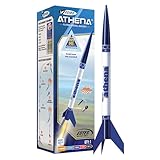
- BEGINNER MODEL ROCKET SET: The Estes Athena model rocket gives kids ages 10+ and beginners an easy way to experience real rocket launches with no building required! This ready-to-fly model rocket kit includes a fully prepared rocket with a parachute. This rocket requires Estes rocket engines, a launch pad system, Starters, Recovery Wadding, and 4 high-quality 1.5-volt AA alkaline batteries (sold separately) for launch use.
- SOARS UP TO 1,125 FT.: Our high-flying Athena rocket features a bright 12-inch parachute for safe recovery and soars up to a projected altitude of 1,125 ft. (343 m) with a C6-7 engine (sold separately). It is also compatible with the A8-3, B4-4, B6-4, and C6-5 rocket engines.
- READY TO FLY: Rocket-building kits are creative, educational gift ideas for Christmas or special-occasion surprises! This beginner-friendly Athena rocket comes fully assembled and just takes 15 minutes of preparation time. This model pairs with the Porta Pad II Launch Pad and Electron Beam Launch Controller (sold separately) for blastoff.SAFETY FIRST, FUN ALWAYS: Our rockets are designed to be used with the NAR (National Association of Rocketry) model-rocket safety code. Always ensure you have an appropriate launch site, stand back at least 15 ft., insert the safety key, issue a countdown, and then you can let your rocket fly!
- SAFETY FIRST, FUN ALWAYS: Our rockets are designed to be used with the NAR (National Association of Rocketry) model-rocket safety code. Always ensure you have an appropriate launch site, stand back at least 15 ft., insert the safety key, issue a countdown, and then you can let your rocket fly!
- ESTES EDUCATION: Since 1958, Estes has created educational rocket kits designed for an unforgettable launch experience. As a family-owned, US-based company, we offer exciting and engaging STEM products for all interests, skills, and power levels.
How Stoke’s financing changed
| Date | Financing event | What Stoke reported |
|---|---|---|
| January 15, 2025 | $260 million Series C | Total funding reached $480 million; proceeds targeted Nova, Launch Complex 14, testing and manufacturing. |
| October 8, 2025 | $510 million Series D plus $100 million debt facility | Stoke said total capital raised reached $990 million; spending included production, supply chain, launch infrastructure and high-cadence operations. |
| February 10, 2026 | Series D extended to $860 million | Stoke reported cumulative capital of $1.34 billion and said it was focused on launch-complex activation, production capacity and its future product roadmap. |
The February extension’s detailed terms were not disclosed. The $1.34 billion figure is Stoke’s reported total capital and should not be confused with the size of any one equity round or with revenue.
Commercial and government rationale
Stoke is pursuing demand from commercial constellations and other medium-lift missions, while also positioning Nova for in-space transportation, return of material from orbit and national-security launches. Its later financing release referenced a U.S. Space Force National Security Space Launch contract. The company’s announcement does not, by itself, provide all procurement terms, mission commitments or contract value.
The same release identified Boltline as part of Stoke’s broader product roadmap. It also linked the new capital to manufacturing scale, supply-chain development, launch-site infrastructure and high-frequency operations.
What the money can—and cannot—prove
What additional capital enables
- More runway for engine, stage and thermal-protection testing.
- Completion and activation of a dedicated launch complex.
- Hiring, manufacturing equipment and deeper supplier capacity.
- Preparation for government certification and national-security procurement.
- More opportunities to demonstrate upper-stage recovery hardware.
What it does not prove
- That Nova can reach orbit.
- That an upper stage can survive reentry and land reliably.
- That rapid reuse will be economical.
- That a launch schedule will be met.
- That Stoke has disclosed positive unit economics, profitability, valuation or customer-contract value.
- That Stoke will outperform SpaceX or other reusable-launch competitors.
Principal risks for the Nova program
- Upper-stage reentry: this is the central unproven engineering step.
- Mass and performance: recovery systems can reduce payload capacity.
- Thermal-system durability: the actively cooled metallic shield must work repeatedly, not just in a single demonstration.
- Engine complexity: full-flow staged combustion imposes demanding turbomachinery, combustion and plumbing requirements.
- Turnaround economics: inspection and refurbishment could erode the benefit of reuse.
- Cadence: high-frequency operations require manufacturing throughput, range access, reliability and enough customers.
- Schedule and regulation: qualification, licensing and launch-site activation can each cause delays.
- Competition: SpaceX already operates reusable first stages and a high launch cadence, while Stoke’s full-reuse proposition remains unproven.
Bottom line for readers
The headline’s “quarter of a billion dollars” refers specifically to Stoke Space’s $260 million Series C announced on January 15, 2025. It funded development of Nova and infrastructure at Cape Canaveral, but it was not government funding, launch revenue or proof of a working reusable orbital rocket.
For a current view, the more important fact is the financing that followed: Stoke reported a $510 million Series D, a $100 million debt facility and an $860 million Series D total after a February 2026 extension. That gives the company substantially more capital to build, test and activate its program. The decisive test remains whether Nova can reach orbit and then demonstrate reliable, economical upper-stage recovery.
Quick Recap
Product prices and availability are accurate as of the date/time indicated and are subject to change. Any price and availability information displayed on Amazon at the time of purchase will apply.




