On October 18, 2024, the U.S. Space Force’s Space Systems Command awarded SpaceX two National Security Space Launch (NSSL) Phase 3 Lane 1 task orders worth a combined $733,566,001. The orders cover nine launch missions: seven for the Space Development Agency (SDA) and an additional National Reconnaissance Office (NRO) mission set.
SpaceX won all nine launches in that particular Lane 1 competition. That is the limited sense in which it “prevailed over ULA”—not a takeover of every U.S. military launch contract or the end of United Launch Alliance’s role.
What SpaceX actually won
The award was made by Space Systems Command under the NSSL Phase 3 Lane 1 contract vehicle. It consisted of two Launch Service Task Orders issued through a multiple-award Indefinite Delivery, Indefinite Quantity (IDIQ) contract.
| Item | Details |
|---|---|
| Recipient | Space Exploration Technologies Corp. (SpaceX) |
| Award date | October 18, 2024 |
| Combined task-order value | $733,566,001 |
| Total launch missions | Nine |
| SDA missions | Seven Tranche 2 Transport Layer launches |
| NRO component | One NRO mission set |
An IDIQ is the umbrella contract; a task order is the specific work assigned under it. Therefore, $733.566 million is the combined value of two launch-service orders, not a single grant to develop rockets or an automatic payment unrelated to launch performance. The firm-fixed-price structure sets the government’s agreed price for the ordered services, which can include launch integration, mission assurance, range support and other requirements in addition to the rocket itself.
#1 Best Overall

- 1:200 Scale SpaceX Starship Model: This NikolaToy model offers a precise 1:200 scale replica of the SpaceX Starship, showcasing a realistic design for aviation and space enthusiasts.
- LED Lights & Misting Effect: Equipped with LED lights and a misting function, this model creates a dynamic and interactive experience, simulating rocket exhaust in a unique way.
- Durable PLA+ Construction: Made from PLA+, a strong and eco-friendly material, ensuring a sturdy, long-lasting model with fine detailing.
- Precision 3D Printing: Crafted with high-precision 3D printing technology to capture every detail of the SpaceX Starship, from its sleek body to the intricate features.
- Ideal Gift for Space Enthusiasts: A perfect gift for space lovers, engineers, or collectors, adding both a decorative touch and an engaging conversation piece to any home or office.
What the nine missions are for
Seven SDA Transport Layer launches
The seven SDA missions are designated T2TL-D through T2TL-J. They are intended to deploy groups of spacecraft for the Tranche 2 Transport Layer, part of the SDA’s proliferated low-Earth-orbit architecture. The official award calls for three launches from Cape Canaveral Space Force Station, Florida, and four from Vandenberg Space Force Base, California.
These are seven launch missions, not seven individual satellites. Each launch can carry a group of spacecraft, so the mission count should not be read as a one-for-one satellite count.
Rank #2

- Name:1:233 Falcon 9 Block 5 Material::Alloy+resin
- Size:Approximately 22x7cm (8.6*2.7inch) Function: Static desktop display
- For collection or display, Not suitable for children to play with Handmade, there may be minor flaws
- Model is a highly Simulated SpaceX Falcon9 Dragon+F9 Starship Heavy Falcon Falcon 9 Biock 5 rocket model. The main body of the first-stage rocket is precision aluminum alloy tube, and the rest of the rocket materials are made of high-quality imported resin-with excellent laser forming ability and long-lasting preservation
The NRO mission set
The second task order covers an NRO mission set. The official material does not publicly identify every payload. A later Space Systems Command release links NROL-145 to the October 2024 NRO order; contemporary reporting described the order as covering two reconnaissance launches.
That distinction matters: “mission set” is the government’s public wording, while the two-launch description comes from secondary reporting. Payload details for NRO missions can remain undisclosed.
Quick wins for a faster PC:
Scan for outdated or missing drivers - takes under a minuteDriver Scan →Clear out junk files and repair common Windows errorsFree Scan →Rank #3
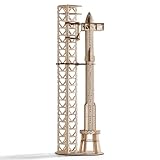
- HANDS-ON ENGINEERING EXPERIENCE: Build this detailed 3d puzzle for adults and explore the complex engineering of the legendary SpaceX Super Heavy booster. A truly immersive dive into aerospace technology
- IMPRESSIVE DISPLAY MODEL: Once completed, this highly detailed and cool-looking model makes a perfect decorative centerpiece for your office, study, or game room, showcasing your unique interests
- SATISFYING MENTAL CHALLENGE: Enjoy hours of focused, relaxing fun. This 3D puzzle provides the perfect level of difficulty, offering a great sense of accomplishment upon completion
- THE PERFECT GIFT IDEA: An unforgettable and inspiring gift for birthSpace-X Falcon Heavydays, holidays, or any occasion. Ideal for space enthusiasts, model kit fans, teens, and adults who love a good challenge
- PREMIUM & SAFE MATERIALS: Made from high-strength, eco-friendly materials with precisely cut pieces for a smooth build. The finished model is robust and durable, designed for long-term display
Why headlines said SpaceX beat ULA
SpaceX and ULA were both eligible for the Lane 1 missions in this award round, and SpaceX won every launch for which they competed. Ars Technica described the result as a nine-for-nine sweep. ULA nevertheless remained an NSSL provider with Phase 3 contracts and later mission assignments.
The public award announcement does not provide the complete competing bid record, so it does not establish that SpaceX won because it offered the lowest price. SpaceX’s established Falcon 9 flight cadence and government-launch experience made it a strong competitor, but the Space Force evaluates more than an advertised rocket price.
Rank #4
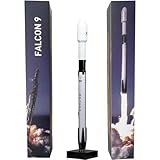
- Name:1:233 Falcon 9 Material::Alloy+resin
- Size:Approximately 28x2.4cm (11*1.5inch) Function: Static desktop display
- For collection or display, Not suitable for children to play with Handmade, there may be minor flaws
- Model is a highly Simulated SpaceX Falcon9 Dragon+F9 Starship Heavy Falcon Falcon 9 Biock 5 rocket model. The main body of the first-stage rocket is precision aluminum alloy tube, and the rest of the rocket materials are made of high-quality imported resin-with excellent laser forming ability and long-lasting preservation
- Ability to reach the required orbit and accommodate the payload.
- Launch-site and range availability.
- Schedule, cadence and provider readiness.
- Mission-assurance and integration requirements.
- Demonstrated performance and resilience.
- Firm-fixed-price cost for the defined service.
Lane 1 and Lane 2 are different competitions
NSSL Phase 3 deliberately divides missions into two lanes. Confusing them can make a Lane 1 win look like control of the entire national-security launch program.
| Lane 1 | Lane 2 | |
|---|---|---|
| Mission profile | More traditional commercial-like orbits and missions | More challenging or unique national-security missions |
| Risk and assurance | Higher tolerance for mission-specific risk, with tailored assurance | Strictest requirements and little tolerance for failure |
| Competition | Multiple providers compete for individual task orders; annual on-ramps can add entrants | Smaller pool of providers meeting full NSSL capabilities |
| Contract approach | Multiple-award, firm-fixed-price IDIQ with competed task orders | Provider selection and mission assignments for demanding national-security launches |
| Phase 3 providers | Broader eligible field | SpaceX, ULA and Blue Origin selected for Phase 3 |
Lane 1’s greater risk tolerance does not mean the Space Force treats its launches as unsafe. It means requirements and oversight are matched to each payload and orbit rather than applying the most demanding assurance regime to every mission. The structure is intended to encourage competition, lower costs over time and create opportunities for newer providers while preserving access to space.
Recommended Free Tools
Best Value
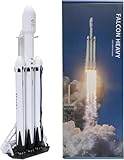
- Extremely exquisite Falcon Heavy rocket model (For collection or display, not a toy! Children should not buy it)
- This model is a highly simulated SpaceX Falcon Heavy rocket model. First-stage super heavy-duty booster is made of precise aluminum alloy tubes.Second-level starship is embedded with reinforced aluminum alloy tubes
- The proportional model:1:233
- Actual height: 32cm (the core diameter is 24mm, the real rocket is 9 meters in diameter) This ratio is the best choice for desktop placement
- Note: This model is not a toy model, it is not recommended to buy for children, please buy with caution to avoid unnecessary trouble for your shopping
Lane 2 is the more demanding track. In the Phase 3 Lane 2 award, SpaceX was named the best-value provider and ULA the next-best-value provider. The Space Force anticipated approximately 60% of principal missions for SpaceX and 40% for ULA, with Blue Origin eligible for a limited number of later missions. See the official Lane 2 announcement.
Independent reader supportYour contribution helps us test, update, and keep practical guides available for everyone.What the $733 million award did not mean
- It was not one undifferentiated contract for a single launch.
- It was not $733 million in profit or a rocket-development subsidy.
- It did not remove ULA from NSSL.
- It did not prove SpaceX had won every type of military or national-security launch.
- It did not identify every NRO payload publicly.
- It should not be compared directly with a commercial Falcon 9 list price without accounting for military integration, security, range and mission-assurance work.
What happened after the 2024 Lane 1 award
Subsequent decisions show that the October 2024 result was an important round in a continuing procurement, not a final scorecard.
| Date | Development |
|---|---|
| April 2025 | Space Force awarded Phase 3 Lane 2 contracts to SpaceX, ULA and Blue Origin. The announced planning figures were about 28 missions for SpaceX, 19 for ULA and up to seven select missions for Blue Origin. Source |
| October 2025 | For FY2026 Lane 2 assignments, five missions worth $714 million went to SpaceX and two worth $428 million went to ULA; no mission in that round went to Blue Origin. Source |
| January 2026 | SpaceX received $739 million for nine additional Lane 1 launches supporting SDA and NRO missions. Source |
| April 2026 | SpaceX received $178.5 million for two SDA Lane 1 launches. Source |
| July 2026 | SpaceX received $1.6 billion for 18 Falcon 9 launches supporting the Space-Based Sensing and Targeting portfolio. Source |
Why the award matters strategically
The Space Force is trying to maintain assured access to space rather than depend on a single launch company. A second capable provider protects schedules if one supplier experiences a technical or operational disruption. Competition can also pressure costs and improve responsiveness.
Proliferated satellite architectures such as the SDA Transport Layer require many launches, creating opportunities for providers with high flight rates. SpaceX’s reusable Falcon 9 and extensive launch history are relevant advantages, but reusability alone does not guarantee a lower government price or explain every source-selection decision.
What’s actually slowing this PC down?
Pick the symptom - the matching free tool is one click away.
For taxpayers and investors, the key point is scope: SpaceX dominated one Lane 1 award round and later won additional orders, while ULA retained a substantial role and Blue Origin entered the selected-provider pool for the more demanding Lane 2 track.
Quick Recap
Product prices and availability are accurate as of the date/time indicated and are subject to change. Any price and availability information displayed on Amazon at the time of purchase will apply.




