Short answer: Qualcomm is developing Arm-based server CPUs that can connect to Nvidia GPUs through Nvidia’s NVLink Fusion ecosystem. This is not a joint Qualcomm-Nvidia processor, an Nvidia purchase commitment, or proof that every Qualcomm server will contain Nvidia GPUs. Qualcomm has since named its product the Dragonfly C1000, a planned 250-plus-core CPU expected to become commercially available in 2028.
What Qualcomm and Nvidia actually announced
At Computex in May 2025, Qualcomm said it would develop custom data-center CPUs that could be used alongside Nvidia GPUs. Nvidia identified Qualcomm as a CPU partner for NVLink Fusion, its platform for connecting partner-designed silicon into Nvidia-centered AI infrastructure.
![AMD EPYC 9004 [4th Gen] 9124 Hexadeca-core [16 Core] 3 GHz Processor](https://m.media-amazon.com/images/I/316ISTIk-UL._SL160_.jpg)
The announcement established an ecosystem and interoperability relationship. It did not announce a co-branded CPU, joint venture, Nvidia distribution agreement, exclusive supply contract, or Nvidia commitment to buy Qualcomm processors.
The plan has since evolved into Qualcomm’s Dragonfly C1000 roadmap. Qualcomm says commercial availability is expected in 2028, so the processor is still a future offering rather than hardware that buyers can order and deploy today.
#1 Best Overall

- Media streaming
- Medium capacity data managementSpecifications
- No of CPU Cores: 32
- Base Clock: 2.4GHz
- Max Boost Clock: Up to 3.3GHz
What NVLink Fusion does
NVLink Fusion is intended to give third-party silicon partners a tighter scale-up connection to Nvidia’s AI systems than a conventional PCIe-only arrangement. In practical terms, a compatible partner CPU can participate in systems built around Nvidia accelerators while Nvidia supplies the interconnect and broader accelerated-computing ecosystem.
Nvidia introduced the program with partners including MediaTek, Marvell, Alchip, Astera Labs, Synopsys and Cadence. That context matters: NVLink Fusion is a semi-custom infrastructure program, not simply a conventional CPU chipset partnership.
Qualcomm’s current C1000 product page lists PCIe Gen 7 and CXL, but it does not explicitly list NVLink Fusion. Therefore, the 2025 announcement confirms Qualcomm’s intended compatibility direction; it does not prove that every C1000 configuration will support NVLink Fusion or ship with Nvidia GPUs.
Qualcomm Dragonfly C1000: the current CPU plan
Qualcomm describes the C1000 as a chiplet-based server processor built around its Oryon CPU cores. Its published specifications and roadmap include:
The Tool Desk
Outbyte PC Repair FREEClear out junk files and repair common Windows errorsFree Scan →Outbyte Driver Updater FREEScan for outdated or missing drivers - takes under a minuteDriver Scan →- More than 250 cores.
- Designed core frequencies above 5 GHz.
- More than 2 TB/s of PCIe Gen 7 connectivity.
- CXL support for memory and device expansion.
- Air- and liquid-cooling support.
- Server-class reliability, availability and serviceability features.
- Confidential computing, telemetry, debugging, ECC, fault isolation and error recovery.
- Target workloads including general-purpose computing, agentic AI and AI head nodes.
- Expected commercial availability in 2028.
Qualcomm estimates that the C1000 will deliver more than twice the performance per watt of competing server CPUs, based on the company’s published specifications and comparisons. That is a Qualcomm estimate, not an independent production-system benchmark.
Rank #2
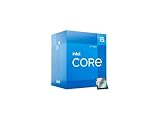
- Intel Core i5 2.50 GHz processor offers hyper-threading architecture that delivers high performance for demanding applications with improved onboard graphics and turbo boost
- The processor features Socket LGA-1700 socket for installation on the PCB
- Its 18 MB of L3 cache is good enough to carry routine data and process them in a flash giving you fast and smooth performance
- Built-in Intel UHD Graphics 730 controller for improved graphics and visual quality. Supports up to 4 monitors.
Qualcomm’s product information is available at the Dragonfly C1000 page and in its 2026 Investor Day presentation.
Why Qualcomm wants a data-center CPU business
Qualcomm is trying to diversify beyond handsets as data-center operators spend heavily on AI infrastructure. At its June 2026 Investor Day, the company set a target of more than $15 billion in data-center revenue by fiscal 2029 and raised its broader fiscal 2029 non-handset revenue target to $40 billion. These are corporate targets, not realized revenue.
Qualcomm positions its low-power chip design, Arm CPU development, system-on-chip integration, custom silicon, connectivity and signal-processing experience as advantages for data centers. Those are strategic claims from Qualcomm, not independently established performance results.
The C1000 is one part of a wider Dragonfly strategy that also includes AI accelerators, High Bandwidth Compute technology, networking and infrastructure-management software. Qualcomm’s Dragonfly AI300, for example, is described as a rack-level inference platform combining compute, memory and networking.
Why Nvidia would work with a potential CPU competitor
The likely strategic logic is that Nvidia benefits when its GPUs remain central to AI systems, even if a customer chooses a host CPU designed by another company. A broader CPU partner ecosystem could give hyperscalers and system builders more configurations, strengthen Nvidia’s interconnect position and reduce reliance on Intel and AMD host processors.
Rank #3
That is an analytical interpretation rather than a stated Nvidia motive. Nvidia is also building its own Arm-based CPU platforms, including Grace and Vera. Nvidia describes Vera as a CPU for AI training, inference, data processing and agentic workloads in its Vera announcement.
Cooperation and competition at the same time
Qualcomm and Nvidia are best understood as coopetitors:
Recommended Free Tools
- Cooperation: Qualcomm wants its CPUs to participate in Nvidia-powered systems through the NVLink Fusion ecosystem.
- Competition: Qualcomm is also developing its own accelerators, networking, custom silicon and full-stack Dragonfly infrastructure, while Nvidia sells Grace and Vera CPU platforms.
Compatibility with Nvidia GPUs could help Qualcomm enter AI systems without displacing Nvidia’s accelerators. At the same time, Qualcomm’s broader platform ambitions compete for the same infrastructure budgets.
What the Meta agreement changes
Qualcomm and Meta announced a strategic, multigeneration agreement under which Meta plans to use Qualcomm data-center CPUs in its next-generation server fleet. The announcement is important because it identifies a hyperscale customer and goes beyond a one-time evaluation.
It still does not disclose unit volumes, revenue, final deployment dates or whether all Meta fleets will use Qualcomm CPUs. It also does not say that Meta will pair those processors with Nvidia GPUs. The agreement is evidence of customer traction, not evidence of current volume shipments.
Rank #4
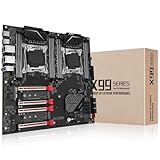
- Intel dual CPU sockets: This C612 server chip motherboard is designed with dual CPU sockets, which can support Intel Core i7 5th/6th generation processors and Xeon E5 V3/V4 series processors on LGA 2011-3 socket. (Note: If only one CPU is installed, please install it in the right slot, and the graphics card needs to be installed in the bottom two slots.)
- DDR4 4-channel memory slot: The memory slot of the LGA 2011-3 motherboard is designed with four channels, which can install 8 memory. It supports effective frequencies of 2133/2400MHz, and the maximum capacity is 256GB. (Non-ECC memory is not compatible when using E5 V4 series processors)
- PCIe 3.0 protocol standard: Equipped with 4 PCIe 3.0 X16 graphics card slots (with steel case). The transfer rate can reach 15.754 GB/s using one graphics card, and the performance can be improved by at least 50% by using two graphics cards. Equipped with dual M.2 hard disk slots, it can achieve fast reading even if multiple programs are running
- Stable power supply: use 24+8+8pin standard power supply interface (need to use a dedicated power supply for dual server motherboards), 12 (CPU) + 4 (memory) + 1 (C612 chip) phase power supply. Precise modularization provides good heat dissipation and makes the program run more stably
- Strong expandability: The X99 motherboard is equipped with multiple expansion interfaces to ensure that the motherboard has more room for improvement. These include 4*USB 3.0 ports, 4*USB 2.0 ports, 10*SATA 3.0 ports, 4*3pin sys fan, 2*4pin CPU fan. Besides, dual network ports allow your computer to do more things
The company announcement is linked from Qualcomm’s release page.
What’s actually slowing this PC down?
Pick the symptom - the matching free tool is one click away.
Arm is an architecture, not a performance guarantee
Qualcomm’s server processors use Arm-based Oryon technology. Arm supplies the instruction-set and licensing ecosystem; Qualcomm designs its own CPU implementation. Nvidia’s Grace and Vera, AWS Graviton, Ampere processors and hyperscaler custom CPUs also use Arm-based designs, but they are not interchangeable products.
Arm compatibility does not make software automatically identical to x86 software. Buyers still need to verify operating-system images, compilers, virtualization, containers, Kubernetes tooling, commercial applications and migration effort.
Where the C1000 would compete
| Platform or supplier | Architecture and position | What buyers would evaluate |
|---|---|---|
| Qualcomm Dragonfly C1000 | Arm; planned 2028 server CPU | Oryon performance, power, software support, OEM systems and accelerator compatibility |
| Nvidia Grace and Vera | Arm; closely integrated with Nvidia accelerated computing | Vertical integration, Nvidia software and GPU system availability |
| AMD EPYC | x86; established server platform | Core density, memory, performance, OEM reach and total cost of ownership |
| Intel Xeon | x86; incumbent enterprise platform | Compatibility, support channels, installed software and system availability |
| AWS Graviton and other hyperscaler CPUs | Arm; cloud- or operator-specific designs | Workload fit, cloud pricing, portability and vendor dependence |
| Google, Microsoft, Meta and other custom CPUs | Purpose-built or internally controlled silicon | Access, scale, software optimization and whether systems are available outside the operator |
What remains unproven
Because availability is targeted for 2028, important buying questions cannot yet be answered from public information:
- Independent benchmarks on production systems.
- Pricing and total cost per workload.
- OEM server availability and supply capacity.
- Linux distribution certification and application compatibility.
- Virtualization, container and Kubernetes maturity.
- Actual memory capacity, bandwidth and CXL device support in shipping configurations.
- Detailed Nvidia interoperability for C1000 systems.
- Meta deployment volumes and timing.
- Long-term firmware, RAS and support performance under failure.
What enterprise buyers should check before committing
- Request independent benchmarks for the exact workloads, not only core counts or vendor projections.
- Confirm operating-system, compiler, virtualization, container and application support on the intended Arm configuration.
- Measure memory bandwidth, CXL behavior, PCIe availability and accelerator communication in a complete server.
- Validate firmware, remote management, ECC, fault isolation and recovery procedures.
- Check whether an OEM or systems integrator will support the full CPU-GPU combination.
- Model power, cooling, licensing, migration and support costs over the system’s life.
- Separate a cloud trial of an Arm instance from ownership of a future C1000 deployment; the two differ in hardware control, networking, memory and accelerator access.
Bottom line for investors and infrastructure buyers
Qualcomm is no longer merely discussing a return to server CPUs. It has a named Dragonfly C1000 product, a 2028 availability target, a multigeneration Meta agreement and a broader data-center platform strategy. Nvidia’s role is to make Qualcomm-designed CPUs eligible for Nvidia-centered AI infrastructure through NVLink Fusion, not to sell or co-brand Qualcomm processors.
The opportunity is substantial but unproven. Qualcomm still must demonstrate independent performance, software maturity, production supply and real customer deployments. Until then, the Nvidia connection is best viewed as an ecosystem bridge, while the C1000 remains a planned product and the Qualcomm-Nvidia relationship remains cooperative and competitive.
Quick Recap
Product prices and availability are accurate as of the date/time indicated and are subject to change. Any price and availability information displayed on Amazon at the time of purchase will apply.




