Quick wins for a faster PC:
Repair Windows errors before they cause bigger problemsFix Now →Fix the driver behind crashes, sound loss and screen glitchesFind Drivers →Prelonic Technologies OG, a startup formed in Linz, Austria, built the prototype display-battery module described in a 2009 EDN report. Screen-printed onto a single flexible PET film, it combined a display, an activation button and a battery. The report described planned test products for greeting cards, gaming cards and marketing materials—not proof that the module became a widely sold retail product.
What Prelonic put on one sheet
The module brought together three functions: a flexible active display, a push-button to activate it and the battery needed to operate it. Prelonic used screen printing on a polyethylene terephthalate (PET) film substrate described as thin as paper. In practical terms, the film served as the shared base for printed functional layers, rather than requiring a conventional rigid display assembly.
Screen printing deposits functional inks through a patterned screen onto a substrate. Different printed layers can perform different jobs, such as conducting electricity or responding optically. Integrating those functions on one flexible film can make a thin, self-contained component; it does not mean the whole device is made from one material or that every electronic component can be printed. The 2009 report does not provide a layer-by-layer design or detailed performance measurements for Prelonic’s prototype.
What the 2009 report did—and did not—establish
EDN reported that Prelonic Technologies OG was formed in 2007 and that the company planned market entry in 2009. CEO Friedrich Eibensteiner identified marketing materials, greeting cards and gaming cards as potential stand-alone applications, and said the company would first launch test products to explore markets. He also said its five-stage roll-to-roll screen printer was intended to enable expected production volumes in the following year.
Recommended Free Tools
#1 Best Overall

- Product IC features built-in comparators and feedback loops to detect four voltage points. Through internal calibration technology, voltage detection accuracy is guaranteed within plus or minus1percent
- Connect the positive and negative wires of the display board to the positive and negative terminals of the lithium battery. The digital display will show real-time battery level.
- Features green, yellow, and red LED indicators to highlight battery status, enabling quick visual differentiation of charge levels.
- Battery level display explanation: 5percent (3.4-3.55V) is red, 50percent (3.55-3.7V) is orange, 75percent (3.7-3.87V) and 100percent (3.87-4.2V) are green.
- Note: This model is not waterproof. Electronic components should be used in dry environments.
Those statements document a prototype, plans and a proposed scale-up path. They do not establish that the test products launched, that the planned volumes were reached, or that the specific Prelonic module is available today. Roll-to-roll printing can move flexible material continuously through a production line, but the existence of a printer alone is not evidence of commercial production or retail availability.
How the later printed-battery work relates
In 2020, Evonik and Ynvisible introduced a technology demonstrator combining printable battery inks with an electrochromic display. Their work described a related approach to integrating a power source and a display, with flexible modules and intended Internet of Things (IoT) applications. It is a later demonstration, not evidence that the 2009 Prelonic product continued into production or used the same materials and design.
Rank #2

- Effortlessly monitor the power level of 1-4 strings of 3.7V lithium batteries with this 4S 3.7V Lithium Battery Power Indicator Display Module, providing accurate and reliable detection through four red LED segments.
- Designed for 4 Strings of 3.7V Li-ion Batteries, this module ensures precise voltage monitoring with a static power consumption of approximately 0, making it highly energy-efficient and reliable
- With a simple press of the measurement button, the 4S 3.7V Lithium Battery Power Indicator Display Module illuminates for 2-6 seconds, offering a clear and quick view of the battery status, even at low voltages
- Easily switch between 1-4 strings by soldering the jumper pads, allowing the 4S 3.7V Lithium Battery Power Indicator Display Module to adapt to your specific battery configuration with ease and flexibility
- Connect the positive and negative terminals of your 4 Strings of 3.7V Li-ion Batteries to the module's input interfaces for a straightforward setup, ensuring accurate and reliable detection without the risk of reverse polarity damage
The distinction matters: “printed display-battery module” can describe different architectures. A display may use electrochromic technology, while a printed battery supplies power; integration, substrate, manufacturing process and intended use depend on the particular supplier and configuration. Smart packaging and IoT concepts are plausible application areas, but a demonstrator or supplier capability is not the same thing as a finished product ready for consumers.
What current supplier specifications indicate
Ynvisible currently advertises printed e-paper display components and gives these specifications for a referenced display configuration:
Rank #3

- Working voltage: 3-34V, working current: 5mA; Working temperature: -20 ℃~50 ℃
- It can be used as a power capacity display for lithium lead acid nickel-hydrogen battery, as long as the required voltage is within the range of the parameter table
- Display based on battery level, selecting the corresponding solder pad can detect the voltage of the battery pack corresponding to 1S-8S, which is very convenient
- The battery voltage is greater than N*3.3V, and the display lights up for 1 grid (N represents the number of battery cells)
- Usage: Connect the positive and negative ports of the display board to the positive and negative ports of the tested battery, and the digital display tube will display the real-time battery power
| Specification | Ynvisible’s stated figure | How to interpret it |
|---|---|---|
| Power use | Less than 1 µW/cm² | Supplier-stated display power-use figure; it is not a complete system energy budget. |
| Thickness | Less than 300 µm | Supplier-stated display thickness, not necessarily the thickness of a battery-equipped finished module. |
| Flexibility | 10 mm radius | Supplier-stated flexibility specification; confirm the permitted bending conditions for a particular design. |
| Required battery capacity | 6 mAh | Supplier-stated requirement for the referenced display configuration, not a universal capacity for printed displays. |
These figures describe a display configuration, not a guarantee about runtime, the full dimensions of an integrated module, or the performance of Prelonic’s earlier prototype. Battery life depends on the display’s operating pattern and the rest of the system, including any sensing, control or communication electronics. A buyer should obtain the specification for the actual proposed configuration.
Independent reader supportYour contribution helps us test, update, and keep practical guides available for everyone.Can you buy one?
The available evidence does not identify a clearly matching Amazon retail product or establish that Prelonic’s exact module is sold today. Current supplier activity is better understood as custom or industrial: Ynvisible describes printed-display capabilities, Evonik has presented printable battery materials, Printed Electronics Ltd offers prototyping and bespoke printed-battery work, and Molex describes thin-film battery and printed-sensor systems. These are potential supplier routes, not confirmation of a standard off-the-shelf display-and-battery module.
Rank #4

- Ultra-thin Electricity display, 5 LED indicators, display more intuitive and more beautiful.3.7V lithium battery, full charge 4.2V.
- Connect the positive and negative terminal of the display board and connect it to the positive and negative ends of the battery to be tested. Lightly press the red button with your finger and the IED lamp lights up to show the real-time battery power.
- Loosen your finger and the LED light will be extinguished after 3-5 seconds of delay. No power will be consumed during static operation.3.7V lithium battery uses a red power indicator, 4 green power indicator (the other voltage range is 1 red power indicator, 4 blue power indicator)
- Package Included:2Pcs 3.7V Li-ion Battery Power Level Indicator Module For Led Voltage Display Meter(If there are any problems with the product, please send us pictures?Tell us more details about this problem? ).
- Thank you so much for your purchasing from our store.Any question ,please feel free to contact us.
For a business evaluating a component, compare the actual proposal on these points:
- Display technology: establish whether the display is electrochromic, e-paper or another type, and what visual behavior the application needs.
- Power and capacity: request the display’s operating requirements and the complete system’s battery specification; do not treat a display-only figure as whole-device performance.
- Substrate and bending: confirm the material, finished-module thickness and bend conditions, including whether the battery and interconnects tolerate the same flexing as the display.
- Manufacturing route and volume: ask whether production is sheet-to-sheet or roll-to-roll, and whether the quoted process, capacity and price apply to prototype quantities or the intended production run.
- Integration scope: determine which party supplies the display, battery, button, sensor, controller and assembly, and what customization or prototyping is available.
- Application fit: distinguish a short-lived greeting card or marketing insert from a reusable IoT device, smart package or wearable, since their power, durability and production needs differ.
For a consumer, the practical answer is that this is an industrial technology area rather than a clearly established retail category. For a product developer, the next step is to request a configuration-specific proposal and verify current availability, qualification requirements, production scale and pricing directly with the supplier.
What’s actually slowing this PC down?
Pick the symptom - the matching free tool is one click away.
Quick Recap
Best Value
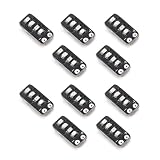
- 1. Ultra-small size, only 5x9.5mm
- 2. Built-in 4-channel high-precision comparator
- 3. Internal comparator has a reasonable hysteresis, easy to do charging and discharging instructions
- 4. Adopt green, yellow and red three-color light display, highlighting the power state
Product prices and availability are accurate as of the date/time indicated and are subject to change. Any price and availability information displayed on Amazon at the time of purchase will apply.




