Palo Alto Networks completed its acquisition of Chronosphere on January 29, 2026, after announcing an agreement on November 19, 2025. The announced consideration was $3.35 billion in cash and replacement equity awards, subject to adjustments. Chronosphere is now a wholly owned subsidiary, giving Palo Alto Networks a cloud-native observability platform and telemetry-pipeline technology to connect with its security and AI-agent products.
What happened in the Chronosphere acquisition?
Palo Alto Networks announced the deal on November 19, 2025, and said it had completed the acquisition on January 29, 2026. Chronosphere became a wholly owned subsidiary. Co-founder and CEO Martin Mao joined Palo Alto Networks as senior vice president and general manager of Observability; the original announcement also said co-founder Rob Skillington and Chronosphere employees were expected to join.


The original announcement described consideration of $3.35 billion in cash and replacement equity awards, subject to adjustments. That is the appropriate figure for describing the announced transaction, rather than the rounded $3.3 billion in the earlier headline. Palo Alto Networks’ acquisition announcement and its closing announcement document the timeline and stated strategy.
Why do the deal documents show different values?
The $3.35 billion figure is the announced transaction consideration, subject to adjustments. Palo Alto Networks’ later SEC filing reported $2.951 billion as preliminary accounting purchase consideration: $2.842 billion in cash and $109 million in replacement awards allocated to purchase consideration. The filing separately reported $525 million in replacement equity awards issued, with the portion not allocated to purchase consideration assigned to future employee services and expensed as share-based compensation. These are different measures, not necessarily competing announcements of the deal price. The accounting allocation is preliminary.
#1 Best Overall
The same filing recorded $2.364 billion of goodwill and $565 million of identified intangible assets. It estimated useful lives of five years for developed technology and six to ten years for customer relationships. Those accounting figures describe the purchase-price allocation, not a customer-facing product valuation. Palo Alto Networks’ SEC acquisition-accounting disclosure provides the breakdown; its Form 8-K documents the completed transaction and subsidiary status.
What Chronosphere brings to Palo Alto Networks
Chronosphere is not just a dashboard or application-monitoring tool. Its platform is built for cloud-native applications, microservices, and containers, and includes ways to collect, transform, optimize, and route telemetry such as metrics, logs, and traces. Telemetry-pipeline controls can help teams filter or route data rather than indiscriminately ingesting everything, which may help manage observability costs depending on the system and its data needs.
Chronosphere also positions its platform around data control and AI-guided troubleshooting and root-cause assistance. Its product site describes its observability and telemetry-pipeline offerings. These capabilities are relevant to organizations operating large, distributed systems, where application behavior and infrastructure health are difficult to understand from isolated monitoring signals.
Why an observability company fits a cybersecurity strategy
Observability and security operations answer related but distinct questions. Observability helps teams understand the health, behavior, and performance of applications and infrastructure. Security operations focus on finding and responding to malicious or suspicious activity. Linking the two can help investigators see whether a performance change, infrastructure event, or unusual application pattern is connected to a security incident.
Recommended Free Tools
Rank #3
![Palo Alto Software Palo Alto 3050 [PA-3050] Network Security Firewall Appliance (Renewed)](https://m.media-amazon.com/images/I/215S7tx0kNL._SL160_.jpg)
- Item Package Quantity - 1
- Product Type - ELECTRONIC SWITCH
- This pre-owned product has been professionally inspected, tested and cleaned by Amazon qualified vendors.
- Accessories may not be original, but will be compatible and fully functional. Product may come in generic box.
Palo Alto Networks says it intends to combine Chronosphere’s observability data with Cortex AgentiX so AI agents can identify, investigate, and potentially remediate IT and security issues. The company’s closing announcement describes context spanning models, prompts, users, and performance. That is the company’s strategic positioning, not proof that every described integration or automated response capability was generally available to customers when the deal closed.
“AI observability” is not one standardized feature. Depending on the product, it can refer to monitoring inference latency, failures, throughput, and infrastructure use; tracking prompts, responses, users, and model interactions; observing agent workflows and tool calls; or using telemetry to detect anomalies and support troubleshooting. These functions are related, but observing an AI application, using AI to assist observability, and using observability data to improve security are not interchangeable.
Rank #4
![Palo Alto 850 [PA-850] Next Generation Firewall Security Appliance (Renewed)](https://m.media-amazon.com/images/I/31ObY2ZV17L._SL160_.jpg)
- World’s first ML-Powered NGFW
- Eleven-time Leader in the Gartner Magic Quadrant for Network Firewalls
- Leader in the Forrester Wave: Enterprise Firewalls, Q4 2022
- Highest Security Effectiveness score in the 2019 NSS Labs NGFW Test Report, with 100% of evasions blocked
- Extends visibility and security to all devices, including unmanaged IoT devices, without the need to deploy additional sensors
What the deal may mean for customers
For existing Chronosphere customers
The acquisition makes Chronosphere part of Palo Alto Networks, but the official acquisition and closing materials do not fully establish post-acquisition contract, pricing, packaging, migration, or data-retention changes. They do not establish that customers must migrate. Customers should confirm the terms that apply to their own contracts and deployment with their account team, rather than assume either continuity or a forced transition.
- Ask whether the standalone Chronosphere platform remains available and whether any product packaging is changing.
- Confirm support contacts, service-level commitments, contract terms, pricing, retention policies, and any migration requirements in writing.
- Check whether APIs, exporters, OpenTelemetry integrations, Fluent Bit pipelines, and existing data destinations remain supported.
- Clarify who can access telemetry across SRE, development, security, and platform teams, and whether data sharing with other Palo Alto Networks products is opt-in or automatic.
- Ask about deployment choices, data residency, export options, and the steps for moving configurations and telemetry if you later change vendors.
For Palo Alto Networks customers
Adding observability could give security teams more direct access to application and infrastructure context, and could make a combined vendor relationship attractive to organizations already standardizing on Palo Alto Networks. The trade-off is greater vendor concentration and potential overlap with existing monitoring, application-performance, SIEM, cloud-security, or AIOps tools. A broader platform is useful only if its integrations and operating model work for the teams that use it.
Best Value
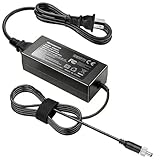
- Compatible with Palo Alto Networks PaloAlto PA-440 PA-450 PA-460 PA440 PA450 PA460 Network Firewall Security Appliance DC12V 12.0V Power Supply Cord Charger. replaces lost or damaged power cords for these classic models
- Input 100-240V AC, 50/60Hz; supports global voltage for international use; reliable performance for home or travel
- FCC approved and safety certified; built-in overcurrent protection (OCP); short-circuit protection (SCP); overvoltage protection (OVP) for safe use
- Durable and convenient design; offers extended reach and flexibility for daily use, ideal replacement for original power supply
- Includes 1 AC Adapter + 1 Power Cord; backed by 24-month exchange warranty for peace of mind
For buyers evaluating a new platform
Compare the actual product and commercial terms with your telemetry volume, retention needs, data-governance rules, integrations, and operational workflows. Chronosphere’s pre-acquisition annual recurring revenue was reported by Palo Alto Networks as more than $160 million as of the end of September 2025, with triple-digit year-over-year growth. That was company-reported ARR, not audited revenue or profit. Compared with the $3.35 billion announced consideration, it implies a headline transaction value of more than 20 times that reported ARR; this is an approximate analytical comparison, not a GAAP valuation measure.
Independent reader supportYour contribution helps us test, update, and keep practical guides available for everyone.How the acquisition could affect the observability market
The strategic opportunity is to link a specialist telemetry pipeline and cloud-native observability platform with a large security portfolio. That may appeal to enterprises seeking fewer suppliers or better correlation between operational and security events. It does not mean Palo Alto Networks has made independent observability vendors, open-source telemetry stacks, or cloud-provider monitoring unnecessary. Organizations may continue to prefer specialist products, modular architectures, or vendor-neutral instrumentation.
OpenTelemetry, for example, is a vendor-neutral instrumentation and telemetry framework, not a complete commercial observability platform by itself. Buyers using it still need to choose or assemble storage, dashboards, alerting, support, and incident workflows. More broadly, the value of consolidation depends on whether integrations preserve customers’ existing tools and whether teams can use the combined system without sacrificing data control or flexibility.
Risks and questions that remain
- Integration execution: Combining a specialist observability business with a large cybersecurity portfolio can be technically and organizationally complex.
- Product priorities: SRE and developer teams may value different workflows from security operations teams; the product must serve both without sidelining observability needs.
- Vendor concentration: Fewer suppliers can simplify operations, but relying more heavily on one vendor can increase switching costs and reduce flexibility.
- Telemetry governance: Operational and security data can have different access, retention, residency, and compliance requirements.
- Automated remediation: An agent acting on noisy or incomplete telemetry could cause an outage or other harm. Buyers should ask what approvals, limits, audit logs, and rollback controls apply before an agent takes action.
- Commercial clarity: The acquisition releases do not settle post-close pricing, packaging, contract changes, or migration obligations.
Before adopting an integrated observability-and-security approach, buyers should establish which AI features are generally available rather than planned, what data is shared across products, how telemetry can be exported, and how existing contracts and support arrangements are handled.
What’s actually slowing this PC down?
Pick the symptom - the matching free tool is one click away.
What Palo Alto Networks’ purchase does—and does not—establish
The deal gives Palo Alto Networks ownership of a substantive cloud-native observability and telemetry asset, and a strategic route to connect operational context with security products. The company’s acquisition rationale points toward AI-assisted investigation and remediation, but the customer impact depends on integration quality, transparent commercial terms, and safeguards for data and automated actions. The completed acquisition alone does not establish that the combined products deliver better results or lower costs than separate tools.
Quick Recap
Product prices and availability are accurate as of the date/time indicated and are subject to change. Any price and availability information displayed on Amazon at the time of purchase will apply.




