Oracle CloudWorld 2024, held in Las Vegas in September 2024, presented two linked bets: Oracle would put its database services wherever enterprise applications already run, and the power demands of AI could require gigawatt-scale facilities backed by nuclear generation. The event combined formal product announcements with related earnings-call disclosures, so availability and maturity varied by offering.
What Oracle CloudWorld 2024 actually announced
CloudWorld was not a single-product launch. Oracle used the event and its surrounding announcement cycle to promote cloud infrastructure, databases, AI, analytics, enterprise applications, developer tools, security and industry data platforms. Oracle’s own event summary grouped the news into AI and data science, analytics, application development, core infrastructure, data, distributed cloud, and security.



The distinction matters. Some items were presented at the conference, others appeared in Oracle press releases during the week, and Larry Ellison’s nuclear-power comments came in related earnings-call remarks rather than as a commercial cloud-service launch.
Why multicloud was the defining theme
Many enterprises want to keep Oracle Database while placing applications, analytics or AI services on AWS, Microsoft Azure or Google Cloud. Separating the database from those workloads can create network latency, migration risk, licensing questions and additional operational work.
#1 Best Overall
Oracle’s answer was to deploy Oracle Database services on OCI infrastructure located in partner-cloud environments. The September 2024 announcement covered Oracle Database@AWS, Oracle Database@Azure and Oracle Database@Google Cloud, alongside existing interconnection products and expanded HeatWave MySQL capabilities.
This is more specific than saying Oracle “supports multiple clouds.” The database technology remains Oracle’s, and the underlying database infrastructure remains OCI-based, while customers can connect it closely to services from the host hyperscaler.
Oracle Database@AWS in practical terms
Oracle Database@AWS provides Oracle database services running on OCI infrastructure deployed in AWS data centers. The announced services included Oracle Autonomous Database on dedicated infrastructure and Oracle Exadata Database Service.
Oracle and AWS positioned the arrangement for applications, analytics and AI workloads using Amazon EC2, AWS data services and Amazon Bedrock. The intended benefits were shorter network paths, a more integrated operational experience and the ability to use AWS services without first migrating an Oracle database.
“Running in AWS” does not mean AWS operates Oracle Database as a native AWS database engine. It means Oracle technology is deployed on Oracle infrastructure within, or closely integrated with, AWS facilities. Several services were described as available through custom quotes or private offers; Autonomous Database also had a pay-as-you-go option in the 2024 announcement.
Database@Google Cloud: four regions at launch
Oracle said Database@Google Cloud was generally available in four regions in September 2024:
| Region named in the announcement | Location |
|---|---|
| U.S. East | Ashburn |
| U.S. West | Salt Lake City |
| U.K. South | London |
| Germany Central | Frankfurt |
The service included Oracle Exadata Database Service, Oracle Autonomous Database and Oracle Database Zero Data Loss Autonomous Recovery Service, according to Oracle’s multicloud release.
Google Cloud customers could therefore retain Oracle Database while using Google’s application, data and AI services. The four-region list describes the September 2024 launch, not guaranteed 2026 coverage; buyers must check Oracle’s live regional documentation.
Crashes, No Sound, or Screen Glitches?
Random freezes, missing sound and display glitches usually trace back to one bad driver. Find and replace yours safely.Free scan · under a minutePC Slower Than It Used to Be?
A free scan shows the junk files, broken settings and background clutter dragging Windows down - then fixes them in one click.Free scan · Windows 10 & 11Rank #2
Database@Azure: expansion of an existing relationship
Database@Azure predated CloudWorld 2024. Oracle used the event to highlight adoption and expansion. On September 9, Oracle said the service was available in six Azure regions:
- Australia East
- Canada Central
- East US
- France Central
- Germany West Central
- UK South
Oracle listed 15 additional regions as planned in its announcement. “Planned” did not mean delivered. Region, service composition and commercial terms can differ, so the 2024 map should not be treated as a permanent specification.
The appeal is clearest for Microsoft-centric organizations: Azure networking, identity, applications, analytics and procurement can remain central while Oracle databases stay close to those workloads. Oracle cited MSCI and Fonterra as customer examples, but those examples do not establish universal savings or performance gains.
Distributed cloud is broader than multicloud
Oracle presented the database partnerships as one part of a distributed-cloud strategy. The portfolio spans public regions, dedicated deployments, hybrid infrastructure, sovereign and government environments, edge systems and multicloud databases.
Free tools Windows power users keep installed
One-click scans. No signup required.
- Dedicated and hybrid deployments: Exadata Cloud@Customer and Compute Cloud@Customer extend OCI capabilities into a customer facility.
- OCI Dedicated Region: A full OCI environment for customers needing dedicated or sovereign control.
- Roving Edge Infrastructure: Portable systems for remote or disconnected operations.
- Public regions and partner clouds: Cloud services placed where data, applications or users already reside.
Oracle’s distributed-cloud announcement framed the benefits as data residency, lower latency, disconnected operation, sovereignty and preservation of existing infrastructure investments.
Dedicated Region25
Oracle announced a smaller OCI Dedicated Region configuration called Dedicated Region25. It could start with three racks and was described as having a 75% smaller launch footprint than the prior configuration, while supporting OCI’s more than 150 cloud and AI services. Availability was planned for 2025 relative to the September 2024 announcement, so it was not necessarily generally available at the time of disclosure.
AI infrastructure: the zettascale claim
Oracle announced an OCI Supercluster configuration using up to 131,072 NVIDIA Blackwell GPUs and 2.4 zettaFLOPS of peak performance. Oracle called it the largest AI supercomputer available in the cloud in its announcement.
Those are Oracle’s maximum announced configuration and vendor-stated peak figure, not a guarantee that every customer could immediately obtain the system or achieve that application performance. Real results depend on model architecture, numerical precision, networking, software, utilization and hardware access.
The Tool Desk
Outbyte PC Repair FREEClear out junk files and repair common Windows errorsFree Scan →Outbyte Driver Updater FREEScan for outdated or missing drivers - takes under a minuteDriver Scan →The announcement also exposed the physical constraints behind AI growth. Very large GPU clusters require electrical capacity, cooling, high-speed networking, land, construction and operations staff. That context helps explain why power supply became part of Oracle’s CloudWorld story.
The nuclear-energy announcement—and its limits
In remarks associated with Oracle’s earnings call around CloudWorld, Larry Ellison said Oracle was designing a data center exceeding 1 gigawatt and had building permits for three small modular reactors. Data Center Knowledge reported the plan as intended for very large AI and GPU workloads.
The statement signals that Oracle expects future AI capacity to be constrained by power availability as well as chips and buildings. A gigawatt-scale site would be exceptionally large, and colocated or on-site nuclear generation could, in theory, provide firm electricity for continuous workloads.
It does not establish that Oracle had built reactors or launched a nuclear-powered cloud service. A building permit is not reactor construction, an operating license, fuel supply, grid interconnection or commercial power production. The disclosure did not identify the reactor vendor, exact site, commissioning date, final design or cost. Data Center Dynamics likewise treated it as an infrastructure plan disclosed around the event, not a completed facility.
Important unresolved issues include SMR licensing, construction and financing risk, fuel availability, cooling-water requirements, backup power, local acceptance, economics versus grid power or power-purchase agreements, and whether AI hardware generations will change before the site is operational.
Other CloudWorld announcements that matter
Generative AI and enterprise applications
CloudWorld also covered generative AI in Oracle’s software and data stack: Fusion Data Intelligence, Oracle Data Intelligence Platform developments, OCI Generative AI and retrieval-augmented-generation capabilities. Oracle highlighted Meta Llama 3.1 405B and 70B models in OCI Generative AI, Hugging Face models in OCI Data Science AI Quick Actions, and a beta of Oracle Code Assist with NetSuite SuiteScript support.
These announcements placed AI inside analytics, business applications and developer workflows rather than treating model access as an isolated infrastructure product. Oracle’s post-event summary provides the company’s grouping of those capabilities.
Utilities and industry data
Oracle Energy and Water Data Intelligence was aimed at utilities, combining data orchestration, analytics, machine learning and OCI infrastructure. It illustrates Oracle’s industry strategy: unify operational data first, then apply AI to it.
Quick wins for a faster PC:
Clear out junk files and repair common Windows errorsFree Scan →Fix the driver behind crashes, sound loss and screen glitchesFind Drivers →Repair Windows errors before they cause bigger problemsFix Now →Rank #4
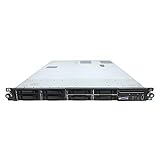
- HP ProLiant DL360 G7 8B Server
- 2x X5650 2.66GHz 12-Cores Total
- 32GB RAM / 8x 146GB 10K 2.5in SAS Hard Drives
- P410 w/ 512MB
Edge AI and disconnected operations
Oracle described Roving Edge enhancements including a three-GPU option, ruggedized portable configurations and support for remote or disconnected inference. Use cases included domain-specific language models and computer vision. Oracle also stated that Roving Edge devices could support up to 56 cores, 102 virtual CPUs, 512 GB of RAM and 123 TB of storage, depending on configuration. Those are Oracle-stated specifications from the 2024 announcement, not a guarantee for every current model; see Oracle’s edge summary.
Security, recovery and governance
Less conspicuous announcements covered network security, Zero Trust Landing Zone developments, governance and observability, sovereign and government-cloud options, and Zero Data Loss Autonomous Recovery Service availability for Database@Azure. These controls determine whether a multicloud design can be operated reliably, not merely connected technically.
Independent reader supportYour contribution helps us test, update, and keep practical guides available for everyone.Who benefits from Oracle’s multicloud model?
- Oracle-heavy enterprises: Organizations with substantial Oracle Database estates can avoid an immediate wholesale migration.
- AWS-, Azure- or Google-centric teams: Application and AI teams can use their preferred hyperscaler while retaining Oracle database compatibility.
- Regulated and sovereign workloads: Dedicated, hybrid and regional options can help meet residency and control requirements.
- Remote and industrial operators: Roving Edge can process data where connectivity is intermittent or unavailable.
The model is less compelling for organizations that can migrate comfortably to a native cloud database, want a single-cloud architecture, or have no Oracle dependency.
Trade-offs buyers should model
Less migration work, more cross-cloud operations
Database@AWS, @Azure and @Google Cloud may reduce database migration effort, but identity, private networking, monitoring, incident ownership, backup, disaster recovery, egress and service limits still cross organizational boundaries.
Lower network distance, deeper dependence
Placing Oracle infrastructure near applications can reduce network distance, while increasing dependence on both Oracle and the host hyperscaler. A multicloud design is not automatically independent of vendors or outages.
Existing investment, complex economics
Customers still need to evaluate Oracle licensing, dedicated infrastructure charges, private offers, separate cloud consumption, support boundaries and contract terms. Request region-specific pricing rather than assuming that proximity eliminates cost.
AI scale, power and construction
A GPU cluster is only one part of an AI platform. Electrical delivery, cooling, networking, land, permits, hardware supply and skilled operations can each become the limiting factor. Nuclear generation would address potential electricity supply, not the rest of that chain.
A practical evaluation checklist
- Confirm that the required Database@ service is generally available in the target region, rather than merely announced or planned.
- Map identity, private connectivity, routing, monitoring and support ownership between Oracle and the partner cloud.
- Model Oracle licensing, private offers, cloud consumption, egress, backup and disaster-recovery costs.
- Define the outage domains and an exit plan; a multicloud label does not guarantee independent failure domains.
- For AI workloads, obtain written commitments on GPU availability, capacity, networking and service-level terms.
- For dedicated, sovereign or edge deployments, validate hardware, site, regulatory, staffing and disconnected-operation requirements.
What remains unproven
CloudWorld 2024 established Oracle’s direction more clearly than it established production outcomes. The announcements did not provide independent benchmarks for Database@ services, universal pricing, worldwide regional coverage or guaranteed access to the largest Blackwell configuration. Nor did they verify a reactor vendor, site, construction schedule, operating approval or completion date for the nuclear plan.
What’s actually slowing this PC down?
Pick the symptom - the matching free tool is one click away.
The durable takeaway is strategic: Oracle wants its database and AI infrastructure available wherever enterprise data and applications already live, while preparing for a future in which electricity is as important to cloud capacity as chips and buildings.
Quick Recap
Product prices and availability are accurate as of the date/time indicated and are subject to change. Any price and availability information displayed on Amazon at the time of purchase will apply.




