Do these 3 things before closing this tab:
1Repair Windows errors before they cause bigger problems2Scan for outdated or missing drivers - takes under a minute3Clear out junk files and repair common Windows errorsShort answer: U.S. export controls sharply reduced authorized sales of Nvidia’s most capable AI chips to China, but they did not create a perfect physical blockade. A Wall Street Journal investigation summarized by CIO on July 4, 2024 found more than 70 distributors openly advertising restricted A100 and H100 processors and servers. The reported supply came through unauthorized resale, diversion, transshipment and possible smuggling—not evidence that Nvidia was legally selling those products into China. By January 2026, the legal position had changed again: qualifying applications to export Nvidia H200-class products could receive case-by-case review. Thus, the headline was substantially accurate about reported 2024 gray-market access, but it is too broad as a description of the current rules.
What the July 2024 investigation actually found
CIO’s July 4, 2024 summary of a Wall Street Journal investigation reported that more than 70 distributors advertised Nvidia chips subject to U.S. restrictions. The investigation reportedly contacted 25 sellers; some claimed they could source dozens of high-end processors each month. Several offered complete servers containing eight GPUs, with prices around $300,000 and delivery in weeks. These were seller claims and advertised offers, not a government inventory estimate or proof that every listed unit existed.

The reported resale prices illustrate the effect of scarcity. In July 2024, sellers quoted approximately $22,500 for an A100 in China versus about $10,000 elsewhere, and approximately $32,400 for an H100 versus about $25,000 elsewhere. Those figures were reported at the time and are not current August 2026 market prices. The reporting is available at CIO.
Physical availability, lawful availability and dependable commercial supply are different things. An advertised processor might have been legally exported to an intermediary and then diverted, offered by an unauthorized broker, misrepresented in documentation, refurbished or counterfeit. Its presence in China does not establish that Nvidia, an authorized distributor or a particular U.S. exporter violated the law.
The Tool Desk
Outbyte PC Repair FREEClear out junk files and repair common Windows errorsFree Scan →Outbyte Driver Updater FREEFix the driver behind crashes, sound loss and screen glitchesFind Drivers →#1 Best Overall
How restricted chips reportedly reached Chinese buyers
The reported network exploited the complexity of a global supply chain rather than a single technical loophole. High-level mechanisms described in the reporting included:
- Third-country transshipment: a product could be exported legally to one destination and later reexported without the required authorization.
- Online brokers and resellers: distributors advertised individual GPUs and finished systems, making enforcement harder when transactions were fragmented.
- Incomplete or inaccurate paperwork: customs descriptions and end-user information could obscure a product’s true destination or use.
- Small-lot shipments: repeated small consignments are less conspicuous than a single bulk movement.
- Finished servers: GPUs installed inside servers may be less visible to a screening process than clearly labeled standalone processors.
- Smuggling and diversion after export: larger quantities could move through professional networks after an initially lawful shipment.
These mechanisms explain why controls are difficult to enforce without providing a playbook for evasion. The enforcement challenge is international: U.S. rules depend partly on foreign governments, freight forwarders, distributors, foundries, cloud providers and end users identifying suspicious activity.
What U.S. export controls actually regulate
“Banned from China” is shorthand, not a complete legal description. The Export Administration Regulations (EAR), administered by the Bureau of Industry and Security (BIS), can impose different requirements depending on the product, destination, transaction and intended use.
Product and system characteristics
Controls can turn on technical parameters such as computing performance and performance density. They may apply differently to a standalone integrated circuit, a server or a larger system. A product below one threshold can still be captured by another rule or by an end-use restriction.
Rank #2

- Part number 900-53651-2500-000 and model: P3651
- This is the 2 slot version for when there is no empty slots between 2 slot cards. If you have one or more empty slots between the cards or the cards are 3 slot this NVLink will not work. See the attached images showing the card layout.
- NVLink 3.0 for any brand of RTX Ampere model graphics cards: 3090, A30, A40, A100 / H100 (Requires three NVLinks), A800, A4500, A5000, A5500, A6000
- This is the same as PNY part number: NVLAMP-2SLOT-BSP and RTXA6000NVLINK-KIT
- This is the same as Dell part number: 0RWJ7Y
Destination and reexport
China, Hong Kong and Macau are relevant legal geographies, and a transaction involving a third country can still be restricted if the item is later reexported or transferred. BIS’s 2022 rules added advanced-computing chips and systems to the Commerce Control List and imposed licensing requirements tied to supercomputing and semiconductor-development or production end uses in China. See the October 7, 2022 BIS announcement.
End users and end uses
Licensing can depend on the ultimate customer, its parent company and the planned use. Military, intelligence, supercomputer and specified AI activities can trigger additional restrictions. A civilian-looking intermediary does not remove the risk if the ultimate beneficiary is restricted.
Origin and authorization
Whether an item is U.S.-origin or otherwise subject to the EAR matters, as do license exceptions and specific licenses. BIS rules have changed repeatedly, so the answer for an A100 or H100 depends on the version of the rules in force, the buyer and the transaction—not simply the product name.
Why the controls did not form a perfect blockade
Export controls regulate transactions, exporters, end users and destinations; they do not automatically track every chip after it leaves a factory. The supply chain spans multiple jurisdictions, each with different enforcement capacity. A chip can be incorporated into a server, sold through several intermediaries or transferred after an initially legal export.
Rank #3
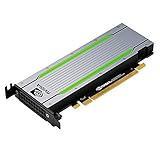
- Video/Sound Cards
- Passive Cooling
Scarcity also creates an economic incentive to take risks. Premium prices make brokering and smuggling attractive, while finite enforcement resources mean authorities cannot inspect every shipment or investigate every online listing. Repeated revisions create compliance complexity and can leave temporary gaps until companies and governments adjust.
BIS acknowledged these concerns in its April 2024 clarification, which broadened controls and added anti-circumvention measures, and in its December 2024 package covering additional equipment, software, high-bandwidth memory and Chinese entities. The announcements are available from BIS (April 4, 2024) and BIS (December 2, 2024).
Timeline: how the policy evolved
| Date | Development | Practical significance |
|---|---|---|
| October 7, 2022 | Advanced-computing and semiconductor-manufacturing controls introduced. | Created major licensing requirements for specified chips, systems and semiconductor activities involving China. |
| October 17, 2023 | Rules added performance-density and anti-circumvention measures. | Made it harder to redesign or route products around a single technical threshold. |
| April 4, 2024 | BIS issued clarifications and broader anti-workaround measures. | Addressed emerging diversion and compliance gaps. |
| December 2, 2024 | BIS added controls on manufacturing equipment, software and HBM and added 140 entities to the Entity List. | Targeted China’s ability to produce advanced semiconductors as well as buy them. |
| January 15, 2025 | Further advanced-computing controls and foundry due-diligence measures. | Focused on preventing diversion to the People’s Republic of China. |
| May 13, 2025 | Guidance addressed AI-model training and use of certain Chinese advanced-computing ICs. | Warned that specified activities could require authorization and discussed General Prohibition 10. |
| January 13, 2026 | Case-by-case license review introduced for Nvidia H200, AMD MI325X and similar chips. | Some qualifying exports could be authorized; this was not a blanket approval. |
| May 31, 2026 | BIS clarified headquarters and ultimate-parent-company rules. | Licensing requirements can follow corporate control even when an entity is outside China or Macau. |
Primary notices include the January 15, 2025 BIS release, AI-training guidance, General Prohibition 10 guidance, the January 13, 2026 policy announcement, and its PDF.
Independent reader supportYour contribution helps us test, update, and keep practical guides available for everyone.What changed in 2026—and what did not
The January 2026 policy did not make unrestricted Nvidia sales into China legal. It allowed applications for Nvidia H200, AMD MI325X and similar products to be reviewed case by case when specified security, compliance, supply and testing conditions were met.
Rank #4

- CUDA Cores: 4608 / NVIDIA Tensor Cores: 576 / NVIDIA RT Cores: 72
- GPU Memory: 24 GB GDDR6 with ECC / Bandwidth: 624 GB/Sec
- System Interface: PCI Express 3.0 x16
- Four DisplayPort 1.4 Connectors
- 3D Stereo Support with Stereo Connector
- Exports could not reduce semiconductor capacity available to U.S. customers.
- The Chinese purchaser needed export-compliance and customer-screening procedures.
- The product needed independent third-party testing in the United States.
- End-use and end-user restrictions still applied.
That creates three distinct categories: unauthorized gray-market access reported in 2024; authorized, conditional shipments that may receive licenses under the 2026 policy; and transactions that remain prohibited because of the customer, use or product. BIS’s May 31, 2026 guidance further clarified that headquarters or ultimate-parent location can determine licensing obligations.
Did the controls work?
The answer depends on the metric. They did not prevent every Nvidia chip from physically reaching China. They did make advanced hardware more expensive, less reliable and harder to obtain through official channels. Whether that materially limited China’s AI and supercomputing capacity depends on scale, repeatability and alternatives.
| Measure | What the evidence supports |
|---|---|
| Physical availability | Restricted chips were reportedly advertised and available through unauthorized channels. |
| Price | July 2024 reported Chinese resale prices carried substantial premiums. |
| Reliability | Gray-market supply lacked the certainty, warranty and support of authorized procurement. |
| Industrial scale | Seller claims of dozens per month do not establish national-scale supply or large functioning clusters. |
| Legality | Reported offers were not proof of authorized exports and may have involved violations. |
| Strategic effect | Requires information not established by the reporting, including genuine volume, operational status, cloud access and domestic substitution. |
For buyers, the practical risks include counterfeit or remarked processors, defective or refurbished hardware, uncertain provenance, no official support, seizure and sanctions exposure, and difficulty assembling enough identical units for a dependable cluster. Remote access to computing outside China, older Nvidia products, domestic accelerators and system-level optimization can also affect capability without a new physical shipment.
What remains unknown
- The total volume of diverted Nvidia chips entering China.
- How many advertised products were genuine, functional and available in the quantities claimed.
- Which intermediaries supplied particular listings.
- Whether gray-market purchases were large enough to support major AI clusters.
- How much Chinese computing access came through overseas cloud services or remote operation.
- The number and outcome of enforcement actions tied specifically to the reported channels.
The bottom line for executives and investors
The 2024 story was not that U.S. restrictions were irrelevant or that Nvidia had legally flooded China with advanced GPUs. It showed that export controls created friction rather than an airtight wall: unauthorized channels could still deliver some hardware, at higher prices and with greater legal and operational risk. The policy then evolved. By August 2026, certain H200-class exports could be considered through conditional licensing, while restricted customers, end uses and other products remained blocked. The most accurate verdict is therefore: U.S. controls sharply constrained authorized access, failed to eliminate all physical access, and later shifted from a largely denial-based approach toward selective, case-by-case licensing.
Crashes, No Sound, or Screen Glitches?
Random freezes, missing sound and display glitches usually trace back to one bad driver. Find and replace yours safely.Free scan · under a minuteWindows Errors? Fix Them Before They Spread
Repair common Windows errors and clear accumulated junk for a smoother, more stable PC - no reinstall needed.Free scan · no reinstallQuick Recap
Product prices and availability are accurate as of the date/time indicated and are subject to change. Any price and availability information displayed on Amazon at the time of purchase will apply.




