The Tool Desk
Outbyte Driver Updater FREEFix the driver behind crashes, sound loss and screen glitchesFind Drivers →Outbyte PC Repair FREERepair Windows errors before they cause bigger problemsFix Now →A June 2023 ASUS GeForce RTX 3070 promotion cut the card to $494.99 from a stated $579.99, just as NVIDIA launched the RTX 4060 at $299. The RTX 3070 deal was notable for buyers seeking a higher-tier card and conventional 1440p performance, but the RTX 4060 offered newer features, substantially lower power use and a much lower entry price. The promotion was historical and limited-stock; it should not be treated as a current 2026 price.
What the RTX 3070 promotion actually offered
The deal report identified an ASUS Dual NVIDIA GeForce RTX 3070 listed at $494.99, reduced from a stated $579.99, while stock lasted. The report described that price as the lowest in roughly 12 months for the listing or comparable retail products, rather than independently proving the lowest price for every RTX 3070 model or market.
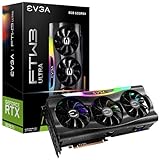

The arithmetic needs correcting: $579.99 minus $494.99 is $85, and $85 divided by $579.99 is approximately 14.7%. A 22% reduction from $579.99 would have produced a price of about $452.39. The deal page’s 22% wording therefore does not match its own prices. See the contemporaneous report at Silent PC Review.
The listing was tied to Amazon, but seller identity, condition, shipping, tax, warranty and new-versus-open-box status were not established by the stated prices. Those details mattered because marketplace listings could change the value substantially.
#1 Best Overall
Why the timing mattered
NVIDIA announced that the RTX 4060 would launch on June 29, 2023, starting at $299. That placed a previous-generation 70-class card beside a new-generation 60-class card at two very different price points. The RTX 3070 promotion was $195.99 more expensive—about 65.6% above the RTX 4060’s launch MSRP—before tax, shipping or differences in actual launch-day availability.
NVIDIA’s launch announcement is available at GeForce RTX 4060 available June 29. The broader family announcement lists the $299 starting price at NVIDIA Newsroom.
RTX 3070 versus RTX 4060 specifications
| Specification | RTX 3070 | RTX 4060 |
|---|---|---|
| Architecture | Ampere | Ada Lovelace |
| CUDA cores | 5,888 | 3,072 |
| Memory | 8GB GDDR6 | 8GB GDDR6 |
| Memory interface | 256-bit | Not stated in the cited material |
| NVIDIA launch MSRP | $499 | $299 |
| Stated power figure | 220W graphics-card power; 650W recommended system power | About 110W average gaming power |
| Launch timing | October 29, 2020 | June 29, 2023 |
| Upscaling and frame generation | DLSS support; no DLSS 3 Frame Generation feature | DLSS 3, including Frame Generation |
| Media features | 7th-generation NVIDIA encoder listed by NVIDIA | AV1 encoding highlighted by NVIDIA |
RTX 3070 specifications and power requirements are listed on NVIDIA’s RTX 3070 page. Its original $499 launch price appears in NVIDIA’s launch announcement. RTX 4060 specifications and approximately 110W average gaming power are covered in NVIDIA’s Ultimate Guide to the RTX 4060.
What the price difference bought
RTX 3070: higher-tier conventional rendering
The RTX 3070’s 5,888 CUDA cores and higher 70-class positioning made it the more defensible choice for a buyer targeting 1440p gaming with conventional rasterized rendering, assuming independent testing confirmed the required performance in the buyer’s games. It also suited owners who already had a suitable 650W-class power supply and wanted more headroom than a 60-class card typically provides.
That advantage came with 220W graphics-card power, more heat and potentially more fan noise. Both cards have 8GB of VRAM, so the RTX 3070 did not provide a memory-capacity advantage for demanding textures, ray tracing or newer games. ASUS Dual cooling, clock speeds, dimensions, connectors and warranty terms also cannot be generalized to every RTX 3070 model.
RTX 4060: efficiency and newer features
The RTX 4060 was positioned by NVIDIA as a 1080p-focused card. At its $299 launch price it was the natural budget option, particularly for compact systems, older power supplies or buyers trying to limit heat, noise and electricity use. Its Ada Lovelace design added DLSS 3 Frame Generation, third-generation ray-tracing cores and AV1 encoding.
Rank #3
- NVIDIA GeForce RTX 3070 Founders Edition
- The GeForce RTX 3070 is powered by Ampere—NVIDIA’s 2nd gen RTX architecture.
- Built with enhanced RT Cores and Tensor Cores, new streaming multiprocessors, and high-speed G6 memory, it gives you the power you need to rip through the most demanding games.
- NVIDIA GeForce RTX 3070 Powered by the NVIDIA GeForce RTX 3070 graphics processing unit (GPU) with a 1695MHz boost clock speed to help meet the needs of demanding games. 8GB GDDR6 (256-bit) Video Memory.
- Antialiasing and anisotropic filtering delivers striking graphics with incredible realism. HDMI and Display Port outputs enable flexible connectivity. PCI Express 4.0 and earlier PCI Express 3.0. Offers compatibility with a range of systems.
Frame Generation is available only in supported games and changes displayed frame rates rather than representing the same result as equivalent native-rendered frames. AV1 can matter to streamers and video creators, while ordinary CUDA workloads require application-specific testing rather than assumptions based on the gaming specifications.
Which card made sense for different buyers?
Choose the RTX 3070 deal when
- You could actually obtain the ASUS card new, with acceptable seller and warranty terms, near $494.99.
- Your priority was higher conventional performance at 1440p rather than the lowest purchase price.
- Your case, cooling and power supply could accommodate a 220W card and the model’s exact connector and dimensions.
- You did not need AV1 encoding or DLSS 3 Frame Generation.
Choose the RTX 4060 when
- You were building for 1080p on a tighter budget.
- You needed lower heat, noise, power consumption or a smaller system.
- You wanted DLSS 3 Frame Generation or AV1 encoding in supported software.
- The RTX 3070’s roughly $196 premium was not justified by your games and resolution.
Consider another product when
- You wanted more than 8GB of VRAM for a longer ownership period.
- A similarly priced current-generation card offered more memory or better efficiency.
- You were considering a used RTX 3070 and could not verify mining history, fan condition, remaining warranty and return rights.
What the deal did—and did not—prove
The promotion established a compelling historical price for one ASUS RTX 3070 listing, not a universal market floor. “Lowest price in 12 months” should remain attributed to the deal report; it does not establish the lowest price among all retailers, regions, used cards, refurbished products, rebates or coupons. The stronger phrase “lowest price ever” is not supported by the cited evidence.
What’s actually slowing this PC down?
Pick the symptom - the matching free tool is one click away.
Neither NVIDIA’s specification pages nor the deal report provides neutral, game-by-game testing. A definitive performance decision would require independent results separating native rasterization, ray tracing, DLSS Super Resolution, Frame Generation, 1080p and 1440p frame rates, frame-time consistency, power draw and noise. The specifications alone cannot prove that the RTX 3070 was faster in every workload or that the RTX 4060 was poor value.
Checks before buying a similar listing
- Confirm whether the listing is new, used, refurbished or open-box, and identify the actual seller.
- Check the exact board’s length, slot thickness, power connector, cooler and warranty rather than relying only on reference specifications.
- Calculate the discount from the listed prices yourself; an $85 reduction from $579.99 is 14.7%, not 22%.
- Compare the complete delivered cost with the RTX 4060 or current alternatives, including tax and shipping.
- For used hardware, require a return window and ask about mining history, temperatures, fan noise and remaining warranty.
Verdict
At $494.99 in June 2023, the RTX 3070 was a legitimate but conditional deal: attractive to buyers who specifically wanted a higher-tier card for conventional 1440p performance and accepted its power draw. The RTX 4060’s $299 launch price was the stronger budget, efficiency and feature choice, especially for 1080p, compact systems, AV1 workflows or DLSS 3 users. Since both cards have 8GB of VRAM, neither should be described as universally future-proof, and the historical promotion says nothing about retail prices or availability in 2026.
For current buying decisions, verify live stock and pricing through NVIDIA’s GeForce product finder and the specific retailer listing; the June 2023 figures above are reference points, not current quotes.
Quick Recap
Product prices and availability are accurate as of the date/time indicated and are subject to change. Any price and availability information displayed on Amazon at the time of purchase will apply.




