Do these 3 things before closing this tab:
1Scan for outdated or missing drivers - takes under a minute2Clear out junk files and repair common Windows errors3Fix the driver behind crashes, sound loss and screen glitchesThere is no universally best mobile network for coverage. The right choice depends on service at your home, workplace, regular routes, and important destinations—and on the exact plan, phone, and roaming terms you use. In the United States, start with the FCC National Broadband Map, confirm the result on each carrier’s map, and test the service indoors before moving your primary number.
Quick answer: which network should you check first?
| Your priority | Best starting point |
|---|---|
| Rural LTE, highways, and broad nationwide reach | Compare Verizon and AT&T first, then verify every important location. |
| Urban or suburban 5G capacity | Compare all three national networks, paying particular attention to mid-band 5G. |
| Lowest-cost plan on a major network | Identify the strongest local network, then compare its prepaid and MVNO options. |
| Frequent driving or travel | Check the entire route and the plan’s roaming terms, not just your address. |
| Reliable indoor service | Use maps only as a shortlist; test the exact building. |
| Heavy hotspot use | Compare hotspot allowances, priority, and congestion policies rather than coverage labels alone. |
This guide concerns U.S. cellular service. It does not compare fixed home broadband, and coverage may differ in Alaska, Puerto Rico, other U.S. territories, or while roaming internationally.
What “coverage” actually tells you
Coverage is not a single measurement. A colored map area can indicate predicted signal while your experience is limited by building materials, congestion, device capability, or plan restrictions.
- Geographic coverage: where a signal is predicted to exist.
- Population coverage: how many people live in covered areas; it is not the same as land-area coverage.
- Outdoor versus indoor coverage: a signal outside may not penetrate concrete, metal roofs, low-emissivity glass, elevators, or underground rooms.
- Voice and data coverage: calls may work when internet service is too slow for streaming or hotspot use.
- Speed-qualified coverage: service meeting a stated download or upload threshold, rather than merely registering a signal.
- Native coverage: the provider’s own network.
- Roaming coverage: service supplied through another carrier under particular plan terms.
- Usable coverage: performance adequate for what you actually do at the times you need it.
Signal strength, capacity, and speed are separate. A strong signal can be slow at a stadium, apartment complex, commuter corridor, or during an emergency. Conversely, LTE can be faster and more stable than a weak or congested 5G connection.
Quick wins for a faster PC:
Scan for outdated or missing drivers - takes under a minuteDriver Scan →Clear out junk files and repair common Windows errorsFree Scan →Fix the driver behind crashes, sound loss and screen glitchesFind Drivers →#1 Best Overall
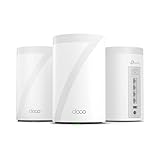
- 𝐅𝐞𝐚𝐭𝐮𝐫𝐞-𝐑𝐢𝐜𝐡 𝐖𝐢-𝐅𝐢 𝐁𝐮𝐢𝐥𝐭 𝐭𝐨 𝐋𝐚𝐬𝐭: Get expansive whole-home coverage, fast Wi-Fi 7 speeds, and a future-ready 10G WAN/LAN port that stays ahead as your network grows. Ideal for both everyday users and performance-focused homeowners.
- 𝗩𝗮𝘀𝘁 𝗠𝗲𝘀𝗵 𝗖𝗼𝘃𝗲𝗿𝗮𝗴𝗲 & 𝗗𝗲𝘃𝗶𝗰𝗲 𝗖𝗮𝗽𝗮𝗰𝗶𝘁𝘆: The 3-pack mesh system covers up to a vast 7,600 sq.ft. and supports over 200 devices without compromising performance, ensuring seamless connectivity.
- 𝐁𝐄𝟏𝟎𝟎𝟎𝟎 𝐓𝐫𝐢-𝐁𝐚𝐧𝐝 𝐖𝐢-𝐅𝐢 𝟕 𝐒𝐩𝐞𝐞𝐝𝐬: Delivers up to 5,188 Mbps (6 GHz), 4,324 Mbps (5 GHz), and 574 Mbps (2.4 GHz) speeds for 4K/8K streaming, AR/VR gaming, and more. Performance varies by conditions, distance to devices, & obstacles such as walls.
- 𝗙𝗼𝘂𝗿 𝟮.𝟱𝗚 𝗪𝗔𝗡/𝗟𝗔𝗡 𝗣𝗼𝗿𝘁𝘀: Includes four 2.5G WAN/LAN ports and a USB 3.0 port, making it an ideal choice for future-proofing your home network.
- 𝐒𝐢𝐦𝐮𝐥𝐭𝐚𝐧𝐞𝐨𝐮𝐬 𝐖𝐢𝐫𝐞𝐝 & 𝐖𝐢𝐫𝐞𝐥𝐞𝐬𝐬 𝐁𝐚𝐜𝐤𝐡𝐚𝐮𝐥: Tri-band Wi-Fi 7 and 10G Ethernet work together to balance traffic between Deco units for faster, more stable whole-home coverage. Backhaul requires at least two Deco units.
How Verizon, AT&T, and T-Mobile compare
National patterns help create a shortlist, but they are not guarantees for a ZIP code. Terrain, tower placement, spectrum, backhaul, congestion, and network upgrades can reverse the result locally.
Verizon
- Likely strengths: a broad LTE footprint, extensive low-band coverage, and historically strong performance across many rural and highway areas.
- Limitations: rural service may have limited capacity, and 5G Ultra Wideband is concentrated in selected locations rather than being equivalent to nationwide 5G.
- Best fit: people whose homes and routes test well on Verizon and who value established postpaid support or broad LTE reach.
- Check: Verizon’s coverage map and plan comparison.
AT&T
- Likely strengths: broad low-band and LTE coverage, often making it a strong candidate for rural, interstate, and nationwide use.
- Limitations: local results vary substantially, and plans can slow data temporarily when the network is busy. AT&T says prices depend on line count and eligible AutoPay or paperless-billing discounts; taxes and fees are extra.
- Best fit: customers who find dependable AT&T service at their high-value locations and want postpaid, prepaid, or AT&T-based alternatives.
- Check: AT&T’s coverage map, wireless plans, and prepaid offerings.
T-Mobile
- Likely strengths: extensive 5G deployment, particularly mid-band 5G, with strong availability and capacity in many metropolitan and suburban areas.
- Limitations: LTE or low-band reach can be less favorable than Verizon or AT&T in some rural areas. Mid-band 5G is faster than low-band but does not travel or penetrate buildings as well.
- Best fit: users who test strong T-Mobile performance in their city, suburb, or travel pattern and value 5G capacity or plan features.
- Check: T-Mobile’s coverage map, plan page, and prepaid map.
In an FCC transaction analysis using 2024 coverage data, Verizon and AT&T had superior LTE 5/1 Mbps coverage to T-Mobile and UScellular combined in most states examined, while T-Mobile and UScellular combined had superior 5G 7/1 Mbps coverage in all of those states. That was a defined analysis—not a universal current-carrier ranking. See the FCC analysis for its methodology and date.
Use the FCC map as a neutral starting point
The FCC’s National Broadband Map uses provider-submitted mobile data and propagation modeling. It can show provider, technology, and location-specific mobile availability, but it does not guarantee indoor service or a particular speed at your phone.
- Search your address or destination.
- Select mobile provider details and compare Verizon, AT&T, and T-Mobile.
- Toggle LTE and 5G separately and note the selected dataset date.
- Use the FCC’s mobile-data download instructions if you need downloadable availability data.
Provider maps can disagree with the FCC map because carriers use different assumptions, data vintages, presentations, and roaming definitions. The FCC explains these differences in What’s on the National Broadband Map. Record the map’s data vintage; the date you viewed a map is not necessarily the date its coverage represents.
Free tools Windows power users keep installed
One-click scans. No signup required.
Check the places and routes that matter
- List locations: home, work or school, family homes, rural properties, campsites, vacation destinations, and indoor rooms where service matters.
- Inspect each carrier map: search the exact address and read legends for 5G, premium 5G, extended coverage, and roaming.
- Trace routes: zoom into highways, rail lines, rural roads, mountain passes, valleys, forests, and coastlines. National views hide local gaps.
- Use real-world measurements: compare multiple dates and times near the actual address. CoverageMap’s FCC-based comparison and its crowdsourced measurements are supporting evidence, not guarantees.
- Verify the plan: check domestic roaming, hotspot limits, high-speed allowances, priority during congestion, 5G access, and compatible frequency bands.
- Test before porting: use a trial eSIM or short prepaid period where available. Test indoors and outdoors, at busy times, and for calls, texts, navigation, streaming, and hotspot use.
LTE, low-band 5G, mid-band 5G, and high-band 5G
| Layer | What it usually means | Practical trade-off |
|---|---|---|
| LTE | Broad range and generally good building penetration. | Often dependable fallback; peak speeds may be lower than newer 5G layers. |
| Low-band 5G | Longer reach and better penetration than higher frequencies. | Broad availability, but usually less capacity than mid-band. |
| Mid-band 5G | A balance of range, capacity, and speed. | Often the most useful urban and suburban 5G layer, but coverage can change block by block. |
| High-band or millimeter-wave 5G | Very high peak speeds over short distances. | Weak building penetration and limited reach; not a substitute for nationwide coverage. |
A 5G icon alone does not establish speed or reliability. Your phone may display 5G on a weak, congested connection, while LTE may perform better in the same spot.
Rank #2

- Boosts Verizon 4G LTE Coverage Indoors – Eliminates dead zones by enhancing voice and data signals in your home or office using your existing high-speed internet connection.
- Supports Up to 14 Devices Simultaneously – Ideal for families or small businesses, ensuring smooth connectivity for multiple smartphones, tablets, and other Verizon 4G LTE devices.
- Plug-and-Play Installation – Easy to set up with no professional help needed; simply connect to your router to start improving your signal instantly.
- Reliable Performance from Samsung – Built with advanced technology to provide consistent, high-quality signal strength in areas with weak Verizon coverage.
- Compact and Sleek Design – Modern black finish blends easily into any room, offering powerful performance without taking up space or drawing attention.
Why MVNO coverage is not automatically identical
Mobile virtual network operators and prepaid brands generally sell access to one or more underlying carrier networks. “Uses the Verizon network,” for example, does not necessarily mean the same roaming, priority, speed, hotspot, 5G, or international features as Verizon postpaid.
- Domestic roaming partners may differ.
- Data may receive lower priority during congestion.
- High-speed data, video, or hotspot use may be capped.
- Some plans restrict 5G, international roaming, or network switching.
- Multi-network services may have different switching rules and device requirements.
Compare the underlying network and the retail plan separately. The FCC notes that roaming arrangements can also cause carrier maps to differ: map explanation.
Examples to investigate
- Visible uses Verizon’s network, but its plan-level priority, roaming, and hotspot terms may differ.
- Mint Mobile uses T-Mobile’s network and typically requires attention to prepaid billing periods and plan limits.
- US Mobile offers plans associated with multiple major networks; network-specific features and switching rules must be checked.
- Cricket Wireless uses AT&T’s network, while priority and premium features may differ from AT&T postpaid.
- Metro by T-Mobile offers prepaid T-Mobile-based service with plan-specific hotspot, roaming, and promotion restrictions.
Choose by use case, not by a national slogan
Rural homes and highways
Compare Verizon and AT&T first, but verify the exact road, building, and busy-hour capacity. A rural tower can support calls and messages yet struggle with video or hotspot use.
The Tool Desk
Outbyte PC Repair FREEClear out junk files and repair common Windows errorsFree Scan →Outbyte Driver Updater FREEScan for outdated or missing drivers - takes under a minuteDriver Scan →Urban apartments and offices
Mid-band 5G may provide excellent capacity outdoors while concrete, metal, or coated glass creates an indoor dead zone. Test the rooms where you work and sleep.
Travelers and commuters
Trace every regular route and confirm roaming terms. A postpaid plan’s extended coverage may not be included on a prepaid or MVNO plan using the same radio network.
Rank #3

- 𝐅𝐞𝐚𝐭𝐮𝐫𝐞-𝐑𝐢𝐜𝐡 𝐖𝐢-𝐅𝐢 𝐁𝐮𝐢𝐥𝐭 𝐭𝐨 𝐋𝐚𝐬𝐭: Get expansive whole-home coverage, fast Wi-Fi 7 speeds, and a future-ready 10G WAN/LAN port that stays ahead as your network grows. Ideal for both everyday users and performance-focused homeowners.
- 𝗩𝗮𝘀𝘁 𝗠𝗲𝘀𝗵 𝗖𝗼𝘃𝗲𝗿𝗮𝗴𝗲 & 𝗗𝗲𝘃𝗶𝗰𝗲 𝗖𝗮𝗽𝗮𝗰𝗶𝘁𝘆: The 2-pack mesh system covers up to a vast 5,800 sq.ft. and supports over 200 devices without compromising performance, ensuring seamless connectivity.
- 𝐁𝐄𝟏𝟎𝟎𝟎𝟎 𝐓𝐫𝐢-𝐁𝐚𝐧𝐝 𝐖𝐢-𝐅𝐢 𝟕 𝐒𝐩𝐞𝐞𝐝𝐬: Delivers up to 5,188 Mbps (6 GHz), 4,324 Mbps (5 GHz), and 574 Mbps (2.4 GHz) speeds for 4K/8K streaming, AR/VR gaming, and more. Performance varies by conditions, distance to devices, & obstacles such as walls.
- 𝗙𝗼𝘂𝗿 𝟮.𝟱𝗚 𝗪𝗔𝗡/𝗟𝗔𝗡 𝗣𝗼𝗿𝘁𝘀: Includes four 2.5G WAN/LAN ports and a USB 3.0 port, making it an ideal choice for future-proofing your home network.
- 𝐒𝐢𝐦𝐮𝐥𝐭𝐚𝐧𝐞𝐨𝐮𝐬 𝐖𝐢𝐫𝐞𝐝 & 𝐖𝐢𝐫𝐞𝐥𝐞𝐬𝐬 𝐁𝐚𝐜𝐤𝐡𝐚𝐮𝐥: Tri-band Wi-Fi 7 and 10G Ethernet work together to balance traffic between Deco units for faster, more stable whole-home coverage. Backhaul requires at least two Deco units.
Hotspot and business users
Prioritize capacity, network priority, hotspot allowances, and device compatibility. Geographic coverage alone cannot predict performance at a busy worksite or event.
Emergency or backup phones
Satellite messaging and emergency satellite features are not ordinary cellular voice or broadband coverage. They may require a compatible phone, clear sky, specific software, and an eligible plan, with limited messaging functionality.
A practical scoring framework
Score each candidate at the locations and times that matter. Give home and work the greatest weight, followed by frequent routes and critical travel destinations.
| Criterion | Question to answer |
|---|---|
| Home and work | Does service work indoors and remain stable during the day? |
| Routes | Are there recurring gaps on normal roads or rail lines? |
| Rural and travel | Does LTE or low-band service remain usable outside towns? |
| 5G quality | Is 5G stable and fast, or merely displayed as an icon? |
| Voice reliability | Do calls connect and stay connected? |
| Capacity | Does performance hold up at busy times? |
| Roaming and priority | What happens outside native coverage or during congestion? |
| Device compatibility | Does the phone support relevant bands and carrier certification? |
| Total cost | What will you pay after taxes, fees, discounts, and required billing terms? |
| Flexibility | Can you trial, cancel, or change networks easily? |
Common coverage mistakes
- Treating a map polygon as guaranteed indoor service or usable speed.
- Using an old ranking without its technology, threshold, geography, or data date.
- Assuming 5G is always faster than LTE.
- Assuming every MVNO receives the underlying carrier’s roaming and priority.
- Ignoring congestion, backhaul, outages, terrain, and building construction.
- Comparing phones without checking modem bands, antennas, certification, software, and SIM or eSIM provisioning.
- Counting satellite emergency features as normal cellular coverage.
Bottom line
Use national comparisons only to form a shortlist. The defensible choice is the provider that performs reliably at your high-value locations and routes with your phone and your plan. Confirm it with the FCC map, each carrier’s map, independent measurements, and a real indoor trial; then choose the least expensive postpaid, prepaid, or MVNO plan that preserves the roaming, priority, hotspot, and data access you actually need.
Quick Recap
Product prices and availability are accurate as of the date/time indicated and are subject to change. Any price and availability information displayed on Amazon at the time of purchase will apply.




