Meta and Nvidia announced a multiyear, multigenerational partnership on February 17, 2026, covering millions of Nvidia Blackwell and Rubin GPUs, Grace and future Vera CPUs, networking, cloud capacity and joint software work. The companies did not disclose an exact chip count, delivery schedule or total contract value. “Millions” therefore describes a planned infrastructure buildout across several product generations—not millions of complete GPU servers arriving at once.
What Meta actually agreed to
Nvidia describes the arrangement as a platform partnership rather than a one-time purchase. The announcement covers hardware installed in Meta facilities and capacity supplied through Nvidia Cloud Partners. It also includes engineering intended to optimize Meta’s models and production workloads for Nvidia’s platform.
| Component | What is publicly established | Why it matters |
|---|---|---|
| Blackwell GPUs | Nvidia’s current AI-accelerator generation is included. | Training and serving large models and other high-throughput workloads. |
| Rubin GPUs | Future-generation GPUs are included in the multiyear roadmap. | Extends the relationship beyond today’s systems; timing and quantities are undisclosed. |
| Grace CPUs | Nvidia says Grace CPUs are already being deployed at scale. | Handles host, data-processing and orchestration work around accelerators. |
| Vera CPUs | Potential large-scale deployment is referenced for 2027. | Shows Nvidia is supplying a broader server platform, not only accelerators. |
| GB300 systems | Named as part of Meta’s infrastructure plans. | Integrated CPU-GPU systems can simplify large AI-cluster design. |
| Spectrum-X networking | Nvidia Ethernet networking is included. | Interconnect performance and reliability strongly affect distributed AI jobs. |
| Cloud capacity and software | Meta can use Nvidia Cloud Partner environments; the companies will work on model and workload optimization. | Some capacity may be rented rather than owned, while software tuning can improve utilization. |
See Nvidia’s announcement for the complete scope: Nvidia’s February 17, 2026 release.
How many chips does “millions” mean?
No precise number has been published. Nvidia’s wording is “millions” of Blackwell and Rubin GPUs, but it does not say how many are allocated to each generation or how many have shipped. The figure also sits inside a broader package that includes CPUs, networking and third-party cloud deployments.
Recommended Free Tools
#1 Best Overall

- PLEASE NOTE: Exporting an NVIDIA RTX Pro 6000 GPU outside the US requires strict adherence to the U.S. Export Administration Regulations (EAR) and issuance of an export license from the Bureau of Industry and Security (BIS). Compliance and Know Your Customer (KYC) screening may be required as a condition of order acceptance. [NVIDIA Blackwell Streaming Multiprocessor] The new SM features increased processing throughput, and new neural shaders that integrate neural networks inside of programmable shaders | DLSS 4: Multi Frame Generation ensures ultra-smooth frame pacing for lifelike simulations.
- [Double-Flow-Through Design] The RTX PRO 6000 Blackwell features a double-flow-through cooling design, optimizing efficiency and airflow to sustain peak performance under 600W power loads. | [5th Gen Tensor Cores] Deliver up to 3X the performance of the previous generation and support for FP4 precision for faster AI model processing times with reduced memory usage, enabling local fine-tuning of LLMs and generative AI | [4th Gen Ray Tracing Cores] Double the ray-triangle intersection rate of the previous generation to create photoreal, physically accurate scenes and immersive 3D designs with RTX Mega Geometry, which enables up to 100X more ray-traced triangles.
- [PCIe Gen 5] Support for PCIe Gen 5 provides double the bandwidth of PCIe Gen 4, improving data-transfer speeds from CPU memory and unlocking faster performance for data-intensive tasks like AI, data science, and 3D modeling. | [GDDR7 Memory] With 96 GB of GPU memory and 1.8 TB ps bandwidth, it can tackle massive 3D and AI projects, fine-tune AI models locally, explore large-scale VR environments, and drive larger multi-app workflows.
- [DisplayPort 2.1] Achieve unparalleled visual clarity and performance, driving high resolution displays at up to 8K at 240 Hz and 16K at 60 Hz. Increased bandwidth enables seamless multi-monitor setups while HDR and higher color depth support ensures superior color accuracy for precision work, such as video editing, 3D design, and live broadcasting.
- [Universal MIG] Divide a single RTX PRO 6000 Blackwell into multiple isolated instances, each with dedicated resources, allowing for concurrent execution of multiple workloads, optimized GPU utilization, and secure isolation of different applications or users. [WARRANTY] 3 YR Manufacturer's Warranty. Bulk OEM Packaging. Retail Packaging is NOT included.
That makes several common interpretations unsafe:
- It is not evidence that millions of complete GB300 or Rubin servers will be delivered immediately.
- It does not establish a fixed split between Blackwell and Rubin.
- It does not tell readers how many chips Meta will own versus access through a cloud provider.
- A chip count alone cannot measure useful capacity without memory, interconnect, power, cooling and software-utilization details.
Reuters likewise reported that Nvidia had not disclosed the deal’s value or exact scale in its coverage of the announcement: Reuters coverage via Investing.com.
What the deal is worth
The companies have not released a total dollar value. Axios characterized the commitment as involving “tens of billions of dollars,” but that is a media characterization, not a disclosed contract price. Without public pricing, purchase timing, cancellation terms or accounting treatment, multiplying an assumed GPU count by an assumed system price would produce speculation rather than the deal’s value.
For investors, the practical distinction is important: the partnership signals potential demand across several Nvidia product lines, but it does not guarantee a particular amount of Nvidia revenue in any quarter or year.
Why Meta needs this much compute
Meta needs infrastructure for both training models and inference—running them for users. Likely workloads include:
- Generative-AI features across Facebook, Instagram, WhatsApp and other products.
- Recommendation and personalization systems operating at global scale.
- AI assistants and other always-on inference services.
- Research, model development and Meta’s longer-term “personal superintelligence” ambitions.
A Reuters report based on an internal memo said Meta was targeting 14 gigawatts of computing capacity in 2027 and could spend as much as $145 billion on AI infrastructure in 2026. Those are reported planning estimates, not finalized spending commitments: Reuters report on Meta’s capacity and spending plans.
Gigawatts describe facility power capacity, not a fixed number of GPUs. The eventual chip count depends on system design, cooling, workload mix and utilization.
Rank #2

- NVIDIA Volta GV100 Architecture — 4,608 CUDA Cores, 640 1st-Gen Tensor Cores delivering 14 TFLOPS FP32 and 112 TFLOPS deep learning performance for AI training, inference, HPC, and scientific computing workloads
- 32GB HBM2 ECC Memory — 900 GB/s Bandwidth — High-bandwidth memory on a 4096-bit bus with ECC error correction provides the memory capacity and throughput required for the largest AI models, simulations, and datasets
- PCIe 3.0 x16 Interface — 250W TDP — Standard PCIe Gen3 connectivity with passive cooling designed for enterprise rack server deployment in HPE ProLiant, Dell PowerEdge, and Supermicro platforms with adequate chassis airflow
- NVLink — Scale to 96GB Unified Memory — Connect two V100 GPUs via NVLink at 300 GB/s bi-directional bandwidth to scale GPU memory from 32GB to 96GB for larger AI training and HPC workloads
- Multi-Precision Computing — Supports FP64 (7 TFLOPS), FP32 (14 TFLOPS), FP16 (112 TFLOPS) and INT8 precision modes for flexible deployment across training, inference, and scientific simulation workloads
Why Nvidia CPUs are part of the story
Grace and the planned Vera deployments matter because AI clusters require more than accelerators. CPUs prepare data, coordinate jobs, run services and support inference systems. By supplying CPUs alongside GPUs and networking, Nvidia is pursuing a larger share of the data-center stack.
The announcement does not establish that Nvidia CPUs will replace Intel or AMD processors throughout Meta. It shows that Meta is willing to evaluate Nvidia’s integrated platform for selected large-scale deployments.
Crashes, No Sound, or Screen Glitches?
Random freezes, missing sound and display glitches usually trace back to one bad driver. Find and replace yours safely.Free scan · under a minutePC Slower Than It Used to Be?
A free scan shows the junk files, broken settings and background clutter dragging Windows down - then fixes them in one click.Free scan · Windows 10 & 11Meta is still developing its own chips
Buying Nvidia hardware does not mean Meta has abandoned custom silicon. Reuters reported that Meta’s “Iris” chip, part of its MTIA in-house accelerator program, was planned to enter production in September 2026. The report said Meta would continue buying GPUs from Nvidia and AMD while using custom chips for workloads where a tailored design can lower cost or improve efficiency. Production timing in that report was a plan, not independent confirmation that volume manufacturing had begun.
The strategies can coexist:
- Custom chips: potentially more efficient for stable, repetitive workloads and useful for reducing supplier dependence.
- Nvidia GPUs: flexible for changing models and backed by a mature software ecosystem.
- Multiple suppliers: improve negotiating leverage and reduce the risk of relying on one accelerator roadmap.
Where AMD and cloud providers fit
AMD as a second accelerator source
Meta’s Nvidia agreement is part of a broader supply strategy. The Associated Press reported a separate arrangement for AMD MI450 chips under a 6-gigawatt deployment, with potential value above $100 billion and a performance-based warrant that could allow Meta to acquire up to 160 million AMD shares if milestones are met. That is a separate AMD transaction, not the value of the Nvidia agreement: Associated Press report.
Nebius as an Nvidia-powered route
Meta can also secure Nvidia-based capacity through specialist cloud providers. A Nebius filing describes a five-year agreement with $12 billion of dedicated capacity, up to $15 billion of additional commitments and potential total contract value of approximately $27 billion, with dedicated capacity beginning in early 2027. This is separate from the direct Nvidia-Meta announcement: Nebius filing with the U.S. Securities and Exchange Commission.
Google and other alternatives
Reports of possible Google TPU discussions should be treated as discussions, not a completed Meta purchase agreement. The confirmed picture is diversification across Nvidia, AMD, Meta’s MTIA chips and cloud capacity, with any additional supplier arrangements requiring separate confirmation.
The Tool Desk
Outbyte PC Repair FREEClear out junk files and repair common Windows errorsFree Scan →Outbyte Driver Updater FREEFix the driver behind crashes, sound loss and screen glitchesFind Drivers →Rank #3
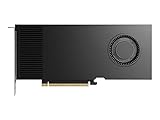
- Professional GPU with Blackwell Architecture
- Blackwell Architecture
- 24GB GDDR7 with PCIe 5.0 & Ray Tracing
- AI Workstation
What remains unknown
- The exact number of GPUs and CPUs.
- The Blackwell-to-Rubin product mix.
- Delivery dates and the pace of deployment.
- How much capacity Meta will own versus rent.
- Which facilities will host each system.
- The contract’s total price, payment terms and cancellation provisions.
- Whether every planned deployment will occur.
Nvidia also notes that its announcement contains forward-looking statements and that actual results may differ. Product availability, power and cooling, construction schedules, networking performance and software utilization can all constrain deployment even when chips are ordered.
What it means for Meta, Nvidia and the AI market
For Meta
Meta gets a path to large amounts of leading-edge compute while its custom silicon matures. The trade-offs are substantial capital and operating costs, dependence on Nvidia’s supply chain and software, and the risk that a rapidly changing model landscape makes some hardware less efficient than expected.
For Nvidia
The partnership validates continued hyperscaler demand and broadens Nvidia’s role from GPU supplier to provider of CPUs, networking, confidential computing and cloud-partner infrastructure. It is not, however, a guarantee of a specific revenue amount.
For the industry
The combination of direct deployments, rented cloud capacity, AMD purchases and Meta-designed chips suggests that frontier AI infrastructure is becoming a portfolio decision. Companies are balancing immediate access to Nvidia’s ecosystem against price, supply resilience and the efficiency gains possible from custom silicon.
What personal-finance readers should take from the headline
This is not a consumer hardware sale with a published price. Its financial significance is exposure to a capital-intensive infrastructure race. Meta’s spending plans could affect free cash flow, depreciation and returns on AI products; Nvidia’s opportunity depends on actual deliveries and pricing; AMD benefits from a separate, potentially large commitment. None of those outcomes can be inferred from the word “millions” alone.
For businesses that need comparable compute, the relevant decision is usually whether to rent capacity or build it. Nvidia DGX Cloud, AWS, Google Cloud, Azure and specialist providers such as Nebius publish different availability and pricing structures. Region, accelerator type, reservation term, data transfer, power and utilization can matter more than a headline GPU price. Meta’s enterprise agreements are not retail terms.
The Bottom Line
Bottom line: Meta is locking in Nvidia as a major supplier across multiple AI generations, including millions of announced Blackwell and Rubin GPUs plus CPUs, networking and cloud capacity. The exact quantity, schedule and price remain undisclosed, and Meta is simultaneously pursuing AMD and its own MTIA chips rather than choosing Nvidia exclusively.
Quick Recap
Product prices and availability are accurate as of the date/time indicated and are subject to change. Any price and availability information displayed on Amazon at the time of purchase will apply.
What’s actually slowing this PC down?
Pick the symptom - the matching free tool is one click away.




