Recommended Free Tools
Managed IT services are an ongoing arrangement in which a third-party provider operates, monitors or supports specific technology functions under a defined contract. For a small or midsize business, an MSP can supply dependable day-to-day IT capacity without building every specialty in-house—but outsourcing does not transfer the company’s legal duties, risk decisions or responsibility for business continuity.
What managed IT services mean
A managed service provider (MSP) takes continuing responsibility for an agreed set of IT tasks rather than waiting for a customer to report a failure and billing only for that incident. The service is commonly delivered for a recurring fee, with a service-level agreement (SLA) defining what is covered, how requests are handled and which responsibilities stay with the customer. CISA defines an MSP as an entity that delivers, operates or manages ICT services and functions under a contractual arrangement such as an SLA (CISA advisory).
The model can include monitoring, routine maintenance, user support and administration of systems. The provider may work on the customer’s premises, remotely or through a hosted environment. “Managed IT” is a broad label, not a standard package: one provider’s scope may be limited to endpoints and help desk, while another also manages cloud infrastructure, security, backup and strategic planning.
Common areas an MSP may manage
- Workstations, laptops, servers, storage and device inventories.
- Networks, Wi-Fi, firewalls, remote access and connectivity vendors.
- Cloud infrastructure and SaaS services such as Microsoft 365 or Google Workspace.
- Identity, access, user onboarding and offboarding.
- Patch administration, endpoint protection and vulnerability processes.
- Backup, recovery planning and restoration tests.
- Help desk, vendor coordination, documentation and technology roadmaps.
Remote monitoring and management (RMM) software can observe devices, raise alerts or tickets, deploy software, run scripts and support remote troubleshooting. Those capabilities are tools, not a guarantee that alerts are staffed or resolved; service scope and escalation determine the human response (NinjaOne overview of RMM).
Quick wins for a faster PC:
Scan for outdated or missing drivers - takes under a minuteDriver Scan →Repair Windows errors before they cause bigger problemsFix Now →#1 Best Overall

- Save valuable floor space: 6U wall mount server cabinet Dimensions: 13.78" H x21.65" W x17.72" D.Maximum mounting depth is 14.2"
- Keep critical network equipment secure: glass door and side panels are lockable to prevent unauthorized access. Front door can be installed on either side of the front of the cabinet to satisfy your door swing orientation preference
- Easy equipment configuration: Fully adjustable mounting rails and numbered U positions, with square holes for easy equipment mounting with top and bottom punch-out panels for easy cable access
- Durability: Made of high quality cold rolled steel holds up to 110lb (50kg) (Easy Assembly Required)
- PCI & HIPPA and EIA/ECA-310-E compliant
How managed IT compares with other models
| Model | Who does what | Best suited to | Key limitation |
|---|---|---|---|
| Break/fix support | A consultant is called after a problem and commonly bills per hour or incident. | Small, simple environments that can tolerate reactive support. | Preventive work may be limited, and spending or downtime can be unpredictable. |
| Managed service provider (MSP) | A provider continuously manages contracted IT functions for a recurring fee. | Organizations needing ongoing support, maintenance or specialist capacity. | Included work, hours and outcomes depend on the contract; projects may cost extra. |
| Managed security service provider (MSSP) | A security-focused provider delivers capabilities such as monitoring, detection, incident response or vulnerability management. | Organizations whose primary gap is security operations or specialist security expertise. | Security services do not necessarily include help desk, device lifecycle or broad IT administration. NIST defines MSSP as Managed Security Service Provider (NIST glossary). |
| Internal IT team | Employees own and operate technology, with direct organizational control. | Organizations needing deep business or proprietary-system knowledge and able to staff coverage. | Recruiting, retaining and covering specialist skills can be difficult or expensive. |
| Co-managed IT | Internal staff retain selected ownership while an MSP provides defined overflow, specialist or after-hours support. | Companies with an IT lead or team that needs more capacity, geographic reach or niche expertise. | Unclear ownership between provider and staff can create gaps unless responsibilities are explicit. |
| Cloud service provider | A vendor supplies cloud infrastructure or platform services; the customer or its MSP still configures and operates many customer-specific layers. | Organizations purchasing cloud compute, storage or platform capabilities. | Buying cloud services alone does not create a complete IT operations or end-user support function. |
An MSP may offer security work, but the label does not establish the depth of that capability. AWS describes managed security providers as working across infrastructure, workloads, applications, data protection, identity, incident response and cyber recovery (AWS managed security providers). Ask what is monitored, who responds, what tools and logs are included, and whether incident containment is authorized. Similarly, cloud providers and MSPs are distinct: Google Cloud describes MSP support as a lifecycle that can span consultation, migration, modernization and ongoing support (Google Cloud MSP initiative).
What a managed IT agreement may include
Separate recurring services, optional add-ons and project work before comparing proposals. A package called “fully managed IT” may still exclude backup, after-hours response, licensing, on-site visits, security incident handling or inherited-system remediation.
Recurring core services
- Help desk intake, ticket tracking and escalation.
- Remote monitoring, routine maintenance and patch administration.
- Endpoint inventory and basic device, network or server health monitoring.
- User and access administration within agreed permissions.
- Documentation, service reporting and coordination with technology vendors.
Common add-ons
- Managed firewalls and Wi-Fi; mobile-device management; on-site support.
- Managed detection and response, email security, endpoint detection, vulnerability scanning or security-awareness training.
- Backup, SaaS backup, disaster recovery and recovery exercises.
- Cloud administration or cost optimization, licensing procurement and compliance evidence support.
- Virtual CIO or IT director services for roadmaps, budgeting and executive advice.
Work often priced separately
- Office moves, major network redesigns and large migrations.
- Server replacements, new application deployments and mergers or acquisitions.
- Remediation of technical debt, compliance preparation and emergency recovery outside agreed limits.
Why businesses use an MSP—and what it cannot promise
An MSP can make technology operations more consistent by assigning routine monitoring, patching, support and documentation to a continuing provider. A smaller business may gain access to skills in networking, cloud, security or backup that it could not justify as separate full-time hires. NIST identifies MSPs, MSSPs and virtual or fractional CISOs as outsourcing options for small businesses with limited resources or expertise (NIST guidance on building a cybersecurity team).
Recurring pricing can make a portion of IT spending easier to forecast, but it does not prove that outsourcing lowers total cost. Compare provider fees with internal staffing, software and licenses, projects, downtime exposure, onboarding and remediation. Proactive monitoring can surface problems earlier only when alert rules are sound and someone is responsible for triage and action; it cannot guarantee zero downtime. Likewise, backup and continuity services help only when recovery objectives are defined and restoration is tested.
Outsourcing is also a way to scale capacity through growth, remote work or new locations without immediately hiring a full internal team. The trade-off is greater dependence on an outside organization with privileged access. CISA warns that attackers target MSPs because trusted provider relationships and access can expose multiple customer environments (CISA advisory on threats to MSPs and customers).
Rank #2

- Universal 19” Rack Mount Compatibility – Perfect for pro audio, video, IT, and network gear. Compatible with mixers, routers, patch panels, servers, power amps, and more.
- Heavy-Duty Load Capacity – Built to support up to 550 lbs. Ideal for studio gear, DJ setups, server equipment, and AV components that demand serious stability.
- Robust Steel Frame & Design – Made with 1.5mm thick steel and weighs 36 lbs for maximum durability, reduced vibration, and long-term reliability in any setting.
- Mobile & Secure – Preinstalled with 3” industrial-grade caster wheels (lockable), making it easy to move and position your rack exactly where you need it.
- All-In-One Setup Kit Included – Comes with 34 rack screws (5mm & 6mm), a 1U blank spacer, and an assembly tool—ready for fast installation out of the box.
Risks to manage and responsibilities to retain
Delegating technical work does not mean the customer can delegate every risk decision. CISA advises customers to allocate responsibilities with providers, including patching, hardware, training, incident response, data protection and recovery (CISA risk considerations for MSP customers). The customer’s leadership still needs to decide acceptable risk, identify critical business processes, classify sensitive data and ensure legal and regulatory obligations are addressed. A contract can allocate tasks; it does not by itself make a company compliant.
Privileged access and concentration
An MSP may need remote-management agents, cloud-console access, backup credentials, firewall access or administrator accounts. Require least privilege, multifactor authentication, separate customer environments, administrative logging, controlled privileged access and prompt revocation when staff or the contract changes. Consider what happens if the provider is compromised, unavailable or financially distressed.
Accountability and service quality
“Your provider handles security” is not an adequate operating plan. Name who declares an incident, isolates a device, disables an account, preserves evidence, contacts authorities or insurers, approves restoration and makes any required notification. Measure repeat problems and root-cause correction rather than relying only on the volume of closed tickets.
Windows Errors? Fix Them Before They Spread
Repair common Windows errors and clear accumulated junk for a smoother, more stable PC - no reinstall needed.Free scan · no reinstallCrashes, No Sound, or Screen Glitches?
Random freezes, missing sound and display glitches usually trace back to one bad driver. Find and replace yours safely.Free scan · under a minuteLock-in and exit risk
Dependence can grow when systems are undocumented, provider-owned accounts control domains or tenants, backups cannot be independently restored, or data-export rights and termination assistance are unclear. Confirm who owns data, configurations, credentials, licenses and backups, and how they are transferred before choosing a provider.
How to evaluate providers and compare the real cost
Assess the provider’s qualifications, operating capability, experience, viability, personnel trustworthiness and ability to protect systems and information. Those are among the areas identified in NIST’s guidance for evaluating IT security services (NIST SP 800-35).
Rank #3

- ADJUSTABLE DEPTH: 4- Post 22U 19" server rack enclosure with 4 vertical rails and adjustable mounting depth 5.7" to 33.0" (14,4cm to 83,8cm); IT rack is compatible with various servers / switches / data / video / AV and other IT networking equipment
- EASY SHIPPING AND ASSEMBLY: Enclosed 22U data rack cabinet ships compact flat-packed to avoid damage and facilitate installation; Include wheels & levelling feet to offer more stability; Home server rack cabinet is only 46.6in (118,3cm) in height
- DESIGN AND VENTILATION: Half height server rack cabinet has lockable and removable door and side panels with vented top allowing airflow; 4 Post 19" rack with 1764lb (800kg) weight capacity (stationary); Computer cabinet rack is EIA/ECA-310-E Compliant
- HARDWARE INCLUDED: Rolling home network rack includes rack mounting and equipment mounting hardware, such as 20 M6 cage nuts / screws, PVC cup washers; Front/rear doors and side panels Keys, 2x allen keys; Rack assembly hardware; Casters and leveling feet
- THE IT PRO'S CHOICE: Designed and built for IT Professionals, this 22U IT Server Cabinet is backed for life, including free lifetime 24/5 multi-lingual technical assistance
Provider-fit checklist
- Can the provider support your industry, technology stack, locations and regulatory context?
- Does it have sufficient staff for your required hours, escalation path and on-site coverage?
- Can it support co-managed responsibilities without displacing internal expertise?
- Will it provide comparable-customer references, insurance information and financial stability evidence?
- Does it have documented onboarding, incident response, subcontractor controls and offboarding?
- Can it show a security roadmap and business-oriented recommendations, not only ticket handling?
Security due diligence
- Ask how provider employees authenticate, receive privileges and have activity logged.
- Confirm customer separation, remote-access design, patch and vulnerability processes, backup safeguards and restore testing.
- Review incident-response and breach-notification procedures, staff screening and security training.
- Identify subcontractors and how their access and controls are governed.
- Review any SOC 2, ISO 27001 or other attestation for its scope, period, exceptions and customer-side responsibilities; a badge alone does not establish that your purchased service is secure.
Price the whole arrangement, not just the monthly headline
Ask whether fees are per user, endpoint, server, location or bundled; how shared devices, contractors and service accounts count; and whether there is a minimum commitment. Price onboarding, initial remediation, after-hours incidents, projects, onsite work, licensing, hardware, backup and security products separately. Check annual price increases, changes in user or device counts, cancellation notice, termination charges and transition assistance.
Software used by an MSP is not the same thing as the managed service. For example, NinjaOne’s public commercial pricing page reviewed in August 2026 listed RMM software pricing from $1.50 per endpoint per month at 10,000 endpoints to $3.75 at 50 or fewer; it noted regional and product variation. Those figures describe the software platform, not the provider’s labor, SLA or complete IT service (NinjaOne pricing). Atera describes a monthly per-technician rather than per-device pricing model for its software, while Datto’s partner page promotes customizable pricing without publishing a standard customer price (Atera pricing model; Datto partner pricing). These are product or channel pricing signals, not like-for-like quotes for outsourced IT.
Do these 3 things before closing this tab:
1Fix the driver behind crashes, sound loss and screen glitches2Repair Windows errors before they cause bigger problems3Scan for outdated or missing drivers - takes under a minuteIf AWS infrastructure operations are the main requirement, AWS Managed Services or an AWS-focused partner may be relevant; neither should be assumed to cover workplace help desk or all other vendors. AWS advertises 24×7 monitoring and an average annual 10–15% operational and AWS-cost saving claim for its own service. That is an AWS-specific claim, not a general MSP result or a guaranteed outcome (AWS Managed Services; AWS Managed Services partners). Validate current region, scope, implementation fees, support tier and contract terms directly.
Independent reader supportYour contribution helps us test, update, and keep practical guides available for everyone.What a useful SLA should say
An SLA should make scope and performance testable. Avoid treating “24/7” as self-explanatory: it can mean automated alerts, a staffed help desk, a security operations center or an engineer empowered to remediate. Require the provider to define which one applies.
Service boundaries and coverage
- Covered devices, systems, operating systems, applications, locations and user groups.
- Support channels, help-desk hours, holidays, monitoring hours and maintenance windows.
- Excluded legacy equipment, unsupported software and out-of-scope vendors.
- On-site dispatch availability and who coordinates carriers or application vendors.
Priority, response and resolution
Set separate targets for critical outages, security incidents, high-priority business interruption, ordinary requests and low-priority work. Define acknowledgment, triage, escalation, workaround and final resolution separately: a quick response does not guarantee a quick fix. Specify when the customer is notified, who can authorize disruptive containment, and whether any resolution commitment is a target or a binding remedy.
Rank #4
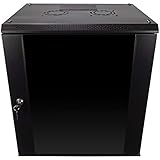
- DURABLE BUILD: Constructed from high-quality Cold Rolled Steel, the NavePoint Consumer Series 12U network cabinet boasts a sturdy, welded frame. Fitting EIA standard 19” networking equipment, this server cabinet confidently supports up to 110 lbs, providing a resilient base for your vital IT gear and equipment
- CONVENIENT DESIGN: This 12U cabinet features a reinforced, heat-treated, tempered glass front door with a security lock. Perfect for applications requiring both security and accessibility, its compact design of 17.72"L x 21.65"W x 24.42"H offers a practical solution for space-constrained settings.
- EASY & CUSTOMIZABLE EQUIPMENT SET UP - The 12U IT cabinet, with removable side panels and security locks, offers customization at its finest. Whether it's for an efficient device or cable management, this data cabinet ensures secure, adaptable configurations that suit your networking server requirements
- ENHANCED VENTILATION & SECURITY - Built-in fans and flow-through ventilation work to prevent overheating, ensuring optimal operation of your equipment. The reinforced, lockable tempered glass front door not only boosts security but also facilitates easy monitoring of installed equipment.
- SAFETY & COMPLIANCE - All NavePoint products are built to industry standards.
Reporting, remedies and responsibility matrix
Require regular reporting on aging tickets, SLA attainment, patch status, inventory, backup status, incidents, vulnerabilities, availability, risks and unresolved recommendations. The agreement should explain service credits or other remedies, but credits rarely compensate for lost revenue or regulatory exposure from a major failure.
| Function | MSP role to specify | Customer role to retain or assign |
|---|---|---|
| Identity administration | Provisioning, access changes and privileged-account controls within approved scope. | Approve business access, establish policy and identify account owners. |
| Patching and endpoint protection | Deploy updates and operate agreed protective tools; report exceptions. | Set risk tolerance, approve maintenance constraints and resolve business-owner conflicts. |
| Firewall and network changes | Implement authorized changes and preserve change records. | Approve material business or security-impacting changes and own connectivity priorities. |
| Backup and restore testing | Monitor jobs and conduct agreed restore tests. | Set recovery-time and recovery-point objectives, identify critical data and approve retention. |
| Incident declaration and response | Detect, escalate and take pre-authorized containment steps. | Name the incident decision-maker; handle legal, insurer and regulatory decisions. |
| Training and application ownership | Provide agreed training and technical application support. | Set employee expectations and appoint business owners for critical applications. |
| Hardware and continuity | Track equipment and execute agreed replacement or recovery actions. | Fund replacement, define business continuity priorities and approve disruption trade-offs. |
Onboarding without inheriting surprises
Before the service starts, identify business-critical systems, sensitive data, recovery objectives, compliance obligations, key vendors, technical debt, administrator accounts and emergency decision-makers. For regulated organizations, make data location, logging, retention, audit access, breach notification and subcontractor terms explicit. Healthcare buyers should not treat a generic “HIPAA-ready” claim as proof that the provider’s controls and contract meet their obligations. Government contractors should identify applicable federal, defense and contractual evidence requirements.
- Set executive objectives: Document service priorities, risk tolerance, coverage needs and decision authority.
- Discover the environment: Inventory assets, applications, locations, network and cloud architecture, vendors and unsupported systems.
- Review identity and access: Find administrator accounts, shared credentials, stale users and existing remote-access paths.
- Validate recovery: Examine backup scope and retention, then test restoration against agreed recovery-time and recovery-point objectives.
- Assess security and technical debt: Record critical vulnerabilities, end-of-life devices, baseline gaps and urgent remediation work.
- Transfer documentation and ownership: Verify domains, tenants, licenses, configurations, network diagrams, passwords and data rights.
- Deploy tools and tune alerts: Confirm who receives each alert, when it escalates and what action is authorized.
- Map users and escalation: Set support channels, priority definitions, approvers and emergency contacts.
- Activate the SLA and review: Begin reporting only after exclusions and responsibilities are understood; hold an early service review to resolve gaps.
Common transition failures include monitoring systems before the provider understands them, leaving old administrator accounts active, silently excluding unsupported devices, assuming backups work without restoring them, and generating security alerts without assigning an owner. For remote-first organizations, emphasize identity, endpoint control, device shipping and remote recovery; for multiple locations, define dispatch and carrier coordination; for mergers, spell out tenant consolidation and integration as projects.
How to tell whether the MSP is working
Use measures that connect service delivery to business continuity and risk reduction, not simply ticket volume. Agree on baselines and review trends with the provider.
- Time to acknowledge and time to restore service, reported by priority.
- Repeat-incident rate and share of recurring issues receiving root-cause remediation.
- Endpoints patched within policy, unsupported-device count and critical-vulnerability aging.
- MFA coverage and backup success alongside restore-test success.
- Recovery-time performance, business-critical application availability and undocumented-system count.
- User satisfaction and completion of agreed roadmap projects.
- Security incidents detected, escalated and contained under the agreed process.
Interpret metrics in context: fewer tickets could reflect better automation or reduced reporting, while many closed tickets may indicate poor underlying system quality. Ask what business result a metric represents and what action follows when it misses target.
When to choose co-managed IT, an MSSP or another approach
An MSP is often a practical fit when the company has no IT staff or one generalist, needs after-hours coverage, operates across locations, faces meaningful downtime costs, or lacks specialist skills. Co-managed IT can be better when internal staff already know the business but need security operations, cloud expertise, project bandwidth or a deeper escalation bench. Choose a dedicated MSSP when detection and response are the main gap, while retaining clear ownership for broader IT administration and incident decisions.
Keep more work internal when proprietary applications demand deep institutional expertise, the organization already has sufficient mature IT and security coverage, or a provider cannot meet data-residency, regulatory or specialized operational requirements. Other options include a specialist cloud consultancy, virtual CIO, direct vendor support, staff augmentation, break/fix help, or a hybrid model that outsources only help desk, backup, monitoring or after-hours support.
Quick Recap
Red flags before signing
- “Unlimited” or “fully managed” claims with no covered-system list or project exclusions.
- “24/7” monitoring without a named human escalation path, response targets or remediation authority.
- Provider administrator access that lacks MFA, customer separation, logging or a revocation process.
- Backups described as successful without documented restore testing and customer-approved recovery objectives.
- Certifications or partner badges offered as a substitute for explaining service scope and controls.
- Unclear ownership of domains, cloud tenants, credentials, configurations, data or backups.
- Long terms, automatic renewals, termination fees or no usable data-export and transition plan.
- Promises of guaranteed savings, security or compliance without measurable scope and customer responsibilities.
Product prices and availability are accurate as of the date/time indicated and are subject to change. Any price and availability information displayed on Amazon at the time of purchase will apply.




