Windows Errors? Fix Them Before They Spread
Repair common Windows errors and clear accumulated junk for a smoother, more stable PC - no reinstall needed.Free scan · no reinstallCrashes, No Sound, or Screen Glitches?
Random freezes, missing sound and display glitches usually trace back to one bad driver. Find and replace yours safely.Free scan · under a minuteLenovo’s hybrid AI strategy is a multi-year effort to connect AI PCs and workstations with edge systems, enterprise data centers and large-scale AI clouds. NVIDIA supplies much of the accelerated-computing hardware and software in the partnership; Lenovo integrates it into systems and adds infrastructure, deployment services and support. The business proposition is flexibility—placing each workload where privacy, latency, scale and total cost make sense—not a promise that every AI task will be cheaper or better on Lenovo hardware.
What Lenovo means by hybrid AI
In Lenovo’s usage, hybrid AI is an operating model in which an organization can use a mix of personal devices, edge infrastructure, private enterprise systems and public-cloud platforms. The term does not mean that every workload automatically shifts between all those locations. It means buyers can choose or combine locations according to the workload’s data sensitivity, response-time needs, compute demand, governance requirements and economics.
- Personal AI: AI PCs, smartphones, tablets and workstations running supported functions locally or connecting to larger systems.
- Edge AI: Computing close to places such as factories, hospitals and retail sites, where rapid response or unreliable connectivity can matter.
- Enterprise AI: On-premises servers and controlled data-center environments for shared workloads and governed access to business data.
- Public AI: Public-cloud services and external AI platforms, which can provide elastic capacity or managed services.
- AI factories: Lenovo’s term for large-scale infrastructure designed to provide AI services or handle high-volume inference; it is not a standardized product category.
Lenovo presents these layers as parts of a portfolio spanning devices, edge and enterprise systems. That is a vendor positioning, not evidence that every component is included in one package or that a single workload can run unchanged everywhere. Lenovo’s AI overview describes the breadth of that portfolio.
How the Lenovo–NVIDIA strategy developed
The partnership has evolved from systems for building and running generative AI into a broader framework for services, agentic applications, production inference and large-scale AI-cloud infrastructure.
The Tool Desk
Outbyte Driver Updater FREEScan for outdated or missing drivers - takes under a minuteDriver Scan →Outbyte PC Repair FREEClear out junk files and repair common Windows errorsFree Scan →#1 Best Overall

- [AI-Ready Business Performance] Powered by the Intel Core Ultra 5 225U processor (12 cores, up to 4.8GHz) with integrated Intel AI Boost NPU, the ThinkPad L16 Gen 2 accelerates AI-enhanced workflows including real-time meeting transcription, document summarization, email management, and smart scheduling—enabling faster multitasking with responsive performance for coding, research, and data visualization
- [Superior Storage and Fast Access] Equipped with up to 16GB DDR5 SODIMM memory, ensuring seamless multitasking across spreadsheets, web browsing, and business software. The 512GB PCIe M.2 SSD enables ultra-fast boot-up, quick file access, and efficient data transfers—perfect for handling large files, presentations, and daily workloads.
- [Outstanding Screen Performance] 16" FHD+(1920 x 1200) IPS, antiglare, 16:10, 400nits, 45% NTSC, 60Hz, touchscreen.
- [Enhanced Connectivity and Versatility] Features 2 x USB-C, 3 x USB-A, 1 x HDMI, 1 x Headphone / mic combo, 1 x Ethernet (RJ-45), Wi-Fi 6 for versatile and high-speed connections to various devices and networks.
- [Optimized for Productivity] Preloaded with Windows 11 Pro for enhanced security and business-ready features. Integrated ThinkShield security provides multi-layer protection for device, identity, and data privacy.
| Date | Development | What it signals |
|---|---|---|
| October 24, 2023 | Lenovo and NVIDIA announced hybrid AI systems for creating domain-specific generative AI with enterprise data. Lenovo named the ThinkSystem SR675 V3 and ThinkStation PX among systems optimized for NVIDIA AI Enterprise. | An initial focus on bringing customized AI from development into production on Lenovo infrastructure. NVIDIA announcement |
| March 18, 2024 | Lenovo announced additional hybrid solutions and support for NVIDIA NIM and NeMo Retriever. | A wider architecture spanning personal devices, workstations, edge, data centers and cloud. Lenovo announcement |
| October 15, 2024 | Lenovo introduced Hybrid AI Advantage with NVIDIA, combining infrastructure, devices, services and AI Library assets with NVIDIA computing and software. Lenovo also announced AI Fast Start to help validate use cases. | A shift from a set of systems toward a services-led framework intended to take pilots toward deployment. AI Fast Start is a service proposition, not a guaranteed delivery timeline. Lenovo announcement |
| March 18, 2025 | Lenovo announced agentic-AI solutions based on NVIDIA Blackwell infrastructure and software including AI Enterprise, NIM and NeMo. | More emphasis on systems that plan and carry out multistep tasks, rather than only responding to prompts. Lenovo’s reported productivity and service outcomes are vendor claims, not general performance guarantees. Lenovo announcement |
| January 6, 2026 | Lenovo announced an AI Cloud Gigafactory program with NVIDIA for AI-cloud providers deploying infrastructure at very large scale. | The strategy expanded beyond corporate deployments to providers building large AI capacity. The announcement’s scale ambitions should not be read as proof that a given deployment is available or suitable for every buyer. Lenovo announcement |
| March 16, 2026 | Lenovo announced production-inference offerings referencing NVIDIA Dynamo, NIM and Vera Rubin NVL72 infrastructure. | A focus on operating AI services and inference performance, including time to first token. Lenovo also cited an IDC-commissioned CIO Playbook statistic; it is commissioned research, not a neutral census. Lenovo announcement |
| June 24, 2026 | Lenovo described an expanded portfolio for agentic AI and inference across devices, workstations, data centers and AI factories. | The portfolio also referenced Intel, Red Hat and Canonical collaboration, indicating Lenovo’s broader AI strategy is not exclusively NVIDIA-based. Lenovo’s claimed inference-cost reductions of up to 8× are not independently verified or defined as a universal benchmark. Lenovo announcement |
What each company brings
NVIDIA: accelerated computing and AI software
NVIDIA contributes GPUs and other accelerators, networking, and software components that Lenovo positions for AI development and deployment. Named technologies across the announcements include NVIDIA AI Enterprise, NIM inference microservices, NeMo and NeMo Retriever, AI Blueprints, and Dynamo. Their roles differ: they can support model development or customization, inference, and deployment workflows. Their appearance in a partnership announcement does not establish that every Lenovo system includes every component.
NVIDIA AI Enterprise is positioned as a supported software layer for production AI on NVIDIA-powered infrastructure. Buyers should verify licensing, support and entitlement in the system quote rather than assume a software subscription comes with the hardware. The 2023 systems announcement describes Lenovo systems optimized for the NVIDIA software stack: Lenovo–NVIDIA hybrid AI.
Lenovo: systems integration and services
Lenovo’s role extends beyond supplying computers and servers. Its proposition includes system design and integration, workstations, enterprise and edge infrastructure, cooling, deployment support, consulting and industry-oriented solutions. AI Fast Start, announced in 2024, is an example of the services layer: Lenovo described it as a way to validate AI use cases across personal, enterprise and public environments before scaling them. The actual scope, schedule and cost depend on the engagement. Lenovo’s Hybrid AI Advantage announcement sets out the framework.
Rank #2
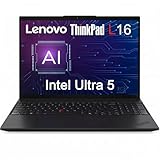
- DISCLOSURE - Brand New Computer has been resealed to upgrade Memory/SSD. 1 Year warranty by Issaquash Highlands Tech
- ENTERPRISE-READY PERFORMANCE - Built for business professionals and SMBs who want more than the E16 or ThinkBook 16 without stretching to the T16, the ThinkPad L16 delivers dependable performance, durable design, and exceptional value for everyday productivity. Engineered for reliability, it is MIL-STD-810H certified to withstand demanding fieldwork and travel. Delivers up to 10 hours of battery life with fast charging (80% in 1 hour), keeping you productive on the go
- POWERFUL PERFORMANCE - Powered by an Intel Core Ultra 5 225U Processor (12 cores, up to 4.8 GHz) and integrated Intel Graphics, the AI PC delivers power-efficient performance for demanding workloads. Configurable with memory options from 8GB to 64GB DDR5 RAM and storage options from 256GB to 2TB M.2 NVMe PCIe SSD, enabling smooth multitasking and fast loading across a wide range of applications
- CRISP DISPLAY - Features a 16" WUXGA (1920×1200) IPS display with a high-brightness 400-nit anti-glare screen, ensuring peak productivity even in sunlit offices or cafes, eliminating the washed-out look typical of standard business laptops. Supports up to 3 external displays via HDMI (max 4K@60Hz) or Thunderbolt 4 (max 8K@60Hz), enabling flexible multi-screen productivity for data analysis without a docking station. A 720p webcam with privacy shutter ensures clear video conferencing and security
- ADVANCED CONNECTIVITY - Equipped with 2x Thunderbolt 4, 2x USB-A 3.2 Gen 1, USB-A 2.0, HDMI 2.1, Ethernet (RJ-45), and a headphone/mic for flexible connectivity. Features Wi-Fi 6E and Bluetooth 5.3 for ultra-fast, stable wireless. Enhanced with a fingerprint reader, backlit keyboard, and a dedicated numeric keypad for secure, efficient typing in any environment
Where AI PCs fit—and where they do not
An AI PC is the user-facing, local-computing layer. Depending on the model and supported software, its CPU, GPU or neural processing unit (NPU) may accelerate tasks such as document transformation, image or audio features, local search, or smaller-model inference. Local execution can reduce reliance on a network connection and avoid sending some inputs to an external service. It does not guarantee privacy: applications may still send prompts, telemetry or other data elsewhere, and device policy and model routing matter.
AI PCs are not substitutes for shared infrastructure that serves many users, runs large models or handles sustained production workloads. A workstation can offer more local capacity for development, engineering or experimentation, but it is still different from an enterprise server or cloud cluster. Lenovo’s public portfolio material presents PCs, workstations and enterprise AI together, but does not establish a complete independent comparison of its PC models, NPU performance, application support or real-world battery life. Lenovo’s AI portfolio page provides the company’s overview.
| Layer | Typical role | Key limitation |
|---|---|---|
| AI PC | Individual productivity features and supported local AI tasks. | Software must actually support local acceleration; capacity is not equivalent to a shared GPU server. |
| AI workstation | Local development, creation, engineering and model experimentation. | Not automatically appropriate for high-concurrency production service. |
| Enterprise server | Shared inference, private retrieval, fine-tuning and governed business applications. | Requires infrastructure operations, capacity planning and appropriate licensing. |
| Cloud or AI factory | Large models, broad user populations and high-volume AI services. | Scale can bring recurring compute charges or substantial facility, power and cooling requirements, depending on deployment. |
Choosing where a workload should run
There is no universal “hybrid is cheaper” rule. The location decision should follow the workload, security boundary and utilization pattern. These are starting points, not Lenovo-certified designs:
Rank #3
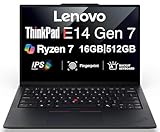
- Performance to Power your Potential - The 14" Lenovo ThinkPad E14 Gen 7 laptop is ideal for life on the go. Fueled by AMD Ryzen 7 250 3.30GHz processor (upto 5.1GHz), it boosts multitasking while advanced AI dynamically optimizes workloads to elevate productivity.
- Effortless Mobility, Unwavering Strength - Lightweight yet compact, it ensures portability for uninterrupted work. Remarkably thin and light for true mobility, the E14 Gen 7 powerhouse combines premium performance with a durable design. Its components incorporate recycled plastic in its build to reduce environmental impact. Moreover, it’s MIL-STD-810H tested to withstand extreme real-life circumstances, offering unwavering reliability for any work environment.
- Clear and Comfortable Viewing All Day - Stunning graphics tackle complex projects and creative tasks with ease. 14.0" IPS WUXGA (1920x1200) 60Hz Antiglare display with 300nits brightness.
- Fast Multitasking and Expanded Connectivity - 16GB DDR5 SODIMM RAM, 512GB 2242 PCIe NVMe SSD, 802.11ax Wi-Fi, Bluetooth 5.3, RJ-45, 5M RGB Webcam, Fingerprint Reader, Backlit Standard Keyboard, HDMI, Thunderbolt 4, USB 3.2 Type-C, Headphone/Microphone Combo Jack.
- Professional-Grade Operating System – Windows 11 Pro 64-bit offers enterprise-grade security and productivity tools, enhanced by AI-powered Copilot for smarter task management. Perfect for professionals, educators, creators, developers, small business users, and anyone needing a reliable system for streaming, online classes, and virtual meetings.
| Workload | Starting location to evaluate | Why |
|---|---|---|
| Personal productivity assistance | AI PC combined with enterprise services | Local responsiveness may suit supported tasks, while organizational controls can govern access to shared systems. |
| Private document summarization | AI PC or private server | Local or controlled processing may help limit data exposure and latency. |
| Enterprise knowledge assistant | Private server or hybrid cloud | Central retrieval and identity controls can govern access to shared business information. |
| Factory or retail computer vision | Edge system | Processing near the data source can support fast responses and reduce dependence on connectivity. |
| Fine-tuning with proprietary data | Enterprise data center or managed private cloud | Can offer control over data and compute, subject to capacity and operating costs. |
| Large-model training | Public cloud, dedicated cluster or AI factory | These environments can provide access to the scale and accelerator capacity such work may require. |
| High-volume customer-service inference | Centralized or distributed infrastructure | Compare utilization, latency, availability and cost across the expected demand pattern. |
| Agentic business workflows | Hybrid, with explicit controls | Local context, centrally governed access and human approvals may be needed in different parts of a workflow. |
For example, an employee could use a PC for local summarization or preprocessing, while a private enterprise index supplies authorized material to a centrally managed model. An edge system might analyze time-sensitive factory sensor data, with larger workloads handled in a data center or cloud. Identity, logging, data boundaries and approval rules should span the components. This is an illustrative architecture, not a claim that Lenovo certifies this exact design.
Why agentic AI raises the stakes
Generative AI commonly produces a response to a prompt. An agentic system is intended to plan tasks, retrieve information, invoke tools or business systems, and carry out multiple steps. That can make it useful for workflow automation, but it also gives errors more ways to affect real operations. Lenovo describes agents as working alongside people, with human judgment retained where context or accountability matters; that is the company’s position, not a substitute for a buyer’s controls. Lenovo’s discussion of agentic AI explains its framing.
- Give agents only the identities and permissions they need; separate read access from authority to make changes.
- Log tool calls, data access and decisions, and set approval gates for consequential actions.
- Test for prompt injection, data exfiltration, unsafe tool use and failure to escalate; provide rollback and human review.
- Evaluate model outputs and tool behavior against real workflows before deployment, and monitor changes after release.
- Set inference budgets and rate controls because repeated reasoning and tool calls can create unpredictable consumption.
The business case: compare total operating cost, not just hardware
On-premises infrastructure can provide control and may produce attractive economics when workloads are sustained and well utilized. It also requires capital, power, cooling, facilities, maintenance, staff and refresh planning. Cloud services can be more practical for intermittent demand or teams without data-center capacity, but consumption charges and data movement need to be included. A hybrid design can balance these factors, while also adding operational complexity across devices, networks, models, identity and monitoring.
Rank #4

- Intel N100 quad-core processor with up to 3.4GHz max turbo and 6MB Intel Smart Cache delivers reliable performance for business applications, web browsing, document editing, and multitasking. 8GB DDR5-4800 SODIMM RAM ensures smooth performance for demanding workloads and multiple applications simultaneously. 256GB PCIe 4.0x4 NVMe M.2 SSD provides lightning-fast boot times, quick application loading, and ample storage for business files and documents. Intel UHD Graphics handles video playback and light multimedia tasks efficiently.
- 15.6-inch FHD display (1920 x 1080) with 87% screen-to-body ratio, 250 nits brightness, and anti-glare coating provides clear visuals for productivity tasks. Camera privacy shutter and Kensington Nano Security Slot protect your data. Professional business black finish with textured PC-ABS construction delivers durability and modern aesthetics for corporate environments. Compact design measures 14.14" W x 9.28" D x 0.78" H and weighs only 3.33 lbs for easy portability between office and home.
- Comprehensive connectivity with WiFi 6 (802.11ax 2x2) and Bluetooth 5.2 wireless technology plus Gigabit Ethernet (100/1000M RJ-45) for reliable wired network connections. Versatile port selection: 2x USB Type-C 5Gbps (USB Power Delivery 30-65W, DisplayPort 1.2), 2x USB Type-A 5Gbps, 1x HDMI 1.4b for external displays, headphone/mic combo jack. USB Type-C ports support charging and external monitor connection. Full-size non-backlit English keyboard with buttonless Mylar touchpad (Precision TouchPad support, 2.76 x 4.13 inches).
- HD 720p camera with privacy shutter and integrated dual array digital microphones ensures clear video calls for virtual meetings and remote collaboration. Stereo speakers (1.5W x2) with High Definition Audio and Senary SN6147 codec deliver quality sound for video conferencing and multimedia content. Perfect for business professionals, remote workers, and anyone needing reliable video communication capabilities for Microsoft Teams, Zoom, and other conferencing platforms.
- Enterprise-grade security with Firmware TPM 2.0 enabled, camera privacy shutter, and Kensington Nano Security Slot for physical device protection. MIL-STD-810H military-grade testing ensures durability and reliability in demanding business environments. ErP Lot 6/26, RoHS compliant, TCO Certified generation 10, and TÜV Rheinland Low Blue Light certified for eye comfort. Pre-installed Windows 11 Home with 65W USB-C power adapter. Ideal for business professionals, students, and remote workers seeking reliable computing.
Performance and cost metrics such as time to first token, throughput and cost per token depend on the model, context length, quantization, concurrent users, batching, retrieval design, network latency, hardware, software versions and power limits. Lenovo’s June 2026 claim of “up to 8×” lower inference cost is a company claim; the cited announcement does not establish a universal benchmark, workload, baseline or independent verification. Lenovo’s announcement should be treated as a claim to validate against a buyer’s own workload.
Similarly, Lenovo’s March 2026 announcement cited 84% of organizations expecting to run AI on-premises or at the edge alongside cloud, attributing the figure to an IDC-commissioned CIO Playbook 2026. Because Lenovo commissioned the study, that figure should not be presented as an independent, neutral census. Lenovo’s inference announcement gives the attribution.
Risks to price into a proposal
- Vendor concentration: An integrated Lenovo–NVIDIA stack may simplify support and procurement, but can increase reliance on NVIDIA’s ecosystem, licensing, roadmap and supply availability.
- Low utilization: A GPU server can be a poor investment if demand is too small or intermittent; hosted services may be simpler in that case.
- Operational complexity: Hybrid operations require model routing, data movement, security, scheduling, monitoring and cost allocation across multiple environments.
- Data leakage: Prompts, retrieved documents, telemetry or outputs can cross an intended boundary unless the data flow and provider policies are explicit.
- Facility constraints: Dense GPU systems can require substantial power, rack capacity and cooling planning; deployment scale makes these constraints more, not less, important. Lenovo’s AI Cloud Gigafactory announcement describes its large-scale infrastructure ambitions.
- Unclear entitlements: AI software, support, model services and professional services may be separately contracted. A public announcement is not a complete bill of materials or availability matrix.
Alternatives and how to compare them
The relevant comparison is not just accelerator speed. Buyers should compare validated configurations, lifecycle management, support responsibility, financing, software compatibility and the ability to operate the stack with their existing staff and facilities.
- Dell Technologies with NVIDIA: Relevant to organizations standardized on Dell PCs, workstations, servers and services.
- HPE with NVIDIA: Worth evaluating for buyers centered on HPE infrastructure, hybrid-cloud management and enterprise services.
- Supermicro with NVIDIA: May appeal where dense GPU configurations and hardware flexibility are priorities, with integration and operations potentially requiring more customer expertise.
- Cloud-first services: AWS, Microsoft Azure and Google Cloud can suit intermittent demand, rapid experiments or teams without data-center capacity. Compare recurring consumption and data movement with the control and facility costs of owned infrastructure.
- Non-NVIDIA platforms: Lenovo’s June 2026 announcement also referenced a CPU-only hybrid AI platform involving Intel Xeon 6 and Red Hat AI Enterprise, alongside Intel, Red Hat and Canonical collaboration. This is evidence that the wider Lenovo portfolio is not exclusively NVIDIA-based, not a performance comparison. Lenovo’s June 2026 announcement.
Questions to ask before buying
- What exactly is being quoted? Request the server and GPU configuration, networking, storage, support, services and every software subscription as separate line items.
- Which software versions and models are supported? Confirm compatibility for the intended model, inference stack and applications; ask which named NVIDIA components are included or licensed separately.
- What performance will this workload deliver? Require throughput and latency estimates under the buyer’s model, context, concurrency and utilization assumptions, and define how results will be validated.
- Where does data go? Obtain a data-flow diagram covering prompts, retrieval, telemetry, model inputs and outputs, plus retention, training and residency terms.
- Who owns support across the stack? Establish escalation responsibility when a problem spans Lenovo hardware, NVIDIA software, a cloud provider and an application vendor.
- Can the site operate the system? Confirm power, cooling, rack, network, staffing and maintenance requirements before ordering dense GPU systems.
- How does the economics compare over time? Include utilization, software, energy, staffing, depreciation or financing, cloud alternatives and upgrade costs.
- What controls govern agents? Ask about least privilege, audit logs, approvals, sandboxing, testing, rollback and human escalation.
- What is available now under this quote? Distinguish shipping configurations from announced platforms or roadmap items; the reviewed public announcements do not provide a universal availability matrix or standard enterprise price list.
What the strategy means for buyers
Lenovo’s differentiation is the breadth of its systems and services and its effort to integrate them with NVIDIA’s AI stack—not ownership of the underlying AI model ecosystem. That can be valuable to organizations seeking one supplier across endpoints, infrastructure and deployment support. The decision still turns on workload fit, software entitlements, operational readiness and measured total cost. An integrated platform can reduce assembly work, but it does not remove the need to govern data, prove performance or plan facilities.
Quick Recap
Product prices and availability are accurate as of the date/time indicated and are subject to change. Any price and availability information displayed on Amazon at the time of purchase will apply.




