Do these 3 things before closing this tab:
1Fix the driver behind crashes, sound loss and screen glitches2Clear out junk files and repair common Windows errors3Scan for outdated or missing drivers - takes under a minuteShort answer: Japan is developing an automated logistics road for the roughly 500-kilometre (310-mile) Tokyo–Osaka freight corridor. It could move freight equivalent to thousands of truckloads, but no 310-mile conveyor belt has been approved, funded or built. The transport technology remains undecided, and the program is still in design, testing and business-model work.
What the viral “25,000 trucks” claim gets wrong
The “25,000 trucks” figure came from 2024 media coverage describing the possible capacity of a proposed Tokyo–Osaka system. It does not mean Japan has ordered 25,000 trucks scrapped or guaranteed that exactly that many vehicles will disappear from its roads.
In practical terms, an automated corridor could replace some long-distance truck movements. Trucks would still collect freight from warehouses, deliver it from destination hubs, serve locations away from the corridor and carry cargo that does not fit the system. The realistic question is how much trunk-haul work the system can absorb, not whether it eliminates trucking.
The original conveyor-belt framing came from a report that presented conveyor belts and autonomous electric carts as possibilities, while noting that the final design had not been chosen (New Atlas).
What’s actually slowing this PC down?
Pick the symptom - the matching free tool is one click away.
#1 Best Overall
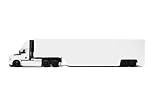
- AUTHENTIC DESIGN: Die-cast metal Freightliner eCascadia Semi-Truck & Container model featuring detailed exterior and opening container cargo doors
- PERFECT SCALE: Precision-crafted 1:62 scale, 13 inch replica with rubber tires and high-quality plastic components for enhanced realism
- INTERACTIVE PLAY: Fun pullback action mechanism allows the truck to drive forward when released
- DETAILED FEATURES: Functioning doors, authentic Freightliner branding, and realistic container trailer design make this an excellent display piece
What Japan is actually proposing
Japan’s Ministry of Land, Infrastructure, Transport and Tourism (MLIT) calls the concept an automated logistics road (jidō butsuryū dōro). It is a dedicated freight transport system integrated with highway infrastructure, using automated transport equipment in space reserved for freight. MLIT’s overview is available at mlit.go.jp/road/autoflow_road.
The proposed operating chain is:
Warehouse or collection truck → automated hub → standardized pallet or transport unit → dedicated automated corridor → destination hub → local truck, rail or other delivery mode.
The system is intended to support:
- Unmanned or highly automated movement between logistics hubs.
- Small-lot, high-frequency freight that is difficult to consolidate efficiently.
- Higher loading rates and more predictable long-distance schedules.
- Lower dependence on scarce truck-driver labor.
- Connections with conventional trucks, rail freight and other modes at hubs.
- Lower operating emissions, noise and vibration when powered with low-carbon electricity.
“Conveyor” is therefore a shorthand description, not an official equipment specification. The final system could use autonomous carts, guided carriers, a rail-like arrangement, dedicated automated lanes or a hybrid design.
Why Japan needs additional freight capacity
Japan is responding to several pressures at once:
- A shrinking and aging population and a projected shortage of truck drivers.
- The 2024 overtime restrictions on truck drivers, which increased concern about available transport capacity.
- More parcels and more frequent shipments in smaller lots.
- Rising freight costs and poor utilization when vehicles carry partially filled loads.
MLIT says the average amount of goods per shipment has roughly halved over two decades while the number of shipments has nearly doubled. Parcel deliveries exceeded 5 billion items in fiscal 2022, according to the ministry’s overview.
Free tools Windows power users keep installed
One-click scans. No signup required.
MLIT’s 2025 final report cites a projected 2030 freight-transport shortfall of 940 million metric tons. Depending on operating assumptions, automated logistics roads could cover approximately 8% to 22% of that gap (MLIT final report).
Rank #2

- 1/25 scale, Skill level 3, paint and cement required
- Special WF 75th anniversary packaging
- Build as single drive/day cab or dual drive/sleeper cab versions
- Many chrome parts including wheels
- All-new decal artwork with authentic Ned Bard & Son logos and optional stripe graphics
Where would it run?
The strategic long-distance concept focuses on the heavily used Tokyo–Osaka freight axis, approximately 500 kilometres or 310 miles. That does not mean the entire route is being excavated or fitted out now.
MLIT’s case studies examine shorter sections and connection points, including areas around Atsugi and the Tomei Expressway; a Tomei–Shin-Tomei connection near Numazu; sections of the Meishin Expressway near Yoro and Sekigahara; and the Shin-Meishin Expressway between Joyo and Yawata-Kyotanabe.
These studies matter because a viable network needs more than a fast mainline. It needs entry and exit points, hubs, maintenance access, emergency recovery routes and connections to existing freight infrastructure.
How much freight could it carry?
The official capacity estimates are scenarios, not measured performance from a completed system. MLIT’s report assumes one-ton transport units, operating speeds of 30 to 80 km/h, 10-metre spacing and 24-hour operation. Under those assumptions, a three-lane Tokyo–Osaka automated logistics road could provide:
| Measure | MLIT estimate or assumption |
|---|---|
| Long-distance corridor | Tokyo–Osaka, approximately 500 km |
| Daily capacity, three lanes | 216,000–576,000 metric tons |
| Annual capacity | 78 million–210 million metric tons |
| Potential driver labor covered | Approximately 21,280–56,747 person-days |
| Potential annual truck CO₂ reduction | Approximately 2.4–6.4 million metric tons |
| Share of projected 2030 freight shortfall | Approximately 8%–22% |
Those figures describe freight capacity and modeled effects. They are not a promise to remove a fixed number of trucks, and they depend on demand, uptime, hub throughput, energy sources and the final equipment design.
Rank #3

- ICONIC “EL JEFE” CUSTOM DUALLY TRUCK - Build the legendary 1979 GMC C-35 squarebody pickup reimagined with bold big-rig styling for a truly unique display piece.
- DIESEL ENGINE DETAIL WITH OPENING HOOD - Features a detailed turbo-diesel engine under an opening hood, showcasing power and realism in every build.
- BIG-RIG STYLE CUSTOM FEATURES - Includes sky-high exhaust stacks, air horns, mud flaps, step bumper, and sleeper compartment for a semi-inspired custom look.
- HEAVY-DUTY DUALLY CHASSIS DESIGN - Detailed chassis rides on big-rig style wheels with six tires, giving the model an aggressive stance and realistic presence.
- PREMIUM MATERIALS & FINISH OPTIONS - Molded in white and clear with chrome-plated parts and soft black tires for enhanced realism and customization.
What freight would use the system?
The proposal is aimed mainly at standardized, palletized, small-lot freight. MLIT materials discuss T11-size pallets and similar units (MLIT design and budget document).
Users would need consistent dimensions, weights, labels and handling procedures. Oversized or unstable loads, hazardous materials, unusually heavy freight and some temperature-controlled shipments may require separate arrangements. Conventional trucks would remain essential for pickup, local delivery and access to businesses outside the hub network.
What is being tested now?
As of August 18, 2026, the program remains in research, design, demonstration and business-model stages. MLIT’s 2026 recruitment call focuses on the components that could determine whether the idea works commercially and safely (MLIT 2026 experiment notice).
Hub handling
Experiments simulate the floor area, processing capacity and automated machinery needed to load and unload freight as multiple units enter and leave a hub.
Multiple-unit operation
Tests cover three or more transport units, curves, lane changes, splitting and merging, buffer lanes, communications, cargo effects, abnormal-event detection and emergency avoidance.
Rank #4

- A BIG BUILD FOR ADVANCED MODELERS: AMT’s 1/24 scale Reefer Trailer is the perfect tractor-pairing kit for any big rig builder. Add it to your collection today!
- FEATURE PACKED: Build it LONG and strong! At 24 inches in length, the Reefer Trailer emphasizes size and detail with a giant trailer box, select-a-point tandem sliding suspension, Thermo King AC unit, spare tire rack, and more! Fits 1/24 scale trucks. Fully paintable, with an enormous sheet of optional water-slide decals.
- QUICK SPECS: 1/24 Scale, 135+ Parts, 24 Inches long once assembled. Parts molded in black and silver with black vinyl tires. Plastic model kit paint and cement required (Testors or Tamiya brands recommended). Paint guide included in the kit. Skill Level 3. For ages 12+
- THE PERFECT PRESENT: Don't know what to get dad for his birthday? Or maybe you have an avid hobbyist or collector in your life. This model kit makes an ideal gift for any occasion!
- TRUST AMT: We at AMT are modelers ourselves and we sweat the details, to make sure every kit produced is top quality in every way!
Power and control
Participants are expected to provide data on electricity consumption, communications reliability and centralized operating-management systems. Planned testing is connected with a section of the under-construction Shin-Tomei Expressway by fiscal 2027.
The 2026 application window ran from July 22 through noon on August 21, 2026. Participation in these trials is not the same as awarding a construction contract or selecting a commercial supplier.
Timeline: concept, trials and a cautious 2030s target
| Date | Milestone |
|---|---|
| February 2024 | MLIT expert discussions began. |
| July 25, 2024 | Interim automated-logistics-road report. |
| July 31, 2025 | Final report published. |
| 2025 | Case studies and experiments using existing facilities. |
| 2026 | Further demonstrations and recruitment of experiment participants. |
| By fiscal 2027 | Planned testing connected with a Shin-Tomei Expressway section. |
| Mid-2030s | Broad implementation target for an initial phase; not a guaranteed completion date for the full corridor. |
A 2024 media report used 2034 for an initial Tokyo–Osaka link. Current official language is broader, referring to implementation in the 2030s or around the mid-2030s rather than promising a specific opening year.
Independent reader supportYour contribution helps us test, update, and keep practical guides available for everyone.Why the project is difficult
Hubs can become the bottleneck
A high-capacity mainline is useless if loading, unloading, sorting or truck connections cannot keep pace. Hub automation, staffing, land and peak-period queuing may be as important as the corridor itself.
Failures must be recoverable
A disabled carrier could block following units. A workable design needs buffer or bypass lanes, recovery vehicles, isolation of failed sections and safe access for technicians.
PC Slower Than It Used to Be?
A free scan shows the junk files, broken settings and background clutter dragging Windows down - then fixes them in one click.Free scan · Windows 10 & 11Outdated Drivers Are Slowing You Down
One free scan finds every outdated or missing driver and matches the right update for your exact hardware.Free scan · exact hardware matchBest Value
- Expertly Designed.
- True to Life Detail.
- Made from Quality Parts.
- Ships from USA.
- Brand New Item.
Japan needs disaster resilience
Earthquakes, landslides, flooding, typhoons, fire and power loss require redundant power and communications, emergency stopping, inspection access and alternate freight routes.
Standards exclude some cargo
Standard pallets improve automation but can exclude freight that is oversized, unstable, hazardous or otherwise non-conforming. The network therefore supplements rather than replaces every freight mode.
The business case is unresolved
MLIT identifies construction, equipment development, electricity, major repairs, maintenance, property and occupancy charges, disaster losses, financing, demand and usage-fee risk as issues requiring further analysis. The often-repeated US$23 billion figure is an early media estimate for a hypothetical 500-kilometre tunnel, excluding the full equipment and operating system; it is not an approved government budget.
How it compares with other freight options
| Option | Strengths | Limitations |
|---|---|---|
| Freight rail | Mature long-distance system and high payload efficiency. | Fixed routes and schedules; terminals and transshipment limit flexibility for small consignments. |
| Automated or electric trucks | Use existing roads and retain route flexibility. | Still face congestion, weather, incidents, mixed-traffic regulation and last-mile work. |
| Truck platooning | Can use existing highways and reduce some driver and aerodynamic costs. | Requires reliable communications and safe responses to cut-ins; does not remove local delivery needs. |
| Automated logistics road | Dedicated operating environment, standardized freight and potentially continuous high utilization. | Very high upfront cost, new hubs, disaster exposure and the risk that other technologies improve faster. |
Verdict: a serious project, not a finished conveyor
Japan is developing a government-backed automated freight corridor that could handle freight equivalent to thousands of long-haul truck trips between Tokyo and Osaka. The capacity estimates are substantial, but they are modeled scenarios built on assumptions about speed, spacing, unit size and 24-hour operation.
The accurate description today is an automated logistics road under evaluation—not a completed 310-mile conveyor belt, not a funded construction project and not a guaranteed replacement for 25,000 trucks. The decisive milestones will be successful hub and multi-unit demonstrations, a credible disaster-recovery design, a financeable business model and a final choice of transport technology.
Quick Recap
Product prices and availability are accurate as of the date/time indicated and are subject to change. Any price and availability information displayed on Amazon at the time of purchase will apply.




