Windows Errors? Fix Them Before They Spread
Repair common Windows errors and clear accumulated junk for a smoother, more stable PC - no reinstall needed.Free scan · no reinstallOutdated Drivers Are Slowing You Down
One free scan finds every outdated or missing driver and matches the right update for your exact hardware.Free scan · exact hardware matchReuters reported on September 4, 2024, that Broadcom was disappointed by tests of wafers made with Intel’s 18A process. The report raised a serious question about Intel’s ability to win outside customers, but it did not establish that 18A had failed outright or that Broadcom had cancelled an order. Intel later said 18A entered high-volume manufacturing in late 2025; whether Intel can turn that manufacturing progress into a substantial external foundry business remains a separate question.
What Reuters reported about Broadcom’s tests
Reuters reported that Broadcom had spent several months testing silicon manufactured on Intel Foundry’s 18A process and that the results disappointed the chip designer. Three sources familiar with the matter told Reuters that Broadcom had concerns about the process’s viability. The report did not publish complete test data or establish that every wafer or chip failed.
Broadcom was a potential customer, not a confirmed 18A production customer. The report did not say that Broadcom had formally terminated a production contract. Its significance was that a major prospective customer was reportedly unconvinced by an early evaluation of Intel’s newest process. Reuters’ September 4, 2024 report is the source for the original allegation.
What Intel and Broadcom said publicly
Intel disputed the implication that 18A was broadly failing, saying the process was “powered on, healthy and yielding well” and remained on schedule for high-volume manufacturing. Those were Intel’s statements, not independent verification of Broadcom’s specific results. Broadcom said its evaluation of Intel Foundry’s products and services had not concluded. The two positions are compatible: Intel could describe the process’s overall status positively while a prospective customer continued testing and had concerns about its own results. Coverage reproducing Intel’s and Broadcom’s statements records those responses.
#1 Best Overall

- Next‑Gen Platform Support: Compatible with Intel 800 Series Chipset‑based motherboards with LGA1851 Socket enabling PCIe 5.0/4.0 and high‑speed DDR5 memory (up to 7200 MT/s).
- High‑Performance Core Configuration: Features up to 24 cores (8 P‑cores + 16 E‑cores) for demanding gaming and creator
- Ultra‑Fast Boost Clocks: Reaches up to 5.5 GHz max turbo frequency for top‑tier responsiveness and performance
- Built for Enthusiasts: Unlocked for performance tuning when paired with Intel Z‑series chipsets, making it ideal for overclockers and power users.
- Robust Power & Thermal Design: Engineered with 125W base power and 250W max turbo power to sustain high‑intensity
What a disappointing foundry test can mean
The Reuters report did not disclose a full test protocol, defect count, yield figure or specific technical failure. “Disappointing” therefore should not be translated into a claim that 18A was unusable. A customer evaluation can uncover a fundamental manufacturing issue, but it can also reveal problems specific to a design, its tools or the way it has been ported to a new process.
- Yield: The share of dies on a wafer that work to specification. It affects usable output, cost per working chip and whether a foundry can supply the customer’s required volume.
- Defect density: The frequency of manufacturing defects across wafer area. Defects can make otherwise viable designs uneconomic, especially when a chip is large.
- Parametric performance: Whether transistors meet a design’s speed, power, leakage and voltage requirements.
- Reliability: Whether chips remain within specification under stress and over time.
- Design enablement: Whether the process design kit, design rules and qualified electronic-design-automation tools let a customer build and verify a production-ready chip.
- Libraries and IP: Whether standard-cell libraries, memory blocks and interface IP work as required on the process.
Yield is not a universal pass-or-fail number: what is commercially acceptable depends on factors including die size, product complexity, target price and volume. A handful of functioning demonstration chips is not enough to establish that a process can produce a customer’s product consistently and economically at scale. Moving a complex design between foundries can take months and requires substantial engineering work, as Reuters-distributed coverage noted.
Rank #2

- Get ultra-efficient with Intel Core Ultra desktop processors that improve both performance and efficiency so your PC can run cooler, quieter, and quicker.
- Core and Threads 24 cores (8 P-cores plus 16 E-cores) and 24 threads. Integrated Intel Graphics included
- Performance Hybrid Architecture Integrates two core microarchitectures, prioritizing and distributing workloads to optimize performance
- Performance Unlocked Up to 5.7 GHz unlocked. 40MB Cache
- Compatibility Compatible with Intel 800 series chipset-based motherboards
Why Broadcom’s evaluation mattered to Intel
Broadcom designs complex networking, connectivity and custom silicon products and has experience working with outside foundries. Winning a customer of that scale could have signaled that Intel could serve demanding chip designers beyond its own product teams. A disappointing evaluation could have the opposite effect: potential customers may hesitate if they believe a new process, its design ecosystem or its supply commitments are not ready for their products.
A contract foundry must offer more than a process that can fabricate a working chip. Customers need predictable quality and performance, sufficient capacity, mature design documentation and tools, IP support, packaging and testing, and confidence in confidentiality and supply-chain reliability. Intel’s 2024 filing acknowledged that winning external customers meant addressing concerns including confidentiality, intellectual property and capacity. Intel’s 2024 Form 10-K describes those challenges.
Rank #3

- 20 cores (8 P-cores + 12 E-cores) and 20 threads. Integrated Intel Graphics included
- Performance hybrid architecture integrates two core microarchitectures, prioritizing and distributing workloads to optimize performance
- Up to 5.3 GHz. 36 MB Cache
- Compatible with Intel 800 series chipset-based motherboards
- Turbo Boost Max Technology 3.0, and PCIe 5.0 & 4.0 support. Intel Optane Memory support. No thermal solution included
The stakes were high because Intel’s turnaround plan under Pat Gelsinger depended not just on improving its manufacturing technology, but also on turning Intel Foundry into a contract manufacturer for other companies. Outside wafer volume could help support expensive leading-edge factories. Intel’s own chips can provide an initial production base, but an internal product win does not automatically prove that the company has the customer support model, economics or broad design ecosystem required of a merchant foundry.
How 18A’s later production changes the picture
Intel subsequently cancelled productization of its 20A process and concentrated its leading-edge effort on 18A. In its 2025 filing, Intel said 18A entered high-volume manufacturing in late 2025 and was used for its first Core Ultra Series 3 processors. Intel describes 18A as using RibbonFET gate-all-around transistors and PowerVia backside power delivery; those technology details do not, by themselves, establish yield or commercial competitiveness. See Intel’s 2025 Form 10-K, its Core Ultra Series 3 announcement and the Intel 18A process page.
Rank #4
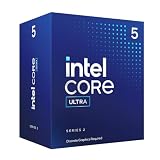
- 10 cores (6 P-cores + 4 E-cores) and 14 threads.
- Performance hybrid architecture integrates two core microarchitectures, prioritizing and distributing workloads to optimize performance
- Up to 4.9 GHz. 22 MB Cache
- Compatible with Intel 800 series chipset-based motherboards
- PCIe 5.0 & 4.0 support. Intel Optane Memory support. No thermal solution included. Discrete graphics required
Intel’s later filings describe improving 18A yields, but that is a company claim, not a published independent yield audit. The filings also say Intel had not secured significant external foundry customers. Thus the later record supports a distinction: 18A reached production for Intel products, while the scale of Intel’s success with third-party customers remained unresolved. Later production does not prove Broadcom’s earlier concerns were mistaken; the process may have improved, the reported test may have involved a particular design, or both.
Independent reader supportYour contribution helps us test, update, and keep practical guides available for everyone.The remaining test: external customers and 14A
The key question for Intel is no longer only whether 18A can manufacture Intel processors. It is whether outside customers will qualify Intel processes for their own designs and commit enough production volume to make the foundry business sustainable. Customers weigh cost, yield, capacity, design support and supply reliability against the cost and risk of staying with or switching from an established foundry.
Do these 3 things before closing this tab:
1Scan for outdated or missing drivers - takes under a minute2Repair Windows errors before they cause bigger problems3Fix the driver behind crashes, sound loss and screen glitchesBest Value

- 10 cores (6 P-cores + 4 E-cores) and 14 threads. Integrated Intel Graphics included
- Performance hybrid architecture integrates two core microarchitectures, prioritizing and distributing workloads to optimize performance
- Up to 4.9 GHz. 22 MB Cache
- Compatible with Intel 800 series chipset-based motherboards
- PCIe 5.0 & 4.0 support. Intel Optane Memory support. No thermal solution included.
Intel’s 2025 annual report says the economics of future leading-edge development depend on external demand. The company said it may pause or discontinue development of 14A and later leading-edge nodes if it cannot secure a significant external customer, and it expects customer decisions on 14A mainly in the second half of 2026 and the first half of 2027. These are Intel’s stated risks and expectations, not a prediction that the node will be cancelled. Intel’s 2025 annual report sets out that dependency.
That commercial hurdle also explains why technical and business success must be judged separately. A process can reach high-volume manufacturing for Intel’s own products without winning enough outside customers to support a broad foundry operation. Conversely, an early customer setback does not alone determine whether a process can later mature.
What the Broadcom setback means
The September 2024 report was a meaningful warning about customer confidence and qualification—not proof that Intel 18A was technically dead. Intel later reported that 18A reached high-volume manufacturing, but the commercial question remained whether major external customers would entrust Intel with production at scale. For Intel, the long-term foundry test is not just making chips on 18A; it is winning enough repeat customer business to justify the next generation of investment.
Quick Recap
Product prices and availability are accurate as of the date/time indicated and are subject to change. Any price and availability information displayed on Amazon at the time of purchase will apply.




