Crashes, No Sound, or Screen Glitches?
Random freezes, missing sound and display glitches usually trace back to one bad driver. Find and replace yours safely.Free scan · under a minutePC Slower Than It Used to Be?
A free scan shows the junk files, broken settings and background clutter dragging Windows down - then fixes them in one click.Free scan · Windows 10 & 11Intel has not been verified as having spun off its manufacturing operation into a separately owned or publicly traded company. The company separated manufacturing economics and reporting from its product divisions, began a standalone foundry profit-and-loss structure in the first quarter of 2024, and said in September 2024 that it planned to establish Intel Foundry as an independent subsidiary inside Intel. Intel’s latest official materials located through August 18, 2026, still describe Intel Foundry as an Intel operating segment.
That distinction matters. Intel is changing how its factories, process-development teams, supply chain, packaging operations and foundry-sales organization are managed and measured, while retaining them within the Intel group.
The short answer
- What changed: Intel manufacturing, technology development and Intel Foundry Services received their own economics, management accountability and reporting structure.
- When it took effect: Intel’s internal foundry model began using a standalone manufacturing profit-and-loss structure in the first quarter of 2024.
- What Intel planned: an independent Intel Foundry subsidiary that would remain owned by Intel.
- What has not been established: a completed sale, initial public offering, joint venture or shareholder spin-off into a separately traded company.
- Why it matters: Intel is trying to make manufacturing costs and performance visible, improve capital discipline and persuade outside customers to use its foundry services.
Intel announced the initial operating-model change in June 2023 (Intel announcement). Its September 2024 plan for an independent subsidiary was framed as a way to give customers and suppliers more separation and to preserve options for future outside funding or a different capital structure (Intel CEO message).
What Intel actually separated
Intel’s product organizations—such as Client Computing Group, Data Center and AI, and Network and Edge—are being treated as customers of Intel Foundry rather than as divisions that receive manufacturing as an invisible internal service. Intel Foundry encompasses far more than a contract-manufacturing sales team:
Quick wins for a faster PC:
Repair Windows errors before they cause bigger problemsFix Now →Fix the driver behind crashes, sound loss and screen glitchesFind Drivers →Clear out junk files and repair common Windows errorsFree Scan →#1 Best Overall

- Next‑Gen Platform Support: Compatible with Intel 800 Series Chipset‑based motherboards with LGA1851 Socket enabling PCIe 5.0/4.0 and high‑speed DDR5 memory (up to 7200 MT/s).
- High‑Performance Core Configuration: Features up to 24 cores (8 P‑cores + 16 E‑cores) for demanding gaming and creator
- Ultra‑Fast Boost Clocks: Reaches up to 5.5 GHz max turbo frequency for top‑tier responsiveness and performance
- Built for Enthusiasts: Unlocked for performance tuning when paired with Intel Z‑series chipsets, making it ideal for overclockers and power users.
- Robust Power & Thermal Design: Engineered with 125W base power and 250W max turbo power to sustain high‑intensity
- Process-technology research and development
- Wafer fabrication and manufacturing operations
- Supply-chain management
- Intel Foundry Services for outside customers
- Test and assembly
- Advanced packaging and chiplet integration
- Electronic-design automation and other design-enablement services
Intel’s filings describe Intel Products as economically similar to a fabless semiconductor business and Intel Foundry as a foundry business, even though both remain inside Intel (Intel segment filing; 2025 annual-report filing).
Spin-off, subsidiary or reorganization?
These terms describe materially different transactions. Intel’s announcements support internal separation and a planned subsidiary, not a completed public-company spin-off.
| Term | What it means here |
|---|---|
| Separate P&L | Manufacturing records its own revenue, costs and profitability for management and reporting purposes. |
| Operating segment | A reportable business unit in Intel’s financial statements; it does not imply separate ownership. |
| Independent subsidiary | A distinct legal entity that remains owned and controlled by Intel. |
| Spin-off | Usually a legal separation in which a new company is distributed to existing shareholders and operates independently. |
| IPO | A public sale of shares to outside investors. |
| Joint venture | A business jointly owned or controlled by Intel and another party. |
Intel’s language about future funding and capital-structure flexibility leaves open the possibility of a later investment, partnership or other transaction. It is not an announcement that any such transaction has occurred or is guaranteed (Intel Foundry update).
Rank #2

- Get ultra-efficient with Intel Core Ultra desktop processors that improve both performance and efficiency so your PC can run cooler, quieter, and quicker.
- Core and Threads 24 cores (8 P-cores plus 16 E-cores) and 24 threads. Integrated Intel Graphics included
- Performance Hybrid Architecture Integrates two core microarchitectures, prioritizing and distributing workloads to optimize performance
- Performance Unlocked Up to 5.7 GHz unlocked. 40MB Cache
- Compatibility Compatible with Intel 800 series chipset-based motherboards
Timeline: from internal model to focused foundry
- June 21, 2023: Intel announced that manufacturing, technology development and Intel Foundry Services would operate with their own profit-and-loss structure beginning in the first quarter of 2024 (announcement).
- April 2024: Intel outlined a new financial-reporting structure that made Intel Foundry a reportable operating segment (financial-framework announcement).
- September 2024: Intel said it planned to establish Intel Foundry as an independent subsidiary inside Intel (CEO message).
- 2025: Intel’s annual-report disclosures continued to describe Intel Foundry as an Intel operating segment. They also said most Foundry activity still supported Intel’s internal products (annual report).
- June 18, 2026: Intel announced dedicated leadership and a more focused operating model for advanced packaging within Intel Foundry (leadership announcement).
How the internal foundry model works
The intended commercial relationship is straightforward:
Free tools Windows power users keep installed
One-click scans. No signup required.
- Intel Products requests wafers, packaging and related manufacturing services.
- Intel Foundry charges those product groups using market-based or foundry-style pricing.
- Intel Foundry records the associated revenue, costs and profitability.
- External customers can purchase wafer fabrication, packaging, chiplet integration and design-enablement services from the same organization.
In simplified form:
Intel Products → buys manufacturing services from → Intel Foundry
External customers → buy manufacturing and packaging services from → Intel Foundry
The model is intended to expose yield, schedule, capacity and cost performance that could previously be buried inside an integrated-device-manufacturer structure. Intel has said technical collaboration between product and manufacturing teams will continue; the change is not a promise that engineering teams will operate with no interaction.
Rank #3

- Game Without Compromise. Play harder and work smarter with Intel Core 14th Gen processors
- 20 cores (8 P-cores plus 12 E-cores) and 28 threads. Integrated Intel UHD Graphics 770 included
- Up to 5.6 GHz with Turbo Boost Max Technology 3.0 gives you smooth game play, high frame rates, and rapid responsiveness
- Compatible with Intel 600-series (with potential BIOS update) or 700-series chipset-based motherboards
- DDR4 and DDR5 platform support cuts your load times and gives you the space to run the most demanding games
Why Intel is doing this
Accountability and cost visibility
A separate P&L lets management and investors see whether factories and process development are creating value or consuming it. Product divisions can compare Intel manufacturing costs with prices available from outside foundries and make more explicit sourcing decisions.
A credible external-foundry proposition
Intel is attempting to compete with established contract manufacturers such as TSMC and Samsung. An organization that serves Intel’s own products and third parties under foundry-style economics is intended to look more like a supplier than an internal cost center.
Recommended Free Tools
Capital efficiency
Leading-edge fabs and process development require substantial, sustained investment. A clearer business boundary could help Intel evaluate capacity, capital spending and potential outside financing more deliberately. Intel has described the subsidiary structure as providing flexibility to consider independent funding or another capital structure, not as a commitment to raise money.
Rank #4
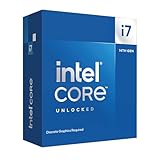
- Game Without Compromise. Play harder and work smarter with Intel Core 14th Gen processors
- 20 cores (8 P-cores plus 12 E-cores) and 28 threads. Discrete graphics required
- Up to 5.6 GHz with Turbo Boost Max Technology 3.0 gives you smooth game play, high frame rates, and rapid responsiveness
- Compatible with Intel 600-series (with potential BIOS update) or 700-series chipset-based motherboards
- DDR4 and DDR5 platform support cuts your load times and gives you the space to run the most demanding games
Use of an integrated technology platform
Intel wants to monetize wafer capacity, advanced packaging, chiplet integration and design tools beyond Intel-designed processors. A broader “systems foundry” offering could let customers combine manufacturing and packaging services while Intel retains some advantages of vertical integration.
Independent reader supportYour contribution helps us test, update, and keep practical guides available for everyone.What it means for Intel’s product groups
Client, data-center, AI and networking businesses would face clearer manufacturing prices and capacity decisions. Potential benefits include better product-level cost visibility, more disciplined allocation of scarce capacity and the ability to use an outside foundry when it is technically or economically preferable.
The model also creates risks. Transfer pricing can complicate accounting, and product groups may see higher apparent costs once manufacturing is charged explicitly. Manufacturing managers may prioritize utilization and long production runs while product teams prioritize launch dates or a particular chip design. A formal separation could also make it harder to coordinate priorities during a capacity shortage.
Best Value

- Game without compromise. Play harder and work smarter with Intel Core 14th Gen processors
- 24 cores (8 P-cores plus 16 E-cores) and 32 threads. Integrated Intel UHD Graphics 770 included
- Leading max clock speed of up to 6.0 GHz gives you smoother game play, higher frame rates, and rapid responsiveness
- Compatible with Intel 600-series (with potential BIOS update) or 700-series chipset-based motherboards
- DDR4 and DDR5 platform support cuts your load times and gives you the space to run the most demanding games
What it means for outside customers
Prospective customers need confidence in confidential design handling, process-design kits, electronic-design-automation support, yields, delivery schedules and the longevity of Intel’s process roadmap. Intel has linked the subsidiary concept to greater organizational separation for customers and suppliers.
However, Intel would still be both a foundry operator and a semiconductor-product competitor. A separate reporting line cannot by itself prove that customer data is inaccessible to competing product teams, guarantee non-discriminatory capacity, or establish independent governance. Customers will judge the structure by contractual protections, access controls, execution and their actual experience.
What it means for shareholders
Potential advantages
- More transparent valuation of the product and foundry businesses.
- Clearer evidence of whether manufacturing is improving or destroying value.
- More disciplined capital-allocation decisions.
- A possible route to outside investment or a separate capital structure later.
Potential disadvantages
- Foundry losses and capital requirements may become more visible without disappearing.
- Intel may continue funding expensive fabs before external volume reaches economic scale.
- Internal and external customers could compete for the same capacity.
- Intel could lose some coordination benefits associated with vertical integration.
- A future legal separation could create tax, debt, pension, supply and governance complications.
Investors should not infer a new stock ticker, a distribution of shares or an immediate value unlock from the word “subsidiary.” Intel’s filings still place Foundry within the company’s reporting structure.
Why Foundry revenue is easy to misread
Intel Foundry’s reported revenue includes services supplied to Intel’s own product groups. Therefore, total Foundry revenue is not the same as revenue from outside customers. To assess external demand, investors need separate information about third-party customers, capacity commitments and the share of revenue generated outside Intel.
Likewise, a separate segment can reveal losses more clearly, but it does not make fabs profitable automatically. Financial separation is an accountability mechanism, not proof of competitive process yields, on-time node delivery or adequate utilization.
What to watch next
- Growth in genuinely external-foundry revenue and the number and quality of outside customers.
- Intel Foundry operating losses, gross margins and progress toward sustainable profitability.
- Execution of Intel 18A and later process nodes. Intel’s 2025 annual report says Intel 18A entered high-volume manufacturing in late 2025 (annual-report filing).
- Advanced-packaging utilization and customer adoption.
- Capital expenditures, fab-construction pace and the division of spending between internal and external demand.
- Any formal announcement of outside equity, a joint venture, an IPO, a sale or a shareholder distribution.
- Whether Foundry remains primarily dependent on Intel Products for volume.
Bottom line: separation, not a confirmed spin-off
Intel has moved manufacturing toward a stand-alone foundry operating model: its own P&L, an operating-segment identity, market-based charges to Intel’s product groups and a planned independent subsidiary inside Intel. The latest official disclosures located through August 18, 2026, do not verify a completed legal spin-off into a separately owned or publicly traded company. “Internal separation and planned subsidiary” is therefore more precise than “Intel spun off its manufacturing business.”
Quick Recap
Product prices and availability are accurate as of the date/time indicated and are subject to change. Any price and availability information displayed on Amazon at the time of purchase will apply.




