Intel reported third-quarter 2024 revenue of $13.3 billion, down 6% from a year earlier, and a $16.6 billion net loss attributable to Intel. The loss was dominated by impairment, accelerated-depreciation, restructuring and tax-related charges, but the underlying business was still weak: non-GAAP earnings were negative, gross margin collapsed, and three major business areas reported lower revenue.
Intel announced the results on October 31, 2024, for the quarter ended September 28, 2024. The figures are reported in Intel’s earnings release and Form 10-Q.
Intel’s headline Q3 2024 results
| Metric | Q3 2024 | Q3 2023 | Year-over-year change |
|---|---|---|---|
| Revenue | $13.3 billion | $14.2 billion | Down 6% (about $874 million) |
| GAAP gross margin | 15.0% | 42.5% | Down 27.5 percentage points |
| GAAP operating margin | -68.2% | -0.1% | Down 68.1 points |
| Net income (loss) attributable to Intel | -$16.6 billion | $297 million | Not meaningful |
| GAAP diluted EPS | -$3.88 | $0.07 | Not meaningful |
| Non-GAAP diluted EPS | -$0.46 | $0.41 | Down sharply |
| Cash from operations | $4.1 billion | Not stated in the cited release | Positive cash flow |
The $16.6 billion figure is the loss attributable to Intel shareholders, rather than necessarily the consolidated loss for every entity in the group. Intel also paid approximately $0.5 billion in dividends during the quarter.
Primary company materials are available through Intel’s investor-relations release and the SEC-hosted earnings filing.
Do these 3 things before closing this tab:
1Scan for outdated or missing drivers - takes under a minute2Repair Windows errors before they cause bigger problems3Fix the driver behind crashes, sound loss and screen glitches#1 Best Overall

- Next‑Gen Platform Support: Compatible with Intel 800 Series Chipset‑based motherboards with LGA1851 Socket enabling PCIe 5.0/4.0 and high‑speed DDR5 memory (up to 7200 MT/s).
- High‑Performance Core Configuration: Features up to 24 cores (8 P‑cores + 16 E‑cores) for demanding gaming and creator
- Ultra‑Fast Boost Clocks: Reaches up to 5.5 GHz max turbo frequency for top‑tier responsiveness and performance
- Built for Enthusiasts: Unlocked for performance tuning when paired with Intel Z‑series chipsets, making it ideal for overclockers and power users.
- Robust Power & Thermal Design: Engineered with 125W base power and 250W max turbo power to sustain high‑intensity
Why could Intel’s loss exceed its quarterly revenue?
GAAP earnings include the period’s accounting revaluations, restructuring costs and tax adjustments, not just cash paid for ordinary operations. Intel recognized approximately $15.9 billion of impairment, accelerated-depreciation and related charges, plus $2.8 billion of restructuring charges. Those items reduced GAAP earnings per share by $3.89.
Manufacturing-asset impairments and accelerated depreciation
A substantial portion related to manufacturing assets, including Intel 7 capacity that the company judged was unlikely to be needed at its previously expected level. An impairment lowers the carrying value of an asset when projected economic benefits no longer support that value; accelerated depreciation recognizes that value over a shorter period. Neither entry represents the company paying the full charge in cash during the quarter, but both indicate that earlier capacity and demand assumptions had deteriorated.
Rank #2

- Get ultra-efficient with Intel Core Ultra desktop processors that improve both performance and efficiency so your PC can run cooler, quieter, and quicker.
- Core and Threads 24 cores (8 P-cores plus 16 E-cores) and 24 threads. Integrated Intel Graphics included
- Performance Hybrid Architecture Integrates two core microarchitectures, prioritizing and distributing workloads to optimize performance
- Performance Unlocked Up to 5.7 GHz unlocked. 40MB Cache
- Compatibility Compatible with Intel 800 series chipset-based motherboards
Restructuring charges
Intel’s $2.8 billion restructuring charge included employee actions, real-estate exits and other cost-reduction measures. Intel said $528 million was non-cash and approximately $2.2 billion would be settled in cash in future periods. The charge therefore combined immediate accounting recognition with obligations that can affect later cash flow.
Goodwill, intangible assets and deferred taxes
The quarter also included impairments of goodwill and certain acquired intangible assets. Separately, Intel recorded an approximately $9.9 billion non-cash deferred-tax-asset valuation allowance after concluding that its cumulative loss position made some tax assets less likely to be recovered. These tax and asset adjustments help explain the exceptional GAAP result; they should not be added mechanically to the headline loss because the filing’s reported figures include tax effects and related offsets.
Rank #3

- Game Without Compromise. Play harder and work smarter with Intel Core 14th Gen processors
- 20 cores (8 P-cores plus 12 E-cores) and 28 threads. Integrated Intel UHD Graphics 770 included
- Up to 5.6 GHz with Turbo Boost Max Technology 3.0 gives you smooth game play, high frame rates, and rapid responsiveness
- Compatible with Intel 600-series (with potential BIOS update) or 700-series chipset-based motherboards
- DDR4 and DDR5 platform support cuts your load times and gives you the space to run the most demanding games
GAAP, non-GAAP and cash flow tell different stories
GAAP result
GAAP diluted loss was $3.88 per share, reflecting all required charges and producing the $16.6 billion loss attributable to Intel.
Adjusted result
Intel’s non-GAAP diluted loss was still $0.46 per share. Non-GAAP measures remove or adjust for specified items, so they make the unusual charges easier to isolate, but a negative adjusted EPS confirms that the continuing business was not profitable in Q3.
Rank #4
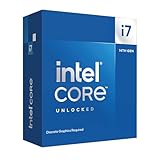
- Game Without Compromise. Play harder and work smarter with Intel Core 14th Gen processors
- 20 cores (8 P-cores plus 12 E-cores) and 28 threads. Discrete graphics required
- Up to 5.6 GHz with Turbo Boost Max Technology 3.0 gives you smooth game play, high frame rates, and rapid responsiveness
- Compatible with Intel 600-series (with potential BIOS update) or 700-series chipset-based motherboards
- DDR4 and DDR5 platform support cuts your load times and gives you the space to run the most demanding games
Operating cash flow
Intel generated $4.1 billion of cash from operations. Net income and operating cash flow measure different things: large non-cash impairments and tax allowances can depress GAAP earnings without an equivalent quarter-end cash outflow. Positive operating cash flow therefore does not make the quarter healthy, but it does show why the $16.6 billion loss should not be described as $16.6 billion of cash burned.
Segment performance was mixed, not uniformly weak
| Business | Q3 year-over-year trend | What Intel cited |
|---|---|---|
| Client Computing Group (CCG) | Revenue down 7% | Lower desktop volume, customer inventory management, weaker demand and exits from legacy businesses; notebook revenue improved on higher volume and average selling prices. |
| Data Center and AI (DCAI) | Revenue up 9% | Primarily stronger hyperscale-customer demand. |
| Altera | Revenue down 44% | Weakness in programmable-chip markets. |
| External Intel Foundry | Revenue down 79% | Lower traditional packaging services and lower equipment sales. |
Intel began separately reporting Intel Products and Intel Foundry in the first quarter of 2024. That structure makes foundry losses and external revenue more visible instead of blending them into product results. DCAI growth was encouraging, but it did not offset declines in PCs, programmable chips and external foundry services.
Free tools Windows power users keep installed
One-click scans. No signup required.
Best Value

- Game without compromise. Play harder and work smarter with Intel Core 14th Gen processors
- 24 cores (8 P-cores plus 16 E-cores) and 32 threads. Integrated Intel UHD Graphics 770 included
- Leading max clock speed of up to 6.0 GHz gives you smoother game play, higher frame rates, and rapid responsiveness
- Compatible with Intel 600-series (with potential BIOS update) or 700-series chipset-based motherboards
- DDR4 and DDR5 platform support cuts your load times and gives you the space to run the most demanding games
What the cost-cutting plan means
Intel said it was progressing toward a plan designed to deliver $10 billion of cost reductions in 2025. The program covers operating expenses, capital spending, cost of sales, portfolio simplification, organizational changes, real-estate actions and manufacturing-capacity adjustments.
- Intel’s 2024 restructuring plan referenced reductions affecting approximately 16,500 employees. That is the number described in the filing, not a claim that every departure had already occurred.
- Lower capital spending and capacity changes can improve near-term cash use, but they can also reduce manufacturing flexibility or investment if cuts go too far.
- Cost savings are not the same as revenue growth. They can support margins and cash flow while leaving product demand and foundry utilization unresolved.
Management also highlighted progress in Intel Products, prospective customer interest in the Intel 18A process and the long-term value of the x86 franchise. Those are management statements and forward-looking claims; prospective interest is not booked revenue or proof of profitable foundry scale.
Intel’s Q4 2024 outlook
| Q4 2024 measure | Management guidance |
|---|---|
| Revenue | $13.3 billion to $14.3 billion |
| GAAP diluted EPS | -$0.24 |
| Non-GAAP diluted EPS | $0.12 |
The revenue midpoint is approximately $13.8 billion, only modestly above Q3’s $13.3 billion. The outlook therefore suggested limited sequential improvement rather than a rapid return to historical profitability. Guidance is management’s forecast, not a guarantee. Intel’s published guidance appears in its Q3 results release.
What this quarter says about Intel’s turnaround
The quarter was neither simply a cosmetic accounting event nor proof that Intel’s turnaround had failed. The scale of the GAAP loss was amplified by non-cash impairments, a deferred-tax valuation allowance and restructuring entries. At the same time, those charges reflected real reductions in expected asset value and real decisions to shrink or reorganize the business.
The Tool Desk
Outbyte PC Repair FREEClear out junk files and repair common Windows errorsFree Scan →Outbyte Driver Updater FREEFix the driver behind crashes, sound loss and screen glitchesFind Drivers →- Revenue fell 6% year over year.
- GAAP gross margin fell to 15.0%, and non-GAAP EPS remained negative.
- DCAI improved, but CCG, Altera and external Intel Foundry contracted.
- External foundry revenue was down 79%, so the 18A strategy had not yet translated into reported external growth in this quarter.
- The $10 billion 2025 savings target could improve the cost structure, but execution must avoid damaging products or manufacturing capabilities needed for recovery.
For investors, the key follow-up questions are whether Intel can restore gross margin, stabilize product revenue, reduce foundry losses and convert its manufacturing roadmap into sustained, profitable external business.
Quick Recap
Product prices and availability are accurate as of the date/time indicated and are subject to change. Any price and availability information displayed on Amazon at the time of purchase will apply.




