Intel did not announce that it would abandon its fabs in 2020. The article “Intel Outside … Just Like all the Others,” published by EE Times on July 27, 2020, was an opinion piece forecasting that Intel might eventually stop developing leading-edge process technology and rely on outside foundries. Intel’s later plans continued to include internal process development, while also expanding its foundry business. Intel says its 18A process entered production in 2025; that company-reported milestone does not, by itself, establish yields or commercial success.
What did “Intel Outside … Just Like all the Others” mean?
Bolaji Ojo’s July 27, 2020, EE Times article argued that Intel might, within five to ten years, stop developing next-generation process technology, stop building new wafer fabs, and depend on dedicated foundries. It connected that possibility to the rising cost of developing processes and building fabs, the availability of foundry alternatives such as TSMC, and the concentration of semiconductor supply-chain capabilities in Asia. Read the EE Times article.
That was Ojo’s analysis and a forecast attributed to unnamed industry observers—not a formal Intel decision, a measured probability, or an established industry consensus. The article’s warning that outsourcing would end Western participation in leading-edge process development was likewise an argument, not a verified outcome.
What did Intel say in 2020 about using foundries?
Then-CEO Bob Swan said Intel would choose manufacturing based on what best served customers, leaving open internal, external, or mixed production: “We will be pragmatic and objective in deploying the process technology that delivers the most predictability and performance for our customers, whether that be in our process, external foundry or a combination of both.” Ojo quoted Swan in the July 27, 2020, EE Times article.
#1 Best Overall

- Next‑Gen Platform Support: Compatible with Intel 800 Series Chipset‑based motherboards with LGA1851 Socket enabling PCIe 5.0/4.0 and high‑speed DDR5 memory (up to 7200 MT/s).
- High‑Performance Core Configuration: Features up to 24 cores (8 P‑cores + 16 E‑cores) for demanding gaming and creator
- Ultra‑Fast Boost Clocks: Reaches up to 5.5 GHz max turbo frequency for top‑tier responsiveness and performance
- Built for Enthusiasts: Unlocked for performance tuning when paired with Intel Z‑series chipsets, making it ideal for overclockers and power users.
- Robust Power & Thermal Design: Engineered with 125W base power and 250W max turbo power to sustain high‑intensity
Ojo also reported Swan’s statement, “Our 7-nanometer products will be delayed … I’m not pleased with our 7 nanometer-process performance.” In context, that was a contemporary comment about a delay and the option to manufacture internally, externally, or through a mix. It is not a statement about Intel’s current process schedule.
How Intel’s later strategy compared with the prediction
Intel’s later statements described continued internal process development alongside a greater role for foundry services. That is different from the forecast that Intel would wholly abandon internal process technology.
Rank #2

- Get ultra-efficient with Intel Core Ultra desktop processors that improve both performance and efficiency so your PC can run cooler, quieter, and quicker.
- Core and Threads 24 cores (8 P-cores plus 16 E-cores) and 24 threads. Integrated Intel Graphics included
- Performance Hybrid Architecture Integrates two core microarchitectures, prioritizing and distributing workloads to optimize performance
- Performance Unlocked Up to 5.7 GHz unlocked. 40MB Cache
- Compatibility Compatible with Intel 800 series chipset-based motherboards
| Question | What the cited material says |
|---|---|
| Would Intel keep developing its own processes? | Intel described continued internal process development and published roadmaps that included Intel 18A and 14A. These are company statements and plans, not independent confirmation of commercial results. Intel’s 2024 announcement. |
| Would Intel rely on external foundries? | Swan left external or mixed manufacturing open as options in 2020. Intel’s later strategy included serving outside foundry customers, but the cited material does not quantify Intel’s dependence on external foundries for its own products. Intel’s description of its internal foundry model. |
| Would Intel offer foundry services? | In February 2024, Intel announced Intel Foundry as a business for external customers and stated an ambition to become the No. 2 foundry by 2030. The ambition is a goal, not an achieved ranking. Intel’s 2024 announcement. |
| Did Intel report a leading-edge production milestone? | Intel Foundry said on June 16, 2026, that 18A entered production in 2025 and 18A-P entered risk production in 2026. These are Intel-reported milestones; the cited material does not independently establish yields, external customer volumes, or commercial success. Intel Foundry’s June 16, 2026 update. |
Intel’s internal foundry model
In 2023, Intel described a model in which product groups would work with Intel’s manufacturing group in a way similar to the arm’s-length relationship between fabless companies and external foundries. Intel said the structure was intended to support both its integrated-device-manufacturer business and its plans to serve outside customers. This changes how Intel described its internal organization; it does not mean Intel had stopped developing or operating its own manufacturing capabilities. Intel’s description of the model.
Intel Foundry and the roadmap
Intel’s February 2024 announcement made Intel Foundry a business serving external customers and listed Intel 18A and Intel 14A on its process roadmap. The company’s stated ambition to become the No. 2 foundry by 2030 should be read as a future target, not evidence that it has reached that position or secured a particular level of customer demand. Intel’s 2024 announcement.
Rank #3

- Game Without Compromise. Play harder and work smarter with Intel Core 14th Gen processors
- 20 cores (8 P-cores plus 12 E-cores) and 28 threads. Integrated Intel UHD Graphics 770 included
- Up to 5.6 GHz with Turbo Boost Max Technology 3.0 gives you smooth game play, high frame rates, and rapid responsiveness
- Compatible with Intel 600-series (with potential BIOS update) or 700-series chipset-based motherboards
- DDR4 and DDR5 platform support cuts your load times and gives you the space to run the most demanding games
What Intel’s 2026 update establishes—and what it does not
Intel Foundry reported that 18A entered production in 2025 and that 18A-P entered risk production in 2026. Intel Foundry EVP and GM Naga Chandrasekaran said, “Our updates and presentations at VLSI signal to Intel Foundry customers and partners that we are fully committed to leading edge process innovation over the long term.” That quotation is Intel’s own characterization of its commitment. The cited update does not independently verify manufacturing yields, outside-customer volumes, or the foundry business’s financial performance. Intel Foundry’s June 16, 2026 update.
Independent reader supportYour contribution helps us test, update, and keep practical guides available for everyone.What did the 2020 article’s market figures show?
Ojo’s article put Intel’s market value at $215 billion on July 27, 2020, and reported that Intel shares fell more than 16 percent over three days following the 7nm delay announcement. These are historical figures as presented by EE Times, not current valuation data or an independently checked market-data series. EE Times, July 27, 2020.
Quick Recap
Best Value

- Game without compromise. Play harder and work smarter with Intel Core 14th Gen processors
- 24 cores (8 P-cores plus 16 E-cores) and 32 threads. Integrated Intel UHD Graphics 770 included
- Leading max clock speed of up to 6.0 GHz gives you smoother game play, higher frame rates, and rapid responsiveness
- Compatible with Intel 600-series (with potential BIOS update) or 700-series chipset-based motherboards
- DDR4 and DDR5 platform support cuts your load times and gives you the space to run the most demanding games
Rank #4
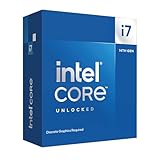
- Game Without Compromise. Play harder and work smarter with Intel Core 14th Gen processors
- 20 cores (8 P-cores plus 12 E-cores) and 28 threads. Discrete graphics required
- Up to 5.6 GHz with Turbo Boost Max Technology 3.0 gives you smooth game play, high frame rates, and rapid responsiveness
- Compatible with Intel 600-series (with potential BIOS update) or 700-series chipset-based motherboards
- DDR4 and DDR5 platform support cuts your load times and gives you the space to run the most demanding games
What should investors take from the forecast?
- Separate a forecast from a corporate decision. The possibility of abandoning leading-edge process development was the article’s prediction, not an Intel announcement.
- Distinguish outsourcing from foundry services. Intel’s later strategy included working with external foundries as a possible manufacturing option and selling foundry services to outside customers; those are related but different activities.
- Read company milestones with their limits. Intel’s reported 18A production entry and its 2030 ranking ambition are useful indicators of stated progress and goals, but do not independently establish yields, market share, customer volumes, or profitability.
Product prices and availability are accurate as of the date/time indicated and are subject to change. Any price and availability information displayed on Amazon at the time of purchase will apply.




