Apple appears to be testing Intel Foundry as a second source for selected Apple-designed chips, with Intel’s 18A-P process and possible production in 2027. The story began with an analyst report in November 2025 and gained credibility after 2026 reports of test production, Intel’s 18A-P risk-production milestone, and public comments that Apple would buy Intel-made chips. However, neither company has publicly disclosed the complete product scope, commercial terms or a binding high-volume contract in the cited announcements.
The short version
| Question | Best-supported answer |
|---|---|
| Who designs the chips? | Apple. This would be contract manufacturing, not Intel returning as the Mac processor designer. |
| Who would manufacture them? | Intel Foundry, according to analyst and media reports. |
| Which process? | Primarily Intel 18A-P, an enhanced member of Intel’s 18A family. |
| Which products? | Reports most often mention lower-end Apple silicon, including base M-series chips for MacBook Air and entry-level iPad Pro products. Other reports have mentioned selected iPhone-related or older Apple processors. |
| When? | Potentially 2027, if design and manufacturing qualification succeeds. Some analysis places meaningful volume in late 2027 or early 2028. |
| What is officially confirmed? | Intel confirmed that 18A-P entered risk production on June 16, 2026. Intel has not named Apple as an 18A-P customer in the cited official material. |
What the original report actually said
On November 30, 2025, Tom’s Hardware reported claims from analyst Ming-Chi Kuo that Apple had signed a nondisclosure agreement with Intel, received an early 18A-P process-design kit and was qualifying the process for a lower-end M-series processor. The report described Apple evaluation and simulation in late 2025 and early 2026, later process-design-kit releases, and possible Intel shipments in the second or third quarter of 2027. Tom’s Hardware’s November 2025 report attributed those details to Kuo; they were not an Apple announcement.
A process-design kit, or PDK, contains the manufacturing rules, models and verification files needed to design a chip for a particular process. Receiving one demonstrates technical engagement. It does not by itself prove a production contract, a completed tape-out or commercial shipments.
What changed in 2026
Reports of test production
May and June 2026 coverage said Apple-silicon testing had begun at Intel and that a 2027 mass-shipment target remained under discussion. AppleInsider described production testing and a 2027 target, while 9to5Mac described a potentially broader set of Apple processors. The reports are not fully consistent about whether the first products would be base M-series parts, iPhone-related chips or selected older designs, so none of those descriptions should be treated as a confirmed product list.
#1 Best Overall

- Next‑Gen Platform Support: Compatible with Intel 800 Series Chipset‑based motherboards with LGA1851 Socket enabling PCIe 5.0/4.0 and high‑speed DDR5 memory (up to 7200 MT/s).
- High‑Performance Core Configuration: Features up to 24 cores (8 P‑cores + 16 E‑cores) for demanding gaming and creator
- Ultra‑Fast Boost Clocks: Reaches up to 5.5 GHz max turbo frequency for top‑tier responsiveness and performance
- Built for Enthusiasts: Unlocked for performance tuning when paired with Intel Z‑series chipsets, making it ideal for overclockers and power users.
- Robust Power & Thermal Design: Engineered with 125W base power and 250W max turbo power to sustain high‑intensity
Intel’s process milestone
Intel said 18A entered production in 2025 and that enhanced 18A-P entered risk production on June 16, 2026. Intel describes 18A-P as design-rule compatible with 18A and claims up to 9% higher performance at the same power, or 18% lower power at the same performance, compared with 18A. Those are Intel’s process-level comparisons, not benchmarks of an Apple chip. Intel’s announcement does not identify Apple as a customer.
A political statement is not a filing
In June 2026, President Donald Trump said Apple had agreed to buy chips made by Intel. Contemporary coverage noted that Apple and Intel had not formally announced the arrangement. The statement increases the deal’s commercial plausibility, but it cannot substitute for a company announcement, contract disclosure or product-level confirmation.
What Intel 18A-P means
“18A” is Intel’s technology-generation name, not a literal 18-nanometer measurement. The platform combines several changes:
Rank #2

- Get ultra-efficient with Intel Core Ultra desktop processors that improve both performance and efficiency so your PC can run cooler, quieter, and quicker.
- Core and Threads 24 cores (8 P-cores plus 16 E-cores) and 24 threads. Integrated Intel Graphics included
- Performance Hybrid Architecture Integrates two core microarchitectures, prioritizing and distributing workloads to optimize performance
- Performance Unlocked Up to 5.7 GHz unlocked. 40MB Cache
- Compatibility Compatible with Intel 800 series chipset-based motherboards
- RibbonFET: Intel’s gate-all-around transistor architecture, intended to improve control of current flow.
- PowerVia: backside power delivery designed to shorten power paths and improve power distribution and signal efficiency.
- Design-rule compatibility: Intel says 18A-P can use 18A design rules, which may reduce redesign work compared with moving to an unrelated node.
- Ecosystem support: electronic-design-automation tools and intellectual-property libraries must work reliably before a customer can move from simulation to volume production. Intel has described partnerships and ecosystem preparation for 18A, including its Synopsys EDA and IP agreement and the RAMP-C program.
Risk production is an early manufacturing phase used to validate the process and customer designs. It is not the same as stable, high-volume manufacturing. Wafers must still pass yield, reliability, performance, packaging and cost qualification.
What’s actually slowing this PC down?
Pick the symptom - the matching free tool is one click away.
Which Apple products are plausible?
The narrowest recurring description is a lower-end or base M-series processor for products such as MacBook Air and entry-level iPad Pro models. Reports have also used the label “M7,” but Apple has not confirmed that name. There is no evidence in the cited material that Intel would manufacture every M-series chip, replace TSMC across Apple’s portfolio or take over high-end Mac processors.
Some 2026 reports broadened the possibility to selected iPhone-related chips or older Apple-designed chipsets. That may reflect separate test vehicles, a wider qualification program or differing interpretations by sources. Until Apple or Intel identifies the products, the defensible description is selected Apple-designed silicon, with lower-end M-series parts among the reported targets.
Rank #3

- 20 cores (8 P-cores + 12 E-cores) and 20 threads. Integrated Intel Graphics included
- Performance hybrid architecture integrates two core microarchitectures, prioritizing and distributing workloads to optimize performance
- Up to 5.3 GHz. 36 MB Cache
- Compatible with Intel 800 series chipset-based motherboards
- Turbo Boost Max Technology 3.0, and PCIe 5.0 & 4.0 support. Intel Optane Memory support. No thermal solution included
Why Apple might use Intel
Apple has not publicly stated its motives. If the reports are accurate, several strategic benefits would explain a limited second-source arrangement:
- Capacity diversification: an additional leading-edge supplier could reduce dependence on one manufacturer.
- Supply-chain resilience: geographic and process diversity may help manage shortages, trade restrictions, disruptions and geopolitical risk.
- U.S. manufacturing: Intel’s advanced manufacturing footprint in the United States could have strategic and political value.
- Negotiating leverage: a qualified alternative could strengthen Apple’s position in capacity and pricing discussions with TSMC.
- Capacity allocation: Apple could reserve TSMC capacity for its highest-volume or most demanding products while placing a less critical design with Intel.
- Process learning: Apple could evaluate RibbonFET, backside power delivery, packaging and future Intel nodes without moving its entire portfolio.
These are analytical inferences, not confirmed Apple statements. Apple could also continue using TSMC at the same time; manufacturing some chips at Intel would imply selective or dual sourcing, not necessarily replacement.
The Tool Desk
Outbyte PC Repair FREERepair Windows errors before they cause bigger problemsFix Now →Outbyte Driver Updater FREEFix the driver behind crashes, sound loss and screen glitchesFind Drivers →Why Intel wants Apple
For Intel Foundry, Apple would be a powerful reference customer. A successful Apple qualification could validate Intel’s process, improve utilization of advanced capacity and make it easier to win other external customers. Intel’s Q4 2025 earnings material reported external foundry revenue of $222 million, illustrating how early the business remained at that point. Intel’s earnings-call material also shows why a major customer matters to the foundry’s credibility.
Rank #4
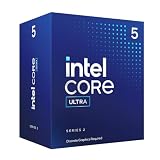
- 10 cores (6 P-cores + 4 E-cores) and 14 threads.
- Performance hybrid architecture integrates two core microarchitectures, prioritizing and distributing workloads to optimize performance
- Up to 4.9 GHz. 22 MB Cache
- Compatible with Intel 800 series chipset-based motherboards
- PCIe 5.0 & 4.0 support. Intel Optane Memory support. No thermal solution included. Discrete graphics required
Intel has said foundry customers evaluate execution, intellectual-property availability, ease of porting, performance, cost, yield and time to market. It has also acknowledged that relationships often begin with smaller volumes and expand only after trust is established. Intel’s fourth-quarter 2024 earnings-call discussion explains that commercial commitment is broader than a node specification.
Independent reader supportYour contribution helps us test, update, and keep practical guides available for everyone.Why 2027 is possible but not guaranteed
Intel management said early external design commitments were expected to emerge in the second half of 2026 and expand into the first half of 2027. The first-quarter 2026 earnings-call material supports the general timing window but does not identify Apple.
A reported path from evaluation to shipment contains several separate gates:
Do these 3 things before closing this tab:
1Scan for outdated or missing drivers - takes under a minute2Repair Windows errors before they cause bigger problems3Fix the driver behind crashes, sound loss and screen glitchesBest Value

- 10 cores (6 P-cores + 4 E-cores) and 14 threads. Integrated Intel Graphics included
- Performance hybrid architecture integrates two core microarchitectures, prioritizing and distributing workloads to optimize performance
- Up to 4.9 GHz. 22 MB Cache
- Compatible with Intel 800 series chipset-based motherboards
- PCIe 5.0 & 4.0 support. Intel Optane Memory support. No thermal solution included.
- NDA and technical data exchange.
- PDK delivery and design simulation.
- Test-chip or engineering-wafer production.
- Product tape-out and process qualification.
- Risk production and yield learning.
- Packaging, final test and reliability qualification.
- Commercial volume manufacturing and customer shipment.
Failure at any stage can reduce, postpone or cancel a program. Apple’s requirements are not limited to making a functional wafer: the finished chip must meet performance per watt, thermals, battery-life, reliability, cost and delivery targets. Advanced packaging, memory integration and chiplet assembly may involve additional Intel or third-party facilities, so “Intel-made” could refer to wafer fabrication rather than every step of the finished processor.
The main risks for both companies
Apple’s trade-offs
- Porting designs, libraries and verification flows creates engineering cost and schedule risk.
- Early yields or power characteristics may be less predictable than at an established supplier.
- Dual sourcing adds logistics, testing and inventory complexity.
- A delayed qualification could threaten a product schedule.
- Intel’s commercial track record as an external leading-edge foundry is still developing.
Intel’s trade-offs
- Apple would have substantial negotiating power and demanding quality requirements.
- A failed qualification could damage Intel Foundry’s reputation with other customers.
- A limited, lower-end program might bring less revenue than the headlines imply.
- Concentrating expectations on one prestigious customer increases execution and customer-concentration risk.
How to judge the evidence
| Evidence | What it would establish |
|---|---|
| Apple or Intel names the other in a formal announcement or filing | Strong evidence of a commercial relationship, though product scope may still need clarification. |
| Intel confirms Apple silicon has entered production | Strong evidence that qualification progressed beyond speculation. |
| Multiple independent analysts report the same node and customer | Medium-strength corroboration. |
| Test-wafer or risk-production reporting with technical detail | Evidence of manufacturing activity, not necessarily volume commitment. |
| A single anonymous source, political comment or market reaction | Weak evidence on its own. |
What Mac and iPad buyers would notice
This arrangement would not mean Intel x86 processors are returning to Macs. Apple would continue to design the CPU or system-on-chip, while Intel would provide foundry manufacturing—conceptually: Apple designs → Intel Foundry manufactures → Apple integrates the chip into its products.
Users might see no obvious software or branding change. Any consumer effect would more likely come indirectly through product availability, capacity, pricing or the performance and battery-life characteristics of a particular chip. Even if Intel manufactures one Apple processor, TSMC could continue making others.
Bottom line
The Apple–Intel foundry story has advanced beyond a purely speculative November 2025 rumor. Reports of 2026 testing, Intel’s confirmed 18A-P risk production and Trump’s public statement make a limited 2027 engagement plausible. The precise products, contract status, volumes and final shipment date remain unconfirmed in the cited company material. The accurate headline is therefore not “Intel is replacing TSMC” or “Intel is designing the next M-series chip,” but that Apple is reportedly evaluating Intel 18A-P as a second manufacturing source for selected Apple-designed silicon.
Quick Recap
Product prices and availability are accurate as of the date/time indicated and are subject to change. Any price and availability information displayed on Amazon at the time of purchase will apply.




