Free tools Windows power users keep installed
One-click scans. No signup required.
Intel announced on May 13, 2024, that Stuart Pann would retire at the end of that month after 35 years with the company. Kevin O’Buckley became senior vice president and general manager of Foundry Services immediately, joined Intel’s executive leadership team and reported to then-CEO Pat Gelsinger. Pann stayed on as an adviser during the handover.
The timing—about 12 weeks after Intel launched its broader Intel Foundry business—made the change consequential. Intel described a planned retirement, not a dismissal. The succession nevertheless exposed execution risk in a capital-intensive strategy intended to challenge established foundries such as TSMC and Samsung.
What Intel actually announced
- May 13, 2024: Kevin O’Buckley started immediately as senior vice president and general manager of Foundry Services.
- He joined Intel’s executive leadership team and reported directly to Pat Gelsinger, who was CEO at the time.
- Stuart Pann would retire at the end of May after 35 years at Intel.
- Pann would remain an adviser to support the transition.
Intel’s announcement does not describe a firing, resignation under pressure or leave of absence. Any claim that Pann was pushed out goes beyond the available evidence.
Read Intel’s announcement: Intel Foundry Services leadership news.
The Tool Desk
Outbyte PC Repair FREERepair Windows errors before they cause bigger problemsFix Now →Outbyte Driver Updater FREEFix the driver behind crashes, sound loss and screen glitchesFind Drivers →#1 Best Overall

- Next‑Gen Platform Support: Compatible with Intel 800 Series Chipset‑based motherboards with LGA1851 Socket enabling PCIe 5.0/4.0 and high‑speed DDR5 memory (up to 7200 MT/s).
- High‑Performance Core Configuration: Features up to 24 cores (8 P‑cores + 16 E‑cores) for demanding gaming and creator
- Ultra‑Fast Boost Clocks: Reaches up to 5.5 GHz max turbo frequency for top‑tier responsiveness and performance
- Built for Enthusiasts: Unlocked for performance tuning when paired with Intel Z‑series chipsets, making it ideal for overclockers and power users.
- Robust Power & Thermal Design: Engineered with 125W base power and 250W max turbo power to sustain high‑intensity
Why the timing mattered
Intel formally launched Intel Foundry on February 21, 2024, at its Foundry Direct Connect event. Pann’s retirement announcement followed roughly three months later, just as the new organization was moving from launch messaging to customer execution.
The launch was part of Gelsinger’s IDM 2.0 strategy, announced in 2021, to make Intel both a chip designer and a contract manufacturer for other companies. Intel said it wanted to become the world’s second-largest foundry by 2030. That is a future ambition, not an achieved market position.
Because the leader changed so soon after launch, customers and investors had a reasonable question: was this normal succession planning, or evidence of trouble? The facts support a mixed answer. The retirement was presented as planned and had an immediate, experienced successor, but leadership churn and the business’s financial demands increased the importance of continuity.
Intel Foundry Services versus Intel Foundry
The names refer to related but different scopes of the organization.
Quick wins for a faster PC:
Scan for outdated or missing drivers - takes under a minuteDriver Scan →Repair Windows errors before they cause bigger problemsFix Now →Rank #2

- Get ultra-efficient with Intel Core Ultra desktop processors that improve both performance and efficiency so your PC can run cooler, quieter, and quicker.
- Core and Threads 24 cores (8 P-cores plus 16 E-cores) and 24 threads. Integrated Intel Graphics included
- Performance Hybrid Architecture Integrates two core microarchitectures, prioritizing and distributing workloads to optimize performance
- Performance Unlocked Up to 5.7 GHz unlocked. 40MB Cache
- Compatibility Compatible with Intel 800 series chipset-based motherboards
| Term | Meaning |
|---|---|
| Intel Foundry Services | The customer-facing and ecosystem-oriented operation serving external chip designers, developing partnerships and coordinating foundry services. |
| Intel Foundry | The broader business and operating model launched in February 2024, combining process-technology development, manufacturing, supply chain, advanced packaging, assembly and test, intellectual property, electronic-design-automation support and customer operations. |
Intel was not creating a separately incorporated company. It was reorganizing and branding capabilities inside Intel as a “systems foundry,” intended to offer more than wafer fabrication alone. Pann’s title remained tied specifically to Foundry Services even as the broader Intel Foundry structure was introduced.
Intel’s launch description is available at Intel Foundry roadmaps and updates.
Why Kevin O’Buckley fit the job
O’Buckley brought more than 25 years in the semiconductor industry. His background covered both manufacturing organizations and the custom-chip development work typical of fabless customers:
- More than 17 years in technology development and manufacturing leadership at IBM.
- Vice president of product development at GlobalFoundries.
- Experience at Avera Semiconductor, which joined Marvell through an acquisition.
- Senior roles at Marvell.
That combination mattered. Intel needed to persuade outside designers that it could provide a predictable manufacturing process, useful design tools and intellectual-property support, while understanding the product-development pressures those customers face. Intel said O’Buckley’s remit included growing the foundry business and expanding its IP and EDA ecosystem; he was not announced merely as a temporary caretaker.
Rank #3

- Game Without Compromise. Play harder and work smarter with Intel Core 14th Gen processors
- 20 cores (8 P-cores plus 12 E-cores) and 28 threads. Integrated Intel UHD Graphics 770 included
- Up to 5.6 GHz with Turbo Boost Max Technology 3.0 gives you smooth game play, high frame rates, and rapid responsiveness
- Compatible with Intel 600-series (with potential BIOS update) or 700-series chipset-based motherboards
- DDR4 and DDR5 platform support cuts your load times and gives you the space to run the most demanding games
What Pann leaves behind
Intel credited Pann with helping establish Intel Foundry under the company’s new operating model. Before leading Foundry Services, he was senior vice president, chief business transformation officer and general manager of Intel’s Corporate Planning Group.
His contribution was therefore organizational as well as commercial: helping create the structure that separated manufacturing operations from Intel’s product-design groups and made internal product teams increasingly comparable to foundry customers. O’Buckley inherited the next phase—customer growth, ecosystem execution and delivery against the technology roadmap.
The strategy Intel was trying to execute
Intel Foundry’s proposition extended beyond making wafers. At launch, Intel highlighted:
- Intel 18A and a planned Intel 14A process roadmap.
- Advanced system assembly and test.
- Support from Synopsys, Cadence, Siemens and Ansys.
- A Microsoft design that Microsoft planned to produce on Intel 18A.
- Public participation from Microsoft CEO Satya Nadella, Arm CEO Rene Haas, OpenAI CEO Sam Altman and U.S. Commerce Secretary Gina Raimondo.
These announcements showed ecosystem and design commitments, not completed high-volume production. Microsoft’s plan should not be described as proof that volume manufacturing had already begun.
Rank #4
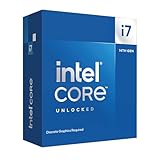
- Game Without Compromise. Play harder and work smarter with Intel Core 14th Gen processors
- 20 cores (8 P-cores plus 12 E-cores) and 28 threads. Discrete graphics required
- Up to 5.6 GHz with Turbo Boost Max Technology 3.0 gives you smooth game play, high frame rates, and rapid responsiveness
- Compatible with Intel 600-series (with potential BIOS update) or 700-series chipset-based motherboards
- DDR4 and DDR5 platform support cuts your load times and gives you the space to run the most demanding games
The model also carried a governance challenge. Intel’s own product groups were increasingly expected to operate as foundry customers, helping demonstrate that the manufacturing side could serve internal and external clients on comparable terms. That separation was intended to make outside customers more comfortable sharing designs with a company that also sells competing processors.
Independent reader supportYour contribution helps us test, update, and keep practical guides available for everyone.Financial context—and what it does not prove
CRN reported that Intel Foundry’s first-quarter revenue was $4.4 billion, down 9.5% year over year, and that Gelsinger said the business remained some distance from profitability because of substantial upfront investment. The reported Foundry figure should not be treated as pure external-foundry sales: the available report does not establish how much came from third-party customers versus Intel-related activity or other components of the broader organization.
The figures explain why execution mattered, but they do not establish why Pann retired. Revenue pressure, continuing losses and heavy capital spending are business risks; they are not evidence that Intel forced out a 35-year employee. Gelsinger characterized the plan as multiyear and said Intel was on track relative to its expectations at that time, a management assessment rather than an independently verified turnaround.
CRN’s contemporaneous account provides the financial and leadership context: CRN’s report on the leadership change.
Crashes, No Sound, or Screen Glitches?
Random freezes, missing sound and display glitches usually trace back to one bad driver. Find and replace yours safely.Free scan · under a minuteWindows Errors? Fix Them Before They Spread
Repair common Windows errors and clear accumulated junk for a smoother, more stable PC - no reinstall needed.Free scan · no reinstallBest Value

- Game without compromise. Play harder and work smarter with Intel Core 14th Gen processors
- 24 cores (8 P-cores plus 16 E-cores) and 32 threads. Integrated Intel UHD Graphics 770 included
- Leading max clock speed of up to 6.0 GHz gives you smoother game play, higher frame rates, and rapid responsiveness
- Compatible with Intel 600-series (with potential BIOS update) or 700-series chipset-based motherboards
- DDR4 and DDR5 platform support cuts your load times and gives you the space to run the most demanding games
A second transition in a strategically critical business
O’Buckley was the third executive to run Intel Foundry Services since the strategy’s 2021 relaunch under Gelsinger:
- Randhir Thakur led the operation first and left Intel in March 2023 to lead Tata Electronics.
- Stuart Pann then led Foundry Services until his planned retirement.
- Kevin O’Buckley took over on May 13, 2024.
Three leaders in roughly three years can concern customers that need stable process roadmaps and long qualification cycles. However, the stated reasons differ: Thakur left for another leadership role, while Intel explicitly described Pann’s departure as retirement after a long career. The sequence warrants monitoring, but it is not by itself proof of dysfunction.
What happened after the handover
In an August 2024 update, Intel described O’Buckley’s customer and ecosystem work as the company approached the planned high-volume-manufacturing phase for Intel 18A. That update documented activity after his appointment, not a completed commercial turnaround. See Intel’s O’Buckley and Intel 18A update.
Intel’s later leadership announcement placed Foundry Services in a more integrated structure led by Naga Chandrasekaran, covering technology development, manufacturing and go-to-market functions. O’Buckley continued as senior vice president and general manager of Foundry Services, reporting to Chandrasekaran. The change shows that Intel kept refining the operating model after Pann’s retirement rather than treating the May structure as permanent. See Intel’s leadership appointments update.
Was Pann’s retirement a warning sign?
Evidence for a routine succession
- Intel used the term retirement and gave a specific end-of-May date after 35 years of service.
- Pann remained as an adviser, which supports an orderly transition.
- O’Buckley started immediately and had relevant IBM, GlobalFoundries, Avera and Marvell experience.
Reasons to treat the timing seriously
- The change came only weeks after the broader Intel Foundry launch.
- Foundry Services was central to Intel’s IDM 2.0 turnaround and its plan to win outside customers.
- The business required large investments and was not yet profitable, while reported Foundry revenue was declining year over year.
- O’Buckley represented the third leader since the 2021 relaunch, creating a continuity risk for customers with long design and qualification cycles.
The defensible conclusion is “planned succession during a high-risk strategic transition.” The announcement supports scrutiny of execution, but it does not support calling the departure a forced exit or declaring Intel’s foundry strategy failed.
Quick Recap
Product prices and availability are accurate as of the date/time indicated and are subject to change. Any price and availability information displayed on Amazon at the time of purchase will apply.




