Outdated Drivers Are Slowing You Down
One free scan finds every outdated or missing driver and matches the right update for your exact hardware.Free scan · exact hardware matchPC Slower Than It Used to Be?
A free scan shows the junk files, broken settings and background clutter dragging Windows down - then fixes them in one click.Free scan · Windows 10 & 11Microsoft Ignite 2025 presented Microsoft and NVIDIA’s partnership as a full-stack route to production AI—from Azure GPU machines and NVIDIA software to enterprise agents, databases, hybrid deployment and industrial simulation. The practical change is integration, not a wholly new technology stack: Microsoft supplies the cloud control plane, identity, data estate and distribution, while NVIDIA supplies accelerated hardware, inference software, models and simulation tools.
The source article for this account was presented by Microsoft and NVIDIA. Its product descriptions are useful, but availability, performance and security claims should be treated as vendor statements unless independently demonstrated.
What Ignite 2025 actually covered
Microsoft Ignite ran November 18–21, 2025, in San Francisco. Microsoft framed the event around the lifecycle of AI, agentic systems, observability, security, data and the “frontier firm,” rather than making the Microsoft–NVIDIA relationship the event’s only theme. The event agenda and announcements are summarized in Microsoft’s Ignite 2025 hub.
Within that broader agenda, the partnership was presented as a way to connect layers that enterprises often buy and operate separately: GPU infrastructure, model serving, application frameworks, business data, workplace software and edge systems.
Free tools Windows power users keep installed
One-click scans. No signup required.
#1 Best Overall

- PLEASE NOTE: Exporting an NVIDIA RTX Pro 6000 GPU outside the US requires strict adherence to the U.S. Export Administration Regulations (EAR) and issuance of an export license from the Bureau of Industry and Security (BIS). Compliance and Know Your Customer (KYC) screening may be required as a condition of order acceptance. [NVIDIA Blackwell Streaming Multiprocessor] The new SM features increased processing throughput, and new neural shaders that integrate neural networks inside of programmable shaders | DLSS 4: Multi Frame Generation ensures ultra-smooth frame pacing for lifelike simulations.
- [Double-Flow-Through Design] The RTX PRO 6000 Blackwell features a double-flow-through cooling design, optimizing efficiency and airflow to sustain peak performance under 600W power loads. | [5th Gen Tensor Cores] Deliver up to 3X the performance of the previous generation and support for FP4 precision for faster AI model processing times with reduced memory usage, enabling local fine-tuning of LLMs and generative AI | [4th Gen Ray Tracing Cores] Double the ray-triangle intersection rate of the previous generation to create photoreal, physically accurate scenes and immersive 3D designs with RTX Mega Geometry, which enables up to 100X more ray-traced triangles.
- [PCIe Gen 5] Support for PCIe Gen 5 provides double the bandwidth of PCIe Gen 4, improving data-transfer speeds from CPU memory and unlocking faster performance for data-intensive tasks like AI, data science, and 3D modeling. | [GDDR7 Memory] With 96 GB of GPU memory and 1.8 TB ps bandwidth, it can tackle massive 3D and AI projects, fine-tune AI models locally, explore large-scale VR environments, and drive larger multi-app workflows.
- [DisplayPort 2.1] Achieve unparalleled visual clarity and performance, driving high resolution displays at up to 8K at 240 Hz and 16K at 60 Hz. Increased bandwidth enables seamless multi-monitor setups while HDR and higher color depth support ensures superior color accuracy for precision work, such as video editing, 3D design, and live broadcasting.
- [Universal MIG] Divide a single RTX PRO 6000 Blackwell into multiple isolated instances, each with dedicated resources, allowing for concurrent execution of multiple workloads, optimized GPU utilization, and secure isolation of different applications or users. [WARRANTY] 3 YR Manufacturer's Warranty. Bulk OEM Packaging. Retail Packaging is NOT included.
“Redefining the AI stack” is therefore best read as an integration strategy. It can reduce assembly work, but it does not remove the need for architecture, evaluation, governance, cost management or operational skills.
The stack, layer by layer
| Layer | Microsoft contribution | NVIDIA contribution | What it means in practice |
|---|---|---|---|
| Compute | Azure GPU virtual machines, Azure Local and cloud control-plane services | Blackwell GPUs and CUDA | Accelerated training, inference, simulation and rendering |
| Model serving | Microsoft Foundry and Azure services | NIM microservices, TensorRT, Triton and TensorRT-LLM | Packaged, optimized inference deployments |
| Models | Foundry catalog and enterprise integration | Nemotron language and multimodal models; Cosmos physical-AI models | More choices for language, multimodal and physical-world workloads |
| Agents | Agent 365, Microsoft 365 and Azure agent services | NeMo Agent Toolkit and related orchestration tools | Agents that can use enterprise applications and tools |
| Data | SQL Server 2025, Azure data services and Microsoft Fabric | GPU-accelerated retrieval-augmented generation (RAG) and inference | Inference closer to governed enterprise data |
| Industrial AI | Azure, Azure Local and digital-twin workflows | Omniverse, simulation and physical-AI tooling | Manufacturing, engineering, robotics and visualization |
Azure NCv6: one GPU platform for several workloads
The infrastructure announcement centered on Azure’s NCv6 series, powered by NVIDIA RTX PRO 6000 Blackwell Server Edition GPUs. Microsoft lists 96 GB of GDDR7 memory per full GPU, Intel Xeon Granite Rapids host CPUs and sizes ranging from fractional GPU allocations to configurations with two GPUs. The complete specification table is on Microsoft Learn.
Microsoft’s stated workload guidance includes LLM inference and RAG for models below approximately 70 billion parameters, agentic-AI development and deployment, Omniverse digital twins and simulation, high-fidelity rendering, NVIDIA RTX Virtual Workstation (VDI), scientific visualization and FP32 high-performance computing. That is a convergence pitch: the same infrastructure can serve AI, graphics and simulation instead of requiring a separate platform for each.
Those descriptions are not independent benchmark results. “Blackwell” is an architecture family, and the RTX PRO 6000 Blackwell Server Edition is not interchangeable with every Blackwell data-center GPU. Fractional GPU sizes may suit smaller inference or VDI jobs, but they do not automatically provide enough memory, bandwidth, latency or concurrency for a production service.
Availability needs a date and a region
Microsoft announced NCv6 as a public preview in November 2025. A later update described a planned transition to general availability, with West US 2 and Southeast Asia identified as initial regions and additional regions planned for the third quarter of 2026. That was a roadmap, not proof that every SKU reached GA. Before committing, check the live SKU page for current status, region, quota and tenant eligibility. The preview announcement is documented here, and the GA-transition update is here.
From a GPU to a production inference service
What each component does
- Microsoft Foundry provides model selection, application development, evaluation, deployment and Azure integration.
- NVIDIA NIM packages optimized inference services around NVIDIA’s serving stack.
- Nemotron is NVIDIA’s language and multimodal model family for enterprise use cases.
- Cosmos targets physical-AI and world-understanding workloads.
- NeMo Agent Toolkit supports building, connecting, evaluating and operating agent systems.
- CUDA, TensorRT, Triton and TensorRT-LLM provide lower-level acceleration and serving components.
NIM and AgentIQ were already integrated with Azure AI Foundry before Ignite 2025, according to Microsoft’s Azure announcement. Ignite was therefore an expansion and packaging of an existing collaboration, not its starting point.
The trade-off is portability. NIM can make NVIDIA hardware easier to use, but optimized deployment can increase reliance on CUDA-compatible infrastructure, particular container and driver versions, Azure interfaces and vendor support. Ask whether the application, model, serving layer and infrastructure can each be moved independently.
Rank #2

- NVIDIA Volta GV100 Architecture — 4,608 CUDA Cores, 640 1st-Gen Tensor Cores delivering 14 TFLOPS FP32 and 112 TFLOPS deep learning performance for AI training, inference, HPC, and scientific computing workloads
- 32GB HBM2 ECC Memory — 900 GB/s Bandwidth — High-bandwidth memory on a 4096-bit bus with ECC error correction provides the memory capacity and throughput required for the largest AI models, simulations, and datasets
- PCIe 3.0 x16 Interface — 250W TDP — Standard PCIe Gen3 connectivity with passive cooling designed for enterprise rack server deployment in HPE ProLiant, Dell PowerEdge, and Supermicro platforms with adequate chassis airflow
- NVLink — Scale to 96GB Unified Memory — Connect two V100 GPUs via NVLink at 300 GB/s bi-directional bandwidth to scale GPU memory from 32GB to 96GB for larger AI training and HPC workloads
- Multi-Precision Computing — Supports FP64 (7 TFLOPS), FP32 (14 TFLOPS), FP16 (112 TFLOPS) and INT8 precision modes for flexible deployment across training, inference, and scientific simulation workloads
Agents as an enterprise operating surface
The application-layer story links Microsoft Agent 365 with NVIDIA’s NeMo Agent Toolkit and Microsoft 365 applications including Outlook, Teams, Word and SharePoint. The division of labor is important:
Recommended Free Tools
- Agent 365: identity, management, governance and control of agents.
- NeMo tooling: development, tool connections, evaluation and orchestration.
- Microsoft 365: workplace context and application actions.
- Azure and NVIDIA: execution, model serving and acceleration.
An integration does not make an agent reliable or autonomous by default. Production designs need least-privilege permissions, defenses against prompt injection in email and documents, explicit authorization for tool calls, human approval for consequential actions, tracing, audit logs, tenant isolation, data-residency controls and recovery when a multi-system workflow fails. Also verify whether the particular connector is generally available, in preview or limited to a licensing tier; the event material itself does not establish universal availability. Microsoft’s event overview is at news.microsoft.com/ignite-2025.
SQL Server 2025 and the reality of GPU-accelerated RAG
The database angle connects SQL Server 2025 with NVIDIA Nemotron RAG models delivered through NIM microservices. The proposed benefits are inference near enterprise data, less data movement, cloud or on-premises deployment and GPU acceleration. Microsoft’s Ignite roundup states that SQL Server 2025 was available at the event: Azure at Ignite 2025.
“AI on the data” is valuable only when the data system is designed correctly. A RAG implementation still requires:
- Extraction, normalization and chunking of source material.
- Embedding generation, indexing and re-indexing as content changes.
- Synchronization of document permissions with retrieval permissions.
- Evaluation of retrieval quality, citations and grounding.
- Controls against sensitive-data leakage and stale answers.
- Monitoring for retrieval failures, hallucinations, latency and cost.
GPU acceleration may improve throughput or latency; it does not repair poor source data, weak retrieval design or incorrect authorization.
Do these 3 things before closing this tab:
1Fix the driver behind crashes, sound loss and screen glitches2Clear out junk files and repair common Windows errors3Scan for outdated or missing drivers - takes under a minuteAzure Local, sovereignty and edge deployment
Microsoft and NVIDIA also position RTX PRO 6000 Blackwell support for Azure Local as a way to run AI and visual-computing workloads at the edge, in private or sovereign environments, or in disconnected sites while retaining Azure management capabilities. The related Azure–NVIDIA announcement covers Azure Local, Nemotron, Cosmos and other components: Microsoft’s announcement.
Potential uses include manufacturing automation, healthcare, government and defense, retail video analytics, predictive maintenance and other low-latency workloads. Local placement can help with latency and data locality, but it is not by itself proof of regulatory compliance or sovereignty.
Rank #3
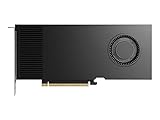
- Professional GPU with Blackwell Architecture
- Blackwell Architecture
- 24GB GDDR7 with PCIe 5.0 & Ray Tracing
- AI Workstation
Azure Local shifts, rather than removes, operational work. Budget for hardware procurement and lifecycle, local networking and storage, driver and patch compatibility, offline operation, high availability, physical security and staff who understand both Azure administration and NVIDIA GPU operations.
Independent reader supportYour contribution helps us test, update, and keep practical guides available for everyone.Omniverse and the move into physical AI
NVIDIA Omniverse libraries on Azure, combined with Azure Local, are aimed at digital twins, real-time simulation, robotics, manufacturing optimization, 3D design and rendering. This gives the partnership a route into engineering and industrial operations in addition to knowledge-work copilots.
A digital twin is not a single software feature. A useful system needs sensor or operational data, a maintained representation of the asset, simulation or visualization, integration with business and control systems, validation against real behavior and clear ownership of safety-critical decisions. The Omniverse material is described in the Azure–NVIDIA announcement.
What was announced, what was available and what was demonstrated?
| Item | Evidence status | How to interpret it |
|---|---|---|
| Microsoft Ignite 2025 event | Verified event, November 18–21, 2025 | Historical context, not a service-availability statement |
| Azure NCv6 with RTX PRO 6000 Blackwell Server Edition | Public preview announced in November 2025; later GA transition planned | Check current SKU, region and quota before purchase |
| NIM and AgentIQ with Azure AI Foundry | Microsoft says integration predated Ignite | Expansion of an existing collaboration |
| Agent 365 and NeMo Agent Toolkit scenarios | Partnership and event material | Verify connector, licensing and preview/GA status for the exact service |
| SQL Server 2025 | Microsoft’s Ignite roundup stated availability | Confirm edition, deployment option and regional terms |
| Omniverse, Cosmos and Azure Local scenarios | Vendor announcements and demonstrations | Capability direction; validate integration and production support for the use case |
| Performance, energy and cost claims | No independent benchmark established here | Require workload-specific testing |
Where the integrated stack creates value
- Existing Microsoft 365, Azure, Entra, Fabric, SQL Server or Power Platform estates can reuse identity, data and procurement relationships.
- NVIDIA-specific acceleration or CUDA compatibility is required.
- The organization wants managed deployment rather than assembling GPU infrastructure.
- Inference must run near governed enterprise data or in a hybrid, edge, sovereign or disconnected site.
- One platform must support inference alongside graphics, simulation, digital twins or VDI.
- A single strategic support relationship is worth more than maximum component-level portability.
Where it may be a poor fit
- The workload is small enough for CPU inference, a modest GPU or a managed model API.
- Cloud portability and avoidance of CUDA dependence are top priorities.
- The required model or framework is better supported on another accelerator ecosystem.
- Azure regions, quotas or pricing cannot meet latency or cost targets.
- The team lacks skills in data engineering, agent security, evaluation, observability and GPU serving.
- Data-residency rules exclude the relevant Azure region.
- The use case requires deterministic, safety-critical behavior that generative models cannot guarantee.
Cost, performance and lock-in questions
Total cost
GPU runtime is only one line item. Include storage and networking, model or API charges, possible NVIDIA AI Enterprise or NIM licensing, Azure Local hardware and support, monitoring, security, data engineering, evaluation, red-team testing, idle capacity and human review. Azure VM pricing varies by region, size, operating system, reservation and billing commitment; use the live Azure pricing page rather than quoting a universal NCv6 price.
Performance evidence
Require tests using your model and data. At minimum measure tokens per second, time to first token, concurrent users, batch size, context length, retrieval latency, GPU utilization, cost per million tokens or completed task, and—on premises—power and cooling requirements. Vendor architecture descriptions are not guarantees of application performance.
Portability and dependence
The integrated route can shorten deployment, while coupling the buyer to Azure control-plane services, Microsoft identity and data products, NVIDIA CUDA and serving optimizations, Azure Local management and vendor-specific support. Document an exit plan at the application, model, serving and infrastructure layers before production.
What’s actually slowing this PC down?
Pick the symptom - the matching free tool is one click away.
A buyer’s checklist
- Confirm the exact NCv6 SKU, current availability status, region, quota and GPU memory.
- Test the target model with realistic context lengths, concurrency and retrieval traffic.
- Map all costs, including software licensing, data transfer, monitoring and idle capacity.
- Document data residency, tenant isolation, retention and incident-response requirements.
- Define agent permissions, approval gates, prompt-injection defenses, audit trails and rollback procedures.
- Verify the edition, licensing and support status of Foundry, NIM, Agent 365, SQL Server and any Omniverse components.
- Compare Azure public cloud, Azure Local, another NVIDIA cloud, self-managed Kubernetes and managed model APIs.
- Require an exit test: identify what can run without Azure services and what depends on CUDA, NIM or proprietary interfaces.
Bottom line
Microsoft and NVIDIA’s Ignite 2025 story is compelling for Microsoft-centered enterprises that need NVIDIA acceleration across generative AI, agents and physical or industrial workloads. Its value is a more deployable path across compute, software, data and governance—not proof that enterprise AI becomes frictionless.
For buyers prioritizing the lowest cost, broadest portability or simple API access, a managed model service, another cloud or self-managed open stack may be better. For everyone else, the decision should rest on current region and availability, workload benchmarks, governance requirements, licensing and a credible plan for managing—and eventually escaping—the platform’s dependencies.
Quick Recap
Product prices and availability are accurate as of the date/time indicated and are subject to change. Any price and availability information displayed on Amazon at the time of purchase will apply.




