What’s actually slowing this PC down?
Pick the symptom - the matching free tool is one click away.
Imagination Technologies did not announce a conventional $100 million equity round. On July 24, 2024, the UK semiconductor-IP company secured a $100 million convertible term loan from funds managed by affiliates of Fortress Investment Group. The proceeds were earmarked for continued development and growth in graphics, compute and artificial-intelligence-at-the-edge intellectual property.
The financing gives Imagination more runway to develop licensable processor designs and the software needed to make them useful in real systems. It does not, by itself, prove a completed turnaround, mass production win or leadership in edge AI.
What Imagination actually secured
| Item | Disclosed detail |
|---|---|
| Announcement | July 24, 2024 |
| Investor | Funds managed by affiliates of Fortress Investment Group LLC |
| Amount | $100 million |
| Structure | Convertible term loan |
| Stated use | Development and growth of graphics, compute and edge-AI semiconductor IP |
Imagination’s announcement and Fortress’s confirmation identify debt that may convert into equity, not an announced all-equity investment or an acquisition. The public announcements reviewed do not state the interest rate, maturity date, conversion price, valuation, conversion triggers or the ownership percentage Fortress could receive. (Imagination announcement; Fortress confirmation)
For readers assessing the business, that distinction matters: a convertible loan can provide immediate cash while preserving a future equity option for the lender, but its ultimate effect on ownership and dilution cannot be calculated from the disclosed terms.
Free tools Windows power users keep installed
One-click scans. No signup required.
#1 Best Overall
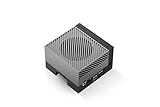
- The NVIDIA Jetson AGX Orin 64GB Developer Kit makes it easy to get started with Jetson Orin. Compact size, lots of connectors, and up to 275 TOPS of AI performance make this developer kit perfect for prototyping advanced AI-powered robots and other autonomous machines.
- The developer kit includes a Jetson AGX Orin 64GB module, and can emulate all the Jetson Orin modules. It supports multiple concurrent AI application pipelines with the NVIDIA Ampere GPU architecture, next-generation deep learning and vision accelerators, high-speed IO and fast memory bandwidth. Now you can develop solutions using your largest and most complex AI models to solve problems such as natural language understanding, 3D perception, and multi-sensor fusion.
- Jetson runs the NVIDIA AI software stack, and use-case specific application frameworks are available, including Isaac for robotics, DeepStream for vision AI, and Riva for conversational AI. You can save significant time with NVIDIA Omniverse Replicator for synthetic data generation (SDG), and by using NVIDIA TAO toolkit to fine-tune pretrained AI models from the NGC catalog.
- Jetson ecosystem partners offer additional AI and system software, developer tools, and custom software development. They can also help with cameras and other sensors, as well as carrier boards and design services for your product.
- With the computing capability of more than 8 Jetson AGX Xavier systems in a developer kit that integrates the latest NVIDIA GPU technology with the world’s most advanced deep learning software stack, you’ll have the flexibility to create tomorrow’s AI solution as well as today’s.
Why semiconductor IP needs this kind of capital
Imagination primarily licenses processor designs rather than selling finished graphics cards or complete AI chips. Its GPU, compute and AI blocks are integrated into customers’ system-on-chip (SoC) products for markets including automotive, mobile, consumer electronics, industrial systems and desktop applications. The company says its IP has appeared in more than 13 billion devices, a company-reported deployment figure rather than an independently audited market-share measure. (GPU portfolio)
Before a customer can ship an SoC, an IP supplier must fund architecture, verification, software drivers, compilers, libraries, developer tools, documentation and customer integration. Automotive programs add functional-safety evidence and long qualification cycles. Revenue can therefore arrive years after engineering work begins, making financing important even when the underlying technology has design-win potential.
Imagination’s GPU-first edge-AI thesis
Edge AI means running inference on or near the device that produces the data instead of sending every input to a remote cloud. Local processing can cut latency and bandwidth use, improve operation when connectivity is poor, and limit the amount of sensitive data sent away from the device. It also brings tight power, thermal, memory and software constraints.
Imagination’s proposition is to make a programmable GPU handle graphics, AI and other compute workloads, with dedicated neural cores available where needed. The company argues that a shared programmable architecture can adapt as models change, support simultaneous graphics and AI, and reduce transfers between separate accelerators. It also positions its technology for SoCs that use RISC-V CPUs. (AI and compute portfolio)
PC Slower Than It Used to Be?
A free scan shows the junk files, broken settings and background clutter dragging Windows down - then fixes them in one click.Free scan · Windows 10 & 11Outdated Drivers Are Slowing You Down
One free scan finds every outdated or missing driver and matches the right update for your exact hardware.Free scan · exact hardware matchThis is an architectural strategy, not independent proof that a GPU is more efficient than a dedicated neural accelerator in every workload. A specialized NPU may deliver better energy efficiency for a narrow, stable set of operators, while a GPU can offer broader programmability at the cost of more software and memory-management work.
E-Series is the clearest later expression of the strategy
On May 8, 2025, Imagination announced its E-Series GPU IP. The company says E-Series combines graphics acceleration with Neural Cores and scales from 2 to 200 TOPS for INT8 and FP8 workloads. That is a range of configurations, not a claim that every implementation delivers 200 TOPS.
Rank #2

- AGX Orin 64GB Development Kit makes it easy to get started with AGX Orin. Its compact size, rich interfaces, and AI performance of up to 275 TOPS make it ideal for building advanced AI robots and other autonomous machine prototypes.
- The development kit includes AGX Orin 64GB module and can emulate all Orin modules. It utilizes the Ampere GPU architecture, next-generation deep learning and vision accelerators, high-speed I/O, and fast memory bandwidth. You can leverage the largest and most complex AI models to develop solutions for problems such as natural language understanding, 3D perception, and multi-sensor fusion.
- Jetson runs AI software and provides application frameworks for specific use cases, such as Isaac for robotics, DeepStream for visual AI, and Riva for conversational AI. Using Omniverse Replicator for Synthetic Data Generation (SDG) can save you significant time; while fine-tuning pre-trained AI models from the NGC catalog using the TAO toolkit can further enhance your results.
- Yahboom offers four kits for users to choose from. The AIlarge model voice module utilizes examples of AI large models and multimodal models; it provides 1TB/2TB SSDs with pre-flashed driver image files; and an 8MP USB industrial camera for image processing.
- It offers various online and offline mainstream AI large model development materials. The system is pre-configured with AI vision examples, ROS case studies, and AI large models. It supports offline/online deployment of large models for voice interaction, real-time video analysis, and visual positioning, helping you quickly get started with localized AI agent development.
- Concurrent workloads: Imagination describes support for graphics, AI or both at the same time.
- Virtualisation: The launch announcement says the design supports up to 16 hardware-backed virtual machines.
- Software: The stack includes compute libraries, graph compilation and developer tooling.
- Burst Processors: The company says this technology reduces internal data movement and power use.
- Availability: Imagination said the first E-Series IP would be available from autumn 2025 and was already licensed at launch; it did not identify the licensee or establish production volume.
On its product page, Imagination claims Burst Processors reduce average GPU power consumption by 35% versus D-Series and that E-Series provides up to four times D-Series AI acceleration. These are vendor claims, not independent benchmark results. Actual performance depends on memory bandwidth, clocks, thermal limits, model operators, sparsity, compiler quality and the surrounding SoC. (E-Series launch; E-Series specifications)
Where the company is trying to compete
Automotive
Potential workloads include digital cockpits, in-vehicle graphics, driver monitoring, advanced driver-assistance systems and autonomous-driving functions. Combining graphics and AI can be attractive when several functions must share a constrained compute and power budget, although safety qualification and customer validation lengthen the path to revenue.
Mobile and consumer electronics
Smartphones, televisions, smart-home hubs and wearables need graphics, image processing and increasingly local generative-AI features. A programmable block may let an SoC vendor reuse hardware across changing applications.
Industrial and embedded systems
Computer vision, robotics and embedded control often operate with limited power, memory and connectivity. Local inference can avoid cloud latency, but deployment still depends on model support and reliable tools.
Desktop and cloud uses
Imagination also cites graphics-rich applications, cloud gaming and compute workloads. These markets are more directly exposed to established GPU platforms, so software compatibility and integration economics become especially important.
How to evaluate the investment’s business significance
What the loan supports
- Long-cycle GPU, compute and AI architecture work.
- Compilers, drivers, libraries and model-optimization tools.
- Customer engineering and SoC integration support.
- Automotive documentation and qualification activity.
What it does not establish
- That Imagination sells a finished consumer edge-AI processor.
- That E-Series has reached mass production or a disclosed shipment volume.
- That the company has won a defined share of the edge-AI silicon market.
- That the full $100 million was allocated to E-Series specifically.
- That Imagination’s market forecasts equal company revenue.
The July 2024 announcement cited company-presented forecasts of an $11 billion semiconductor-IP opportunity by 2026 and an AI-semiconductor market potentially exceeding $1 trillion by 2030. Those are market estimates, not Imagination results. (Financing announcement)
Rank #3

- 【Core Parameters】★AI Perf:34-67 TOPS ★GPU:512-core NVIDIA Ampere architecture GPU with 16 Tensor Cores ★CPU:6-core Arm Corte-A78AE v8.2 64-bit CPU 1.5MB L2 + 4MB L3 ★Memory:4GB 64-bit LPDDR5 51 GB/s ★Storage: external NVMe via M.2 Key M (NOTE:SUB Board No SD Card Slot)
- 【Empowered by Large Al Model, Enhanced Human-Computer Interaction】Jetson Orin Super leverages three AI models and incorporates an AI voice interaction module. This multimodal visual system matches the scene being described, enabling environmental awareness and AI visual gameplay. Combined with a large-scale voice module and camera, it enables speech-to-text, semantic analysis, natural conversation, and real-time video analysis, enabling advanced embodied AI applications.
- 【AI Upgrade】Jetson Orin Nano series modules are compact in size but can deliver up to 34-67 TOPS of AI performance, with power consumption ranging from 7 watts to 25 watts. Compared to the Jetson Nano B01, it offers up to 80 times the performance and sets a new standard for entry-level edge AI.
- 【Highly compatible carrier board】Yahboom's carrier board is fully compatible with orin nano module. Compared to carrier boards that use Jetson Nano on the market, the newly upgraded circuit supports 25W power mode, which enables larger and more complex neural networks and fully leverages the performance of the core module. The resources, size, and interfaces of the Yahboom carrier board are consistent with the official board, with the only difference addition of power switch button.
- 【Tutorial materials provided】The JETSON system based on Ubuntu 22.04 provides a complete desktop Linux environment with accelerated graphics, supporting NVIDI-ACUDA 12.6, TensorRT 10.7.0, cuDNN 9.6.0, OpenCV 4.10.0, etc. The performance on AI LLM, VLM and visual Transformer is significantly improved compared with the previous generation.
Competitive trade-offs for SoC designers
| Potential advantage | Important limitation |
|---|---|
| One programmable architecture can cover graphics, AI and compute | A GPU is not automatically the most power-efficient engine for every neural workload |
| Shared processing may reduce data movement between blocks | Benefits depend on memory architecture, scheduling and compiler quality |
| Programmability accommodates changing models | Customers may need substantial software optimization and operator support |
| RISC-V compatibility broadens CPU integration choices | Compatibility does not remove SoC integration, verification or product-support costs |
| Licensing avoids building every processor block internally | Licensees still fund fabrication, packaging, software, qualification and support |
TOPS figures also require care. INT8 and FP8 throughput numbers are not directly comparable with every competitor’s metric, and peak arithmetic does not predict application-level latency, accuracy or energy use.
Timeline after the financing
- July 24, 2024: Fortress-backed funds provide the $100 million convertible term loan.
- May 8, 2025: Imagination announces E-Series GPU IP, including the 2–200 TOPS INT8/FP8 range.
- Autumn 2025: The company says first E-Series IP becomes available.
- February 9, 2026: Imagination announces Markus Mosen as chief executive.
- June 15, 2026: The company announces participation in the CHASSIS chiplet project with functionally safe GPU IP.
These later announcements show continued product and corporate activity, but the public materials do not prove that the loan directly caused any individual development. Licensee identities, production shipments, revenue impact and conversion outcomes remain undisclosed in the cited materials.
What prospective licensees should ask
- Which E-Series configuration, memory system and process node fit the target workload?
- What compiler, driver and operator coverage exists for the intended models?
- Are the stated TOPS and power figures measured on a comparable implementation?
- What safety evidence, lifecycle support and roadmap commitments apply to automotive designs?
- What are the upfront license, engineering, royalty and support obligations?
- How will graphics and AI workloads share bandwidth under the customer’s thermal limits?
Imagination offers a conventional expert-contact route for E-Series. Its Open Access program advertises a $0 license fee for selected technology for qualifying scale-up companies, with support charged at cost and royalties payable once a product ships; it does not publish a complete royalty schedule. (Open Access program)
Frequently Asked Questions
Was Imagination’s $100 million financing equity?
No. The disclosed instrument was a $100 million convertible term loan from funds managed by Fortress Investment Group affiliates. The public announcement did not disclose conversion or repayment terms.
Quick wins for a faster PC:
Repair Windows errors before they cause bigger problemsFix Now →Fix the driver behind crashes, sound loss and screen glitchesFind Drivers →Clear out junk files and repair common Windows errorsFree Scan →Does Imagination sell an edge-AI chip?
Imagination primarily licenses GPU, compute and AI processor IP to companies that design their own SoCs. E-Series is licensable IP, not a plug-in consumer accelerator.
Does E-Series deliver 200 TOPS in every product?
No. Imagination says E-Series scales from 2 to 200 TOPS for INT8/FP8 workloads, depending on configuration.
Quick Recap
Product prices and availability are accurate as of the date/time indicated and are subject to change. Any price and availability information displayed on Amazon at the time of purchase will apply.




