Free tools Windows power users keep installed
One-click scans. No signup required.
Measuring soil carbon means measuring both the carbon concentration in soil and the amount of soil in a defined area and depth. To show that a farming practice changed soil-carbon stock, compare a baseline with repeat measurements made using a comparable sampling design and laboratory method. To support a carbon-credit claim, follow the current program methodology: a soil test alone does not verify a creditable result.
What soil-carbon measurement tells you
Soil organic carbon concentration is the proportion of carbon in the analyzed soil. Soil organic carbon stock is the amount of carbon stored in a defined area and depth. Concentration by itself cannot tell you the stock per hectare: the calculation also needs soil bulk density, the thickness of each layer, and an adjustment for coarse fragments such as stones.
USDA Natural Resources Conservation Service (NRCS) guidance, CEMA 221, calculates stock for each layer as:
SOC stock (milligrams C/square-cm) = Bulk Density (g/cubic-cm) × Soil Organic Carbon (mg C/g soil) × Thickness (cm) × Volume of Whole Soil (1 − coarse fragment%).
#1 Best Overall

- Valued Carpenter Pencil Set: You will get 2 pcs solid carpenter pencils with 26 piece 2.8 mm refills, 1 replaceable sharpener, 1 plastic storage box.The complete carpenter pencils combination allows you to finish your work faster and more easily
- Deep Hole Marker Pencil: The deep-hole construction pencils adopts 45mm elongated tip design, which is more convenient to mark in the small hole or in other tight areas that other carpenter markers cannot reach
- Carpenter Pencils with Sharpener: The sharpener is screwed into the top of the work pencil, which won't get lost either. Built-in pencil sharpener that keep the lead with pointed and smooth to Improves line of sight in fine work
- Stronger Solid Lead: This work pencil is matched with a 2.8 mm thick lead , which is much thicker and stronger during the drawing process of construction work, it will not break or damage easily
- Marks on Various Surfaces: 3 colors solid construction pencil can marks on various surfaces,such as metal, plastic, wood, paper etc. Ideals for woodworkers, contractors, craftsmen, builders, merchants and masons
Use consistent units and calculate each layer before adding layers to report the total for the chosen depth. CEMA 221 also calls for recording the core-cutting tip’s internal diameter and height to determine sample volume. A core sampler helps collect a known volume of soil; it does not measure carbon concentration or verify a field-level claim.
How to measure soil carbon in a field
1. Decide what the measurement is for
First establish whether you need an agronomic soil-health test, an evaluation of field-level stock change, research data, or evidence for a carbon-credit project. Those purposes do not necessarily use the same sampling depth, design, analysis, or reporting rules. If credits are involved, identify the applicable program and current methodology before sampling.
Rank #2

- Ergonomically Designed: Work in tight areas with a compact design that gets into tough spots
- Compact and Lightweight: Both tools are designed to fit into difficult to reach spaces. The 1/4" impact driver has a length of 5.55 in. and weighs just 2.8 lbs, while the 1/2" drill/driver measures only 7.5 in. and weighs 3.6 lbs
- Both the DEWALT impact driver and electric drill driver feature integrated LED work lights with a convenient 20-second delay, ensuring enhanced visibility in dimly lit or challenging work areas
- One-Handed Loading - Keep one hand free with a 1/4 in. hex chuck that accepts 1 in. bit tips
- Power drill cordless with 1/2" single sleeve ratcheting chuck provides tight bit gripping strength, making bit changes faster and more secure
2. Establish a baseline before changing practices
NRCS CEMA 221 recommends sampling before implementing a practice and repeating the sampling 3–5 years later. NRCS soil-health guidance notes that changes commonly take several years to observe, often more than five. These are monitoring recommendations, not guarantees that a change will be detectable on a particular farm within that time.
3. Design and record the sampling
Soil carbon varies across a field, so the locations and sampling strategy matter. Divide land into appropriate strata when needed and select locations according to the protocol you are using. Record the field or tract, depth, soil information, collection date, sample IDs, and GPS information. For a repeat measurement, NRCS recommends returning to the same georeferenced locations and using the same strategy under similar soil conditions, at the same time of year, and with the same laboratory.
Rank #3

- 【Great Compatibility】This Katerk 1/4 inch hex shank bit holder is specifically designed for 1/4 inch hex shank drill bits. It's compatible with most 1/4 fast hex handles, hex sockets, various electric screwdrivers, and handheld screwdrivers. The bit holder makes it a valuable addition for any handyman.
- 【Secure and Safe】Built with a secure backup nut design, each drill bit holder securely locks onto your bits, ensuring they stay firmly in place. Additionally, our bit holder incorporates a high-quality steel ball rolling design that holds up to several kilograms of weight, ensuring your various drill bits don't fall off.
- 【Easy One-Handed Operation】The bit holder for impact driver allows you to change bits single-handedly, simplifying your workflow. Its multi-color design further allows for quick identification of the drill bit you need.
- 【Compact and Convenient】Thanks to its compact size, this 1/4 inch bit holder is easy to carry around. The bit holder allows for easy attachment to various tools, making this a convenient addition to your construction accessories. The Katerk bit holder is cast from high-quality alloy material, promising a long product lifespan. Despite its rugged strength, the bit holder remains lightweight, making it portable.
- 【Cool Christmas Gift For Men Stocking Stuffers】 This screwdriver bit holder, driver bit holder, impact bit holder, can be given as a gift to your loved one, especially for anyone involved in construction or electrical work. It's a must-have for stocking stuffers for men and women, tools gifts for dad, tech gadgets for men, gifts for dad, gifts for him, gifts for husband, gifts for boyfriend, cool gadgets for men, and cool gifts for dad.
4. Sample to the required depth in increments
Depth requirements depend on the purpose and governing methodology. Verra’s 21 October 2025 notice says VM0042 ex-post soil organic carbon stock quantification requires data to at least 30 cm for both model inputs and measured values. The notice describes a limited use of shallower data for model calibration or validation only when the model output covers at least 30 cm and the extrapolation is transparent. Such shallower source data do not meet the project-specific measurement requirement for verification.
5. Measure bulk density and organic carbon
NRCS CEMA 221 specifies laboratory measurement of bulk density and organic carbon by dry combustion. It calls for measuring both on each core increment without compositing. The guidance lists laboratory proficiency or certification routes including NAPT PAP, ANAB, or ISO/IEC 17043:2010 for ISO 10694:1995. Confirm the current requirements of the intended project and the laboratory before collecting samples.
Rank #4

- Long Nib and Deep Hole Marker: Our mechanical carpenter pencil with 45mm nib is designed for easy marking of deep holes or narrow areas. These construction pencils are the great choice for woodworking tools, construction tools, carpenter tools, contractor tools, wood carpentry tools and architect tools
- Extra Refills in 2 Colors for Versatile Marking: The construction mechanical pencil comes with 12 extra 2.8mm refills, including 6 red and 6 black refills. The black refill is suitable for light surfaces, while the red wax is perfect for dark surfaces. Our carpenter mechanical pencil makes sure that you'll have an ample supply for extended use
- Built-in Sharpener: Our construction pencil comes with a built-in sharpener to ensure the mechanical pencil tip is always sharp and ready for use. Never buy an extra pencil sharpener again. A great tool for any woodworker pencil, contractor pencils. The refill can easily be extended or retracted with a simple click of the pencils mechanical, allowing you to work more efficiently and accurately
- Portable Clip Design: Our deep hole construction pencil features a portable clip design, easy to carry and attach to your pocket or tool box, so that you can keep the carpenter pencils mechanical close at hand, making it a convenient tool to have on the go. Great gifts choice for carpenters
- Stronger Pencil Lead: The black refills are made of lead, sturdy and smooth. The red refills are made of wax, clear and light. These marking pencils are much thicker and stronger than normal pencils during the marking process of construction work, suitable for various surfaces, such as glasses, metal, boards, floors, walls, furniture, etc. The written marks can be easily wiped with a wet paper towel when needed
6. Calculate and preserve the results
Calculate the stock for each sampled layer using its bulk density, organic-carbon concentration, thickness, and coarse-fragment correction. Keep the measurements, units, sample metadata, and calculations together so the reported total can be traced back to the field samples.
Independent reader supportYour contribution helps us test, update, and keep practical guides available for everyone.How to verify a carbon-farming result
Verification is about whether a project’s claim meets the rules of a specified program—not simply whether a laboratory found carbon in a sample. A crediting project needs evidence that satisfies its chosen methodology, including applicable sampling and analysis rules, uncertainty treatment, records of management, calculations or model evidence, and independent verification. Exact requirements depend on the current methodology and project route.
The Tool Desk
Outbyte Driver Updater FREEScan for outdated or missing drivers - takes under a minuteDriver Scan →Outbyte PC Repair FREERepair Windows errors before they cause bigger problemsFix Now →Best Value
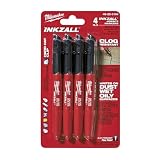
- Milwaukee Ink all Fine Point Marker, Black, 4 Per Pack
- 4 per pack Features Clog Resistant Marker Tip Writes through Dusty, Wet and Oily Surfaces Durable Marker Tip for Writing on Concrete, OSB and Rough Surfaces
- Clog resistant tip writes on dusty, wet and oily surfaces and is optimized for rough surfaces such as OSB, cinderblock and concrete
- Hard hat clip- attaches for easy access
- Quick dry time with reduced smearing and marking
Under Verra’s VM0042 framework, the two broad quantification routes are measurement and modeling, and measurement and remeasurement. The choice depends on matters such as suitable calibration and validation data, model applicability, availability of an independent modeling expert, the complexity of documenting modeled outcomes, and the project’s capacity to sample and analyze soil. Verra’s FAQ answers cited here refer to v2.1; check the live governing version before applying those details.
For a measure-and-model project, Verra’s FAQ says the project submits a model validation report and is assessed by a validation/verification body with independent modeling expertise. The evidence must be suitable for the project’s method; a field sensor result, lab report, or soil-health test alone cannot substitute for the required project documentation and review.
Which measurement approach fits the question?
| Approach | What it can establish | Key considerations |
|---|---|---|
| Agronomic soil-health or fertility test | Soil information for agronomic decisions; by itself, it does not establish a change in carbon stock or verify a credit. | Use the test for its intended purpose. Stock measurement additionally requires bulk density, depth or layer thickness, and coarse-fragment information. |
| Measure and remeasure | A comparison of soil-carbon stock at baseline and a later sampling, when the sampling and analytical methods are comparable. | Requires a defensible repeated sampling design, appropriate depth and increments, laboratory analysis, and consideration of uncertainty under the governing program. |
| Measurement plus modeling | An estimate of stock change using measurements together with a calibrated and validated model, where permitted by the methodology. | Model applicability, data for calibration and validation, independent expertise, documentation effort, and sampling and analysis capacity affect suitability. |
| Proximal spectroscopy or remote sensing | Verra’s FAQ says proximal field spectroscopy may be used for SOC content when uncertainty is accounted for under methodology criteria. | The same FAQ says remote sensing is not permitted for SOC stock-change monitoring under the referenced VM0042 v2.1. Do not assume these rules apply to other standards or later versions. |
Version and scale matter
Verra’s revision-status page, checked 4 October 2026, described VM0042 v3.0 as under independent expert review and v2.2 as the methodology being revised. Proposed v3.0 content included repeated measurements and a model prediction-error true-up, stronger modeling rigor, and standardized stratification, sampling, processing, and laboratory analysis. Those were proposals on that date, not final v3.0 requirements. The 30 cm depth notice, the FAQ answers referring to v2.1, and the revision page therefore have different version contexts; use the live effective methodology for a project decision.
The NRCS Soil Carbon Monitoring and Research Network is designed to assess trends across working lands, not to detect statistically significant differences on individual farms. Its program page describes planned site revisits on a recurring 5–10-year basis, with resampling planned to begin in FY2030. That is a monitoring schedule, not evidence of a measured sequestration outcome.
Do these 3 things before closing this tab:
1Clear out junk files and repair common Windows errors2Scan for outdated or missing drivers - takes under a minute3Repair Windows errors before they cause bigger problemsWhat the measurements can—and cannot—support
- A carbon concentration result alone is not a stock figure; the calculation needs bulk density, layer thickness, and coarse-fragment information.
- A repeat sample is most useful when locations, season, strategy, soil conditions, and laboratory method are comparable.
- Adopting a farming practice does not, by itself, prove that soil-carbon stock increased. The cited guidance does not establish one sequestration figure that can be applied across soils, climates, and management contexts.
- A sample collection tool, soil-health test, or sensor is not a complete credit-verification system. A credit claim must meet the applicable program’s measurement, uncertainty, documentation, and independent verification requirements.
NRCS identifies technical service providers and qualified individuals as possible sources of assistance with EQIP-supported conservation planning and monitoring. A voluntary credit project may also require expertise in sampling design, modeling, and validation/verification under its methodology.
Quick Recap
Product prices and availability are accurate as of the date/time indicated and are subject to change. Any price and availability information displayed on Amazon at the time of purchase will apply.




